Peeling Nails and Dryness or Weakness: What’s the Connection?
Quick Answer
Peeling nails and dryness or weakness are closely connected, but they’re not exactly the same problem. Repeated water exposure, harsh cleaning products, frequent polish removal, and nail damage can weaken the layers of keratin that form your nails. Moisturizing regularly, wearing gloves for wet chores, keeping nails short, and avoiding aggressive manicures can help prevent further peeling. Persistent or unexplained changes may need medical evaluation.
You finally grow your natural nails long enough for that beautiful Pinterest manicure, only to notice thin layers peeling away at the tips. Your nails feel dry, bend too easily, or break before you can enjoy your favorite design.
So, are your nails peeling because they’re dry, or are they naturally weak? The answer often involves both, along with everyday habits that gradually damage the nail plate.
Understanding the connection between peeling nails and dryness or weakness helps you choose the right care routine instead of spending money on products that promise overnight results.


Why Are Your Nails Peeling in Layers?
Your fingernails are made primarily of keratin, a strong structural protein also found in your hair and skin. Unlike living skin, the visible nail plate consists of compacted cells that cannot repair themselves once damaged.
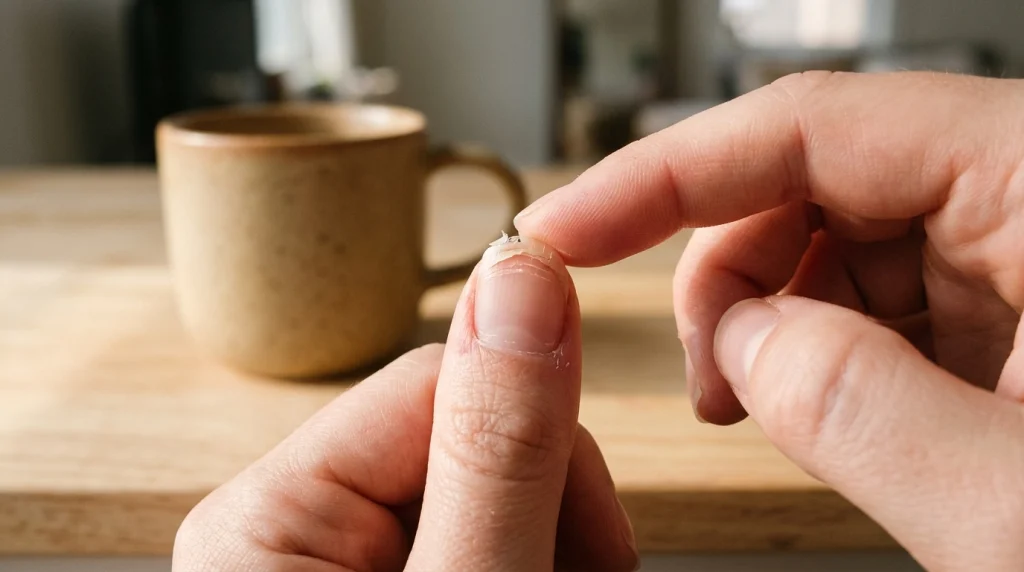
When the layers near the free edge begin separating horizontally, the condition is called onychoschizia, commonly known as lamellar nail splitting.
Instead of breaking across the entire nail, the surface may lift into thin, paper-like sheets. You might notice the problem after removing polish, washing dishes, or filing your nails.
Several factors can contribute:
- Repeated wetting and drying: Water absorption and drying cycles can stress the nail structure.
- Harsh chemicals: Detergents and cleaning solutions may aggravate brittle nails and surrounding dryness.
- Mechanical damage: Scraping, picking, excessive buffing, and rough filing can remove nail layers.
- Frequent manicures: Aggressive gel or acrylic removal may leave nails noticeably thinner.
- Underlying health conditions: Certain skin disorders, thyroid problems, and nutritional deficiencies can sometimes contribute to persistent brittleness.
The most useful first step is identifying which of these factors applies to your routine. If you’re also noticing frequent breakage, our guide to common causes of weak nails explains additional reasons your nails may lose strength.
What’s the Connection Between Peeling Nails and Dryness?
Dryness can contribute to brittle nails, but the relationship is more complicated than simply having too little water inside your nail plate.
Your nails naturally contain water and lipids that influence their flexibility and structure. Repeated environmental exposure can disturb that balance and make splitting more likely.
1. Repeated Water Exposure Can Weaken Nail Layers
It sounds contradictory, but spending too much time in water can contribute to nails that feel dry and brittle afterward.
When you soak your hands, your nails absorb moisture and expand slightly. As they dry, they contract. Repeated cycles can place stress on the keratin layers, particularly when combined with detergents or physical trauma.
For example, if you wash dishes without gloves every evening, your nails experience prolonged water exposure followed by drying.
Over time, this routine may contribute to peeling at the tips.
2. Dry Nail Surfaces Are More Vulnerable to Damage
Nails that have been exposed to harsh solvents or repeated chemical treatments may lose some of their natural flexibility.
Instead of bending slightly under pressure, brittle tips may chip, split, or separate into layers.
Dry cuticles and rough skin around your nails can appear alongside this problem, although dry surrounding skin does not automatically mean the nail plate itself is dehydrated.
3. Moisture Alone Cannot Repair Existing Peeling
Cuticle oil and hand cream can improve the appearance and comfort of dry nails and nearby skin. They may also help reduce additional brittleness associated with dryness.
However, moisturizers cannot permanently reconnect nail layers that have already separated.
Your goal is to protect the damaged portion while healthier nail gradually grows forward.
Pro Tip
Apply hand cream immediately after washing and drying your hands. Massage a little into your nails and surrounding skin instead of moisturizing only your palms. Consistency matters more than applying a large amount once a week.
How Can You Tell Whether Your Nails Are Dry or Weak?
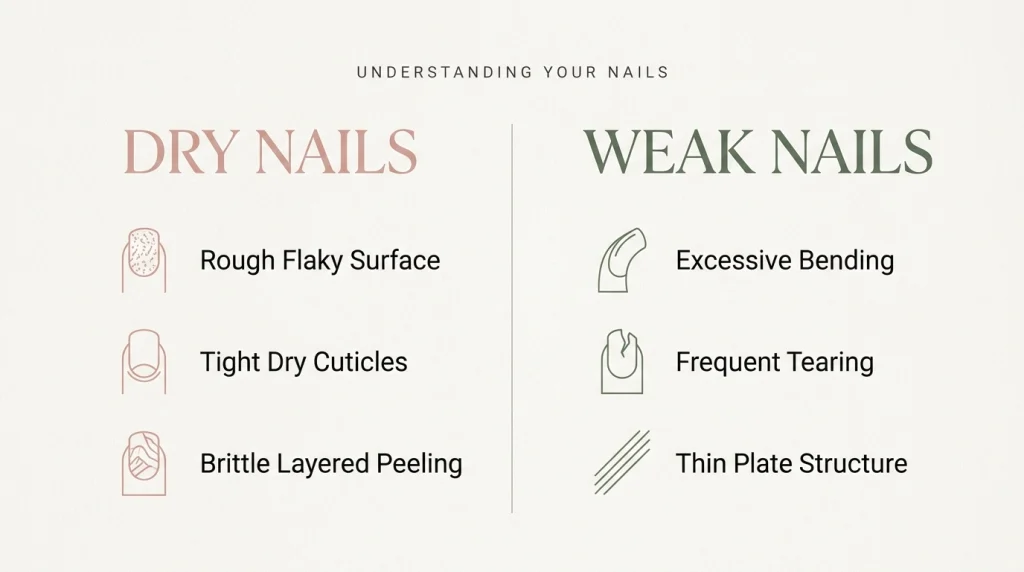
Dry nails and weak nails often overlap, but they describe different aspects of nail condition.
Dryness generally refers to moisture-related changes affecting nail flexibility and the surrounding skin. Weakness describes how easily your nail bends, splits, tears, or breaks under ordinary pressure.
Common Signs of Dry Nails
- Rough or flaky nail surfaces.
- Dry cuticles and hangnails.
- Peeling near the free edges.
- Brittleness that becomes more noticeable after cleaning or polish removal.
- Dry, tight-feeling skin around the fingertips.
Common Signs of Weak Nails
- Nails bending excessively during everyday activities.
- Frequent breakage despite keeping nails short.
- Thin or uneven nail plates after cosmetic treatments.
- Repeated splitting along the edges.
- Difficulty maintaining natural nail length.
These signs are clues rather than a medical diagnosis. Your nails can be dry and brittle, thin and flexible, or affected by a combination of conditions.
For a closer comparison, explore our article about dry nails vs. brittle nails.
What Makes Your Nails Dry, Weak, and More Likely to Peel?
Most people experience more than one contributing factor. Understanding your specific triggers can help you make changes that actually matter.
Frequent Handwashing and Cleaning
Handwashing is essential for hygiene, and you shouldn’t avoid it to protect your manicure.
However, repeated exposure to soap, water, and cleaning chemicals can make already vulnerable nails more prone to splitting.
Dry your hands thoroughly and moisturize afterward. For prolonged chores such as dishwashing, use protective gloves suited to the task.
Picking Off Gel or Acrylic Products
Peeling off a gel manicure may feel satisfying, but it can pull away superficial layers of your natural nail.
If your nails become noticeably thinner after removing extensions, the removal process may be contributing to the damage.
Always follow the appropriate removal method for your nail product. Avoid forcefully lifting, scraping, or tearing attached enhancements.
Excessive Filing and Buffing
Regular shaping helps prevent snags, but aggressive filing can make thin nails even more fragile.
Buffing repeatedly removes material from the nail plate. This is especially important if your nails already feel soft after salon treatments.
Choose a fine-grit or glass file for natural nails and use gentle pressure. File the free edge rather than sanding away the nail surface.
Harsh Nail Polish Removers
Nail polish removers contain solvents designed to dissolve cosmetic coatings. Frequent or prolonged exposure may leave the nail and surrounding skin feeling dry.
Acetone is effective for removing certain products, but repeated soaking can aggravate dryness. Non-acetone formulas may feel gentler for some people, although they are not automatically harmless.
Use the removal method required for your polish, minimize unnecessary contact, and moisturize afterward.
Cold Weather and Low Humidity
Cold outdoor air and indoor heating can contribute to dry skin and cuticles.
If your hands become rough during winter, your nails may also experience more environmental stress. Regular moisturizing and protection from prolonged exposure can help maintain comfort.
Health and Nutritional Factors
Most peeling nails are not proof of a vitamin deficiency. External damage is a common explanation.
Still, persistent nail changes can sometimes be associated with conditions such as iron deficiency, thyroid disease, psoriasis, eczema, or fungal infections.
If the problem is widespread, unexplained, worsening, or accompanied by other symptoms, a healthcare professional can determine whether testing is appropriate.
Warning
Don’t assume persistent peeling is simply dryness if your nails also become painful, swollen, unusually discolored, significantly lifted, or thick and crumbly. A new or changing dark streak also needs medical evaluation. These changes can indicate problems that moisturizing alone will not address.
How Can You Stop Peeling Nails Caused by Dryness or Damage?
You don’t need an expensive ten-product treatment system. A few consistent habits can reduce additional stress and help protect new nail growth.
1. Keep Your Nails Short While They Recover
Long nails are more likely to catch on clothing, packaging, or other objects. When the free edge is already peeling, these small impacts can extend existing splits.
Trim your nails to a comfortable length and gently smooth any rough corners.
If a layer has already lifted, don’t pull it backward. Carefully remove only loose material at the free edge when safe to do so.
2. Moisturize Your Nails and Cuticles Daily
Apply a fragrance-free hand cream after washing your hands. Pay special attention to the nail plate, sidewalls, and surrounding cuticle area.
For additional conditioning, you can apply a small amount of jojoba-based cuticle oil once or twice daily.
Cuticle oil is not a permanent repair treatment, but it can make dry nails and surrounding skin feel more comfortable.
3. Protect Your Hands During Wet Chores
Wear reusable protective gloves when washing dishes, cleaning bathrooms, or handling household detergents.
Choose gloves appropriate for the chemicals you’re using, and follow the product label.
If your hands become sweaty inside the gloves, remove them during safe breaks, dry your hands, and change damp glove liners when needed.
4. Stop Peeling and Scraping Nail Products
If your nails are already thin, avoid peeling off polish or artificial enhancements.
Use the recommended removal process or visit an experienced nail professional when removal requires special techniques.
You may also benefit from a break from repeated enhancements or aggressive surface preparation while damaged areas grow out.
5. Use Gentle Filing Techniques
Shape your natural nails with light pressure. A fine-grit or glass file can help smooth rough edges without aggressive abrasion.
Avoid sawing forcefully across delicate tips. You also don’t need to buff the entire surface to make nails look smoother.
6. Support Nail Growth With Balanced Nutrition
Your nail matrix produces new nail using nutrients supplied through your body.
A balanced diet containing adequate protein, iron, zinc, and other essential nutrients supports normal nail growth.
Foods such as eggs, legumes, lean meats, leafy greens, nuts, and seeds can contribute to a varied diet.
Don’t start high-dose supplements simply because your nails peel. Supplements aren’t proven to solve every case of brittle nails, and some, including biotin, can interfere with laboratory tests.
For additional gentle care options, see our guide on how to make your nails healthy again.
Which Nail Care Products Actually Help With Peeling?
The most useful products protect your nails from additional damage rather than promising to permanently rebuild already separated layers.
Start with the essentials below before investing in expensive nail treatments.
Disclosure: As an Amazon Associate, we earn from qualifying purchases.
Recommended Product
Jojoba-Based Cuticle Oil
A jojoba-based cuticle oil is a convenient option for conditioning dry nail surfaces and surrounding skin. Apply a small amount and massage gently into the cuticle area.
As an Amazon Associate, we earn from qualifying purchases.
Recommended Product
Fragrance-Free Moisturizing Hand Cream
A fragrance-free cream containing ingredients such as glycerin or petrolatum can help reduce dryness around your nails, especially after frequent handwashing.
As an Amazon Associate, we earn from qualifying purchases.
Recommended Product
Fine-Grain Glass Nail File
A smooth glass nail file can help control the shape of fragile nails and remove small snags without unnecessary aggressive filing.
As an Amazon Associate, we earn from qualifying purchases.
How Long Does It Take for Peeling Nails to Recover?
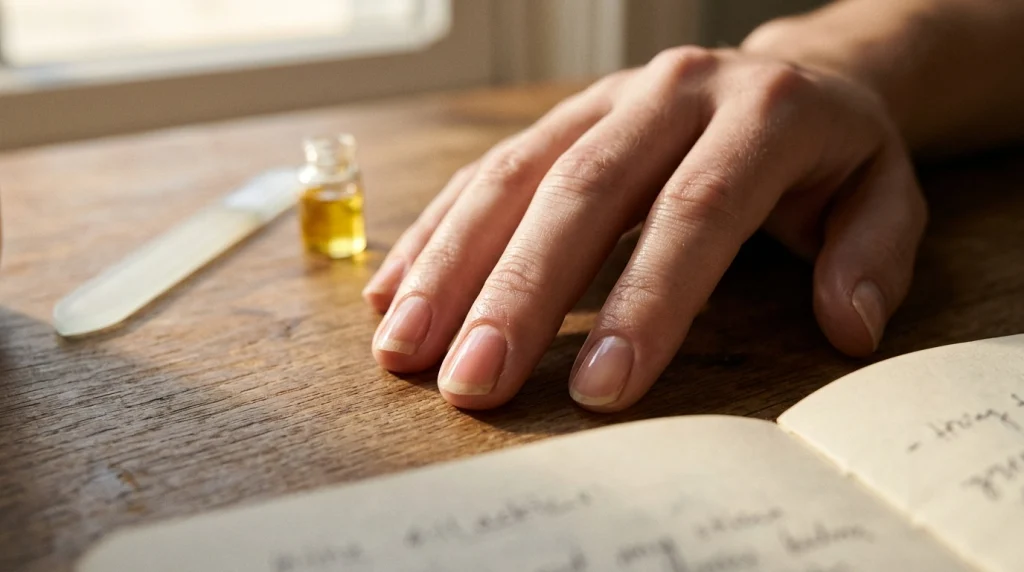
Recovery depends on how much of your nail is damaged and whether the underlying cause has been addressed.
Moisturizing may make dry cuticles and surrounding skin feel better within days. However, existing splits in the nail plate won’t disappear immediately.
Fingernails typically grow about 3 millimeters per month on average, although growth speed varies with age, health, and other factors.
- First several days: Your cuticles may feel softer, and regular filing can help reduce snagging.
- After several weeks: You may notice less new peeling if damaging habits have been corrected.
- After two to three months: More new nail growth may become visible, although damaged tips may still remain.
- After approximately four to six months: A fingernail may grow through much of a complete replacement cycle.
These are general timelines, not guaranteed outcomes. Significant damage, infections, or medical conditions can delay recovery.
The important distinction is that you’re protecting new nail growth, not magically healing the damaged keratin already visible.
What Daily Routine Helps Prevent Peeling Nails?
A realistic routine should fit into your existing day. You don’t need to spend an hour on nail care or apply several different strengthening serums.
Morning: Moisturize and Protect
After washing your hands, apply a small amount of fragrance-free hand cream. Make sure to cover your nails and surrounding skin.
Before cleaning or washing dishes, put on protective gloves to limit prolonged contact with water and detergents.
During the Day: Avoid Unnecessary Nail Stress
Don’t use your nails to open packages, scrape labels, or pry objects apart.
If you notice a rough edge, smooth it gently with a nail file rather than picking at the peeling layer.
Reapply moisturizer after handwashing when your hands feel dry.
Evening: Condition the Cuticle Area
Massage a small amount of cuticle oil or moisturizer into your nails and surrounding skin.
If your cuticles are extremely dry, you can apply a thin layer of plain petroleum jelly over moisturizer before bed.
Keep your routine simple enough that you’ll actually repeat it.
Weekly: Check for New Damage
Once a week, inspect your natural nails in good lighting.
Look for new peeling, snags, lifting, discoloration, or tenderness. Trim excess length if necessary and avoid unnecessary buffing.
Our daily nail care routine provides more ideas for making these habits part of your regular beauty schedule.
What Should You Do and Avoid When Your Nails Keep Peeling?
Do
- Moisturize after washing your hands.
- Keep damaged nails comfortably short.
- Wear protective gloves for wet chores.
- File rough edges gently.
- Eat a varied, balanced diet.
- Use appropriate manicure removal methods.
- Monitor persistent or unusual changes.
Don’t
- Peel away separated nail layers.
- Pick off gel or acrylic manicures.
- Buff already thin nails repeatedly.
- Use nails as household tools.
- Expose hands unnecessarily to harsh cleaners.
- Use irritating DIY treatments.
- Ignore pain, swelling, or discoloration.
Why Are Your Nails Still Peeling After You Start Moisturizing?
If you’re already using cuticle oil and hand cream but still experience peeling, another factor may be contributing.
Problem: Your nail tips keep separating into layers
Immediate fix: Shorten the affected free edge and gently smooth snags. Prevention: Reduce prolonged wet work and avoid picking at existing splits. The damaged portion must gradually grow out.
Problem: Your nails feel thin after gel removal
Immediate fix: Avoid additional aggressive filing or enhancement removal. Prevention: Use appropriate professional or product-specific removal methods rather than peeling or scraping away coatings.
Problem: Your nails peel after frequent cleaning
Immediate fix: Dry your hands and apply moisturizer after cleaning. Prevention: Use suitable gloves and reduce unnecessary exposure to detergents and long soaking sessions.
Problem: Several nails keep changing despite gentle care
Immediate fix: Arrange an evaluation with a qualified healthcare professional. Prevention: Address any identified underlying condition while continuing appropriate everyday nail care.
Can Nail Strengtheners Make Peeling Worse?
Some nail strengtheners can provide a temporary coating that makes nails feel firmer. However, a harder nail is not automatically a healthier nail.
If your nail is already brittle, excessive hardening may make flexibility a concern. Some formaldehyde-containing hardeners can aggravate brittleness or irritation, particularly when used repeatedly.
Instead of choosing the strongest formula available, focus first on protecting the nail from external damage.
A gentle cosmetic coating may be appropriate for some people, but it cannot permanently rebuild layers that have already peeled.
If your nails are sore, significantly thinned, lifting, or inflamed, avoid covering the problem with additional products until you know what is causing it.
When Should You See a Dermatologist About Peeling Nails?
Mild peeling limited to the nail tips can often be managed by reducing damage and improving daily care.
However, some nail changes deserve professional evaluation.
Contact a healthcare professional if you notice:
- Persistent peeling without an obvious cause.
- Increasing pain, redness, swelling, or pus.
- Nails lifting significantly away from the nail bed.
- Thickening, crumbling, or unusual discoloration.
- A new or changing dark streak.
- Several nails changing suddenly.
- Brittle nails accompanied by other concerning symptoms, such as unexplained fatigue or changes in your general health.
A dermatologist can examine your nail plate, surrounding skin, and growth pattern to determine whether the issue is cosmetic, inflammatory, infectious, or related to another health condition.
Depending on your symptoms, your clinician may recommend additional testing. You shouldn’t assume you need iron supplements, thyroid medication, or antifungal treatment without an appropriate diagnosis.
Frequently Asked Questions About Peeling Nails and Weakness
Q: Are peeling nails a sign of dehydration?
A: Not necessarily. Peeling nails are more commonly associated with repeated wetting and drying, chemical exposure, or physical damage. Drinking adequate water supports general health, but increasing water intake alone will not repair separated nail layers.
Q: Can cuticle oil stop nails from peeling?
A: Cuticle oil can help condition dry nails and surrounding skin, but it cannot permanently bond separated layers together. Combining moisturizing with protection from water, chemicals, and trauma is more useful than relying on oil alone.
Q: Does a vitamin deficiency cause nails to peel?
A: Certain nutritional deficiencies, including iron deficiency, can contribute to abnormal or brittle nails. However, peeling alone does not prove a deficiency. A healthcare professional can assess whether your symptoms justify testing.
Q: Should you stop wearing nail polish if your nails are peeling?
A: Taking a break from frequent manicures may help if removal, buffing, or enhancements are contributing to the damage. Regular polish does not automatically damage every nail, but repeated harsh removal can worsen existing weakness.
Q: Can peeling nails become strong again naturally?
A: Yes, nails affected by everyday cosmetic or environmental damage may improve as healthier nail grows out. Keep nails short, moisturize, avoid unnecessary trauma, and allow several months for damaged areas to be replaced. Persistent problems may require medical assessment.
Final Thoughts: What Really Helps Peeling Nails?
The connection between peeling nails and dryness or weakness usually involves a combination of environmental exposure, nail structure, and everyday care habits.
Start with gentle filing, regular moisturizing, protective gloves, and careful manicure removal. Your nails may not transform overnight, but consistent protection gives new growth a better chance to remain healthy-looking.
Save this guide to your Pinterest nail-care board so you can return to these simple habits whenever your nails need extra attention.

Hi, I’m Jessica, the creator behind Unique Lash & Nails Katy.
I created this website for anyone who loves beautiful nails as much as I do. Here, I share trendy nail designs, seasonal manicure ideas, easy nail care tips, honest product recommendations, and step-by-step guides to help you create salon-worthy nails at home. Whether you’re looking for everyday inspiration or your next favorite nail trend, I hope you’ll find something you love.