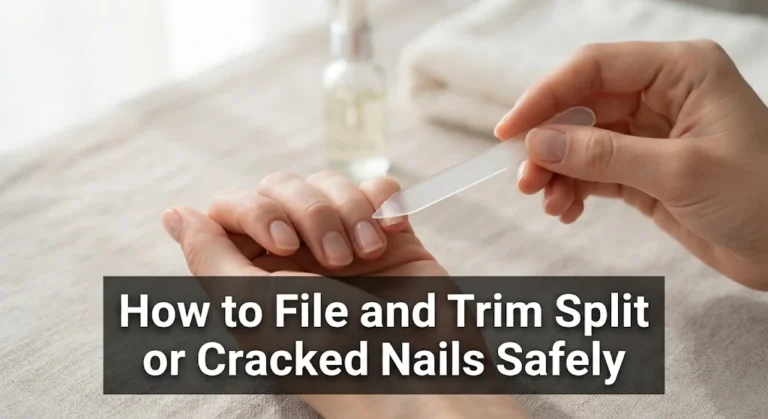
How Long Do Split or Cracked Nails Take to Grow Out?
Quick Answer
A split or cracked fingernail usually grows forward at about 3 millimeters per month. A small crack near the tip may be trimmed away in a few weeks, while damage closer to the cuticle can take roughly four to six months—or longer—to grow out completely. Toenails grow much more slowly and may need 12 to 18 months for full replacement. Keep the affected nail short and protected; a deep, painful or recurring split needs professional assessment.
Seeing a crack across your favorite manicure can feel discouraging, especially when the split keeps catching on your hair or clothes. The good news is that many minor cracks eventually move to the tip as healthy nail grows behind them.
What matters is where the crack begins, how deep it goes, and whether the tissue that makes new nail is healthy. Here’s how to estimate your timeline, protect a damaged nail, and recognize when it’s more than a cosmetic problem.


How Long Does a Split Fingernail Actually Take to Grow Out?

Healthy fingernails grow an average of approximately 3 millimeters a month. That means a damaged section doesn’t simply heal together like a cut in your skin. Instead, new nail grows from the matrix beneath the skin at the base, gradually pushing the cracked portion toward the free edge.
For a typical fingernail, complete replacement takes around four to six months, although individual growth rates vary. Some people need longer, particularly if the nail matrix was injured or an underlying condition is affecting growth.
- Small split at the free edge: Often a few weeks until it can be safely trimmed away, depending on how far the damage extends.
- Crack halfway down the nail: Commonly around two to four months to reach the edge, but your nail length and growth rate matter.
- Crack close to the cuticle: May need approximately four to six months or more to grow out.
- Completely lost fingernail: Full regrowth often requires about six months and sometimes longer.
- Cracked toenail: Much slower; replacing an entire toenail may take 12 to 18 months.
These are planning ranges, not promises. If your split keeps reappearing in exactly the same place, waiting alone may not solve it.
Why Does the Location of the Crack Change the Timeline?
Imagine a thin line drawn across your nail. The farther that line is from the tip, the more distance it has to travel before you can cut it off. That is why two equally visible cracks can have very different recovery times.
A split at the nail tip
If only the white free edge has peeled or chipped, you may be able to carefully shorten the nail immediately. When the split extends just into the attached portion, wait until it has grown forward far enough to trim without pulling on sensitive tissue.
A horizontal crack across the center
A horizontal crack across the visible nail plate may reflect a single injury or a period when nail growth was disrupted. If it is stable and painless, the damaged area can migrate outward over several months. Avoid trying to scrape or buff the line away; doing so removes more nail material.
A vertical split running toward the cuticle
A lengthwise split deserves more attention, particularly when it begins near the base or repeatedly forms along the same track. Damage or scarring of the nail matrix, as well as certain nail disorders, can make a split persist as new nail grows. A dermatologist can determine whether the nail is likely to recover normally.
Warning
If a crack reaches the pink attached nail, is bleeding, exposes skin underneath, or causes significant pain, don’t glue it closed or pull the separated pieces apart. Protect the area and seek medical advice.
What Causes Nails to Split or Crack in the First Place?
Getting the cause right helps you protect the new growth. Otherwise, a fresh section of nail may become damaged before the old crack has disappeared.
Repeated water exposure and dryness
Frequent soaking followed by drying can stress the nail plate. If you wash dishes without gloves or regularly use strong cleaners, your nails may become more prone to peeling and splitting. Moisturizer and household gloves help reduce that repeated stress.
Manicure and removal damage
Overfiling, scraping gel off, picking at acrylics, or aggressive buffing can thin the nail surface. The resulting rough or flexible layers may split with ordinary activities. You don’t necessarily need to avoid every manicure forever, but your removal routine should be gentle.
Sudden injury
Slamming a finger in a door, catching a long nail on fabric, or striking it against a hard surface can create a single crack. Severe injuries can also damage the nail bed or matrix. A painful crush injury should be assessed promptly, even if the split initially looks small.
Recurring brittleness or a medical condition
Some nails split repeatedly because of ongoing brittleness, inflammatory skin conditions, infections, or other health factors. A change involving several nails, persistent splitting, thickening, discoloration, or lifting is a good reason to talk with a healthcare professional rather than assuming it is only dryness.
If several nails are damaged after manicures, the recovery principles in our nail recovery routine can help you simplify your everyday care while they grow.
How Can You Tell Whether the Split Is Growing Out Normally?
Look for an intact band of new nail forming at the cuticle and for the crack to slowly move closer to the tip. Because the movement is subtle from day to day, check your progress over weeks rather than hours.
- Encouraging signs: A smooth new section near the base, no new cracking, decreasing tenderness after a minor injury, and a split that visibly shifts forward.
- Signs of continuing damage: Fresh splits appearing beside the old crack, a nail that keeps catching, worsening peeling, or a crack that extends deeper.
- Signs that need assessment: Persistent pain, redness, warmth, swelling, drainage, marked lifting, unexplained dark pigmentation, or a split that never improves.
Take one photograph in similar lighting every two to four weeks. Keeping your finger in the same position makes it easier to compare the distance between the cuticle and the crack. You don’t need to push your cuticle back to measure it.
What Should You Do While a Cracked Nail Grows Out?
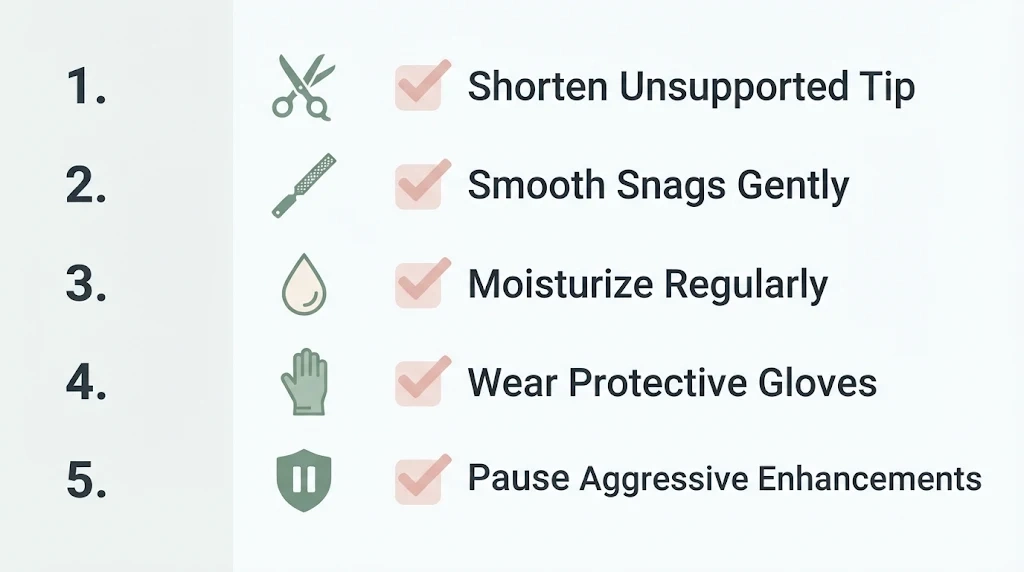
The goal isn’t to force the damaged plate to mend. It’s to prevent the split from worsening and give new nail the best chance to remain intact.
1. Shorten the unsupported tip carefully
Use clean, sharp clippers to shorten a loose free edge that is no longer attached to tender skin. If the crack extends into the pink attached portion, don’t cut through it. A shorter nail has less leverage when it bumps into objects.
Common mistake: Cutting deeply into the split to make the line disappear, which can turn a minor crack into a painful injury.
2. Smooth any snag without thinning the nail
Use a fine-grit file with light pressure on the exposed edge. Stop when it no longer catches on fabric. Avoid vigorous filing across the nail surface or repeated buffing because that takes away protective layers.
Common mistake: Filing the top of the crack until it looks invisible, leaving the surrounding nail even weaker.
3. Moisturize nails and surrounding skin
After handwashing, massage a little fragrance-free cream into your fingertips and nail folds. Cuticle oil can be a pleasant additional step, but ordinary moisturizer is useful too. Moisture care helps manage dryness; it does not instantly seal a split or guarantee faster growth.
Common mistake: Applying oil once a week and expecting a damaged nail plate to reverse its existing crack.
4. Protect the nail during wet chores
Wear well-fitting protective gloves for dishes, cleaning, and other lengthy wet tasks. Remove the gloves afterward, dry your hands, and reapply moisturizer. If a minor nail injury needs a protective dressing, use clean gauze and follow appropriate wound-care advice.
Common mistake: Leaving damp gloves on for extended periods, allowing moisture to build up around already fragile nails.
5. Pause aggressive nail enhancements
Skip procedures that require forceful preparation, sanding, or removal while the split is fragile. Never place nail glue, gel, or acrylic over an open wound or a painful crack involving attached tissue. If you want a decorative manicure, wait until the nail is stable and discuss safe options with a qualified nail professional.
Common mistake: Hiding an inflamed or lifting nail under an opaque enhancement, which can delay recognizing a problem.
Can a Split Nail Repair Itself Without Growing Out?
Not in the same way skin repairs a cut. The visible nail plate is made largely of dead, hardened keratin. A crack in that plate doesn’t knit itself back together through living tissue repair.
A superficial split may seem to improve because you file away a snag or temporarily protect the edge. However, the underlying damaged section remains until it moves off the tip or is otherwise removed safely. That is why patience and preventing new trauma matter more than dramatic overnight nail-repair claims.
The living nail matrix continues producing new material when it remains healthy. If the matrix itself is scarred after a severe injury, the new nail may continue to look split or distorted. This is one reason persistent lengthwise cracks should be checked.
Will Nail Oil, Strengthener, or Supplements Make It Grow Out Faster?
No ordinary nail-care product can reliably make a deep crack disappear within days. Most products are better understood as ways to reduce avoidable breakage while your natural growth continues.
Cuticle oil and hand cream
These can help soften dry skin and improve everyday comfort. Applying them consistently after handwashing is a practical choice, especially when you handle detergents frequently. If you dislike oily fingertips, use a light cream during the day and oil before bed.
Clear polish and strengthening products
On an intact, painless nail, a conventional polish may provide a cosmetic layer, but it isn’t a treatment for a deep split. Some hardeners can make certain brittle nails feel less flexible, while other formulas or repeated removals may irritate or worsen dryness. Stop using any product that stings, causes redness, or increases brittleness.
Biotin and other nail supplements
A balanced diet supports normal nail production, but taking extra supplements when you have no deficiency is not a guaranteed shortcut. Evidence for routine biotin supplementation in otherwise healthy people is limited, and high doses can interfere with certain laboratory tests. Ask a clinician before starting supplements specifically to treat nail changes.
For a helpful explanation of growth versus breakage, see whether nail care affects nail growth.
Which Basic Products Are Actually Useful for a Cracked Nail?
You don’t need an expensive repair kit. A few gentle tools are usually more useful than a drawer full of miracle treatments. These optional shopping suggestions are for routine care of minor, painless nail damage—not for treating an open wound or a suspected infection.
Recommended Product Type
Fine-Grit Glass Nail File
A smooth glass file can help you gently control a snagging free edge without repeated coarse filing. Use very light pressure and never file into attached, painful tissue.
Browse Glass Nail Files on Amazon
As an Amazon Associate, we earn from qualifying purchases.
Recommended Product Type
Fragrance-Free Hand Cream
Choose a plain moisturizer that is comfortable to reapply after handwashing, especially if the skin around your nails feels dry or tight.
As an Amazon Associate, we earn from qualifying purchases.
Recommended Product Type
Reusable Household Cleaning Gloves
Gloves help limit repeated detergent and water exposure during chores, reducing one common source of stress on fragile nail edges.
Browse Cleaning Gloves on Amazon
As an Amazon Associate, we earn from qualifying purchases.
What Should You Do and Avoid Until the Crack Grows Out?
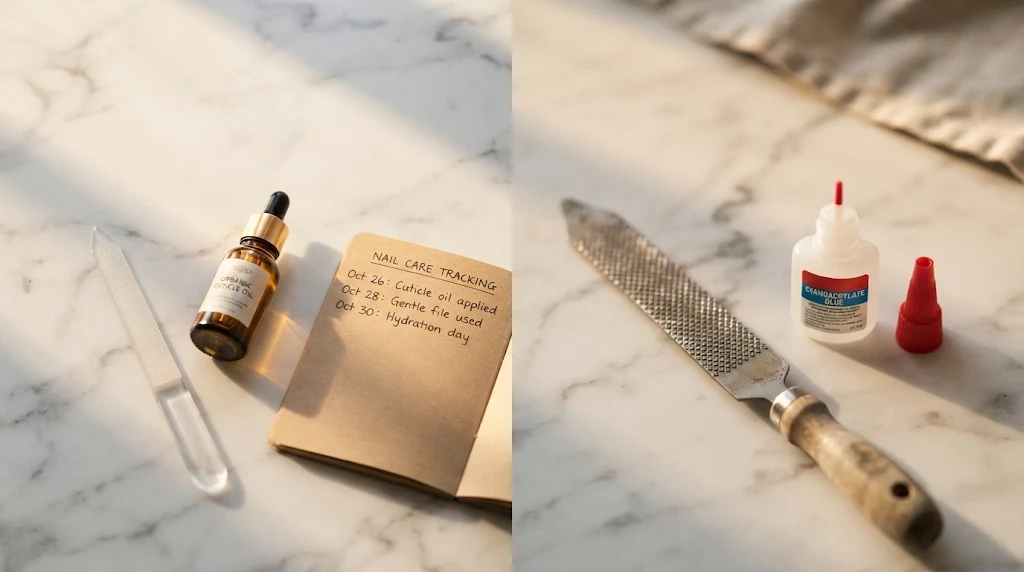
Do
- Keep tips short and smooth.
- Moisturize after washing.
- Use gloves for wet chores.
- Monitor the crack every few weeks.
- Seek care for concerning changes.
Don’t
- Pull loose nail layers apart.
- Buff deeply into a crack.
- Peel off gel or acrylic.
- Glue an open, painful split.
- Ignore persistent swelling or drainage.
If you prefer a repeatable plan, our simple nail care routine covers everyday maintenance beyond the recovery period.
What If Your Cracked Nail Isn’t Getting Better?
The split keeps catching on clothes
Carefully remove only a loose, painless snag from the free edge, then keep the nail short. If the crack involves attached tissue, protect it instead of cutting deeper.
A crack keeps reappearing in the same spot
Arrange a dermatology assessment. Repeated splitting along one line can indicate damage to the nail-producing area or another nail disorder, so cosmetic coating alone may not resolve it.
Several nails peel after gel removal
Stop scraping or peeling products off, keep the nails manageable in length, and switch to gentle maintenance. A dermatologist can assess persistent or severe thinning.
There is pain, pus, swelling, or a new dark streak
Seek medical evaluation rather than trying a nail-repair kit. Signs of infection, a significant injury, or unexplained pigmentation need an appropriate diagnosis.
When Should You See a Dermatologist for a Split Nail?
Book an appointment if your split is persistent, keeps returning near the base, involves multiple nails without an obvious cause, or comes with unusual changes in color, shape, thickness, or attachment. A clinician may look for trauma, inflammation, infection, or other conditions affecting the nail unit.
Seek prompt medical care after a serious crush injury, if bleeding won’t stop, or if the nail is deeply torn or partly detached. Increasing redness, warmth, swelling, pus, or significant pain may indicate an infection or another problem that should not wait for the nail to grow out.
While you monitor recovery, you can use this daily nail care guide to keep your routine simple and consistent.
Frequently Asked Questions About Cracked Nail Regrowth
Q: Can a cracked nail grow out in two weeks?
A: A tiny crack right at the free edge might move far enough to trim within two weeks. A split farther down the nail usually takes much longer because fingernails grow only around 3 millimeters per month.
Q: Does a vertical nail split ever heal completely?
A: A one-time split may disappear as the damaged plate grows off. But a vertical split that starts near the cuticle or repeatedly returns may reflect matrix damage and should be evaluated by a dermatologist.
Q: Should I cut off the cracked part of my nail?
A: Trim only a loose, painless section beyond the attached nail. Don’t cut into the pink nail bed or tear away material that is still attached. Seek care if the split is deep or painful.
Q: Can gel polish cover a split while it grows out?
A: Avoid gel or glue over painful, bleeding, lifted, or inflamed nail tissue. For a stable superficial split, ask a trained professional about low-trauma cosmetic options, and avoid harsh removal.
Q: Why is my cracked nail not moving toward the tip?
A: Nail growth is slow, so movement may be difficult to notice week to week. If the same split stays near the base, repeatedly reforms, or comes with changes in the surrounding skin, seek medical evaluation.
The Bottom Line: Protect the Nail While New Growth Replaces It
For many minor splits, the simplest recovery plan is also the best: keep your nail short, smooth sharp edges, moisturize, and avoid repeated injury while the cracked section slowly moves outward. A full fingernail commonly takes several months to replace, so visible progress is gradual.
If your nail is painful, repeatedly splitting from the base, or changing in an unusual way, don’t wait for a cosmetic fix—get it checked. Save this guide to your Pinterest nail-care board so you can return to the timeline and protective tips as your nail grows.

Hi, I’m Jessica, the creator behind Unique Lash & Nails Katy.
I created this website for anyone who loves beautiful nails as much as I do. Here, I share trendy nail designs, seasonal manicure ideas, easy nail care tips, honest product recommendations, and step-by-step guides to help you create salon-worthy nails at home. Whether you’re looking for everyday inspiration or your next favorite nail trend, I hope you’ll find something you love.