Why Do Nails Turn Brown? Causes and What to Do
Quick Answer
Nails can turn brown because of dark nail polish, external staining, injuries, fungal infections, medications, or natural pigment production. Some brown nail changes are harmless, but a new or changing dark streak can occasionally indicate nail melanoma. The appearance, location, and progression of the discoloration help determine whether you need simple nail care or a medical examination.
You remove your favorite dark manicure and notice your nails look brown instead of their usual color. Or perhaps you’ve spotted a brown stripe on one fingernail and can’t remember injuring it. Naturally, you’re wondering what caused the change.
Brown nail discoloration has several possible explanations. Some are cosmetic, while others involve changes beneath the nail plate that deserve medical attention.
This guide explains why nails turn brown, how to recognize different patterns, what you can safely do at home, and when you should visit a dermatologist.


What Causes Nails to Turn Brown?
Your nail plate is made primarily of keratin, a tough protein produced by cells in the nail matrix. The nail itself is normally translucent, allowing the underlying nail bed to influence its appearance.
Brown coloration can develop when pigment enters the nail plate, blood collects beneath it, external substances stain its surface, or an infection changes the nail’s structure.
Here are eight possible explanations.
1. Dark Nail Polish Can Leave Brown Stains
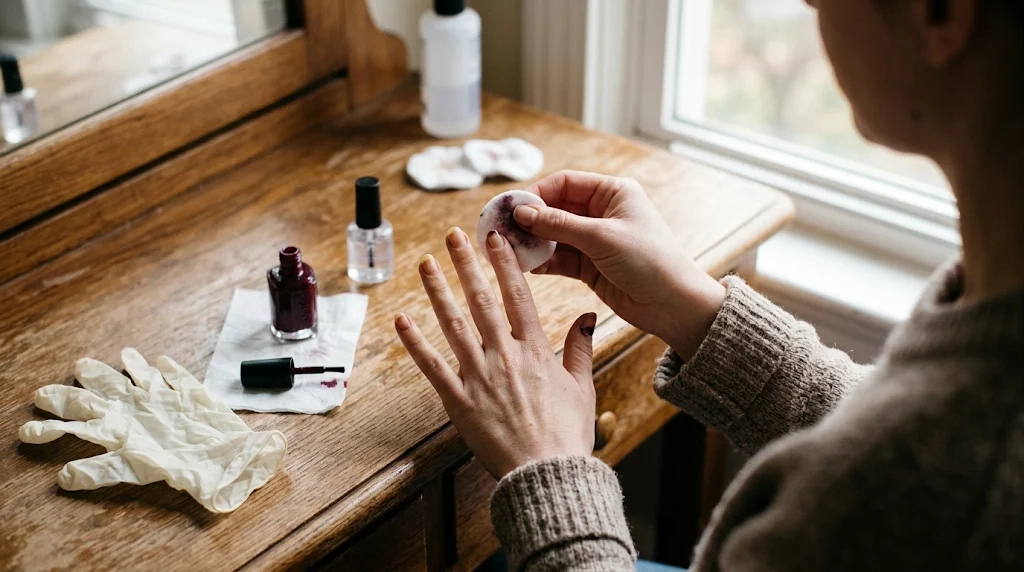
One of the simplest reasons nails turn brown is repeated exposure to highly pigmented nail polish.
Dark red, burgundy, purple, and black polish can leave yellowish-brown or orange-brown discoloration, particularly when you apply them directly to your natural nails without a protective base coat.
These pigments can become embedded in superficial layers of the nail plate. Even after removing the polish, some discoloration may remain.
Signs that suggest polish staining:
- Several nails show similar discoloration.
- The color appeared after removing dark polish.
- Your nails feel smooth rather than thick or crumbly.
- There is no unexplained pain or swelling.
- Fresh nail growth near the cuticle appears normal.
Cosmetic discoloration generally improves as your nails grow out. Cleaning the nail surface may remove residue, but embedded pigments often cannot be washed away immediately.
For additional advice, see our guide on how to lighten dark nails naturally and safely.
2. Fungal Nail Infections Can Cause Brown Discoloration
A fungal nail infection, medically called onychomycosis, can make fingernails or toenails look yellow, white, brown, or otherwise discolored.
Fungi can affect the nail plate and the material beneath it, gradually changing its texture, thickness, and appearance.
Common signs include:
- Yellowish-brown nail discoloration
- Thickened or misshapen nails
- Crumbly or brittle nail edges
- Debris collecting underneath the nail
- Partial separation from the nail bed
Toenails are particularly vulnerable because shoes can create warm, damp conditions that favor fungal growth.
However, color alone cannot confirm a fungal infection. Nail psoriasis, old injuries, and other conditions may look similar.
A healthcare professional may examine a nail clipping or sample before recommending antifungal treatment.
3. Nail Injuries Can Create Brown or Dark Spots
If you’ve accidentally slammed your finger in a door, dropped something on your toe, or worn shoes that repeatedly squeeze your toenails, an injury may explain the color change.
Trauma can cause blood to collect beneath the nail, producing a condition called a subungual hematoma.
The trapped blood may initially appear red, purple, or black and later develop a brownish appearance as it ages.
Typical clues include:
- A dark patch beneath one nail
- A recent injury or repeated pressure
- Tenderness following the injury
- A mark that gradually moves toward the nail tip as the nail grows
You may not remember every minor injury. Running, hiking, and tight footwear can repeatedly traumatize toenails without one obvious accident.
Severe pain or a significant fresh injury needs prompt medical assessment. Never attempt to drill or puncture your nail at home to release trapped blood.
4. Natural Pigmentation Can Produce Brown Nail Lines
Some people develop brown or black vertical bands because of melanin, the natural pigment responsible for skin and hair color.
This pattern is called longitudinal melanonychia.
It may appear as one or several bands running from the nail base toward the tip.
Benign nail pigmentation is more common in people with darker skin tones, and multiple nails may develop similar bands over time.
Other possible causes include repeated friction, certain medications, and inflammatory nail conditions.
Although many pigmented bands are harmless, their appearance cannot reliably establish the diagnosis.
A new brown band on one nail, particularly in an adult, should be evaluated by a dermatologist. This is especially important when its width, color, or borders change.
5. Certain Medications Can Darken Nails
Some medications can increase pigment production or cause other nail color changes.
Examples include certain chemotherapy medicines, antimalarial drugs, and other prescription treatments.
Depending on the medication, pigmentation may appear as several brown bands or more widespread darkening across multiple nails.
The timing of the color change can be helpful. Your healthcare professional may ask whether you started a new medication before noticing the discoloration.
Never stop taking prescribed medication simply because your nails have changed color. Discuss the change with the clinician responsible for your treatment.
6. Nail Psoriasis and Other Inflammatory Conditions
Inflammatory conditions can change both nail appearance and structure.
Nail psoriasis, for example, may produce yellow-brown patches, pitting, thickening, or separation of the nail from its underlying bed.
Lichen planus and other inflammatory disorders may also produce nail changes, sometimes including pigmentation.
These conditions are not always limited to the nails. You may also notice skin changes or other symptoms.
If discoloration appears alongside pitting, persistent lifting, or unusual nail distortion, ask a dermatologist to evaluate the entire nail unit.
7. Hair Dye, Tobacco, and Other External Substances
Not every brown nail is caused by something happening inside your body.
External substances can stain the nail surface, including:
- Hair dye
- Self-tanning products
- Henna
- Tobacco-related pigments
- Certain household or workplace chemicals
- Highly pigmented cosmetic products
Surface staining often follows the areas exposed to the substance. It may affect multiple nails or concentrate on the fingers that handled the material.
Wearing suitable protective gloves when working with dyes and household chemicals can help prevent recurring staining.
8. Less Common Medical Causes
Sometimes brown nail pigmentation relates to a broader medical condition.
Certain hormonal disorders, including Addison’s disease, may be associated with increased pigmentation. Other medical conditions and treatments can also affect nail color.
However, brown nails alone are not enough to diagnose a hormonal problem, nutritional deficiency, or other internal disease.
One particularly important, although uncommon, cause of brown or black nail pigmentation is nail unit melanoma, a type of skin cancer that can develop in the nail-producing tissues.
Because it may initially resemble a harmless pigmented streak, suspicious nail changes require medical evaluation rather than cosmetic treatment.
What Does Brown Nail Discoloration Look Like?
The pattern of discoloration can provide useful clues, although it cannot identify the cause with certainty.
Brown Spots on Fingernails
Small brown patches can develop after minor injuries or contact with staining substances.
A spot associated with old blood may gradually move outward as the nail grows.
A persistent or unexplained spot, especially one that changes or does not grow outward, needs professional assessment.
Brown Vertical Lines on Nails
A brown line extending from the cuticle toward the nail tip is often described as longitudinal melanonychia.
Possible explanations include natural pigmentation, repeated trauma, medication effects, benign pigment-producing lesions, and occasionally melanoma.
A dermatologist can examine its shape, color variation, width, and surrounding skin to determine whether further investigation is needed.
Brown Discoloration Across the Entire Nail
Widespread discoloration may be related to cosmetic staining, medication-associated pigmentation, infection, or other nail disorders.
Look for accompanying changes, including thickening, brittleness, separation, or discomfort.
Brown Toenails
Toenails may develop brown changes from fungal infections, pressure caused by tight shoes, repetitive running injuries, or pigmentation.
Don’t assume a dark toenail is fungal merely because it’s on your foot. A new or changing pigmented band on a toenail deserves the same attention as one on a fingernail.
When Is a Brown Nail a Warning Sign?
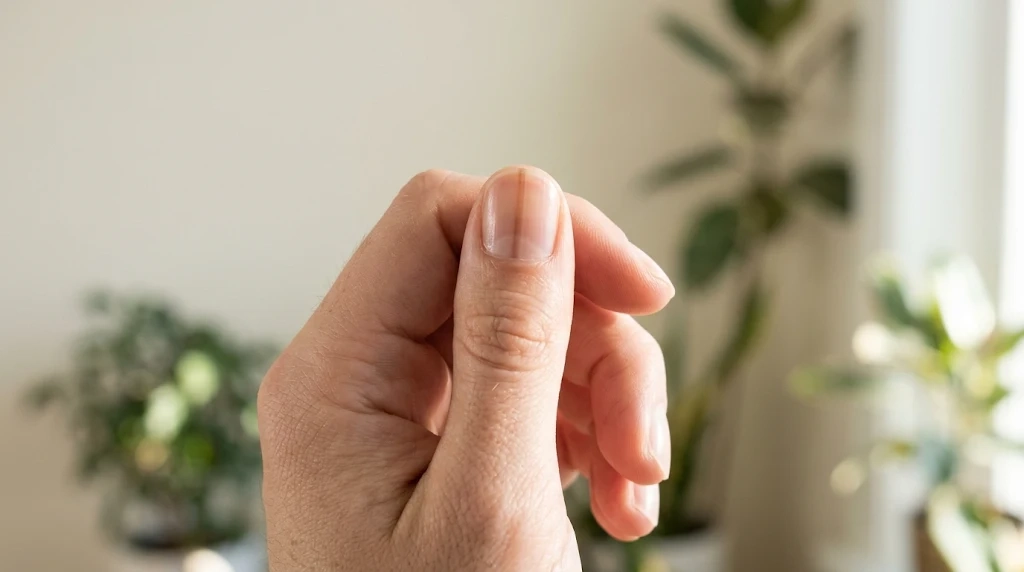
Most brown nail changes are not emergencies, but some patterns warrant prompt examination.
Warning
Arrange a prompt dermatology appointment for a new or changing brown or black nail streak, especially when it widens, has irregular borders, or extends onto the surrounding skin. These findings can occasionally indicate nail melanoma. Do not cover the change with polish and wait for it to disappear.
Warning signs include:
- A new dark band on one nail: Particularly when it appears in adulthood without a clear explanation.
- Progressive widening: A stripe that becomes broader near the cuticle or changes over time.
- Irregular pigmentation: Uneven borders or several shades of brown and black.
- Pigment on nearby skin: Darkening extending beyond the nail plate onto the nail fold.
- Nail damage: Unexplained splitting, bleeding, distortion, or persistent pain.
- Changes without an injury: Persistent discoloration that cannot be explained by external staining or trauma.
Not every dark streak is cancerous, and some melanomas don’t follow a textbook appearance. Professional examination is the safest way to distinguish suspicious changes from harmless pigmentation.
For a broader explanation of nail health, explore our article on the signs of unhealthy nails.
How Can You Tell Whether Brown Nails Are Stained or Damaged?
Before attempting any treatment, examine your nails without polish in bright, natural light.
Ask yourself these questions:
- When did the color appear? Was it immediately after removing polish, or did it develop gradually?
- How many nails are affected? Several similarly stained nails may suggest a shared exposure.
- Is the nail texture normal? Thickening, crumbling, or lifting may suggest a nail disorder.
- Is the discoloration moving outward? Old injury-related marks can migrate toward the tip as the nail grows.
- Is the color changing? A widening or darkening vertical band needs medical evaluation.
- Are there other symptoms? Pain, swelling, bleeding, or drainage increases the need for professional care.
Taking a clear photograph can help document the current appearance, particularly when a healthcare professional recommends monitoring.
However, photographing a suspicious nail should not delay a medical appointment.
Can You Get Rid of Brown Nails at Home?
Whether brown discoloration can be treated at home depends entirely on its cause.
If you have a clear history of harmless surface staining, gentle cosmetic care may help. If the color comes from infection, pigment production, or another medical condition, home whitening will not address the underlying cause.
For Ordinary Nail Polish Stains
Remove remaining polish using a nail polish remover appropriate for your manicure. Wash your hands gently, dry your nails, and apply moisturizer to the surrounding skin.
Give your nails time to grow rather than repeatedly scrubbing or aggressively buffing them.
You can also avoid another dark manicure until you understand whether the discoloration is fading or growing out.
For Suspected Fungal Infections
Keep your nails clean, appropriately trimmed, and dry. Avoid sharing nail tools and change damp socks promptly.
Book an appointment for confirmation of the infection. Depending on the diagnosis and severity, treatment may involve prescription topical or oral antifungal medication.
Ordinary cosmetic products and home bleaching methods do not reliably cure established nail fungus.
For Injury-Related Discoloration
If an injury has been assessed and no further treatment is required, the discolored portion may gradually grow toward the tip.
Protect the affected nail from repeated pressure and avoid pulling off a loose nail plate.
For a recent painful injury, severe throbbing, substantial swelling, or a damaged nail, seek medical attention promptly.
For Unexplained Dark Lines
Do not attempt to remove a brown nail stripe with lemon juice, hydrogen peroxide, bleach, or heavy filing.
These methods cannot remove pigment produced beneath the nail and may cause additional irritation or damage.
A dermatologist should determine the cause before you consider cosmetic treatment.
How Do Dermatologists Diagnose Brown Nails?
A dermatologist begins by examining the nail and asking about when the change started.
They may discuss injuries, nail products, medications, medical history, and whether the discoloration has evolved.
Depending on the suspected cause, further assessment can include:
- Clinical examination: Checking the nail plate, surrounding skin, and other nails.
- Dermoscopy: Using magnification and specialized lighting to inspect pigment patterns.
- Fungal testing: Examining nail material when an infection is suspected.
- Biopsy: Sampling the relevant nail tissue when a concerning pigmented lesion requires diagnosis.
Not every brown nail needs laboratory testing or a biopsy. The appropriate approach depends on its appearance, history, and clinical findings.
When melanoma is suspected, a biopsy may be needed to establish or exclude the diagnosis.
How Long Does It Take for Brown Nails to Return to Normal?
There isn’t one recovery timeline because nail discoloration has different causes.
Superficial stains may fade with cleaning and normal growth, while pigment embedded deeper in the nail plate can remain until the affected portion grows out.
Fingernails commonly require approximately four to six months to grow out completely. Toenails generally grow more slowly and may take around twelve to eighteen months.
These are approximate growth timelines, not promises that a brown nail will resolve without treatment.
Infections, ongoing pigment production, and certain nail disorders may continue until their underlying causes are managed.
How Can You Prevent Brown Nail Discoloration?
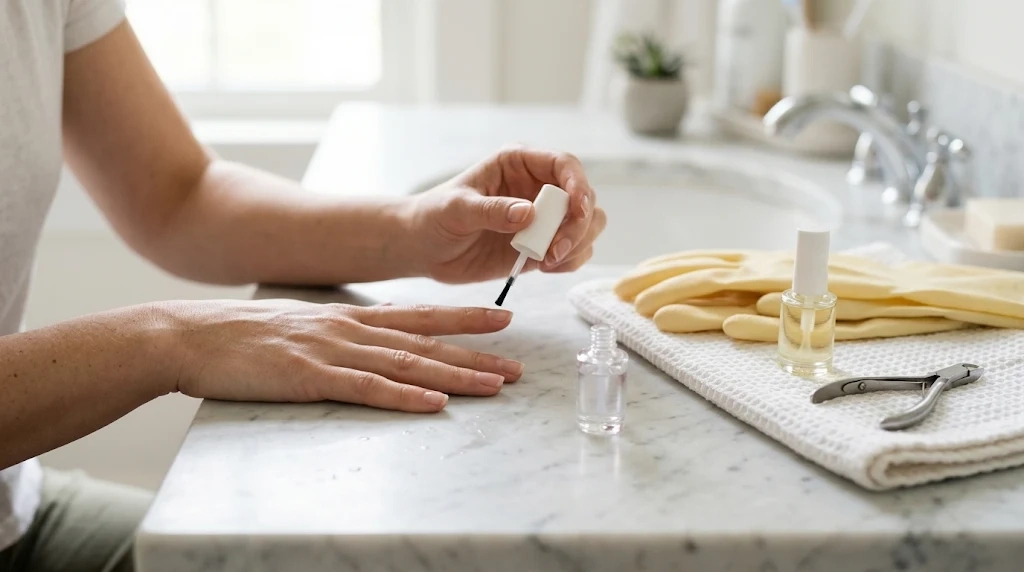
Although not every cause is preventable, a few consistent nail care habits can reduce avoidable staining and damage.
Do
- Use a base coat under dark polish.
- Wear gloves when handling dyes and chemicals.
- Keep toenails clean and dry.
- Choose shoes with enough room for your toes.
- Use clean, properly maintained manicure tools.
- Check unexplained nail color changes.
Don’t
- Ignore a widening dark nail streak.
- Use harsh bleach on your nails.
- Buff aggressively to remove stains.
- Share personal nail tools.
- Wear tight shoes that injure toenails.
- Hide unexplained discoloration with polish.
Use a Protective Base Coat
Applying a thin layer of base coat beneath pigmented polish helps create a barrier between the color and your natural nail.
It cannot guarantee complete stain prevention, but it is a practical step when you frequently wear dark manicures.
Optional Nail Care Product
Protective Nail Polish Base Coat
A protective base coat can help reduce direct contact between dark nail polish pigments and your natural nails. It is intended for cosmetic stain prevention, not treatment of unexplained discoloration.
As an Amazon Associate, we earn from qualifying purchases.
Protect Your Nails During Household Tasks
Wear suitable gloves when using hair dye, cleaning chemicals, or other substances that could stain your hands and nails.
After removing gloves, wash and dry your hands. Avoid leaving damp gloves on for long periods.
Optional Nail Care Product
Reusable Protective Cleaning Gloves
Reusable gloves suitable for the task can reduce exposure to staining substances and irritating household products. Choose a material compatible with the chemicals you’re handling.
As an Amazon Associate, we earn from qualifying purchases.
Maintain a Gentle Nail Care Routine
Wash away ordinary dirt, trim nails without cutting too deeply, and moisturize the skin around them.
Avoid cutting living skin around your nail folds or using sharp tools to scrape underneath attached nail plates.
Learn more about how to keep nails clean safely and how to make your nails healthy again.
Pro Tip
Before your next manicure, examine each bare nail in bright light. A quick visual check helps you notice new stains, unusual nail texture, or pigmented streaks that might otherwise be hidden beneath polish.
Common Mistakes to Avoid When Your Nails Turn Brown
Assuming Every Brown Nail Is a Fungus
Fungal infections can cause discoloration, but so can bruises, polish stains, pigmentation, and other nail conditions.
Using antifungal products without confirming the diagnosis may delay appropriate care.
Trying to Bleach Away a Dark Nail Stripe
Harsh chemicals cannot correct pigment originating in the nail matrix or remove blood trapped beneath the nail.
They can also irritate surrounding skin and worsen nail damage.
Covering an Unexplained Change with Gel Polish
Opaque manicures make it harder to observe whether a dark streak is widening or changing shape.
If you’re concerned about a new discoloration, leave the nail uncovered until a healthcare professional has assessed it.
Waiting Too Long to Investigate Warning Signs
A changing brown or black band does not necessarily mean melanoma, but early evaluation matters.
Don’t wait for pain to develop. Concerning nail pigmentation may be painless.
Frequently Asked Questions About Brown Nails
Q: Why are my fingernails turning brown suddenly?
A: Sudden brown discoloration can follow dark polish, external staining, or an injury. Other causes include infections and pigment changes. A new unexplained dark streak, particularly on one nail, should be checked by a dermatologist.
Q: Can brown nails be a sign of vitamin deficiency?
A: Some nutritional problems can affect nails, but brown coloration is not a reliable sign of a particular vitamin deficiency. Don’t start high-dose supplements based on nail color alone. A clinician can assess your symptoms and determine whether testing is needed.
Q: Is a brown line on my nail dangerous?
A: Many brown nail lines are benign, but a new or changing vertical stripe can occasionally indicate nail melanoma. A dermatologist should evaluate unexplained bands, particularly those that widen, become irregular, or extend onto surrounding skin.
Q: Will brown nail discoloration go away on its own?
A: Temporary stains and old bruises may grow out with the nail. Discoloration caused by infection or ongoing pigment production may persist. Unexplained changes should not simply be left untreated while waiting to see whether they disappear.
Q: Why are my toenails brown but my fingernails normal?
A: Toenails experience more pressure from footwear and are commonly affected by fungal infections. Repetitive injuries can also cause dark bruising. However, a new or changing brown band on one toenail still requires appropriate medical assessment.
Final Thoughts: What Should You Do If Your Nails Turn Brown?
Brown nails can result from ordinary polish staining, injuries, fungal infections, natural pigmentation, or other medical causes. The most important step is identifying why the color changed rather than automatically trying to remove it.
If your nails developed a harmless stain after a manicure, gentle care and normal nail growth may be enough. But if you notice a new dark streak, changing pigmentation, nail damage, or unexplained symptoms, arrange a professional evaluation.
Save this guide to Pinterest so you can revisit these nail care tips and warning signs whenever you notice an unusual change in your nails.
Medical disclaimer: This article is intended for general educational information and does not replace medical diagnosis or treatment. Consult a qualified healthcare professional about unexplained or concerning nail changes.

Hi, I’m Jessica, the creator behind Unique Lash & Nails Katy.
I created this website for anyone who loves beautiful nails as much as I do. Here, I share trendy nail designs, seasonal manicure ideas, easy nail care tips, honest product recommendations, and step-by-step guides to help you create salon-worthy nails at home. Whether you’re looking for everyday inspiration or your next favorite nail trend, I hope you’ll find something you love.