How to Fix Dry Nails: Easy Ways to Stop Peeling
Quick Answer
To fix dry nails, massage fragrance-free hand cream into your nails and cuticles after washing, use a little cuticle oil daily, and apply petroleum jelly before bed. Keep fragile nails short, wear gloves for wet chores, and stop peeling polish or over-buffing. Your cuticles may feel better within days, but damaged nail layers must gradually grow out over several months.
How to Fix Dry Nails
When your nails look chalky, catch on your clothes, or peel just as they start growing, another expensive manicure isn’t the answer. You need moisture, less everyday damage, and a routine you can actually maintain. Here’s how to calm the dryness now, protect the tips tomorrow, and recognize when a nail problem needs more than home care.


Why Are Your Nails So Dry in the First Place?
Your visible nail plate is made mostly of hardened keratin. Unlike your living skin, it can’t heal a split by producing fresh cells in that exact spot. Once layers have peeled away, they have to grow forward and eventually be trimmed off. That makes protecting the nail you already have just as important as moisturizing it.
Repeated wetting and drying is a leading everyday trigger. Nails absorb water and swell; as they dry, they shrink again. Frequent dishwashing, long baths, swimming, or cleaning without gloves can make the layers more likely to separate. The surprising part? More soaking isn’t the cure for dry nails.
Manicure removal is another common culprit. Acetone and other polish removers can leave nails feeling dry, while peeling off gel, dip powder, or press-ons may pull away layers of the natural nail. Aggressive buffing does something similar by thinning the surface you’re trying to strengthen.
Dry air, detergents, and irritated skin can add to the problem. Winter heating, frequent handwashing, strong cleaning sprays, and fragranced products may leave the surrounding cuticle area rough and tight. If your skin is irritated as well as your nails, a gentle cream is usually a better first move than a heavily scented nail treatment.
Sometimes dryness isn’t the whole story. Persistent brittleness can also be associated with skin conditions, iron deficiency, thyroid problems, or other medical issues. If the changes are new, widespread, or don’t improve with sensible care, don’t assume you simply need a stronger oil.
How Can You Tell Whether Your Nails Are Dry or Damaged?
Dryness and damage often overlap, but looking closely helps you choose the right fix. Common signs include:
- Flaky tips: Thin layers lift at the free edge, especially after frequent water exposure or polish removal.
- Rough, dull surfaces: Nails feel less smooth than usual, even without polish.
- Easy splitting: Small cracks appear when the nail bends or catches on fabric.
- Tight or ragged cuticle skin: The skin around the nail feels dry, rough, or uncomfortable.
- Thin, tender areas after enhancements: Removing gel or acrylics may leave the plate mechanically damaged, not merely thirsty.
If a nail is thick, lifting, unusually colored, painful, or surrounded by swollen skin, that doesn’t fit the simple dry-nail picture. Skip cosmetic cover-ups until you know what’s causing it.
What Should You Do Right Now to Fix Dry Nails?
1. Apply a rich cream after every handwash
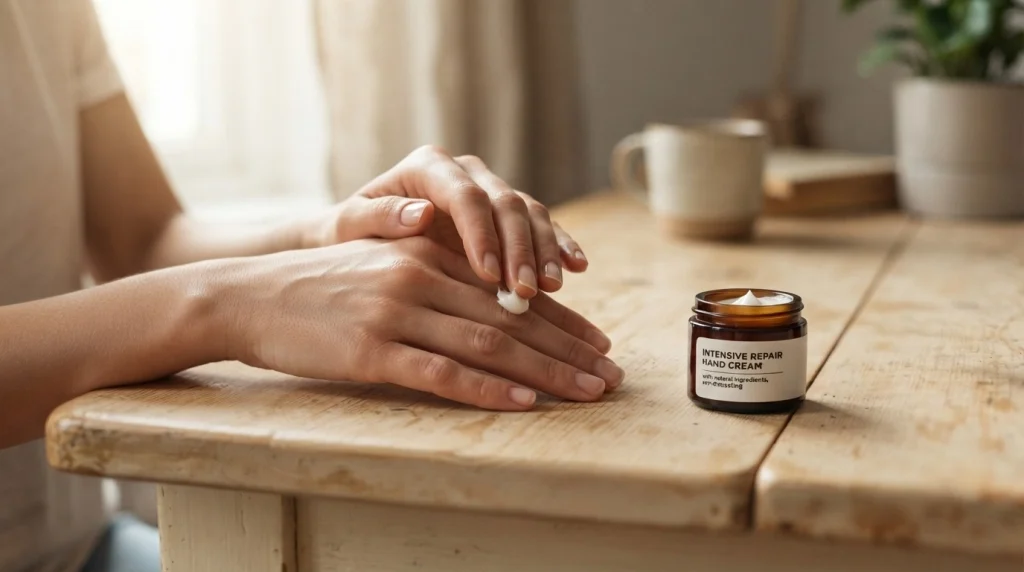
Start with a fragrance-free hand cream that contains ingredients such as glycerin, petrolatum, or ceramides. After washing, dry your hands gently, then massage a pea-sized amount over your fingertips, nail plates, and cuticle areas. This is more useful than treating the backs of your hands while forgetting your nails.
Keep a small tube near the sink or in your bag. If your hands are washed often, the best moisturizer is the one you’ll reapply. You don’t have to wait until your skin looks flaky before using it.
2. Massage cuticle oil into the nail edges
Use a drop of jojoba-based or mineral-based cuticle oil across several nails and spread it around the sidewalls, cuticles, and exposed nail surface. The goal is a comfortable, conditioned feel, not dripping fingers. Once or twice a day is an easy starting schedule; increase only if your skin tolerates it and feels dry.
Oil helps soften the surrounding skin and reduce that dry, rough feel. It does not glue split nail layers back together or make new nail grow overnight. If you’re comparing ingredients, the guide to oils for weak and brittle nails explains which textures suit different routines.
3. Seal in moisture before you sleep
At bedtime, spread your usual cream over your nails and cuticles. Add a very thin film of plain petroleum jelly on top if the area still feels dry. This heavier layer helps reduce moisture loss while you’re not washing your hands. Lightweight cotton gloves can keep the product off your bedding if you like them.
Don’t apply a thick, slippery coating and expect faster repair. A small amount is easier to live with and works well as part of a repeatable routine. Skip any product that stings or causes a rash.
Pro Tip
Put your bedtime cream next to your toothbrush instead of inside a manicure drawer. Linking nail care to something you already do nightly makes consistency easier than a once-a-week rescue treatment.
4. Shorten and gently smooth the fragile tips
Use clean clippers to trim nails to a comfortable short length, then round sharp corners with a fine glass file. Shorter nails are less likely to catch, flex repeatedly, and tear farther into the nail plate. File only the free edge, with light, controlled strokes.
Avoid buffing across the nail surface to erase peeling. That may temporarily make the nail look smoother, but it removes more of the material you need to protect. If a corner is already split into painful attached tissue, don’t pull it off.
5. Put a barrier between your nails and wet chores
Wear waterproof cleaning gloves for dishes, bathroom cleaning, and other prolonged wet work. Choose a cotton-lined pair or wear thin cotton liners if your hands sweat easily. Remove the gloves when you’re finished, dry your hands, then apply cream.
Gloves reduce the water-swelling cycle and limit contact with detergents. They’re helpful even when you have beautiful polish on: polish doesn’t make your nails immune to repeated soaking. For washing without unnecessary scrubbing, use these gentle nail-cleaning steps.
6. Give overworked nails a gentler manicure period
If your nails started peeling after several gel, dip, or acrylic sets, take a break from enhancements while the damaged areas grow forward. Skip aggressive filing, scraping, and DIY removal shortcuts. For ordinary polish, remove it carefully, avoid unnecessary remover sessions, and moisturize afterward.
You don’t need bare nails forever. What matters is avoiding repeat damage and being able to see changes in the natural nail. This explanation of whether nails are healthier without polish can help you choose a sensible break instead of following a rigid rule.
What Does a Simple Seven-Day Dry-Nail Recovery Routine Look Like?
You don’t need ten new products. For the first week, focus on doing the same protective actions consistently. This plan takes only a few minutes per day and is meant to reduce further breakage, not promise completely new nails in seven days.
- Morning: After washing, dry your hands and massage cream onto nails, fingertips, and cuticles. Add a tiny amount of oil if the edges still feel rough.
- After water or cleaning: Reapply hand cream. Use gloves for any task that keeps your hands wet for more than brief washing.
- Evening: Check for snags without picking. Apply cuticle oil, follow with cream, and finish with a thin film of petroleum jelly if needed.
- Once during the week: Trim only if needed and gently file rough free edges. Don’t buff the top of the nail or remove polish just to inspect it repeatedly.
- At the end of the week: Notice whether your cuticles feel softer and your tips snag less. Take a photo in the same lighting to compare future growth.
After week one, keep the habits that helped and stop chasing instant changes in nail thickness. If you’d rather build these actions around your lifestyle, this daily nail-care routine gives you a broader maintenance system.
Which Products Actually Help Dry Nails?
The essentials are a plain hand cream, a practical nail oil, and physical protection from water. More expensive isn’t automatically better; fragrance-free formulas and easy reapplication are usually worth prioritizing. These suggestions are based on product types, not unverified promises about brand results.
Recommended Product
Jojoba-Based Cuticle Oil
A small brush or pen makes it easy to condition dry nail edges without carrying a messy bottle.
As an Amazon Associate, we earn from qualifying purchases.
Recommended Product
Fragrance-Free Hand Cream With Glycerin or Ceramides
A rich cream works for your nails and surrounding skin, so you can moisturize after every wash with one product.
As an Amazon Associate, we earn from qualifying purchases.
For extra protection, consider cotton-lined cleaning gloves to keep dish soap off your fingers. A fine-grit glass nail file is another useful one-time purchase if your tips snag frequently. Neither product needs a luxury price tag to be useful.
What Common Mistakes Keep Dry Nails From Improving?
- Soaking nails in water or lemon juice: Extra water exposure can worsen splitting, while acidic DIY treatments may irritate damaged skin.
- Ripping away peeling layers: A loose edge may take healthy attached material with it. Smooth the free edge instead.
- Using hardeners without checking the formula: Some make nails rigid or contain irritating ingredients. Harder doesn’t always mean less breakable.
- Cutting healthy cuticles: The cuticle helps form a protective seal. Cutting it can create irritation and opportunities for infection.
- Taking nail supplements automatically: Biotin isn’t a reliable first fix for everyday dryness and can interfere with certain laboratory tests. Ask a clinician before using it.
- Expecting one oily treatment to rebuild damage: Moisture improves comfort, but the underlying split still needs time to grow out.
How Long Does It Take for Dry Nails to Recover?
Relief and regrowth happen on different timelines. If the main issue is dry skin around your nails, cream and petroleum jelly may make the area feel more comfortable within several days. Nails that were rough from mild dehydration can look better with regular conditioning, but the result varies.
Peeling or thinned nail plate takes longer. Fingernails grow roughly 3 millimeters per month, and replacing a whole fingernail commonly takes about four to six months. You may see a smoother band growing out from the base before the damaged tip disappears. Your speed depends on your health, age, which nail is affected, and whether new damage continues.
Track fewer snags, less breakage, and healthier-looking new growth instead of expecting your existing nail to become instantly thicker. If you’re seeing worsening changes despite steady protection, the cause deserves a closer look.
What If Your Dry Nails Still Keep Peeling or Breaking?
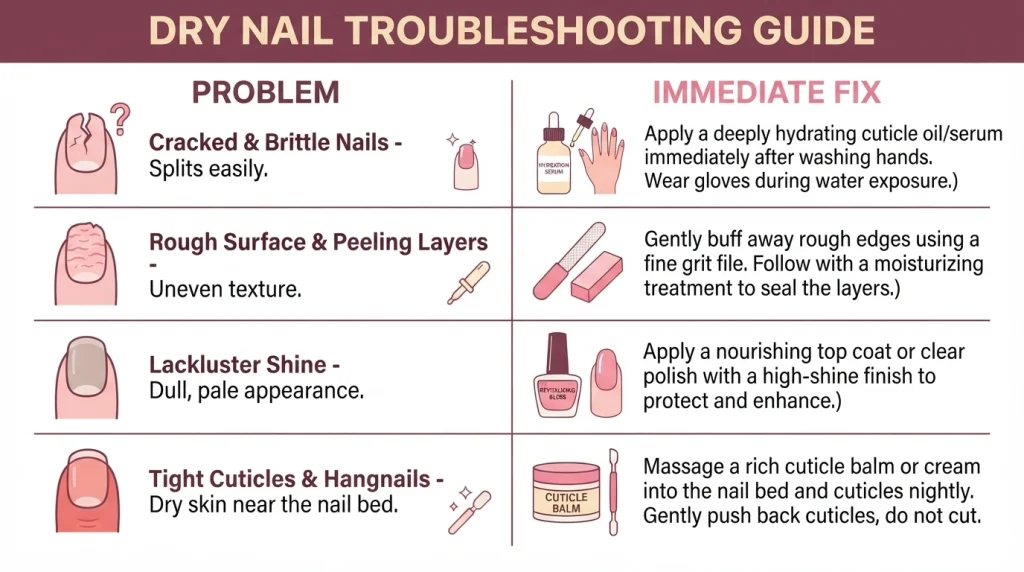
The tips peel every time you wash dishes
Fix now: Smooth the loose free edge and moisturize. Next time: Use lined waterproof gloves, dry your hands after the chore, and reapply cream. Water exposure is the likely habit to address first.
Your nails feel paper-thin after gel removal
Fix now: Keep them short, minimize friction, and skip more buffing or enhancement removal. Next time: Never peel off gel, and ask for a gentler professional removal method. Thin areas cannot be filled in with oil.
Your cuticles stay cracked despite oil
Fix now: Switch to fragrance-free cream and a thin petroleum jelly layer at night. Next time: Avoid picking, scented products, and detergents without gloves. Persistent redness or itching may need evaluation for dermatitis.
One nail keeps splitting in the same place
Fix now: File away any snag at the free edge and protect it from pressure. Next time: Avoid repeated trauma to that finger. A recurring split from the base or a changing nail should be checked by a dermatologist.
When Should You See a Dermatologist About Dry Nails?
Warning
Seek medical advice if a nail becomes painful, swollen, warm, draining, detached, thickened, or persistently discolored, or if you notice a new dark streak. Sudden changes across several nails, recurring splits near the base, and symptoms that persist despite gentle care also deserve assessment. Don’t hide unexplained changes under polish or acrylics.
Simple dryness can improve with better daily habits, but it isn’t possible to diagnose fungal infection, eczema, psoriasis, or a nutrient problem from appearance alone. Your clinician can determine whether testing or treatment is appropriate, especially if the problem is worsening.
Frequently Asked Questions About Dry Nails
Q: Can you fix dry nails overnight?
A: You can make dry cuticle skin feel softer overnight with cream and petroleum jelly. A nail plate that is already peeling or split won’t rebuild in one night; the damaged area has to grow out.
Q: Is cuticle oil or hand cream better for dry nails?
A: Use both if you like: cream moisturizes your nails and surrounding skin after washing, while a small amount of oil is convenient for focused conditioning around the edges. Consistency matters more than choosing one perfect product.
Q: Does drinking more water cure brittle nails?
A: Staying normally hydrated supports overall health, but extra water isn’t a proven cure for nails damaged by detergents, repeated wetting, or manicures. Protecting your hands and moisturizing the nail area directly is more useful for those triggers.
Q: Should you stop wearing nail polish when nails are dry?
A: A break is useful if removal leaves your nails flaky, tender, or thin. If your nails look healthy, regular polish isn’t automatically a problem; the biggest priority is gentle application and removal.
Q: Can Vaseline help dry, peeling nails?
A: Plain petroleum jelly can help limit moisture loss and soften dry skin around your nails, especially at bedtime. It won’t glue peeling layers together, so combine it with short nails, gentle filing, and protection from wet work.
Your Dry Nails Can Feel Better With a Simpler Routine
To fix dry nails, start with the boring-but-effective basics: cream after washing, a little oil, overnight protection, shorter tips, and gloves for wet chores. Those habits reduce new damage while older splits grow out. Save this guide to your Pinterest nail-care board so your routine stays easy to follow.

Hi, I’m Jessica, the creator behind Unique Lash & Nails Katy.
I created this website for anyone who loves beautiful nails as much as I do. Here, I share trendy nail designs, seasonal manicure ideas, easy nail care tips, honest product recommendations, and step-by-step guides to help you create salon-worthy nails at home. Whether you’re looking for everyday inspiration or your next favorite nail trend, I hope you’ll find something you love.