How Household Chemicals and Water Exposure Damage Nails
Quick Answer
Household chemicals and repeated water exposure can weaken your nails by disrupting their protective structure and irritating the surrounding skin. Frequent soaking, dishwashing, harsh detergents, and cleaning products may contribute to peeling, splitting, and breakage. Protect your nails with appropriate waterproof gloves, limit unnecessary soaking, dry your hands thoroughly, and moisturize after washing. Consistent protection helps prevent further damage while healthier nail growth gradually replaces damaged sections.
Your nails might look strong after a fresh manicure, but everyday household chores can quietly work against them. Washing dishes, cleaning bathrooms, doing laundry, and repeatedly wetting your hands expose your nails to moisture and potentially irritating ingredients.
Understanding how household chemicals and water exposure damage nails makes it easier to prevent brittle tips, peeling layers, and uncomfortable cuticles. Here’s what happens to your nails during everyday cleaning and which simple changes can help you keep them healthier.


What Happens to Your Nails When They Contact Water and Chemicals?
Your fingernails consist primarily of keratin, a structural protein arranged in layers that give the nail plate strength and flexibility. Although your nails feel hard, they aren’t completely waterproof or resistant to chemical exposure.
Water can penetrate the nail plate and temporarily change its flexibility. As your nails dry, their moisture content changes again. Repeated wetting and drying may contribute to splitting, especially when your nails already have fragile or damaged edges.
Household cleaning products introduce another challenge. Detergents and solvents can disturb protective components of the nail surface, while irritating ingredients may damage the delicate skin surrounding your nails.
These effects usually develop gradually. One ordinary handwashing session doesn’t automatically damage healthy nails, but frequent, prolonged, unprotected exposure increases the opportunity for problems.
Why the Skin Around Your Nails Matters
Your nail folds and cuticles protect the area where your nails emerge. When cleaning products repeatedly irritate this skin, you may develop dryness, cracking, or inflammation.
Damaged surrounding skin can become uncomfortable and more vulnerable to infection. Persistent inflammation near the nail growth area may also affect how new nails develop.
For a broader explanation of environmental factors affecting nail strength, explore our guide to weak nails and nail hydration.
How Does Repeated Water Exposure Weaken Fingernails?
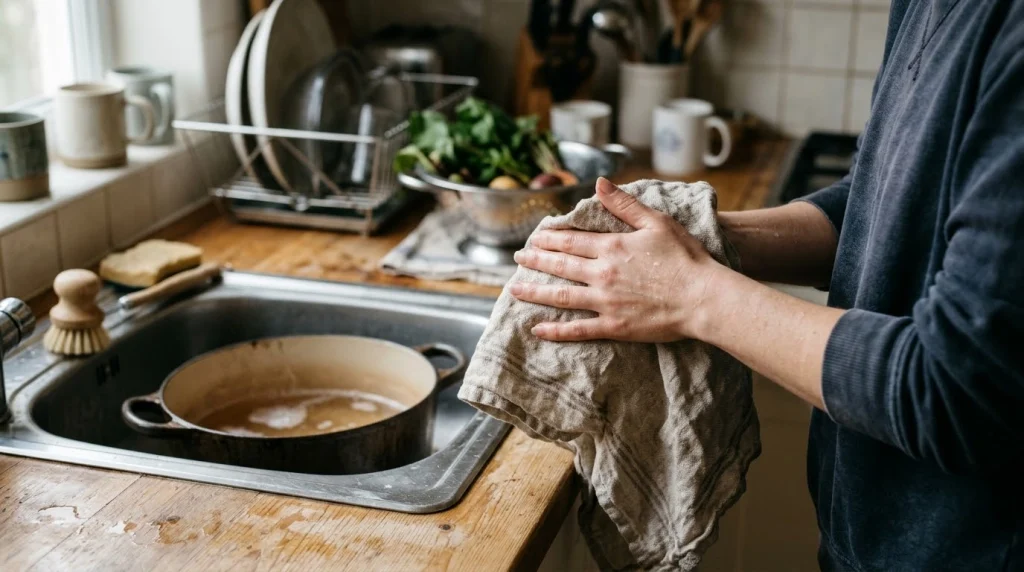
Water exposure isn’t inherently harmful. You need regular handwashing for hygiene, and occasional contact with clean water is normal. The main concern is repeated or extended wet work, particularly when combined with detergents and physical friction.
Repeated Wetting and Drying
Think about how frequently your hands become wet throughout a typical day. You might wash breakfast dishes, clean vegetables, shower, wipe countertops, and wash your hands several times.
During prolonged exposure, your nail plate absorbs moisture and becomes more flexible. As it dries, its physical properties change again. Over time, repeated cycles can contribute to separation between nail layers.
This separation is commonly associated with peeling nail tips, also called onychoschizia.
Long Soaking Sessions
Leaving your hands submerged while washing dishes or soaking stained cookware increases exposure time. Nails that have already been weakened by aggressive filing or manicure removal may be especially vulnerable.
Instead of holding your hands underwater while a pan soaks, leave the cookware in the sink and return when it’s ready to clean.
Hot Water and Frequent Washing
Very hot water can increase skin irritation, especially when combined with strong soap. Frequent washing without moisturizing may leave your fingertips rough and uncomfortable.
Use comfortably warm water for routine tasks. After washing, dry around your nails and apply moisturizer rather than skipping necessary hand hygiene.
Which Household Chemicals Can Damage Your Nails?
Different cleaning products create different risks. Some primarily contribute to dryness, while stronger chemicals may cause significant irritation or burns.
The concentration, exposure time, frequency, and condition of your skin all influence how a particular product affects you.
1. Dishwashing Liquid and Detergents
Dish soap removes food grease efficiently, but repeated direct exposure may also dry the skin around your nails. Combined with long periods in water, it can make already-brittle nail tips more difficult to maintain.
If dishwashing is part of your daily routine, follow these practical tips for protecting nails while washing dishes.
2. Bleach and Strong Disinfectants
Bleach-based products can irritate or burn exposed skin, depending on concentration and contact time. Some disinfectants contain additional ingredients that may aggravate sensitive hands.
Always follow the product label for dilution, ventilation, protective equipment, and appropriate use. Never apply household bleach directly to your nails as a whitening treatment.
3. Bathroom and Oven Cleaners
Products designed to remove limescale, grease, or stubborn stains may contain strong acids or alkalis. Some can cause chemical burns rather than ordinary dryness.
Use cleaning brushes or handled tools to keep your fingertips away from these substances. Select protective gloves specifically suitable for the chemical involved.
4. Laundry Detergents and Stain Removers
Concentrated laundry products may contain surfactants, enzymes, fragrances, or other ingredients that irritate sensitive skin. Repeated handling of detergent solutions can contribute to dryness around the nail folds.
Avoid unnecessary skin contact when pretreating stains or handwashing clothing. Rinse accidental residue from your skin according to the product’s safety directions.
5. Degreasers and Household Solvents
Strong degreasers and solvent-containing products can affect the skin’s protective barrier. Repeated exposure may increase dryness and irritation, particularly if you already have cracked fingertips.
Glove material matters here. A glove that works for ordinary dishwater might not offer adequate protection against a particular solvent.
6. Disinfecting Wipes and Cleaning Sprays
Quick cleaning products can seem gentle because they’re convenient. However, repeated contact with preservatives, fragrances, or disinfecting ingredients may irritate sensitive hands.
Follow handling instructions, avoid unnecessary direct contact, and choose a less irritating cleaning method when it can accomplish the same task.
Important Chemical Safety Warning
Never mix household bleach with ammonia, vinegar, acidic bathroom cleaners, or other cleaning products. Dangerous gases can form. If a chemical splashes onto your skin, stop using it, remove contaminated items, and immediately rinse with plenty of running water while following the label’s first-aid instructions. Seek urgent medical advice for burns, severe pain, blistering, or significant exposure.
What Are the Early Signs of Water and Chemical Nail Damage?
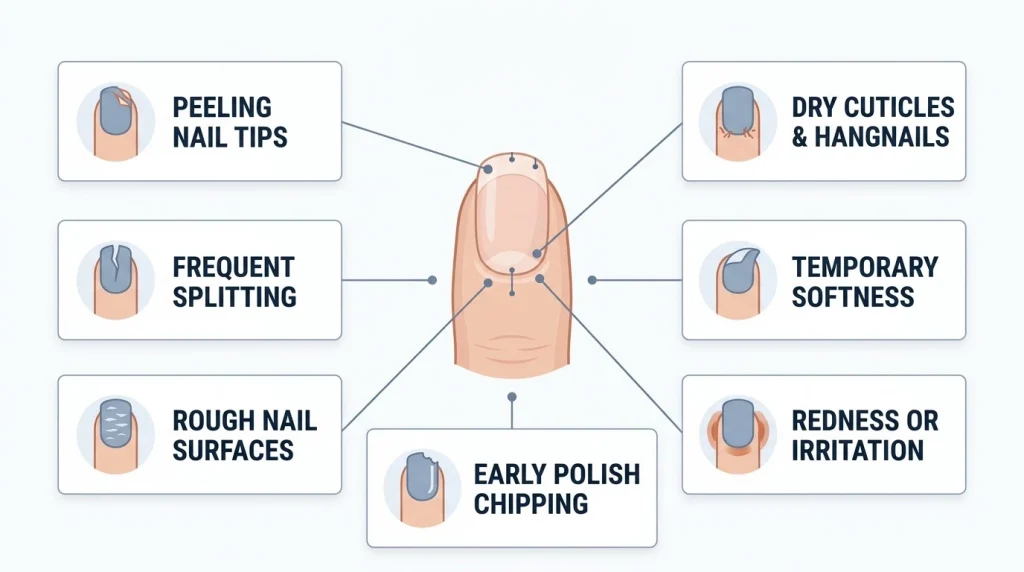
Household-related nail damage often develops gradually rather than appearing after a single cleaning session. Recognizing the earliest changes helps you adjust your routine before the problem becomes more frustrating.
- Peeling nail tips: Thin layers separate along the free edge, sometimes catching on your clothes or hair.
- Frequent splitting: Small cracks appear when your nails encounter ordinary pressure.
- Rough nail surfaces: Your nails may feel uneven or develop fragile-looking edges.
- Dry cuticles: Skin around your nails becomes flaky, tight, or prone to hangnails.
- Temporary softness: Nails may bend more easily after prolonged immersion in water.
- Redness or irritation: Your fingertips or nail folds may burn, itch, or become inflamed.
- Manicure problems: Polish may chip sooner when repeated wet work and physical abrasion affect your nail edges.
These symptoms don’t automatically prove that household chemicals are responsible. Nail biting, rough manicure removal, eczema, psoriasis, fungal infections, and other health conditions can cause similar changes.
For additional habits to examine, see our article about common brittle nail care mistakes.
Can Household Chemicals Damage Gel, Acrylic, and Regular Nail Polish?
Your natural nails and manicure products respond differently to moisture and cleaning chemicals.
Regular nail polish: Repeated wet work, scrubbing, and abrasion can contribute to chipping, especially at the tips. The exact effect depends on the polish formula and how well it was applied.
Gel polish: A properly applied gel manicure provides a coating over your natural nail, but it doesn’t make your fingers immune to chemical irritation. Lifting or damaged edges can also trap moisture underneath.
Acrylic nails: Extensions may withstand some everyday chores, but strong impacts, chemical exposure, and excessive moisture can still create problems. Lifting should be assessed rather than covered with more product.
Don’t peel off a lifted enhancement. Removing it aggressively can strip layers from your natural nail and add mechanical damage to an existing problem.
How Can You Protect Your Nails During Household Cleaning?
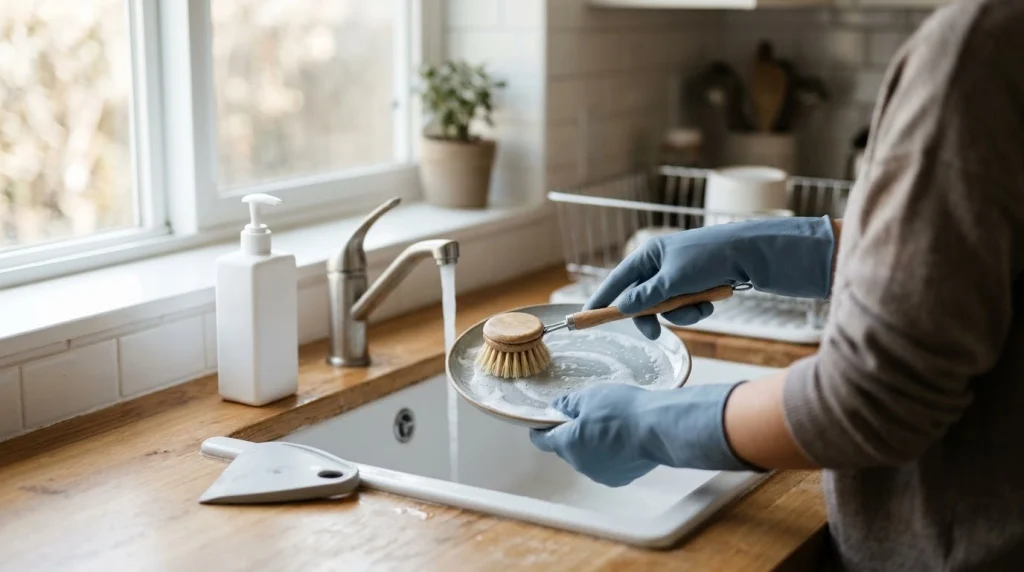
You don’t need to avoid every cleaning task to maintain healthy-looking nails. A consistent protective routine is generally more useful than relying on an expensive treatment after damage appears.
Choose Suitable Protective Gloves
For ordinary dishwashing, well-fitting waterproof gloves help reduce direct contact with water and detergent. Select a pair that allows you to hold slippery dishes comfortably.
For stronger cleaning chemicals, check the product label and glove manufacturer’s compatibility information. No single glove material protects against every substance.
Keep glove interiors clean and dry. If your hands sweat during longer chores, consider thin cotton liners and take breaks when practical.
Reduce Unnecessary Soaking
Separate food preparation, soaking dishes, and scrubbing into manageable tasks. Use a long-handled brush when possible instead of leaving your fingers submerged.
Shorter exposure periods can reduce the repeated wet work that contributes to fragile nails.
Moisturize After Washing
Once you’ve washed and dried your hands, apply a fragrance-free moisturizer around your fingertips, nail folds, and cuticles.
Look for ingredients such as glycerin, petrolatum, or ceramides. These can help support moisture retention in the surrounding skin.
If your nail edges feel especially dry, a small amount of petroleum jelly before bed offers an inexpensive additional protective layer.
Keep Nails at a Practical Length
Long nails are more likely to encounter mechanical stress when you scrub surfaces, lift pans, or handle household equipment.
Keeping your nails moderately short can make them easier to protect while damaged sections grow out.
If an edge catches on fabric, gently smooth it with a fine file rather than tearing away the loose layer.
Use Your Tools Instead of Your Fingernails
Don’t scrape hardened food, remove labels, or pry open containers with your nails. These actions add mechanical stress to any weakness caused by water or chemical exposure.
A small plastic scraper, cleaning brush, or appropriate kitchen tool can do the job without putting pressure on your nail tips.
Pro Tip
Keep hand cream beside your kitchen sink and another small tube near your bathroom sink. Moisturizing immediately after washing makes nail care part of your existing routine instead of another task to remember.
Which Nail Care Products Are Worth Keeping at Home?
You don’t need a complicated collection of treatments. A few practical products can support a protective routine without promising to repair damaged keratin instantly.
Recommended Protection
Cotton-Lined Waterproof Dishwashing Gloves
Choose comfortable household gloves for everyday dishes and routine wet cleaning. A cotton lining can improve comfort when your hands become sweaty.
Recommended Daily Care
Fragrance-Free Moisturizing Hand Cream
A rich cream containing glycerin or ceramides helps maintain the skin barrier around your nails after frequent washing.
Optional Nail Care
Jojoba-Based Cuticle Oil Pen
A portable cuticle oil makes it convenient to condition dry nail folds. It’s optional if your regular hand moisturizer already works well.
Affiliate disclosure: As an Amazon Associate, we earn from qualifying purchases. Product availability and suitability may vary.
What Should You Do If Your Nails Are Already Peeling or Splitting?
When your nails already show signs of damage, your first goal is to stop making the problem worse.
- Identify repeated exposure: Consider which chores involve prolonged water contact, harsh products, or frequent scrubbing.
- Protect vulnerable nails: Use suitable gloves and avoid exposing already-cracked fingertips to cleaning chemicals.
- Shorten fragile edges: Carefully trim and smooth damaged tips without cutting into painful or attached tissue.
- Moisturize consistently: Apply hand cream after washing and before sleeping.
- Avoid aggressive manicures: Don’t buff thin nails repeatedly, peel off gel polish, or scrape away damaged layers.
- Monitor new growth: Watch whether the nails emerging from their base appear healthier as you continue protective habits.
Existing splits don’t heal together like a cut in your skin. The damaged section generally needs to grow outward and eventually be trimmed away.
For help managing fragile edges, follow our guide to filing and trimming weak nails safely.
How Long Does It Take for Chemically Damaged Nails to Recover?
Recovery depends on whether you’re dealing with temporary skin irritation, superficial peeling, or more significant damage to the nail plate or growth area.
Dry surrounding skin may start to feel more comfortable after you reduce irritant exposure and moisturize regularly. However, the timing varies according to the severity of the irritation.
Your fingernails grow approximately 3 millimeters per month, although individual growth rates differ. Replacing an entire damaged fingernail commonly takes around four to six months, sometimes longer.
You may notice fewer new splits before the old damage has completely grown out. Maintaining your protective routine matters more than expecting a fast transformation from one oil or treatment.
What Nail Care Habits Should You Follow or Avoid?
Do
- Wear suitable protective gloves.
- Moisturize after handwashing.
- Keep fragile nails neatly trimmed.
- Use cleaning tools instead of nails.
- Follow chemical safety labels.
Don’t
- Soak your hands unnecessarily.
- Use harsh cleaners on bare skin.
- Wear wet gloves for long periods.
- Peel away splitting nail layers.
- Mix household cleaning chemicals.
When Should You See a Dermatologist About Nail Damage?
Not every brittle nail requires medical treatment, but persistent or unusual changes deserve attention.
Arrange a professional assessment if you experience:
- Persistent pain, swelling, or inflammation around your nails.
- Nails separating significantly from the nail bed.
- Green, yellow, or unusual discoloration.
- Repeated infections or drainage near your cuticles.
- Sudden nail changes without an obvious explanation.
- Severe splitting that continues despite protective care.
- A new or changing dark streak in a nail.
A dermatologist can evaluate whether your symptoms involve ordinary nail fragility, contact dermatitis, infection, or another underlying condition.
If you develop severe burning, blistering, breathing difficulty, or other symptoms after chemical exposure, seek immediate medical or poison-control guidance instead of waiting for a routine appointment.
Frequently Asked Questions About Household Chemicals and Nail Damage
Q: Can washing dishes every day make your nails brittle?
A: Yes. Repeated contact with water and detergents can contribute to peeling and splitting, especially if your nails are already fragile. Wearing waterproof gloves and moisturizing afterward can help reduce exposure.
Q: Does bleach permanently damage fingernails?
A: Bleach exposure can cause irritation or chemical injury depending on its concentration and duration of contact. Superficial nail damage may gradually grow out, but severe injury involving the nail growth area requires medical evaluation.
Q: Does wearing nail polish protect nails from cleaning chemicals?
A: Nail polish provides a cosmetic coating, not reliable chemical protection. Cleaning products can still contact your cuticles, fingertips, and exposed nail edges. Appropriate gloves remain the safer choice.
Q: Can drinking more water repair dry, brittle nails?
A: Staying adequately hydrated supports general health, but drinking extra water isn’t an established treatment for brittle nail plates. Reducing damaging external exposure and moisturizing your hands are more direct protective measures.
Q: Can damaged nails become healthy again naturally?
A: Many nails affected by everyday environmental damage improve as healthier nail grows in. Existing splits must grow out, and persistent nail changes caused by skin conditions, infections, or other medical problems may need treatment.
Final Thoughts: Protect Your Nails From Everyday Exposure
Understanding how household chemicals and water exposure damage nails helps you make small changes that protect your natural manicure. Repeated soaking, irritating cleaners, and physical stress can contribute to weak nails, but protective gloves, gentle care, and consistent moisturizing make a meaningful difference.
Focus on preventing further damage while healthier nails grow out. Save this guide to your Pinterest nail-care board so you can return to these practical habits whenever your nails need extra attention.

Hi, I’m Jessica, the creator behind Unique Lash & Nails Katy.
I created this website for anyone who loves beautiful nails as much as I do. Here, I share trendy nail designs, seasonal manicure ideas, easy nail care tips, honest product recommendations, and step-by-step guides to help you create salon-worthy nails at home. Whether you’re looking for everyday inspiration or your next favorite nail trend, I hope you’ll find something you love.