How Water, Chemicals, Polish, Gel and Acrylics Affect Splitting or Cracked Nails
Quick Answer
Water, cleaning chemicals, frequent polish removal, gel manicures, and acrylic enhancements can contribute to splitting or cracked nails. Repeated wetting and drying stresses nail layers, while detergents and solvents increase dryness. Aggressive filing, picking, and improper removal of gel or acrylics can thin the nail plate. Protect your nails with gloves, daily moisturizer, gentle manicures, and breaks from damaging treatments.
You finally achieve the perfect nail length, only to notice a tiny crack running down one nail. A few days later, another nail starts peeling at the tip. If this sounds familiar, your manicure routine or everyday habits could be contributing to the problem.
Your nails encounter water, household cleaners, nail polish, acetone, gel products, and artificial enhancements regularly. Each affects the nail plate differently, and some combinations can make existing damage worse.
Understanding these effects helps you identify potential triggers, choose gentler nail treatments, and keep your natural nails looking healthy without abandoning your favorite manicure styles.


Why Do Nails Split or Crack in the First Place?
Your fingernails are primarily made of hardened keratin. The nail plate contains tightly packed layers that provide strength while allowing some flexibility.
When these layers are exposed to repeated moisture changes, friction, chemical irritation, or excessive filing, they can begin to separate or fracture.
Two common patterns of nail damage are:
- Horizontal peeling or splitting: Thin layers separate near the free edge of the nail. This pattern is often called onychoschizia.
- Vertical cracking: A split runs lengthwise along the nail. It may result from trauma, ridging, or an underlying nail condition.
Not every crack has the same cause. Frequent handwashing may contribute to peeling tips, while a single deep vertical split may need a different explanation.
If your nails are already fragile, start with these practical habits for preventing nail splitting while you identify the source of the damage.
How Does Water Affect Splitting or Cracked Nails?
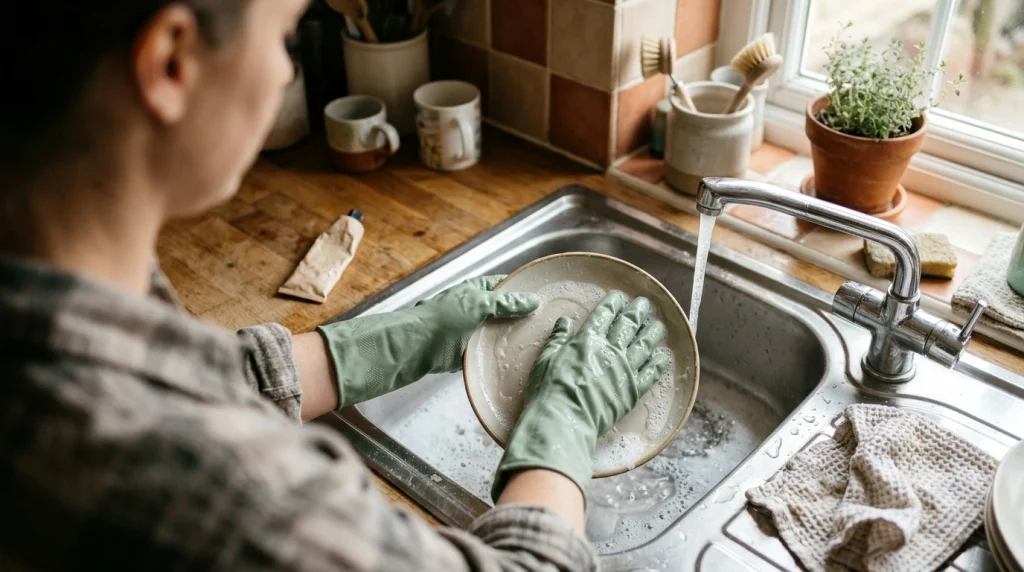
Water is essential for washing your hands and maintaining hygiene. However, repeated or prolonged water exposure can contribute to brittle nails.
Repeated Wetting and Drying Stresses Nail Layers
When your nails absorb water, their moisture content and physical properties temporarily change. As they dry, those properties change again.
Repeated cycles of wetting and drying can contribute to separation between nail layers, especially when combined with soaps, friction, and existing brittleness.
This explains why peeling nails are common among people who frequently wash dishes, clean surfaces, swim, or work with their hands in water.
Hot Water and Long Soaking Sessions
A short warm shower is unlikely to ruin healthy nails. The concern is prolonged immersion, particularly when hot water is combined with soap or detergent.
Long soaking sessions may leave your nails temporarily softer and easier to bend. Repeated exposure can also dry the surrounding skin.
If your nails already split easily, avoid unnecessary soaking before filing or shaping them.
How to Protect Nails From Water Damage
- Wear protective gloves when washing dishes or cleaning.
- Dry your hands carefully after washing.
- Apply hand cream after frequent water exposure.
- Avoid keeping your hands inside wet gloves for long periods.
- Keep nails comfortably short while damaged areas grow out.
Pro Tip
Keep a small tube of fragrance-free hand cream near your kitchen sink. Applying moisturizer after washing makes nail protection part of your existing routine rather than another complicated beauty step.
How Do Cleaning Chemicals Damage Natural Nails?
Household cleaning products can affect both your nail plate and the skin surrounding it.
Dishwashing liquids, degreasers, disinfectants, and other cleaning agents may contain detergents or solvents that remove surface oils and irritate skin.
Frequent contact can worsen dryness and contribute to nail fragility, particularly when combined with prolonged water exposure.
Detergents and Dish Soap
Detergents help remove grease and dirt, but repeated exposure can also strip protective oils from your skin.
If your hands feel tight or rough after washing dishes, your nails may be experiencing the same demanding environment.
Strong Household Cleaners
Bleach-containing cleaners, degreasers, and concentrated cleaning solutions can irritate or injure skin when handled incorrectly.
Never mix household cleaning chemicals. Follow the manufacturer’s instructions and choose gloves compatible with the product being used.
Alcohol-Based Hand Sanitizers
Alcohol-based sanitizers can temporarily dry the skin around your nails. They are not automatically a cause of nail splitting, but frequent use may worsen dryness in people already prone to irritation.
Moisturizing after the sanitizer has dried can help keep surrounding skin comfortable.
Warning
If a cleaning chemical causes burning, significant redness, blistering, or pain, stop exposure immediately and follow the product’s first-aid instructions. Severe or persistent symptoms require medical attention.
Can Regular Nail Polish Cause Splitting or Cracked Nails?
Regular nail polish is not necessarily harmful to healthy nails. Many people wear traditional polish without developing noticeable splitting.
Problems are more likely to arise from repeated removal, aggressive manicure preparation, and rough handling.
Frequent Polish Removal
Nail polish removers contain solvents designed to dissolve nail coatings. Acetone is effective, but frequent or prolonged exposure can dry the nail surface and surrounding skin.
Non-acetone removers may feel gentler for some users, although they still contain solvents and may require additional rubbing.
Choose the remover appropriate for your polish and avoid unnecessary repeated applications.
Scraping or Peeling Off Polish
Picking at chipped polish can pull on the surface of a fragile nail, particularly when the product is strongly adhered.
Remove traditional polish using an appropriate remover instead of scraping stubborn sections with metal tools.
Are Nail Hardeners Always Helpful?
Not necessarily. A hardener may temporarily make nails feel firmer, but excessively rigid nails can break instead of flexing.
Some formaldehyde-containing hardeners can also cause irritation or worsen brittleness with repeated use.
If your nails are already peeling, focus first on preventing trauma and maintaining moisture rather than repeatedly layering hardening treatments.
How Do Gel Manicures Affect Weak or Cracked Nails?
Gel manicures offer glossy color and longer wear than many traditional polishes. However, frequent gel treatments can contribute to nail brittleness, peeling, and cracking.
The main concerns involve surface preparation, product application, removal, and repeated exposure over time.
Excessive Buffing Before Gel Application
Some technicians lightly prepare the nail surface to improve adhesion. Removing too much natural nail material, however, makes the plate thinner.
A thinner nail may bend more easily and become more vulnerable to everyday impacts.
Peeling Gel Polish Off
One of the most damaging manicure habits is pulling off gel when it begins lifting.
The coating may take attached surface nail layers with it, producing rough white patches, thinning, or peeling.
Resist the temptation to remove gel by force, even when only a small corner remains attached.
Improper Gel Removal
Soak-off gel is generally removed using the manufacturer’s recommended method, often involving acetone. Some harder gel systems require professional filing instead.
Excessive scraping, over-filing, or leaving removal products on longer than directed can contribute to damage.
If a coating does not release easily, stop rather than prying it away.
Gel Ingredients and Skin Allergies
Gel systems commonly contain acrylate-related ingredients. Uncured material contacting the skin can trigger allergic contact dermatitis in susceptible individuals.
Possible signs include itching, redness, swelling, or blisters around the fingertips. Some reactions may appear away from the nails.
Correct curing and avoiding skin contact are important, but suspected allergies should be assessed by a healthcare professional.
Pro Tip
Tell your nail technician if your nails are naturally thin or frequently peel. Request minimal surface filing and proper removal instead of aggressive preparation to make the manicure last longer.
Can Acrylic Nails Make Natural Nails Split?
Acrylic enhancements can provide additional length and allow detailed nail designs. Unfortunately, they can also expose your natural nails to mechanical stress.
Filing During Acrylic Preparation
Acrylic application typically requires surface preparation for adhesion.
If the natural nail is filed too aggressively, its thickness decreases. Repeated filing during maintenance appointments can make the problem worse.
Long Acrylic Extensions and Leverage
Long artificial nails can catch on clothing, furniture, and everyday objects.
When an extension experiences a strong impact, force may transfer to the natural nail beneath it.
This can cause painful cracking, lifting, or separation, particularly if the natural nail is already weak.
Improper Acrylic Removal
Pulling, twisting, or prying off acrylics can damage the natural nail plate and may cause painful separation from the nail bed.
Professional removal or manufacturer-approved removal methods are safer than forcing the enhancement off.
Lifting and Trapped Moisture
A gap between an enhancement and the natural nail may trap moisture and debris.
If you notice lifting, discoloration, pain, or an unusual odor, do not simply seal the gap with more product. Arrange an appropriate assessment and removal.
For additional recovery guidance, see our article on repairing a damaged nail at home safely.
Which Causes More Nail Damage: Water, Polish, Gel, or Acrylics?
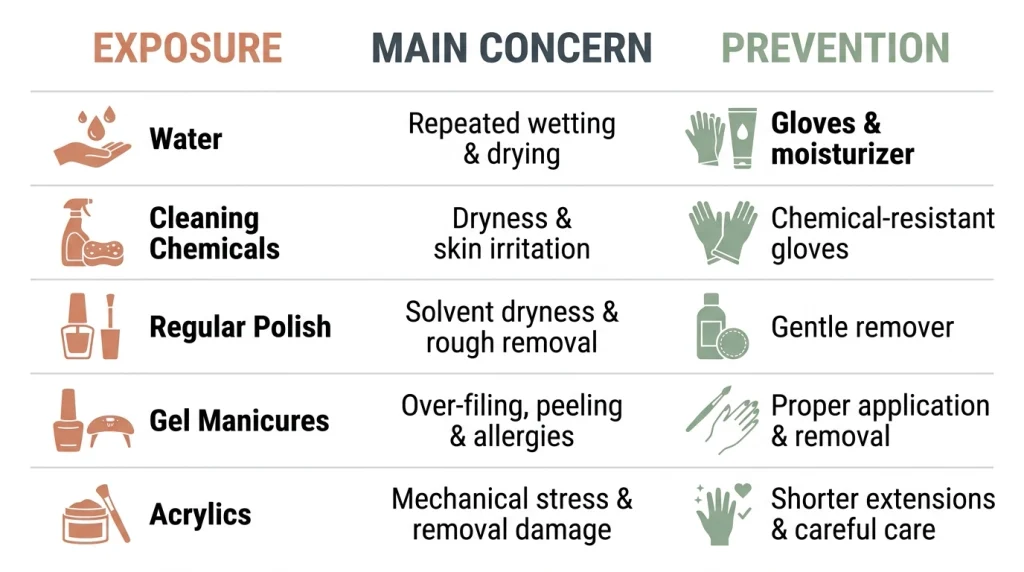
The answer depends on how frequently your nails are exposed, how products are applied or removed, and whether your nails are already fragile.
| Exposure | Main Concern | Prevention |
|---|---|---|
| Water | Repeated wetting and drying | Gloves and moisturizer |
| Cleaning chemicals | Dryness and irritation | Chemical-resistant gloves |
| Regular polish | Repeated solvent use and rough removal | Gentle removal |
| Gel | Over-filing, peeling, allergic reactions | Proper application and removal |
| Acrylics | Mechanical stress and removal damage | Shorter extensions and careful maintenance |
For nails that already split easily, traditional polish with gentle removal may be a more manageable cosmetic option than repeated extensions or aggressive gel treatments.
However, no manicure type guarantees damage-free results. Application technique and everyday nail care matter.
What Are the Early Signs of Nail Damage?
Recognizing nail changes early can help you adjust your routine before minor weakness develops into a larger crack.
- Peeling nail tips: Thin layers separate or catch on fabric.
- Unusual flexibility: Nails bend much more easily than before.
- Recurring cracks: The same nail repeatedly splits near its edge.
- Rough surfaces: Nails feel uneven after aggressive filing or product removal.
- Dry nail folds: Surrounding skin becomes flaky or develops hangnails.
- White surface patches: Rough, chalky-looking areas appear after scraping or peeling off enhancements.
These changes do not prove that a particular product caused the problem. Their timing and appearance may help you identify patterns.
For example, splitting after several consecutive gel removals suggests a different trigger from brittle nails that developed during months of frequent dishwashing.
How Can You Prevent Nails From Splitting or Cracking?

You don’t need an expensive routine to reduce avoidable nail damage. Consistent protection and gentle maintenance are more important than owning dozens of treatments.
1. Keep Your Nails at a Manageable Length
Shorter nails are less likely to catch on objects or experience leverage during daily activities.
Use clean clippers and a fine nail file to smooth rough edges. Avoid cutting into attached, painful nail tissue.
2. Moisturize After Washing
Apply fragrance-free hand cream to your hands, nails, and surrounding skin after washing.
Products containing glycerin or petrolatum can help reduce dryness and support the skin’s moisture barrier.
3. Wear Gloves for Wet Work
Choose protective gloves for dishwashing, household cleaning, and other prolonged wet tasks.
Replace wet gloves and dry your hands after the task. Constant moisture trapped inside gloves can also irritate your skin.
4. Avoid Aggressive Nail Preparation
Never file down healthy nail layers simply to eliminate visible ridges or make a product adhere more strongly.
If you visit a salon, explain that you want to minimize natural nail thinning.
5. Remove Enhancements Properly
Follow the recommended removal method for the specific gel, acrylic, or other product you’re wearing.
If you’re unsure which system was applied, ask your nail technician instead of experimenting with scraping or forceful removal.
6. Give Damaged Nails Time to Grow
Unlike living skin, a cracked nail plate does not regenerate in place.
Healthy nail grows from the nail matrix near the base, gradually replacing the damaged portion.
Our simple nail recovery routine explains how to support your nails while the weakened area grows out.
What Nail Care Products Can Help Protect Fragile Nails?
A few affordable essentials can make a meaningful difference to your routine. Choose products based on your actual needs rather than assuming every strengthening treatment is necessary.
Affiliate disclosure: As an Amazon Associate, we earn from qualifying purchases.
Recommended Product
Reusable Dishwashing Gloves
Protective gloves reduce direct contact with water and household detergents, making them especially useful if frequent cleaning contributes to your nail splitting.
As an Amazon Associate, we earn from qualifying purchases.
Recommended Product
Jojoba-Based Cuticle Oil
Cuticle oil helps moisturize dry nail folds and makes daily nail care easier. It won’t permanently repair a split nail plate, but it can improve surrounding skin comfort.
As an Amazon Associate, we earn from qualifying purchases.
Recommended Product
Fine Glass Nail File
A fine glass file helps smooth small snags and uneven free edges, which can prevent minor catches from developing into larger cracks.
As an Amazon Associate, we earn from qualifying purchases.
What Should You Do and Avoid When Your Nails Are Splitting?
Do
- Moisturize nails regularly.
- Wear gloves for cleaning.
- Keep nails short and smooth.
- Use gentle removal methods.
- Watch for signs of irritation.
Don’t
- Peel off gel or acrylics.
- Over-file natural nails.
- Use nails to open objects.
- Ignore painful cracks.
- Cover suspicious nail changes.
How Long Does It Take for Damaged Nails to Recover?
Recovery depends on the location and extent of damage.
Dry surrounding skin may feel more comfortable within days of consistent moisturizing. However, a split or thinned nail plate must gradually grow outward before the damaged section can be trimmed away.
Fingernails typically grow approximately 3 millimeters per month. Replacing an entire fingernail commonly takes around four to six months.
Damage near the tip may disappear much sooner, while damage close to the base can take several months to grow out.
During recovery, avoid treatments that repeatedly remove surface nail layers. Follow a consistent daily nail care routine to reduce additional stress.
When Should You See a Dermatologist for Cracked Nails?
Minor splitting at the nail tips often improves with gentler handling and reduced exposure to damaging conditions.
However, some nail changes can indicate infection, injury, inflammation, or an underlying medical condition.
Arrange medical evaluation if you notice:
- A deep crack extending into the attached portion of the nail.
- Persistent pain, swelling, bleeding, or pus.
- Significant separation between the nail and nail bed.
- A new or changing dark stripe without an obvious explanation.
- Thick, crumbly, or unusually discolored nails.
- Repeated splitting that continues despite protective care.
Iron deficiency, thyroid disorders, inflammatory skin conditions, and infections can sometimes contribute to nail abnormalities. A healthcare professional can determine whether testing or treatment is appropriate.
Frequently Asked Questions
Q: Can too much water make your nails split?
A: Yes. Repeated wetting and drying can contribute to brittle, peeling nails. Wearing gloves during prolonged wet work and moisturizing after handwashing can help reduce damage.
Q: Does nail polish weaken natural nails?
A: Regular nail polish does not automatically weaken healthy nails. Frequent solvent exposure, excessive surface preparation, and rough removal are more concerning for people with brittle nails.
Q: Are gel nails safer than acrylic nails?
A: Soak-off gels may place less mechanical stress on natural nails than rigid acrylic extensions, but both can cause damage when applied or removed incorrectly. Your nail condition and the technician’s technique matter.
Q: Can cracked nails repair themselves?
A: A cracked nail plate does not permanently fuse back together. The damaged area must grow outward as new nail forms near the base. Protecting the nail prevents the crack from becoming worse during this process.
Q: Should you stop getting manicures if your nails are splitting?
A: Consider taking a break from gel, acrylics, and aggressive nail preparation while damaged areas grow out. If you still want color, a simple traditional manicure with gentle removal may be more suitable.
Final Thoughts: Protect Your Nails Without Giving Up Beautiful Manicures
Water, chemicals, nail polish, gel, and acrylics affect your nails in different ways. The biggest risks often come from repeated exposure, harsh preparation, mechanical stress, and improper removal.
Keep your nails moisturized, protect them during cleaning, choose gentle manicure techniques, and allow damaged sections to grow out. Small, consistent changes can help you maintain attractive nails while reducing avoidable splitting and cracking.
Save this guide to your Pinterest nail care board so you can revisit these tips whenever your nails need extra protection.

Hi, I’m Jessica, the creator behind Unique Lash & Nails Katy.
I created this website for anyone who loves beautiful nails as much as I do. Here, I share trendy nail designs, seasonal manicure ideas, easy nail care tips, honest product recommendations, and step-by-step guides to help you create salon-worthy nails at home. Whether you’re looking for everyday inspiration or your next favorite nail trend, I hope you’ll find something you love.