How Do Acetone, Nail Polish, Gel Polish and Acrylics Affect Brittle Nails?
Quick Answer
Acetone and other polish removers can dry nails and surrounding skin, making already brittle nails more likely to peel or split. Regular nail polish is usually the gentlest manicure choice if you remove it carefully. Gel polish and acrylics create greater risks because buffing, filing, soaking, picking, and forceful removal can thin or damage your natural nail plate. If your nails are fragile, choose gentle care, limit repeated removal, and pause enhancements until your nails improve.
If your nails started peeling after a manicure, you may be wondering whether the polish, the remover, or the salon treatment caused it. The answer depends less on the pretty finish and more on how the product was applied and removed.
Here is how each option affects brittle nails, which choices are gentler, and how you can keep enjoying manicures without ignoring warning signs.


Why Do Brittle Nails React So Badly to Manicure Products?
Your nail plate is made of tightly packed keratinized cells. Unlike living skin, an already damaged section of nail cannot regenerate itself. Your body must grow new nail from the matrix beneath the base of the nail.
Brittle nails may split into thin horizontal layers, crack lengthwise, or break with everyday pressure. Repeated wetting and drying, detergents, mechanical trauma, and manicure procedures can all contribute. Some medical conditions also cause nail changes, so you should not automatically blame a product for every problem.
If you are unsure whether your nails are truly brittle, compare your symptoms with these common causes of brittle nails. The pattern and timing of the damage offer clues.
Signs your manicure routine may be making brittleness worse
- Your tips look white, flaky, or layered after removing polish.
- Your nails bend more easily than before or snag on clothing.
- You see rough patches after an electric file or buffer was used.
- Cracks appear after you pick at lifting gel or acrylic.
- The skin around your nails feels tight, dry, or irritated after removal.
One episode does not necessarily mean permanent damage. Repeating the same harsh preparation and removal, however, may prevent your nails from growing out without new injury.
Does Acetone Make Brittle Nails Weaker?
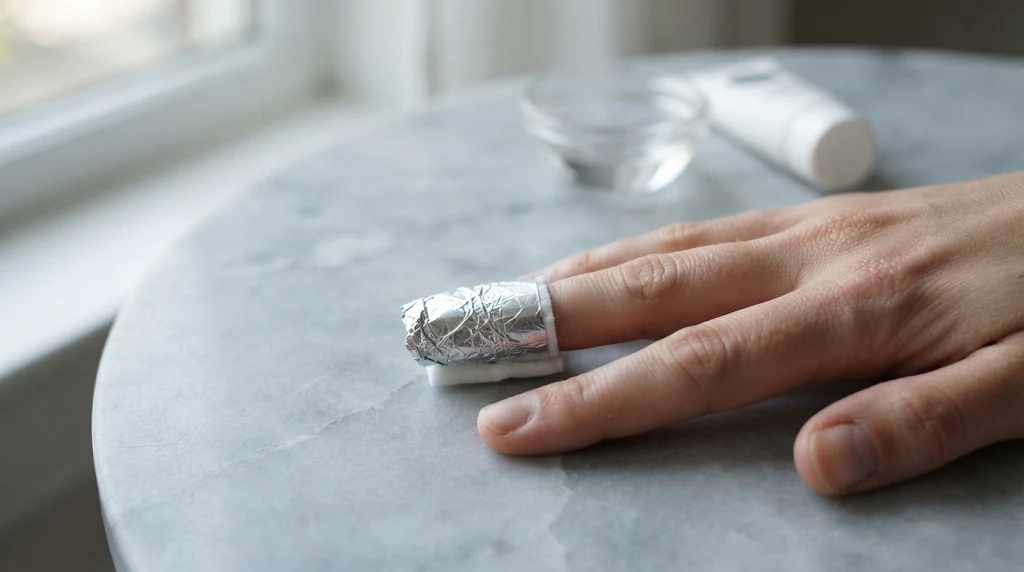
Acetone can worsen dryness and brittleness, especially with frequent or prolonged contact. It is an effective solvent that dissolves many nail coatings, but it also removes oils from the nail surface and surrounding skin. If your nail tips already peel, dryness can make them feel rougher and more vulnerable to snagging.
That does not mean acetone is inherently the worst choice in every situation. For a soak-off gel coating, a properly timed acetone wrap may be safer than prying at a stubborn layer. The biggest difference often comes from how frequently you use remover and whether you scrub, scrape, or moisturize afterward.
Is acetone-free remover always safer?
No. Many acetone-free removers use other solvents, such as ethyl acetate, that can also dry nails and irritate skin. Some remove ordinary lacquer more slowly, which may encourage repeated wiping. Choose a remover designed for your coating, follow its instructions, and avoid treating the words “acetone-free” as a guarantee of nail health.
For standard lacquer, a gentle remover may be an option. If you want to compare alternatives, see this guide to natural and chemical-free nail polish remover claims.
How can you limit remover-related damage?
- Change your polish less often instead of removing and repainting it every couple of days.
- Press a remover-soaked pad against the coating briefly before wiping; avoid aggressive back-and-forth scrubbing.
- Keep remover off the surrounding skin as much as possible.
- Wash away residue as directed, dry gently, and apply fragrance-free hand cream or petroleum jelly.
- Never use acetone near flames or heat; follow the ventilation and safety instructions on the label.
Pro Tip
Keep a small tube of fragrance-free hand cream beside your remover. Applying it immediately after removal makes aftercare part of the routine instead of something you forget until your cuticles crack.
Is Regular Nail Polish Safe for Brittle Nails?
Traditional nail polish is generally the lowest-trauma option of these manicure choices. Its thin coating does not normally require curing lamps, heavy surface filing, or extensive acetone soaking. It may temporarily help reduce snagging by providing a smooth covering, although it does not repair a damaged nail plate.
The main problem is usually what happens around the polish. Repeatedly buffing ridges, removing color too frequently, peeling off chips, or using irritating products can worsen nail fragility. Some hardening formulas can make nails so rigid that they snap rather than flex.
How to wear regular polish more gently
- Start with clean, dry nails; do not aggressively buff away ridges.
- Use a thin base coat, then two thin coats of color if desired.
- Let each layer dry according to the product instructions.
- Refresh a chipped tip only when practical instead of stripping the entire manicure repeatedly.
- Remove the coating gently when it is time for a new manicure.
Check labels if your skin is sensitive. Some nail polish ingredients and resins can trigger contact allergies. Burning, itching, redness, or a rash is a reason to stop using the suspected product and seek professional advice if symptoms continue.
How Does Gel Polish Affect Already Brittle Nails?
Gel polish lasts longer than traditional lacquer because it cures into a durable film under a compatible nail lamp. That lasting finish is appealing when your ordinary polish chips quickly. However, the steps involved can be hard on nails that already peel or split.
Gel manicures may contribute to brittleness, peeling, and cracking, particularly when repeated. Over-buffing before application thins the nail surface. Scraping stubborn gel after soaking can remove even more natural nail. Pulling or picking off a lifted corner may detach superficial nail layers along with the polish.
Does the curing lamp damage your nail?
The lamp is not the main cause of nail-plate thinning. Filing and removal are more direct concerns for brittle nails. However, UV and LED gel-curing lamps emit ultraviolet radiation, so repeated exposure is a separate skin-health consideration. Dermatologists suggest broad-spectrum, water-resistant SPF 30 or higher on the hands or opaque fingertip-free protective gloves before curing.
Also, gel products can contain (meth)acrylates that may cause allergic contact dermatitis. Avoid uncured gel touching your skin, and use the exact lamp and curing time specified by the manufacturer. Home kits are not automatically safer than a trained professional’s application.
What is the gentlest way to remove soak-off gel?
First, confirm your product really is soak-off gel. Hard gels often require professional filing and are not removed by a simple acetone soak. For soak-off formulas, follow the brand’s directions or book professional removal.
- Protect the skin around the fingertips and avoid unnecessary filing of the natural nail.
- Place acetone-soaked cotton directly on the coated nail and wrap as directed, rather than soaking your whole hand.
- Allow the recommended contact time; many systems take around 10–20 minutes, depending on the product.
- Check whether the softened coating releases gently. If it resists, do not force it off with a metal scraper.
- Clean and moisturize your nails and cuticles once removal is complete.
Warning
Do not peel gel polish from a brittle nail, even if most of it has lifted. Pulling at the coating can strip off layers of natural nail. If the product will not release with the recommended method, ask a qualified nail professional for help.
For everyday maintenance of an intact gel manicure, follow this separate guide on how to clean gel nails without using remover unnecessarily.
Are Acrylic Nails Worse for Brittle Nails?
Acrylic enhancements are usually a poor choice when your natural nails are already weak or splitting. Acrylic systems create a hard extension or overlay that adds length and structure, but preparing the natural nail often involves filing its surface. Refill appointments may involve more filing, and removal may require substantial soaking or professional reduction of the enhancement.
Long acrylic tips also act as levers. If an extension catches on something, the force can be transferred to your natural nail. That may produce painful cracks or lifting, especially when the nail underneath is thin.
Acrylic chemistry also carries a risk of irritation and allergy. These risks are not inevitable for everyone, but hiding fragile nails beneath an opaque enhancement can delay recognition of a worsening problem.
What if you already have acrylics on?
Do not tear off a loose acrylic or try to wedge an object beneath it. Keep the length manageable, avoid repeated knocks, and contact a qualified technician for the correct removal procedure. If you have pain, swelling, nail lifting, or discoloration, seek a medical assessment rather than simply booking another fill.
After removal, let your nails grow without enhancements while you focus on simple protective habits. A short, neat natural manicure is often easier to maintain than adding another thick covering over a compromised nail.
Which Manicure Option Is Gentlest for Brittle Nails?
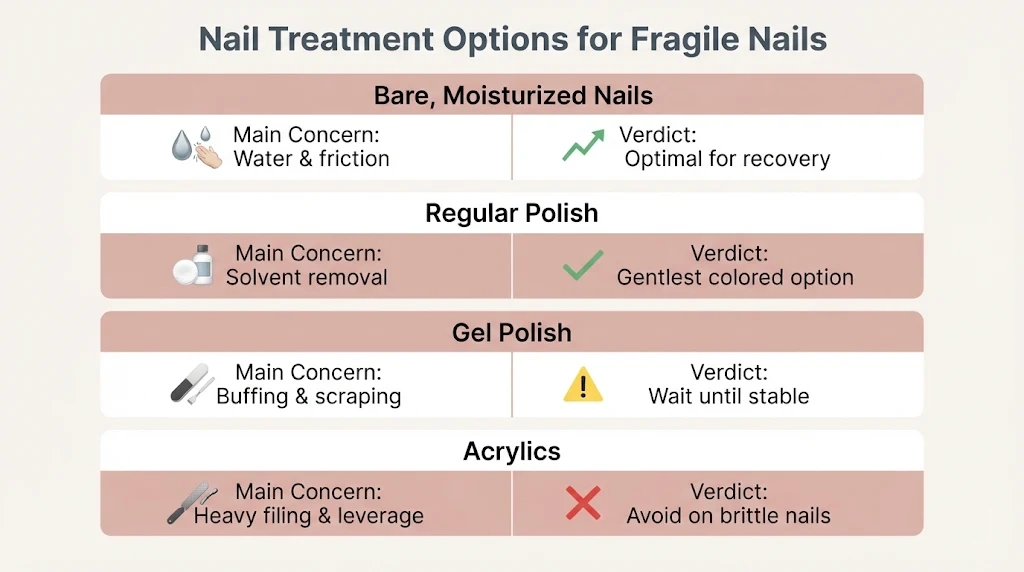
There is no universal ranking for every person or every product, but the pattern below is useful when you are choosing your next appointment.
| Option | Main Concern | Practical Choice |
|---|---|---|
| Bare, moisturized nails | Everyday water and friction | Good while nails are recovering |
| Regular polish | Frequent solvent removal | Often the gentlest colored option |
| Gel polish | Buffing, removal and allergy risk | Consider only once nails are stable |
| Acrylics | Filing, leverage and repeated fills | Generally avoid on actively brittle nails |
If your nails are actively peeling, sore, or unusually flexible, start with a break from enhancements rather than choosing the strongest-looking coating. Your aim is to protect new nail growth, not just hide damage underneath another manicure.
What Should You Do If Your Nails Are Brittle After Gel or Acrylic Removal?
Focus on reducing additional stress. You cannot glue the original microscopic nail layers back together, but you can make the damaged tips less likely to snag while stronger new growth gradually moves forward.
Keep the tips short and smooth
Trim away unnecessary length and shape the edges with a fine nail file. Choose a soft oval or squoval edge rather than a sharp point. Resist buffing away every uneven patch, because that removes more material from a nail plate that may already be thin.
Moisturize after handwashing and before bed
Apply a fragrance-free hand cream to your hands, nails, and surrounding skin after washing. At night, a little petroleum jelly or cuticle oil can help reduce dryness. Moisturizers help with comfort and protection; they are not a substitute for nail growth.
Wear gloves during prolonged wet work
Repeated water exposure and detergents can contribute to splitting. Use well-fitting gloves when washing dishes or cleaning, then remove them and dry your hands after the job. Avoid leaving wet hands sealed inside gloves for a long time.
Pause repeated cosmetic treatments
If your nails are brittle after gel or acrylic removal, consider a break of at least one to two weeks, or longer if they are still uncomfortable or damaged. This reduces repeated exposure, but it does not mean an entire damaged nail is replaced in two weeks. Follow daily habits that help strengthen nails as the new nail grows.
Pro Tip
Take a photo of your bare nails every four weeks in the same lighting. Focus on the new nail near the cuticle rather than expecting the already-peeling tip to become smooth again.
What Should You Do—and Avoid—With Brittle Nails?
Do
- Keep nails short while they grow out.
- Moisturize the nail area regularly.
- Use gloves for washing and cleaning.
- Choose gentle, infrequent removal.
- Check bare nails for unexpected changes.
Don’t
- Peel or pry off gel or acrylic.
- Buff thin nails to hide damage.
- Cut away protective cuticles.
- Use hardeners excessively.
- Cover painful or discolored nails.
How Long Will It Take for Damaged Nails to Recover?
You may notice fewer snags within a few days of trimming the edges and less skin dryness after regular moisturizing. That is symptom management, not full nail repair. New fingernails typically grow about 3 millimeters per month, and complete replacement often takes around four to six months, sometimes longer.
Your timeline depends on whether the injury involved only the surface or also affected the nail matrix. A single rough removal may leave a thin section that slowly advances toward the tip as the nail grows. Repeated filing or another aggressive manicure may add new damage during that process.
For a more detailed expectation, see how long it takes to strengthen nails.
Which Simple Products Actually Help Protect Brittle Nails?
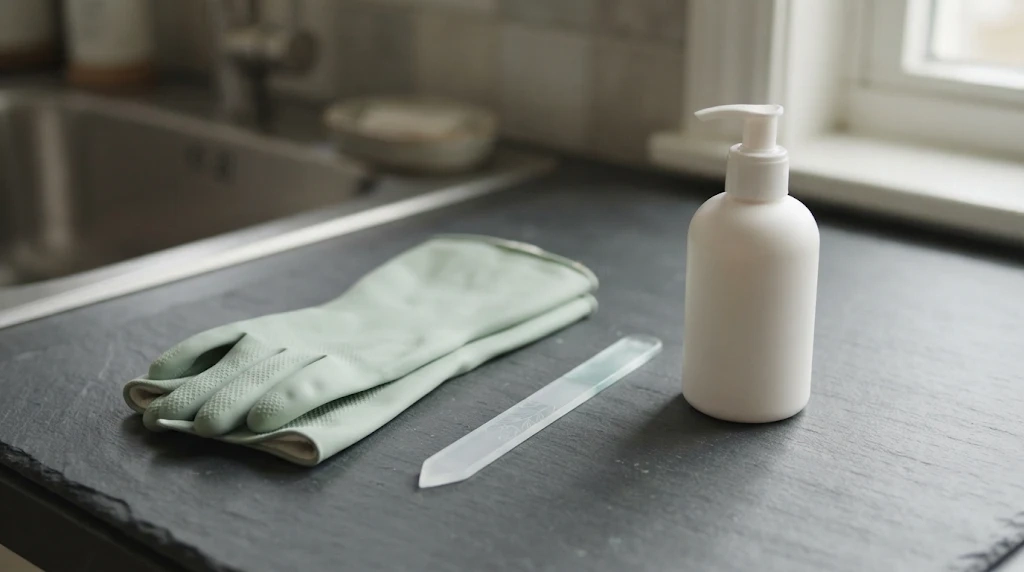
You do not need a complicated repair kit. Prioritize products that make gentle maintenance easy. These links are Amazon search pages, so compare ingredients and current product details before buying.
Recommended Product
Fragrance-Free Hand Cream
Useful after washing to help reduce nail-area dryness without adding another hard coating.
As an Amazon Associate, we earn from qualifying purchases.
Recommended Product
Fine Glass Nail File
Helps smooth small snags without tearing peeling edges with your fingers.
Recommended Product
Cotton-Lined Household Gloves
Reduce direct exposure to detergents and long water contact during wet chores.
Be cautious with formaldehyde-containing nail hardeners, which can make some nails more brittle with frequent use. Skip supplements promising instant repair unless a clinician identifies a reason you need them.
When Should You See a Dermatologist About Brittle Nails?
If your nail changes began right after a rough manicure and gradually improve with gentle care, cosmetic trauma may be a contributor. But not every brittle nail problem comes from polish. Skin disorders, infections, nutritional problems, and other medical conditions may also affect the nails.
Warning
Arrange medical evaluation for increasing pain, swelling, pus, pronounced nail lifting, persistent green or yellow discoloration, a new or changing dark streak, or a rash after nail products. Seek advice if several nails change suddenly or brittleness persists despite gentler care.
Do not cover unexplained discoloration or a painful nail with another opaque layer. A qualified clinician can assess whether you need treatment or testing.
Frequently Asked Questions About Acetone and Brittle Nails
Q: Can acetone permanently damage my nails?
A: Acetone commonly causes temporary dryness. Repeated harsh removal combined with scraping or filing can injure the nail plate; those damaged portions must grow out rather than instantly heal.
Q: Should I stop wearing all nail polish if my nails are brittle?
A: Not necessarily. Gentle regular polish may be reasonable if your nails are comfortable and otherwise normal. Avoid frequent changes and pause any coating if it irritates your skin or masks worrying nail changes.
Q: Is gel polish stronger than regular polish for weak nails?
A: Gel creates a more durable coating, but that does not make the natural nail healthier. Preparation, removal, and picking can worsen brittle nails, so traditional polish is often the gentler choice.
Q: Can acrylic nails protect my brittle nails while they grow?
A: Acrylic may cover a fragile surface, but filing, extra length, fills, and removal can increase damage. Dermatologists generally advise avoiding artificial nails over already damaged nails.
Q: How long should I avoid gel and acrylics after nail damage?
A: A one-to-two-week break reduces immediate exposure, but significant nail-plate damage may take months to grow out. Resume enhancements only when your nails are stable, and seek medical advice for pain or persistent changes.
Give Your Natural Nails the Gentler Option
When your nails are brittle, the most important choice is not simply acetone versus acetone-free remover. It is the whole manicure routine: fewer solvent sessions, minimal filing, careful removal, regular moisturizing, and a break from damaging enhancements. Save this guide to your Pinterest nail-care board for the next time you plan a manicure.

Hi, I’m Jessica, the creator behind Unique Lash & Nails Katy.
I created this website for anyone who loves beautiful nails as much as I do. Here, I share trendy nail designs, seasonal manicure ideas, easy nail care tips, honest product recommendations, and step-by-step guides to help you create salon-worthy nails at home. Whether you’re looking for everyday inspiration or your next favorite nail trend, I hope you’ll find something you love.