How to Care for Ridged Toenails vs Fingernails
Quick Answer
To care for ridged toenails vs fingernails, moisturize both daily, trim them gently, and avoid aggressive filing or buffing. Fingernails need extra protection from water, cleaning products, and manicures. Toenails need straight-across trimming, properly fitting shoes, and good foot hygiene. Fine vertical ridges are often harmless, but new deep horizontal grooves, painful changes, or discoloration deserve medical attention.
Have you noticed tiny lines running down your fingernails or rough ridges across your toenails? Your first instinct might be to buff them away or cover them with polish. But not every ridge needs treatment, and the right care depends on which nails are affected.
Your fingernails and toenails share the same basic structure, yet they face different daily stresses. Hands deal with frequent washing, detergents, and manicures. Feet experience shoe pressure, moisture, and repeated impact from walking.
Understanding these differences helps you protect your nails without accidentally making them thinner or more fragile.
Here’s how to identify common nail ridges, build separate care routines for your hands and feet, and recognize changes that need professional attention.


Why Do Fingernails and Toenails Develop Ridges?
Nail ridges are raised lines or shallow depressions on the nail surface. They can develop because of normal aging, dryness, repeated injury, inflammation, or changes in nail growth.
Your nails grow from specialized tissue called the nail matrix, located beneath the skin near the nail base. When the matrix produces the nail plate unevenly, changes may appear in the growing nail.
Vertical Nail Ridges
Vertical ridges run from the cuticle area toward the nail tip. They are also called longitudinal ridges.
These fine lines commonly become more noticeable with age. They may also occur alongside dryness or brittle nail changes.
If your nails have always had subtle vertical lines and otherwise look healthy, the ridges may simply reflect your normal nail texture.
However, a suddenly developing deep ridge, splitting along one line, or a new associated color change deserves closer evaluation.
Horizontal Nail Ridges
Horizontal ridges travel across the width of the nail. Deep horizontal grooves are sometimes called Beau’s lines.
They can develop when nail growth temporarily slows or stops because of an illness, injury, inflammation, or another physical stressor.
For example, a serious illness with fever may temporarily interrupt nail growth. As the nail starts growing normally again, a horizontal indentation may become visible.
If several nails develop deep horizontal grooves at approximately the same time, contact a healthcare professional rather than assuming the problem is cosmetic.
Other Possible Causes
- Repeated injury: Tight shoes, nail picking, or rough manicures can affect nail growth.
- Dryness and brittleness: Frequent water exposure and harsh cleaning products can make nail texture more noticeable.
- Skin conditions: Eczema, psoriasis, and other inflammatory conditions may affect nail appearance.
- Fungal infections: These often affect toenails and can cause thickening, discoloration, and crumbling.
- Medical conditions: Certain thyroid disorders and nutritional deficiencies can contribute to nail changes, although ridges alone cannot diagnose them.
If you’re unsure whether your nail changes are normal, compare them with the examples in our guide to signs of unhealthy nails.
What Is the Difference Between Ridged Toenails and Fingernails?

Both types of nails are made primarily of keratin, but they grow at different speeds and encounter different environmental conditions.
That means your care routine should not be exactly the same.
| Feature | Fingernails | Toenails |
|---|---|---|
| Growth | Generally faster | Generally slower |
| Common stress | Water, detergents, manicures | Shoes, pressure, repeated impact |
| Typical trimming | Follow natural nail shape | Straight across |
| Care priority | Hydration and surface protection | Pressure reduction and hygiene |
| Full replacement | Often around 4–6 months | Often around 12–18 months |
These growth timelines are approximate. Age, health, injury, and individual growth rates can affect how quickly a nail is replaced.
Because toenails grow more slowly, an old ridge may remain visible much longer than a similar ridge on your fingernail.
How Should You Care for Ridged Fingernails?
For most mild, harmless fingernail ridges, the goal is not to remove every line. Instead, focus on reducing dryness, preventing splitting, and protecting healthy new growth.
1. Moisturize Your Fingernails Every Day
Apply a fragrance-free hand cream after washing your hands and before bedtime.
Massage a small amount over each nail plate and around the nail folds. Products containing glycerin, petrolatum, or similar moisturizing ingredients can help reduce dryness.
A cuticle oil can be a pleasant addition, but you do not need an expensive formula. Consistency matters more than branding.
Moisturizing will not erase ridges formed inside the nail matrix. It can, however, improve flexibility and reduce dryness-related breakage.
2. File Nail Edges Gently
Keep your nails at a comfortable length and use a fine-grit nail file to smooth rough edges.
Avoid aggressively sawing back and forth or pressing hard against fragile areas. Gentle filing reduces snagging without unnecessarily wearing down the nail.
Try a fine-grit glass nail file if you prefer precise control while shaping your natural nails.
3. Avoid Heavy Nail Buffing
Buffing can temporarily improve the appearance of shallow ridges, but repeated or aggressive buffing removes material from the nail plate.
That can be especially troublesome when your nails are already thin, brittle, or splitting.
If you choose to buff, use a gentle buffer sparingly and stop immediately if the nail becomes sensitive or noticeably thinner.
Warning
Never try to sand away deep grooves or ridges associated with pain, splitting, discoloration, or nail lifting. These changes may need medical assessment, and buffing can make the damaged nail weaker.
4. Protect Your Hands During Wet Work
Repeated exposure to water and detergents can contribute to brittle, peeling nails.
Wear protective gloves when washing dishes or cleaning with household chemicals. If your hands become damp inside gloves, remove them when possible and dry your skin.
Apply moisturizer afterward to keep the nails and surrounding skin comfortable.
5. Take Breaks From Harsh Manicures
Frequent gel removal, acrylic application, and picking off polish can damage the nail surface.
If your ridges come with peeling or brittleness, consider a break from enhancements while the damaged nail grows out.
Do not scrape or peel product from the nail plate. Follow proper removal instructions or ask a trained professional for assistance.
How Should You Care for Ridged Toenails?
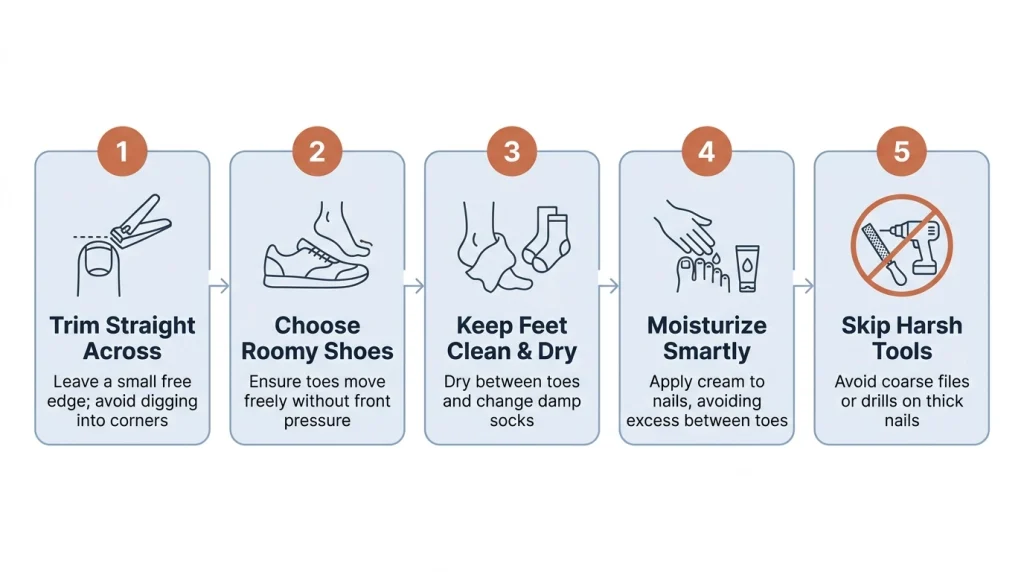
Toenail care requires a slightly different approach because footwear, pressure, and moisture play larger roles.
The main goals are to prevent repeated trauma, keep the nails manageable, and recognize infections or other changes early.
1. Trim Toenails Straight Across
Use clean toenail clippers and cut each nail straight across, leaving a small amount of visible free edge.
Do not dig deeply into the corners or trim the nail extremely short. Cutting into the sides can increase the risk of an ingrown toenail.
Use a file to soften sharp corners without rounding them deeply into the surrounding skin.
2. Choose Shoes With Enough Toe Room
Repeated pressure from narrow footwear can injure the nail plate or growth area.
Select shoes that allow your toes to move comfortably. Your longest toe should not be pressed tightly against the front of the shoe.
This is particularly important if you walk long distances, exercise frequently, or notice tenderness after wearing certain shoes.
If one toenail repeatedly becomes damaged, consider whether your footwear might be contributing.
3. Keep Your Feet Clean and Dry
Wash your feet gently and dry them thoroughly, particularly between the toes.
Change damp socks and allow shoes to dry between uses when possible.
Moist environments can increase the likelihood of fungal problems, which may affect nail color, thickness, and texture.
Wear protective sandals in shared showers or pool areas rather than walking barefoot.
4. Moisturize Without Leaving Skin Soggy
Apply a moisturizing cream to the toenails, nail folds, and dry skin on your feet.
For particularly dry areas, a thin layer of petrolatum before bed may help reduce moisture loss.
Avoid leaving thick moisturizer between your toes, where trapped moisture can encourage skin problems.
If you have diabetes, neuropathy, or circulation problems, ask your healthcare professional about an appropriate foot-care routine.
5. Avoid Aggressive Pedicure Tools
Thick, ridged toenails can be tempting to file down with a coarse tool or electric drill.
However, aggressive thinning may cause damage, especially if you cannot clearly see how much healthy nail remains.
If your toenails are very thick, painful, or difficult to trim, a podiatrist can recommend safer care and determine whether treatment is needed.
For additional guidance, explore our article on how to care for brittle toenails.
What Daily Routine Works Best for Both?
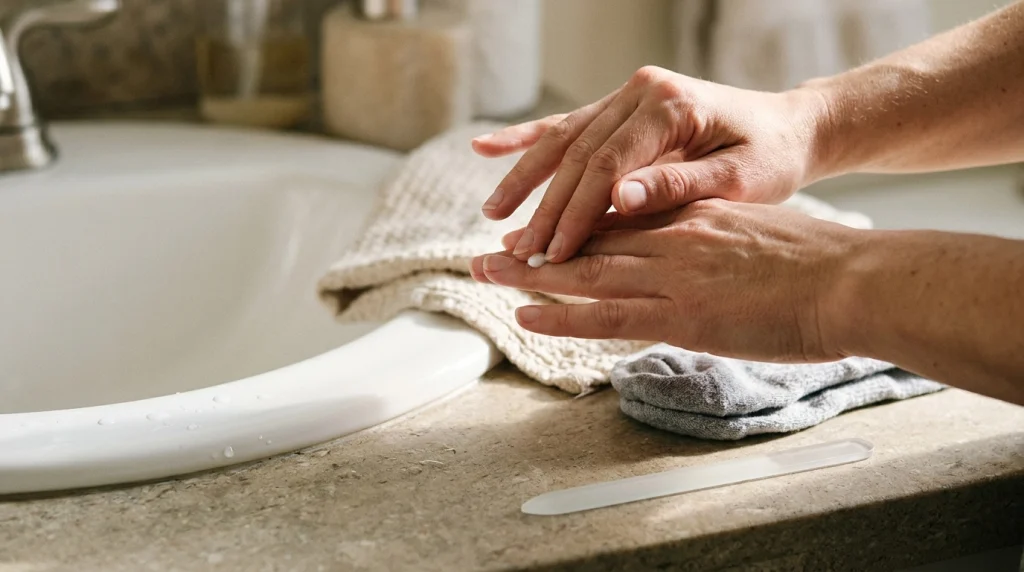
You do not need a complicated beauty routine to maintain healthier-looking ridged nails. Simple habits, repeated consistently, often provide the most practical protection.
Morning Routine
- Check for new nail changes while washing your hands or feet.
- Dry your nails carefully after cleansing.
- Apply a small amount of moisturizer to your fingernails.
- Choose comfortable shoes and clean, dry socks.
- Protect your hands if you expect prolonged wet work.
Evening Routine
- Clean your nails gently without scraping underneath them.
- Check for splitting, lifting, irritation, or unusual discoloration.
- Moisturize the nails and surrounding skin.
- File sharp edges only when necessary.
- Allow your nails to remain free from unnecessary pressure or picking.
Pro Tip
Take a clear photograph of your unpolished nails once a month in similar lighting. Compare the new growth near the nail base rather than expecting old ridges to disappear. This makes it easier to notice improvement or identify a persistent change.
What Should You Do and Avoid With Ridged Nails?
DO
- Moisturize regularly.
- Use clean nail tools.
- Keep nails comfortably short.
- Wear protective gloves.
- Choose properly fitting footwear.
- Watch for new changes.
DON’T
- Buff ridges aggressively.
- Cut or tear living nail folds.
- Pick off gel polish.
- Wear tight shoes repeatedly.
- Ignore painful nail changes.
- Self-diagnose deficiencies.
Your cuticles and surrounding nail folds help protect the growing nail. Learn more in our guide explaining what the cuticle is and how to care for it.
Which Products Can Help You Care for Ridged Nails?
You don’t need an expensive collection of nail treatments. Start with products that solve practical problems such as dryness, snagging, or difficult trimming.
Affiliate disclosure: As an Amazon Associate, we earn from qualifying purchases.
Recommended Product
Fragrance-Free Hand and Nail Cream
A moisturizer containing ingredients such as glycerin or petrolatum can help reduce dryness around your nails and cuticles. Choose a fragrance-free option if your skin is sensitive.
Recommended Product
Precision Toenail Clippers
Well-designed toenail clippers can make straight-across trimming more manageable. Look for a comfortable grip and clean cutting edges. If your nails are severely thickened, seek professional guidance instead.
Recommended Product
Petrolatum-Based Skin Protectant
A simple petrolatum ointment can protect dry skin around the nails and reduce moisture loss. Apply a thin layer to clean skin, particularly before bedtime.
How Long Does It Take for Nail Ridges to Improve?
The timeline depends on what caused the ridges.
If dryness contributes to roughness or brittleness, regular moisturizing may improve comfort relatively quickly. However, a ridge already formed in the nail plate usually remains until that portion grows out or is trimmed away.
Fingernails generally grow faster than toenails. A complete fingernail replacement often takes approximately four to six months, while a toenail may require twelve to eighteen months.
Some harmless age-related vertical ridges may remain even with excellent care.
Think of your routine as protecting healthy new growth rather than promising to erase every existing line.
For a broader explanation, see how nail health changes over time.
Can Vitamins or Supplements Fix Ridged Nails?
Not necessarily. Nail ridges are not reliable evidence that you need a particular vitamin or supplement.
Some nutrient deficiencies, including iron or zinc deficiency, can be associated with nail abnormalities. But repeated injury, skin conditions, normal aging, and other causes may produce similar changes.
If you suspect a deficiency because of your overall symptoms, a healthcare professional can decide whether testing is appropriate.
A balanced diet with adequate protein, iron, zinc, and essential nutrients supports normal nail growth, but taking extra supplements without a demonstrated need may not improve ridges.
Biotin supplements are frequently marketed for nail health, yet evidence of benefit for people without a deficiency is limited. High-dose biotin may also interfere with certain laboratory tests.
Our article on nail changes and vitamin deficiencies explores why nail appearance should not be used as a diagnosis.
When Should You See a Dermatologist About Nail Ridges?
Fine vertical ridges that have developed gradually and remain stable are often harmless. However, some nail changes require an examination.
Warning Signs
Arrange a medical assessment if you notice new deep horizontal grooves, persistent pain, swelling, a nail lifting away from the nail bed, major thickening, or unexplained discoloration. A new or changing dark streak should be examined promptly, particularly if pigment extends onto nearby skin.
You should also seek advice if a ridge repeatedly splits, appears after an unexplained injury, or affects several nails alongside other symptoms.
If you have diabetes, reduced sensation in your feet, or poor circulation, do not attempt aggressive home treatment of damaged or thick toenails.
A dermatologist or podiatrist can assess whether the problem comes from trauma, infection, inflammation, or another medical condition.
Frequently Asked Questions
Q: Are vertical ridges on fingernails normal?
A: Fine vertical ridges are common, particularly with aging. They are often harmless when stable and unaccompanied by pain or other changes. New, deep, or changing ridges should be assessed.
Q: Why are my toenails more ridged than my fingernails?
A: Toenails experience pressure from shoes and repeated impacts during walking. They also grow more slowly, allowing existing damage to remain visible for longer. Thickening or discoloration may indicate another condition.
Q: Can moisturizing remove nail ridges?
A: Moisturizing helps reduce dryness and may improve brittle nail texture, but it cannot reverse a groove already formed in the nail plate. Some ridges gradually move outward as the nail grows.
Q: Should I use a ridge-filling nail polish?
A: A ridge-filling base coat may temporarily make mild surface ridges look smoother. It does not treat their cause. Avoid covering unexplained nail changes that need examination.
Q: Do horizontal nail ridges always indicate a serious illness?
A: No. They may develop after an injury or temporary interruption in nail growth. However, new or repeated deep horizontal grooves should be discussed with a healthcare professional to identify the cause.
Final Thoughts: Keep Your Nail Care Gentle and Consistent
Learning how to care for ridged toenails vs fingernails begins with recognizing that each faces different everyday challenges. Protect fingernails from excessive water and manicure damage, while giving toenails proper trimming, shoe space, and moisture control.
Most importantly, prioritize healthy nail growth over perfectly smooth-looking nails. Save this guide to your Pinterest nail care board so you can revisit these simple habits whenever your nails need extra attention.

Hi, I’m Jessica, the creator behind Unique Lash & Nails Katy.
I created this website for anyone who loves beautiful nails as much as I do. Here, I share trendy nail designs, seasonal manicure ideas, easy nail care tips, honest product recommendations, and step-by-step guides to help you create salon-worthy nails at home. Whether you’re looking for everyday inspiration or your next favorite nail trend, I hope you’ll find something you love.