What Your Nails Are Telling You About Vitamin Deficiency
Quick Answer
Vitamin deficiency shows up in your nails as spoon-shaped dips, white spots, vertical ridges, brittle or peeling layers, pale or bluish nail beds, and slow growth. B12, iron, biotin, and vitamin D deficiencies are the most common culprits, and each tends to leave a slightly different fingerprint on your nail plate.
Your nails grow slowly, roughly 3mm a month, which is exactly why they’re such a reliable record of what’s been happening inside your body over the past few months. A sudden change in texture, color, or shape isn’t random — it’s usually your body telling you something is missing from your diet.
Here’s what each sign actually means, and what you can do about it starting today.


Why Your Nails React to Vitamin Deficiency
 Save
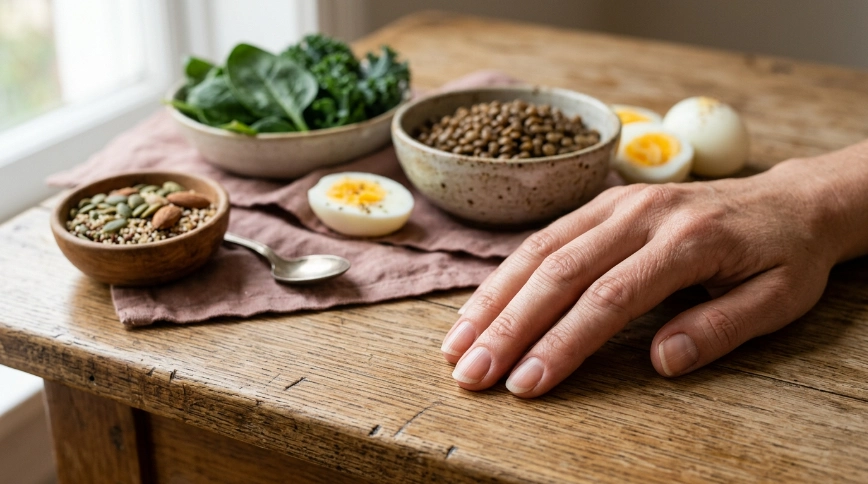
SaveNails are made almost entirely of keratin, a protein your body builds using nutrients like biotin, zinc, iron, and B vitamins. When one of these runs low, your body prioritizes vital organs first and nail production gets whatever’s left over. That’s why nails are often one of the earliest visible signs of a deficiency, showing up weeks before you’d notice fatigue or other symptoms.
Your nail bed also relies on healthy blood flow and oxygen delivery, which is why iron and B12 deficiencies specifically affect nail color, not just texture.
Common Signs of Vitamin Deficiency in Nails
Spoon-Shaped Nails (Koilonychia)
If the center of your nail dips inward and the edges curve up, forming a shape that could hold a drop of water, this is one of the clearest signs of iron deficiency. It usually develops gradually and affects several nails at once rather than just one.
White Spots or Patches (Leukonychia)
Small white spots scattered across the nail are often blamed on calcium, but they’re more commonly linked to zinc deficiency or minor trauma to the nail bed. If the spots are widespread and recurring rather than a one-off, zinc is worth looking into first.
Vertical Ridges
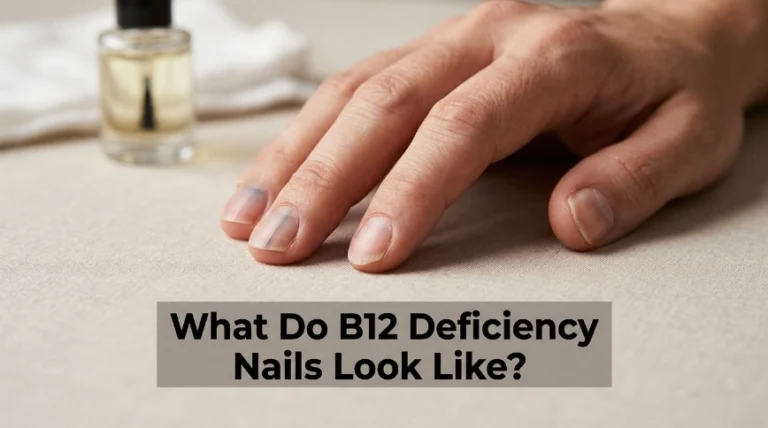
Fine vertical lines running from cuticle to tip are extremely common and often just a normal part of aging. But when they appear suddenly and are accompanied by brittleness, they can point to a B vitamin deficiency, particularly B12 or folate.
Brittle, Splitting, or Peeling Nails
Nails that split horizontally in layers or crack easily even when you’re not doing anything abrasive often point to a biotin deficiency. Biotin plays a direct role in keratin production, so low levels weaken the structural integrity of the nail plate itself.
Pale, Bluish, or Dark Nail Beds
A nail bed that looks unusually pale can signal iron deficiency, since iron is what carries oxygen-rich blood to the tissue under your nail. A bluish tint, on the other hand, is more often tied to low B12 and reduced oxygen circulation.
Slow or Stalled Growth
If your nails seem to be stuck at the same length no matter how long you wait, vitamin D and protein deficiencies are common causes. Growth is one of the first functions your body slows down when nutrients are limited.
Warning
Nail changes can also come from thyroid conditions, fungal infections, or medication side effects, not just diet. If you notice sudden discoloration, pain, swelling, or a nail lifting from the bed, see a doctor rather than assuming it’s nutritional.
Do’s and Don’ts for Nail Nutrition
 Save
SaveDo
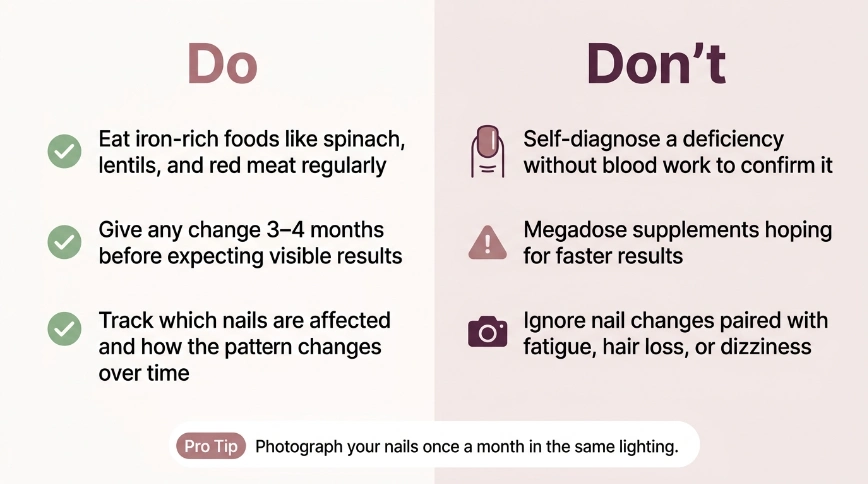
- +Eat iron-rich foods like spinach, lentils, and red meat regularly
- +Give any change 3-4 months before expecting visible results
- +Track which nails are affected and how the pattern changes over time
Don’t
- −Self-diagnose a deficiency without blood work to confirm it
- −Megadose supplements hoping for faster results
- −Ignore nail changes paired with fatigue, hair loss, or dizziness
Pro Tip
Photograph your nails once a month in the same lighting. Because nails grow so slowly, side-by-side photos make it much easier to tell whether a ridge or spot is actually new or something you’ve just started noticing.
Understanding what’s happening beneath the surface pairs well with knowing what causes weak nails in the first place, since deficiency is only one piece of that picture. If your nails are already showing damage, this guide on how to repair damaged, weak nails walks through the recovery process step by step.
Recommended Product
Biotin + Collagen Nail Strength Supplement
★★★★☆ Highly rated on Amazon
A daily biotin and collagen blend targets exactly the nutrients most linked to peeling, splitting nails.
As an Amazon Associate, we earn from qualifying purchases.
Diet does most of the heavy lifting here, and pairing supplements with actual foods that are good for nail growth gives you a more complete approach than relying on a pill alone.
Recommended Product
Cuticle and Nail Strengthening Oil
★★★★☆ Highly rated on Amazon
A nourishing nail oil won’t fix an internal deficiency, but it does protect brittle nails from further breakage while your diet catches up.
As an Amazon Associate, we earn from qualifying purchases.
If you’re not sure whether what you’re seeing counts as a warning sign or just normal wear, this breakdown of signs of unhealthy nails is a useful side-by-side comparison, and whether healthy nails should be hard or soft clears up a common point of confusion.
FAQ
Q: How long does it take for nails to improve after fixing a deficiency?
A: Most people notice smoother, stronger new growth within 3 to 4 months, since that’s roughly how long it takes for a full nail to grow out from the base.
Q: Can nail polish or gel manicures cause these same symptoms?
A: Yes, especially peeling and thinning. The difference is that product-related damage tends to affect the nail’s surface layer, while deficiency-related changes usually affect shape, color, or growth rate too.
Q: Do I need a blood test to know which vitamin I’m missing?
A: A blood test is the only reliable way to confirm a specific deficiency. Nail signs are a helpful clue, not a diagnosis on their own.
Q: Are white spots on nails always a sign of deficiency?
A: Not always. Minor bumps or trauma to the nail cause white spots too, and those grow out on their own within a few weeks without any dietary changes.
Conclusion
Your nails are a quiet but reliable indicator of what’s going on nutritionally, and catching the signs early makes recovery much faster. Start by matching what you’re seeing to the specific patterns above, adjust your diet accordingly, and give it a few months to show. Save this guide to Pinterest so you can reference it next time you’re checking your nails in the mirror.

Hi, I’m Jessica, the creator behind Unique Lash & Nails Katy.
I created this website for anyone who loves beautiful nails as much as I do. Here, I share trendy nail designs, seasonal manicure ideas, easy nail care tips, honest product recommendations, and step-by-step guides to help you create salon-worthy nails at home. Whether you’re looking for everyday inspiration or your next favorite nail trend, I hope you’ll find something you love.