Can Nail Ridges Go Away? Causes & Simple Care Tips
Quick Answer
Yes, nail ridges can sometimes go away, depending on their cause. Ridges caused by temporary illness, injury, or interrupted nail growth may disappear as healthier nail grows out. Fine vertical ridges associated with aging often remain, although gentle care can improve their appearance. New horizontal ridges, painful changes, or unusual discoloration deserve medical attention rather than cosmetic treatment alone.
Have you noticed tiny raised lines running along your fingernails? Maybe your once-smooth nails now have visible grooves that make your favorite nude polish look uneven.
It’s natural to wonder whether those ridges are permanent or if you can get your smooth nails back.
The encouraging news is that many nail ridges are harmless, and some improve when their underlying cause is addressed. However, not every ridge is the same, and treating them correctly starts with understanding why they appeared.
Here’s what you should know about nail ridges, how long they may last, and which nail care habits can help.


What Are Nail Ridges, and Why Do They Appear?
Nail ridges are raised lines, shallow grooves, or indentations in your nail plate. They can appear on fingernails or toenails, and their direction often gives useful clues about their origin.
Your nails grow from an area called the nail matrix, located mostly beneath the skin at the base of each nail. This tissue produces the cells that eventually form your hard nail plate.
If nail production changes temporarily or over time, the surface of your nail may develop an uneven texture.
Understanding how the nail matrix produces new nail cells can help explain why ridges sometimes grow out rather than disappearing immediately.
Vertical Nail Ridges
Vertical ridges run from the cuticle toward the fingertip. They are also called longitudinal ridges.
These are generally the most common type of nail ridge. Many people develop increasingly visible vertical lines as they age.
Fine vertical ridges may be a normal variation in nail texture, especially if they have appeared gradually and your nails otherwise look healthy.
They don’t automatically mean you’re missing vitamins or experiencing a medical problem.
Horizontal Nail Ridges
Horizontal ridges extend across the nail from one side to the other.
Deep horizontal grooves, sometimes called Beau’s lines, may develop when an illness, injury, significant physical stress, or another condition temporarily interrupts normal nail growth.
Unlike typical age-related vertical ridges, newly developed horizontal grooves deserve closer attention.
If you notice unexplained horizontal ridges, particularly across several nails, contact a healthcare professional to discuss possible causes.
Can Vertical Nail Ridges Go Away Completely?
Whether vertical nail ridges disappear depends primarily on why they developed.
If your ridges are associated with normal aging, they may remain visible because the changes influencing nail growth can persist.
Moisturizing and protecting your nails may make their surface look healthier, but these habits cannot guarantee that natural age-related ridges will disappear.
When ridges result from temporary damage or a treatable underlying condition, newly produced nail may become smoother after the cause improves.
Remember that the existing nail plate is made from hardened cells. A moisturizer can condition its surface, but it cannot rebuild or permanently reshape the nail that’s already formed.
The most meaningful improvement usually comes from protecting the nail growth area while healthier nail gradually replaces the older portion.
Can Horizontal Nail Ridges Grow Out?
Yes. Horizontal ridges caused by a temporary interruption in nail growth can move toward the tip as your nail continues growing.
Once the original problem resolves, the nail matrix may resume producing a smoother nail plate.
For example, a horizontal groove caused by an earlier illness may slowly travel outward over the following months.
You cannot erase the groove immediately, but you may eventually trim it away as the affected nail reaches the free edge.
If horizontal ridges keep returning, become deeper, or affect multiple nails without an obvious explanation, medical evaluation is important.
Warning
Don’t assume every horizontal groove is a cosmetic problem. Deep, new, or unexplained horizontal ridges can reflect disrupted nail growth and should be discussed with a qualified healthcare professional.
What Causes Nail Ridges in the First Place?
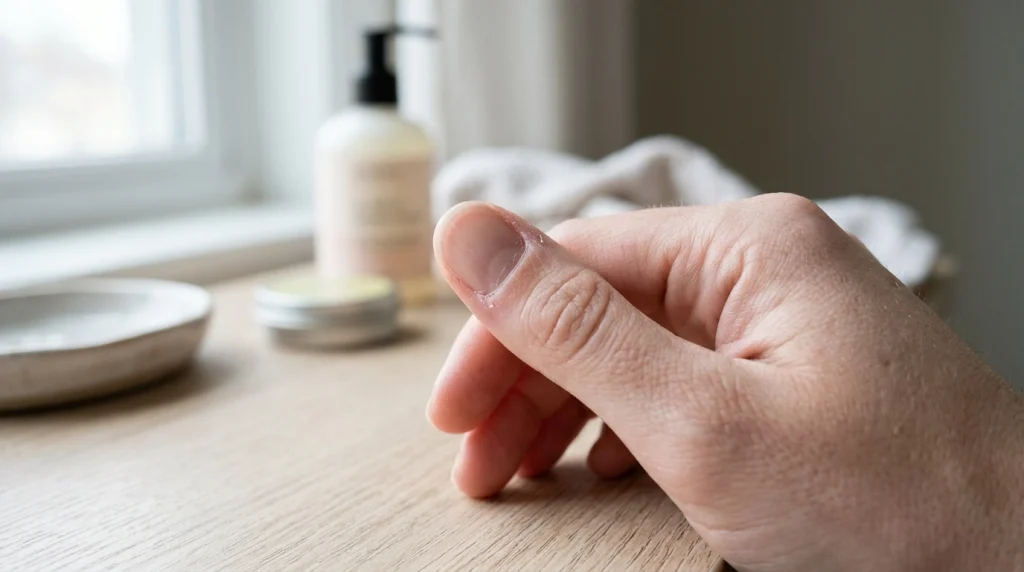
Several factors can affect your nail’s texture. Some involve everyday habits, while others relate to changes in nail growth or general health.
1. Natural Aging
As you grow older, the processes involved in producing new nail cells gradually change.
Vertical ridges may become more prominent, even when your nails are otherwise healthy.
Because aging is an ongoing process, these ridges may not disappear completely.
2. Repeated Nail Trauma
Picking at your cuticles, scraping your nail plate, or repeatedly pushing back the skin at the nail base can damage delicate tissue.
In some cases, this affects how your nail grows and creates grooves or uneven areas.
If the damage is temporary and the matrix remains healthy, the affected nail may eventually grow out normally.
Learning what your cuticle does makes it easier to understand why aggressive cuticle removal can be harmful.
3. Dryness and Brittle Nails
Dry nails may show surface irregularities more noticeably, especially when they also peel or split.
Frequent handwashing, repeated wetting and drying, strong cleaning products, and harsh manicure removal can contribute to brittle nails.
Moisturizers may improve flexibility and the appearance of dryness-related roughness, even when they don’t eliminate true nail ridges.
4. Previous Illness or Physical Stress
A significant illness, high fever, injury, or medical treatment may temporarily interfere with nail growth.
This can sometimes cause horizontal grooves to develop.
Because nails grow slowly, you may notice the resulting lines weeks after the original event.
The groove may continue moving outward even after you’ve recovered.
5. Nutritional Deficiencies
Some nutritional deficiencies can affect nail health, although nail ridges alone cannot identify a particular deficiency.
Iron deficiency, for instance, can sometimes produce nail changes, including unusual thinning or spoon-shaped nails.
Taking supplements without identifying a deficiency isn’t a reliable way to remove ridges.
If you have persistent nail changes together with fatigue, weakness, or other symptoms, ask a healthcare professional whether testing is appropriate.
6. Skin or Nail Conditions
Conditions such as psoriasis, eczema affecting the surrounding skin, and certain inflammatory nail disorders can alter nail texture.
These changes may include ridges, pits, splitting, or irregular growth.
Infections can also change nail color, thickness, and shape.
When an underlying condition is responsible, treatment should focus on that condition rather than simply concealing the nail surface.
How Can You Make Ridged Nails Look Smoother?
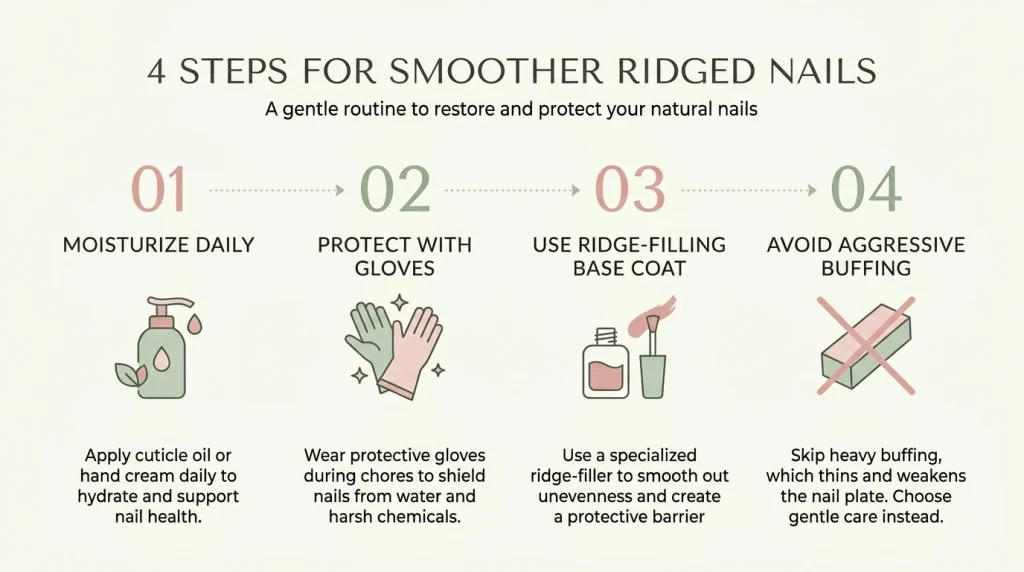
You don’t need an aggressive manicure or a collection of expensive products to improve the appearance of mild nail ridges.
Start with gentle, consistent care that supports your natural nails without making them thinner.
1. Moisturize Your Nails and Cuticles Daily
Applying moisturizer is one of the simplest ways to help dry nails look better.
Choose a fragrance-free hand cream, plain petroleum jelly, or a suitable cuticle oil.
Massage a small amount over the nail surface and surrounding skin after washing your hands and before bed.
This helps reduce dryness and supports the skin barrier around your nails.
Pro Tip
Keep a small bottle of cuticle oil beside your regular hand cream. Applying both after your evening handwashing makes nail care easier to maintain consistently.
2. Protect Your Hands During Household Chores
Repeated exposure to water and cleaning chemicals can leave nails fragile.
Wear protective gloves when washing dishes, scrubbing surfaces, or handling strong household cleaning products.
Once you’re finished, dry your hands thoroughly and apply moisturizer.
If your nails are already splitting or peeling, this protective habit may help prevent additional damage while new nail grows.
3. Use a Ridge-Filling Base Coat
If you enjoy wearing nail polish, a ridge-filling base coat can help create a smoother-looking finish.
These products temporarily fill some surface irregularities, allowing color to appear more even.
Apply a thin layer according to the manufacturer’s instructions, then follow with your preferred polish.
Keep in mind that ridge fillers are cosmetic products. They don’t repair the underlying cause of nail ridges or permanently change nail growth.
4. Avoid Aggressive Nail Buffing
Buffing can temporarily smooth the appearance of superficial ridges, but it also removes a small amount of the nail plate.
Repeatedly buffing until the ridges disappear may leave your nails thin, weak, and more vulnerable to splitting.
If your nails are already fragile, avoid surface buffing and choose a ridge-filling base coat instead.
For ordinary manicures, concentrate on gently filing the free edge rather than sanding down the entire nail.
5. Stop Picking at Your Cuticles
Repeated pressure or picking at the base of the nail can interfere with healthy nail growth.
Instead of digging under your cuticles or forcing them backward, moisturize the surrounding skin and leave the protective nail fold intact.
If you notice a habit of rubbing or picking one thumbnail, try keeping your hands occupied with a small stress-relief object.
Reducing repeated trauma gives the nail growth area a better chance to recover.
6. Allow Damaged Nails to Grow Out
Nail repair is gradual because the existing nail plate doesn’t regenerate in place.
If a ridge formed because of a temporary injury, you may need to wait until the affected section grows toward the tip.
During this period, keep your nails at a comfortable length and avoid habits that cause repeated breakage.
A simple healthy nail care routine can help you maintain your nails while you wait for fresh growth.
How Long Does It Take for Nail Ridges to Go Away?

The timeline varies with the type of ridge, the underlying cause, and your individual nail growth rate.
Fingernails generally grow around 3 millimeters per month, although growth can vary with age, health, and other factors.
A fingernail commonly takes approximately four to six months to replace most or all of its visible length. Toenails often take considerably longer, sometimes 12 to 18 months or more.
If a horizontal ridge is growing out after a temporary illness or injury, the affected section may gradually move outward over several months.
However, age-related vertical ridges may remain visible indefinitely.
Here’s a practical way to think about the timeline:
- Immediately: Moisturizer or ridge-filling polish may improve surface appearance temporarily.
- After several weeks: You may notice changes in the new nail growing near the base if the original cause has resolved.
- After several months: A temporary ridge may move closer to the tip, where it can eventually be trimmed away.
- Long term: Persistent age-related or matrix-related ridges may not disappear without improvement in their underlying cause.
These are general expectations, not guaranteed treatment results.
Can Vitamins or Supplements Remove Nail Ridges?
It’s tempting to reach for biotin, collagen, or a beauty supplement when your nails start looking uneven.
However, there is no reliable evidence that taking extra vitamins will erase ordinary age-related nail ridges.
Some supplements may have a role for selected people with deficiencies or particular nail problems, but they are not universal treatments.
Biotin supplements can also interfere with certain laboratory blood tests, including some heart and thyroid tests.
If you suspect a nutritional problem, discuss your symptoms with a healthcare professional before starting high-dose supplements.
Focus on eating a varied diet with adequate protein and essential nutrients rather than assuming a single supplement will correct nail texture.
Which Nail Care Products Are Worth Trying?
Products can help with dryness, protection, and cosmetic smoothing. They should complement healthy habits rather than replace medical evaluation when needed.
Recommended Product
Jojoba-Based Cuticle Oil
A simple cuticle oil helps condition dry skin around the nails and can improve the appearance of dryness-related roughness. Choose a formula that doesn’t irritate your skin.
As an Amazon Associate, we earn from qualifying purchases.
Recommended Product
Ridge-Filling Nail Base Coat
A ridge-filling base coat is useful when you want a smoother-looking manicure without repeatedly buffing your natural nail surface.
Explore Ridge Fillers on Amazon
As an Amazon Associate, we earn from qualifying purchases.
Recommended Product
Fragrance-Free Hand Cream
A gentle hand cream helps maintain moisture around your nails, especially if you wash your hands frequently or experience dry skin.
As an Amazon Associate, we earn from qualifying purchases.
What Should You Do and Avoid If You Have Nail Ridges?
Small daily habits can make a difference to the condition of your nails while preventing unnecessary damage.
Do
- Moisturize nails and surrounding skin daily.
- Wear gloves during wet household chores.
- File rough edges gently.
- Use ridge-filling polish for temporary smoothing.
- Allow injured nails time to grow.
- Seek medical advice for unexplained changes.
Don’t
- Buff ridges aggressively.
- Pick or dig into your cuticles.
- Peel off gel or artificial nails.
- Use harsh household chemicals on nails.
- Take high-dose supplements without advice.
- Hide suspicious nail changes under polish.
When Should You See a Doctor About Nail Ridges?
Most fine vertical ridges are not emergencies, particularly when they develop gradually and aren’t accompanied by other symptoms.
However, some nail changes deserve professional evaluation.
Contact a healthcare professional if you notice:
- New or unexplained horizontal grooves.
- Sudden changes affecting several nails.
- Persistent pain, swelling, or redness around a nail.
- Thickened, crumbling, or lifting nails.
- Deep splitting or rapidly worsening nail deformity.
- New or changing dark streaks in a nail.
- Nail changes accompanied by other concerning health symptoms.
A new or changing dark streak deserves prompt dermatology assessment because certain nail cancers can initially resemble harmless discoloration.
Likewise, nail changes associated with significant pain, pus, or spreading redness require timely evaluation.
For a wider overview of symptoms, see this guide to signs of unhealthy nails.
Your clinician may examine your nails, ask about recent illnesses or injuries, and recommend testing when your symptoms suggest an underlying condition.
Can You Prevent Nail Ridges From Coming Back?
You cannot prevent every nail ridge, particularly those associated with normal aging or inherited nail characteristics.
However, you can reduce avoidable nail damage and support healthier nail growth.
Start with a manageable routine rather than constantly changing products.
Your Daily Nail Care Routine
- Morning: Apply hand cream after washing and drying your hands.
- During the day: Wear gloves for cleaning and avoid using your nails to pry or scrape objects.
- Evening: Massage a small amount of cuticle oil or moisturizer around your nail folds.
- Weekly: Trim and gently shape your nails when needed, using clean tools.
- Between manicures: Inspect your nails for new grooves, color changes, or irritation before covering them with polish.
Consistency is more important than performing a complicated nail treatment once a month.
If you wear gel or artificial nails, choose careful application and removal methods that minimize trauma to your natural nails.
Frequently Asked Questions About Nail Ridges
Q: Can nail ridges go away naturally?
A: Yes, temporary ridges caused by certain injuries or growth interruptions may disappear as your nails grow out. Age-related vertical ridges often persist, although moisturizing may improve their appearance.
Q: Do vertical nail ridges mean vitamin deficiency?
A: Not necessarily. Fine vertical ridges are often associated with normal aging. Nutritional deficiencies can affect nail health, but ridges alone cannot diagnose a deficiency.
Q: Does cuticle oil remove nail ridges?
A: Cuticle oil can improve dryness and help nails look better, but it cannot erase a structural groove or permanently change the nail plate. Its main role is moisturizing and conditioning.
Q: Should you buff ridged nails until they’re smooth?
A: No. Aggressive or repeated buffing removes nail material and can make your nails thinner. A ridge-filling base coat is generally a gentler cosmetic option.
Q: Are horizontal nail ridges permanent?
A: Not always. A horizontal groove caused by a temporary illness or injury may grow out over several months. Recurrent or unexplained horizontal ridges should be assessed by a healthcare professional.
Final Thoughts: Can Nail Ridges Really Disappear?
Yes, some nail ridges can go away, especially when a temporary growth disruption resolves and the affected nail grows out. Fine vertical ridges associated with aging may remain, but gentle moisturizing, protective habits, and cosmetic ridge fillers can help your nails look smoother.
The most important step is recognizing the difference between ordinary texture changes and signs that need medical attention.
Save this guide to your Pinterest nail care board so you can revisit these simple tips whenever your nails need a little extra attention.

Hi, I’m Jessica, the creator behind Unique Lash & Nails Katy.
I created this website for anyone who loves beautiful nails as much as I do. Here, I share trendy nail designs, seasonal manicure ideas, easy nail care tips, honest product recommendations, and step-by-step guides to help you create salon-worthy nails at home. Whether you’re looking for everyday inspiration or your next favorite nail trend, I hope you’ll find something you love.