How Nail Health Changes Over Time: Normal Changes and Warning Signs
Quick Answer
Your nails may grow more slowly and show more lengthwise ridges as you get older. They may also feel drier or split more easily, although water exposure, manicures, and health conditions can contribute. Gentle trimming, moisturizing, and protecting your hands during wet work can help. Have a new dark streak, painful swelling, lifting nail, or another persistent change checked by a dermatologist.
You might notice the difference while removing polish: a ridge you don’t remember seeing, a corner that splits more often, or a manicure that takes longer to grow out. Those changes don’t all have the same cause. Understanding how nail health changes over time helps you choose care that fits your nails and recognize when a change deserves medical attention.


Why do your nails change over time?
Your nails grow from the nail matrix beneath the skin near each cuticle. New nail cells push older cells forward, forming the visible nail plate. Because that plate grows gradually, what you see today can reflect something that happened weeks or months ago. A nail also responds to everyday wear: repeated handwashing, cleaning products, tight shoes, picking, and manicures can affect its appearance.
Age can change nail growth and texture, but it isn’t the only explanation for a change. Your habits, skin conditions, injuries, medications, and general health can matter too. That’s why it’s more useful to ask what changed, when it changed, and whether other symptoms appeared than to assume every new mark is simply part of getting older.
Do nails grow more slowly as you get older?
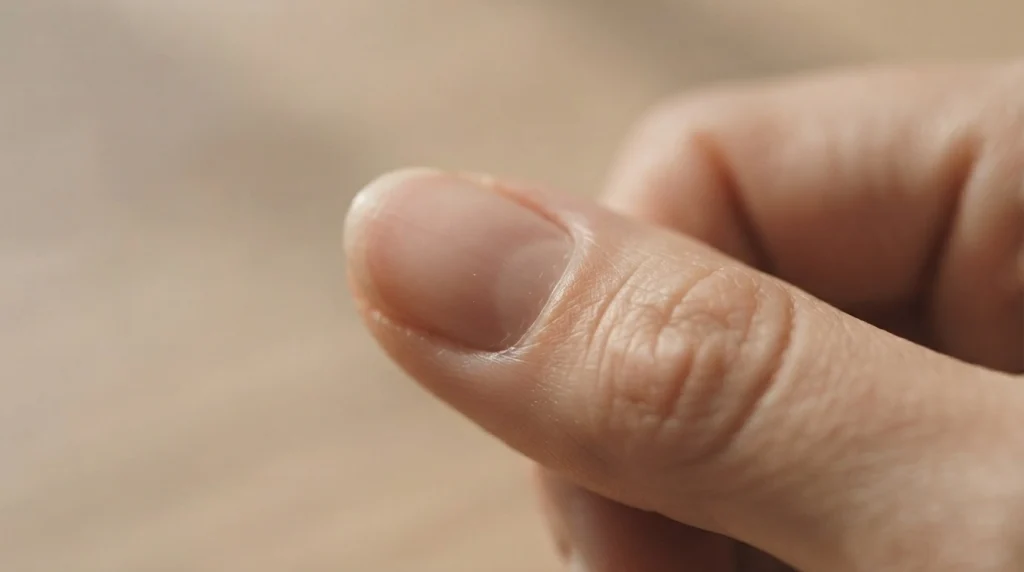
They can. Nail growth tends to slow with age, so you may find that your manicure takes longer to grow out than it used to. Fingernails generally grow faster than toenails. A damaged toenail can therefore take much longer to look normal again, which can make a small injury feel surprisingly persistent.
Slower growth also changes how you judge a treatment. A moisturizer may make the skin around your nails feel better quickly, but it can’t instantly replace a damaged nail plate. You have to wait for new nail to grow forward. If your nail began looking different after an illness, an injury, or repeated manicures, take a clear photo and compare it with another photo several weeks later. Look for healthy new growth near the cuticle rather than expecting the entire nail to change at once.
Don’t use growth speed alone to diagnose a problem. If one nail suddenly stops appearing to grow, becomes painful, or changes shape or color, ask a clinician to examine it.
Are lengthwise ridges a normal part of aging?
Fine ridges that run from the cuticle toward the tip often become more noticeable with age. You may see them most clearly under glossy polish or bright overhead light. A gentle ridge-filling base coat can smooth the look if they bother you; you don’t need to grind the nail flat.
Deep grooves running across a nail tell a different story. They can appear when nail growth was interrupted for a period. If a new groove is deep, affects several nails, or comes with other changes, a dermatologist can help you work out why it appeared.
If you’re deciding how to maintain the surface without overworking it, start with the basics in this guide to caring for your nails. A smooth-looking manicure isn’t worth thinning an already fragile nail.
Pro Tip
Check a ridge after removing polish and washing away the remover. Color, shine, and product buildup can make a shallow surface change look more dramatic than it is.
Why might your nails become brittle or peel?
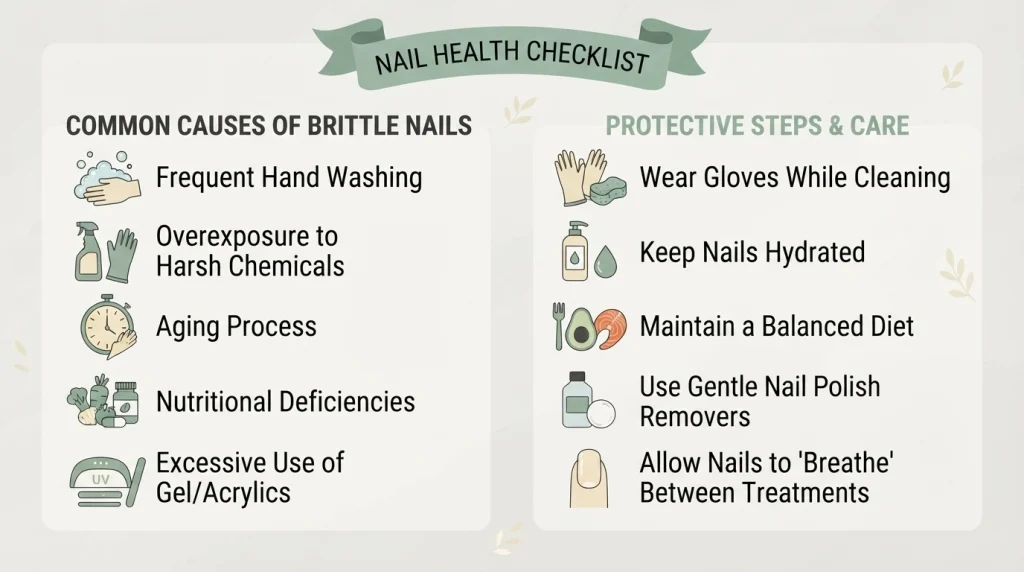
A nail can split at the tip when its layers no longer hold together well. Repeated soaking and drying, frequent exposure to cleaning products, and rough removal of nail enhancements can all make breakage more likely. Some people also develop brittle nails with age. If your nails were strong for years and suddenly become fragile, don’t assume your birthday explains it; a clinician can consider other possible causes.
Pay attention to the pattern. If the nails on the hand you use most are peeling after months of wet work, daily exposure may be playing a role. If one nail is damaged after a knock, an injury may fit better. If several nails change along with symptoms elsewhere in your body, that’s a reason to ask a healthcare professional rather than buying another strengthening treatment.
Keep peeling nails short enough that loose layers won’t catch on clothing. File a snag gently instead of pulling it. After washing your hands, dry them and apply hand cream around the nails and cuticles. Wear protective gloves for dishes and cleaning, then remove the gloves when the job is done so your hands don’t remain damp inside them.
If you want a routine you can repeat without making nail care a project, use this simple nail care routine as a starting point and adjust it to the tasks your hands actually do.
Can manicures change how healthy your nails look?
Yes. A manicure can make nails look smoother and stronger for a while, but application and removal can affect the nail underneath. Picking off gel, forcing off enhancements, or filing the natural nail too aggressively can leave it thin and tender. Covering a nail that’s already damaged can also make it harder for you to notice a developing problem.
Notice what happens between appointments. Does one corner repeatedly lift? Do your nails feel sore after removal? Are the skin folds around them red or irritated? Those observations are more useful than judging nail health only while the polish looks flawless.
For a lower-effort reset, keep the nails at a comfortable length, smooth rough tips gently, and moisturize your hands after washing. If you wear polish, remove it without scraping the nail plate. Give a painful, lifting, or inflamed nail attention before applying another set of products.
What daily habits help your nails stay comfortable?
You don’t need a long shelf of products. A few consistent habits can reduce the wear your nails face each day:
- Trim and file before a snag grows. A small split is easier to manage before it catches and tears farther down.
- Moisturize after handwashing. Rub hand cream over the skin around each nail, especially if frequent washing leaves it dry.
- Protect your hands during wet work. Gloves limit repeated contact with water and household cleaners.
- Leave cuticles intact. Avoid cutting or picking the protective skin around the nail, which can lead to irritation or infection.
- Give toenails room. Shoes that press repeatedly against a toe can injure its nail over time.
- Look at bare nails occasionally. A quick check between manicures makes a new mark, color change, or lifting edge easier to spot.
Choose a routine you can keep up on ordinary days. The advice in this daily nail care guide can help you turn trimming, moisturizing, and protection into simple habits.
Pro Tip
Keep a small tube of hand cream where you finish washing dishes or sanitizing your hands most often. Placing it at the point you need it makes the habit easier to remember.
Which nail changes should you get checked?

Some gradual texture changes are common, but you can’t reliably identify every nail condition by appearance alone. Arrange a professional assessment if you notice any of these changes:
- A new or changing dark streak running along a nail, especially one you can’t explain by an injury.
- A nail lifting away from the skin underneath it.
- Redness, swelling, warmth, or pain around a nail.
- A new greenish-black color or a persistent change in color you can’t explain.
- Deep grooves across a nail, new pits, or a marked change in shape.
- A nail that thickens dramatically or becomes difficult to manage.
When to act
Don’t wait for a new or changing dark streak to grow out before seeking an assessment. A dermatologist can determine whether it is harmless or needs investigation. Seek care for painful swelling or a lifting nail as well, especially if you have diabetes or poor circulation.
A photograph can help you describe a change, but it can’t replace an examination. If you can, note when you first noticed it, whether it affects one nail or several, and whether you’ve had an injury or recent manicure. That gives your clinician a clearer history.
Frequently Asked Questions
Q: Do nails naturally get weaker with age?
A: Some people notice more brittle nails as they age, but age isn’t the only possible cause. Repeated water exposure, nail treatments, and health conditions can also contribute. Get a sudden or persistent change checked.
Q: Are vertical ridges on nails serious?
A: Fine lengthwise ridges often become more visible over time. A ridge that’s new, unusually deep, painful, or accompanied by a color change is worth discussing with a dermatologist.
Q: Can you reverse an age-related nail change?
A: You can’t make a ridge disappear instantly, but gentle care may reduce breakage and make nails more comfortable. A visible improvement in the nail plate depends on new nail growing in.
Q: Should you take a supplement for brittle nails?
A: Don’t assume brittle nails mean you’re missing a particular vitamin. If the change persists, ask a healthcare professional about possible causes before taking a supplement specifically for your nails.
What matters most as your nails change?
Your nails don’t have to look exactly the same throughout your life to be healthy. Watch for patterns, protect them from repeated damage, and take a new or concerning change seriously. Save this guide to Pinterest so you can revisit the signs and care tips whenever your nails look different.

Hi, I’m Jessica, the creator behind Unique Lash & Nails Katy.
I created this website for anyone who loves beautiful nails as much as I do. Here, I share trendy nail designs, seasonal manicure ideas, easy nail care tips, honest product recommendations, and step-by-step guides to help you create salon-worthy nails at home. Whether you’re looking for everyday inspiration or your next favorite nail trend, I hope you’ll find something you love.