Why Do Nail Ridges Become More Visible With Age? Causes
Quick Answer
Nail ridges become more visible with age mainly because the way your nail matrix produces new nail cells changes over time. Fine vertical lines running from the cuticle to the tip are common and usually harmless. Dryness and brittle nail texture can make them more noticeable. Regular moisturizing, gentle manicures, and protection from excessive water exposure can improve how your nails look and feel, although age-related ridges may not disappear completely.
Have you noticed tiny lines running down your fingernails that weren’t as obvious a few years ago? Perhaps your once-smooth manicure now looks slightly uneven, even after applying your favorite nail polish.
You’re not imagining things. Your nails naturally change throughout your life, and vertical ridges are among the most common age-related changes.
The reassuring news is that these lines rarely mean anything serious when they appear gradually and aren’t accompanied by other symptoms.
Understanding why nail ridges become more visible with age will help you recognize normal changes, protect your natural nails, and know when a closer look from a dermatologist is worthwhile.


Why Do Nail Ridges Become More Visible as You Get Older?
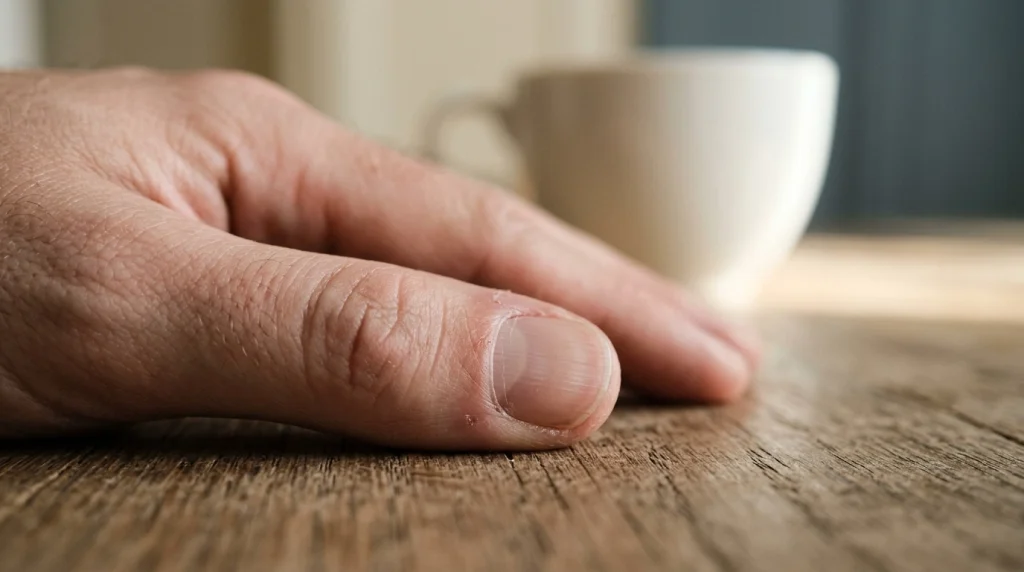
The main explanation involves your nail matrix, the specialized tissue beneath the skin near the base of each nail.
Your nail matrix continuously produces cells that become the hard, protective nail plate you see on your fingers. As fresh nail cells form, older cells move forward toward your fingertips.
With aging, changes in this cell-production process can make the nail surface less uniform. Instead of appearing perfectly smooth, it may develop fine raised lines running lengthwise.
According to Mayo Clinic, vertical nail ridges may become more numerous or prominent with age because of changes in nail cell turnover.
Several additional factors can make the texture more apparent.
1. Changes in Nail Cell Production
Your nail matrix doesn’t necessarily produce exactly the same surface texture throughout your life.
Small variations in the way nail cells develop and become part of the nail plate can create visible lengthwise ridges.
Think of your nail surface as a collection of tightly packed layers. When their arrangement becomes slightly uneven, the surface may develop shallow raised areas and grooves.
These differences can become more obvious as you get older, even when your nails remain healthy.
It’s important to remember that a ridged nail isn’t automatically a damaged nail. Texture can be part of normal aging.
2. Nails May Become Drier or More Brittle
Another reason nail ridges seem more pronounced is that mature nails may become more susceptible to dryness and brittleness.
Repeated exposure to water, detergents, nail polish removers, and dry environments can contribute to a rougher nail surface.
When your nails are dry, small imperfections may stand out more clearly, particularly under bright lighting or glossy polish.
Dryness doesn’t necessarily create every ridge, but it can make existing texture more noticeable.
If your nails also peel or split at the tips, explore the differences between dry nails and brittle nails to understand which care habits may help.
3. Years of Everyday Wear and Tear
Your fingernails experience countless small stresses throughout your life.
Typing, cleaning, gardening, removing nail polish, and performing everyday household tasks can all affect nail condition.
Frequent wetting and drying may weaken the nail plate, while rough filing or aggressive manicure removal can remove protective nail layers.
Over time, these habits may contribute to splitting, roughness, and a less even appearance.
However, ordinary age-related vertical ridges are not simply the result of years of damage. Natural changes in nail growth remain an important factor.
4. Existing Nail Texture Becomes Easier to Notice
Some people have subtle vertical ridges for much of their adult lives without paying attention to them.
Changes in surface shine, nail thickness, surrounding skin condition, and manicure habits can make those lines easier to see later.
You may notice them particularly after removing gel polish or switching from opaque colors to a clear manicure.
That doesn’t necessarily mean the underlying ridges developed suddenly.
What Do Normal Age-Related Nail Ridges Look Like?
Typical age-related ridges are called longitudinal or vertical nail ridges.
They run in the same direction as your nail grows: from the base toward the fingertip.
Common characteristics include:
- Fine raised lines running lengthwise along the nail.
- Several shallow ridges appearing on multiple fingernails.
- Gradual changes developing over months or years.
- No associated pain, swelling, or tenderness.
- Otherwise normal nail color and attachment.
- Slightly uneven texture when you gently run a fingertip across the nail.
Some ridges are barely visible unless light hits the nail at a particular angle. Others are more noticeable but still harmless.
You don’t need perfectly smooth nails to have healthy nails.
What matters most is whether the appearance is familiar and stable or represents a new, significant change.
What’s the Difference Between Vertical and Horizontal Nail Ridges?
Not all nail ridges have the same meaning.
The direction, depth, and timing of a ridge can provide useful clues about why it developed.
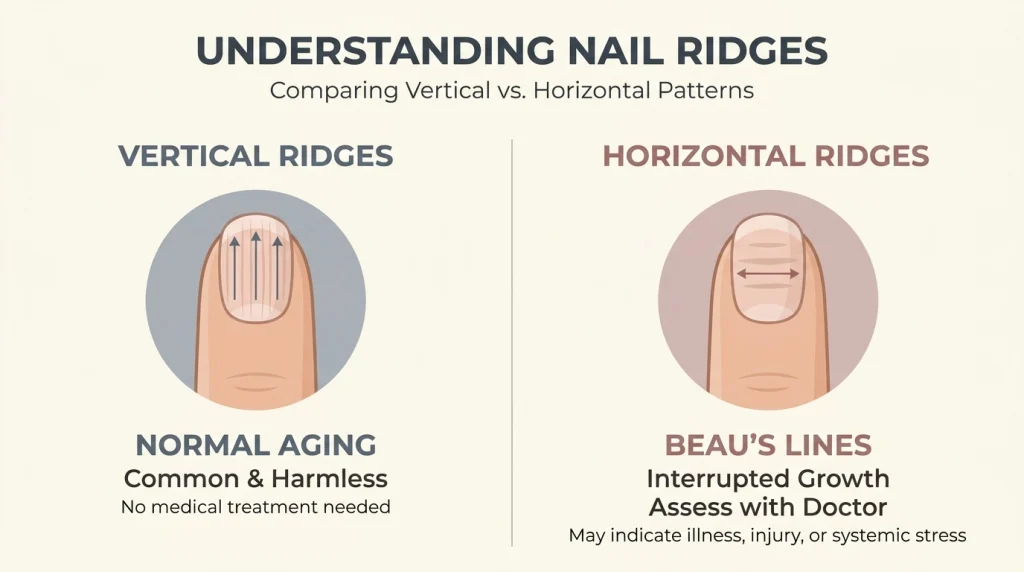
Vertical Ridges: Often a Normal Part of Aging
Vertical ridges extend from your cuticle toward the free edge of your nail.
They commonly become more noticeable with age and usually don’t require medical treatment when they’re fine, painless, and gradual.
Dry skin, eczema, and some medical conditions can also contribute to longitudinal nail changes, so appearance alone cannot establish the cause in every case.
Horizontal Ridges: Sometimes a Sign of Interrupted Growth
Horizontal ridges travel across the nail from one side to the other.
Deep horizontal grooves are sometimes called Beau’s lines.
They can develop when nail growth temporarily slows or stops because of an injury, significant illness, certain medications, or another stress affecting the body.
Unlike ordinary fine vertical ridges, new deep horizontal grooves deserve closer attention, especially when several nails are affected.
Important Distinction
Fine vertical ridges that develop gradually are often harmless. New horizontal grooves, a rapidly changing ridge, or nail texture changes accompanied by pain or discoloration should be assessed by a healthcare professional. Don’t assume every nail change is caused by aging.
Can Nail Ridges Indicate a Vitamin Deficiency?
It’s common to see online claims suggesting that vertical nail ridges always mean you’re missing iron, vitamin B12, biotin, or another nutrient.
That explanation is too simplistic.
While nutritional deficiencies can affect nail appearance, fine vertical ridges are frequently a normal part of aging and aren’t reliable evidence of a particular deficiency.
Iron deficiency, for example, may be associated with brittle nails or spoon-shaped nails, a condition in which the nail develops a noticeable central depression.
Other nutrient-related nail changes can overlap with those caused by illness, repetitive damage, or skin conditions.
If you develop unexpected nail changes along with unusual fatigue, weakness, or other symptoms, a healthcare professional can decide whether testing is appropriate.
You can learn more about the limitations of appearance-based diagnosis in our article covering signs of vitamin deficiency in nails.
Should You Take Biotin for Age-Related Nail Ridges?
Not automatically.
Biotin is involved in normal body processes, but evidence supporting supplements for people without a deficiency is limited.
Taking extra biotin won’t necessarily smooth age-related nail ridges or reverse natural changes in the nail matrix.
High-dose biotin supplements can also interfere with certain laboratory blood tests, including some tests related to heart and thyroid health.
Before taking a supplement specifically for your nails, discuss your concerns with a qualified healthcare professional.
Can You Get Rid of Nail Ridges Caused by Aging?
You may be able to reduce how noticeable your ridges look, but permanently eliminating natural age-related ridges isn’t always possible.
That’s because the visible nail plate is made of hardened cells that cannot repair themselves in the same way living skin does.
Changes to the way new nail grows must occur at the matrix, and existing nail material gradually moves outward as your nail grows.
Moisturizers, protective habits, and cosmetic products can improve the appearance and condition of your nails without changing the underlying aging process.
The best strategy is to keep your nails comfortable, prevent unnecessary damage, and choose gentle methods to create a smoother-looking finish.
How Can You Make Age-Related Nail Ridges Less Noticeable?
You don’t need an expensive manicure routine to manage ordinary vertical ridges.
A few consistent habits can help protect your nail plates and improve their appearance.
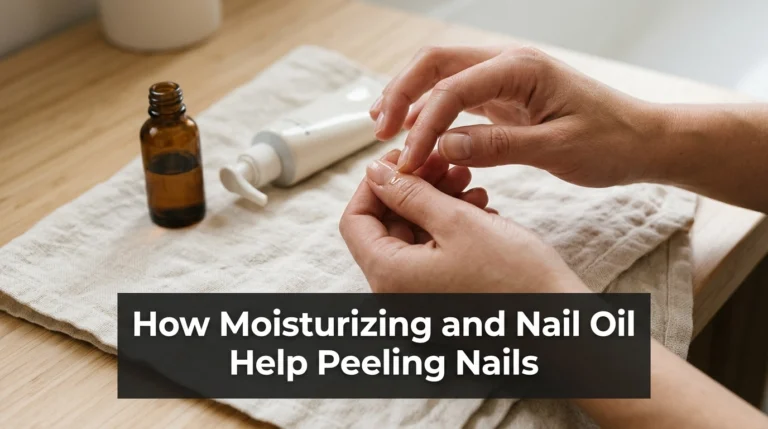
1. Moisturize Your Nails and Cuticles Daily
Apply a fragrance-free hand cream after washing your hands and before bedtime.
Massage a small amount over your nails and the surrounding skin rather than treating your hands and nails as separate areas.
Products containing glycerin or petrolatum can help maintain moisture in dry skin and reduce the effects of frequent handwashing.
If you enjoy using cuticle oil, look for a simple formula and apply it to the nail folds and surrounding skin.
Jojoba-based products are a convenient cosmetic option, although no particular oil has been proven to erase age-related ridges.
Pro Tip
Keep hand cream beside your sink and apply it immediately after thoroughly drying your hands. Making moisturizing part of an existing routine is easier than remembering a completely separate nail treatment.
2. Use a Ridge-Filling Base Coat
If you enjoy wearing nail polish, a ridge-filling base coat may help create a smoother-looking manicure.
These products are designed to visually level minor surface irregularities before you apply color.
They don’t remove the ridges or permanently change your natural nail structure.
Instead, they create a more even cosmetic finish that can make polish look smoother.
Apply one thin layer according to the product instructions and allow it to dry before adding your chosen nail color.
Optional Nail Care Product
Ridge-Filling Nail Base Coat
A ridge-filling base coat can visually smooth fine nail texture before polish without requiring you to file down the natural nail surface.
Find Ridge-Filling Base Coats on Amazon
As an Amazon Associate, we earn from qualifying purchases.
3. Avoid Aggressive Nail Buffing
It’s tempting to reach for a buffing block whenever you see an uneven nail surface.
However, buffing works by removing a small amount of the nail plate.
Repeated or aggressive buffing can make already thin or fragile nails weaker, increasing the risk of splitting and breakage.
If your nails are brittle, peeling, or unusually thin, avoid buffing their surfaces.
A ridge-filling base coat is generally a better cosmetic approach than trying to sand every line away.
4. Protect Your Nails During Household Chores
Frequent contact with water and cleaning products can contribute to nail fragility.
Wear suitable protective gloves when washing dishes, cleaning bathrooms, or handling detergents.
Choose gloves that fit comfortably and avoid keeping your hands damp inside them for extended periods.
After finishing, dry your hands thoroughly and apply moisturizer.
This routine doesn’t prevent the natural aging process, but it helps reduce avoidable environmental stress.
5. Keep Your Nails at a Manageable Length
Long nails experience more leverage when they catch on objects, which can make brittle nails more vulnerable to cracks and splits.
Keeping your nails relatively short can reduce everyday mechanical stress.
Use a fine-grit nail file to smooth rough edges gently, without scraping deeply into the nail surface.
A softly rounded or squoval shape often works well for everyday practicality.
The ideal length is one that allows you to carry out normal activities without frequent snagging.
6. Be Gentle With Gel and Acrylic Manicures
Gel and acrylic manicures can look beautiful, but repeated filing and rough removal may weaken your natural nails.
Never peel off gel polish or forcefully pry away artificial enhancements.
Removing these products incorrectly may lift layers from the nail plate and leave the surface looking rougher.
Ask your nail technician to avoid excessive filing and protect the surrounding skin during treatment.
If your nails are already thin or splitting, consider taking a break from enhancements while damaged areas grow out.
For additional ideas, see our guide on how to strengthen nails with gentle daily habits.
What Nail Care Habits Should You Follow or Avoid?
Do
- Moisturize your hands and nails regularly.
- Wear gloves for wet household tasks.
- Keep nail edges smooth and manageable.
- Choose gentle manicure products.
- Watch for new or unusual changes.
Don’t
- Buff thin nails aggressively.
- Peel off gel polish or acrylics.
- Cut or repeatedly pick your cuticles.
- Assume all ridges mean deficiency.
- Ignore painful or changing nail abnormalities.
How Long Does It Take to Improve the Appearance of Ridged Nails?
The answer depends on what you’re trying to improve.
A ridge-filling base coat can create an immediately smoother cosmetic appearance once the product dries.
Moisturizing may help dry nails and surrounding skin feel more comfortable relatively quickly, but it won’t instantly eliminate ridges formed during nail growth.
If your nails are brittle because of repeated environmental damage, consistent protection may help reduce further splitting over the following weeks.
Visible improvements in new nail material take longer.
Fingernails typically require several months to grow from the base to the tip, and complete replacement commonly takes around four to six months, although growth rates vary.
This is why you shouldn’t judge a nail care routine after just a few days.
If the ridges reflect normal age-related changes in the matrix, they may remain visible even when your nails are otherwise healthy and well cared for.
Can You Prevent Nail Ridges From Becoming More Visible?
There’s no guaranteed method for preventing every age-related vertical ridge.
Natural changes in nail cell production are part of the aging process, and ordinary skincare products cannot stop them entirely.
However, good nail care can help you avoid additional problems that make your nails appear rough or fragile.
Focus on regular moisturizing, gentle trimming, protecting your hands from harsh conditions, and avoiding unnecessary nail trauma.
It’s also helpful to consider your general health rather than concentrating only on cosmetic treatments.
A balanced diet, appropriate medical care, and attention to persistent symptoms support overall wellbeing, including normal nail growth.
For a broader explanation of what to expect as you get older, explore how nail health changes over time.
When Should You Worry About Nail Ridges?

Most gradually developing fine vertical ridges aren’t a reason to panic.
Still, not every nail change should be attributed to aging.
Consider arranging an examination with a healthcare professional or dermatologist if you notice:
- Deep horizontal grooves: Especially when they appear suddenly or affect several nails.
- New dark streaks: Particularly a brown or black line that widens, changes color, or affects one nail without an obvious explanation.
- Persistent nail splitting: Especially when the same nail repeatedly splits from a deep groove.
- Pain or swelling: Tenderness, redness, warmth, or discharge around the nail may suggest inflammation or infection.
- Nail lifting: Separation of the nail plate from the underlying nail bed.
- Major shape changes: New spoon-shaped nails, unusual curvature, or significant thickening.
- Sudden widespread changes: Rapidly changing nail texture accompanied by other unexplained symptoms.
A dermatologist can examine the nail pattern, ask about recent illnesses and manicure habits, and determine whether further testing is necessary.
Warning
A new or changing dark nail streak should be evaluated promptly by a dermatologist. Although many pigmented nail lines are harmless, some can indicate nail melanoma. Don’t attempt to cover or treat an unexplained streak with cosmetic products instead of obtaining a professional assessment.
To compare other nail changes with potentially concerning symptoms, read our article on the signs of unhealthy nails.
Frequently Asked Questions About Aging and Nail Ridges
Q: At what age do vertical nail ridges start appearing?
A: There’s no specific age when vertical nail ridges must appear. Some people notice fine lines during early adulthood, while others see them become more prominent later. Genetics, normal nail growth variation, and environmental exposure can influence their visibility.
Q: Are vertical nail ridges a sign of poor health?
A: Not necessarily. Fine vertical ridges are common with aging and often appear on otherwise healthy nails. New, painful, rapidly changing, or unusually deep ridges deserve professional evaluation, especially if other nail changes accompany them.
Q: Can drinking more water remove nail ridges?
A: Drinking adequate water supports your general health, but extra water won’t erase structural ridges caused by normal nail growth. For external dryness, moisturizing your nails and protecting them from repeated wetting and drying are more directly useful.
Q: Does nail polish make vertical ridges worse?
A: Regular nail polish doesn’t inherently cause age-related ridges. However, harsh removal, repeated scraping, and aggressive buffing can damage the nail plate. A ridge-filling base coat can make minor lines less noticeable without filing them away.
Q: Will age-related nail ridges eventually disappear?
A: Natural age-related vertical ridges may persist because they’re associated with how new nail cells are produced. Moisturizing and gentle nail care can improve comfort and appearance, but they don’t guarantee permanently smooth nails.
What Should You Remember About Nail Ridges and Aging?
Fine vertical nail ridges becoming more visible with age are usually a normal change rather than a sign that something is wrong.
Protect your nails, keep them moisturized, avoid aggressive buffing, and pay attention to sudden or unusual changes. Healthy nails don’t need to be perfectly smooth.
Save this guide to Pinterest so you’ll have these nail care tips and warning signs available whenever you notice a change in your natural nails.

Hi, I’m Jessica, the creator behind Unique Lash & Nails Katy.
I created this website for anyone who loves beautiful nails as much as I do. Here, I share trendy nail designs, seasonal manicure ideas, easy nail care tips, honest product recommendations, and step-by-step guides to help you create salon-worthy nails at home. Whether you’re looking for everyday inspiration or your next favorite nail trend, I hope you’ll find something you love.