Why Are My Nails Yellow? Causes and Safe Solutions
Quick Answer
Why are my nails yellow? Yellow nails commonly result from dark nail polish stains, smoking, fungal infections, or repeated nail injuries. If your nails are otherwise smooth and healthy, surface staining may be responsible. However, yellow nails that become thick, brittle, painful, or slow-growing deserve medical attention. The best solution depends on identifying the actual cause rather than simply trying to whiten the nails.
You remove your favorite dark manicure and notice something unexpected: your natural nails look yellow. Or perhaps your toenails have gradually changed color, even though you haven’t worn polish recently.
It’s understandable to wonder whether your nails are stained, damaged, or showing signs of a health problem.
The good news is that many causes of yellow nails are manageable. This guide explains the most common reasons nails turn yellow, how to recognize concerning changes, what you can safely do at home, and when you should speak with a healthcare professional.


Why Do Nails Turn Yellow?
Your nails are made primarily of keratin, a tough protein that forms the visible nail plate. Healthy nails are usually translucent, allowing the pinkish nail bed underneath to show through.
When the nail plate becomes stained, thickened, damaged, or affected by an infection, its appearance can change.
Yellow discoloration doesn’t have just one explanation. The appearance of your nails, how quickly the color developed, and whether other symptoms are present can help narrow down the possibilities.
For example, yellow nails that appear immediately after removing dark polish suggest a different cause from a toenail that gradually becomes thick, crumbly, and discolored.
Pay attention to three important details:
- Color: Is the nail pale yellow, deep yellow, yellow-brown, or greenish?
- Texture: Does the nail remain smooth, or has it become thick, brittle, or crumbly?
- Symptoms: Is there pain, swelling, lifting, unusually slow growth, or irritation around the nail?
These observations won’t provide a definite diagnosis, but they can help you decide whether gentle nail care is reasonable or a medical evaluation is needed.
What Are the Most Common Causes of Yellow Nails?
1. Dark Nail Polish Can Stain Your Natural Nails
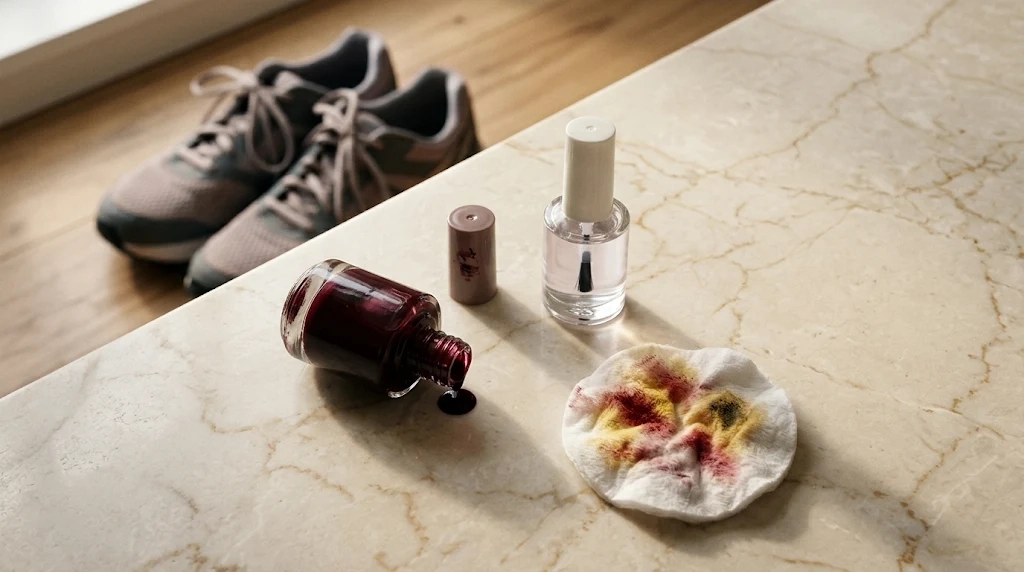
One of the most common cosmetic explanations for yellow fingernails is staining from nail polish.
Dark red, burgundy, purple, orange, and other heavily pigmented polishes may leave temporary discoloration on the nail plate, particularly when applied without a protective base coat.
The pigments can leave the nail surface looking yellow or orange after the manicure is removed.
Signs that suggest polish staining:
- Your nails became yellow after wearing a pigmented polish.
- The discoloration affects the polished areas.
- Your nails remain reasonably smooth and normal in thickness.
- You don’t notice pain, swelling, or crumbling.
What helps: Remove the polish gently, keep your nails moisturized, and let the stained portion gradually grow out. Use a base coat before your next colored manicure.
For practical prevention advice, explore these ways to protect your nails from nail polish damage.
2. Fungal Nail Infections Can Cause Yellow Discoloration
A fungal nail infection, medically called onychomycosis, is another important possible cause of yellow nails.
Fungal infections are more common in toenails than fingernails. They may begin near the tip or side of a nail and gradually spread.
Unlike simple polish staining, an infected nail may change in both color and texture.
Common warning signs include:
- Yellow, white, or brown discoloration
- Thickened nail plates
- Brittle or crumbly edges
- Debris collecting beneath the nail
- Separation of the nail from the nail bed
- Occasional discomfort or tenderness
Warm, moist environments can encourage fungal growth. Sweaty shoes, shared shower areas, athlete’s foot, and repeated nail trauma may increase your risk.
What helps: Keep your feet clean and dry, change damp socks, and consult a pharmacist or clinician about appropriate antifungal treatment.
Because other conditions can resemble fungal infections, a clinician may examine or test a nail sample before prescribing treatment.
Topical treatment can take months, and some infections require prescription medication. Healthy nail growth, rather than immediate whitening, is usually the best sign of improvement.
Warning
Don’t assume every yellow toenail is fungal. Nail psoriasis, injury, and other conditions can look similar. Seek professional advice before starting prolonged antifungal treatment, especially if you have diabetes, poor circulation, or a weakened immune system.
3. Smoking Can Leave Yellow or Brown Nail Stains
Tobacco smoke can leave yellow-brown discoloration on fingernails and the surrounding skin.
This is particularly noticeable on fingers that frequently hold cigarettes.
Unlike some nail disorders, smoking-related staining may affect the fingertips as well as the nail surfaces.
What helps: Reducing and stopping tobacco exposure prevents additional staining and provides broader health benefits.
Existing discoloration may gradually improve as your nails grow, although repeated exposure can cause stains to return.
4. Repeated Nail Trauma Can Change Nail Color
Your nails can also turn yellow after repeated physical stress.
Tight footwear, frequent pressure on the toes, aggressive filing, and repeated manicure damage can affect the nail plate or cause it to separate from the underlying nail bed.
When a nail lifts, the separated portion often appears whitish or yellowish because it no longer sits directly against the pink nail bed.
You might notice the problem after:
- Wearing shoes that squeeze your toes
- Running or walking long distances in poorly fitting footwear
- Using sharp tools beneath your nails
- Picking off gel polish or acrylic enhancements
- Repeatedly buffing already thin nails
What helps: Reduce pressure, avoid further manipulation, and keep the nail reasonably short and protected.
If the nail keeps lifting, becomes painful, or changes color without an obvious explanation, arrange a professional examination.
5. Nail Psoriasis May Change Nail Color and Texture
Psoriasis is an inflammatory condition that can affect the nails as well as the skin.
Nail psoriasis sometimes causes yellowish or salmon-colored patches beneath the nail. These changes may appear alongside pitting, thickening, crumbling, or separation from the nail bed.
Because nail psoriasis can resemble a fungal infection, appearance alone may not distinguish the two.
If you already have psoriasis or notice unusual nail changes together with skin symptoms, a dermatologist can help identify the cause and discuss treatment.
6. Certain Medications Can Affect Nail Appearance
Some medications can cause changes in nail color, growth, or attachment.
These changes vary depending on the medication and your individual response. They may appear gradually rather than immediately after treatment begins.
If your nails started changing after a new prescription, review the medication information and speak with your pharmacist or prescribing clinician.
Don’t stop prescribed medication simply because your nails have changed color.
7. Rarely, Yellow Nails Can Indicate Yellow Nail Syndrome
Yellow nail syndrome is an uncommon medical condition associated with characteristic nail changes and, in some cases, swelling or respiratory problems.
Nails affected by this condition may become:
- Yellow or yellow-green
- Thickened and unusually curved
- Very slow-growing
- Separated from the nail bed
Some people also experience swelling in the legs or persistent breathing-related symptoms.
This condition is rare. Having yellow nails alone does not mean you have yellow nail syndrome.
However, yellowing that affects multiple nails together with unusual thickening, markedly slow growth, unexplained swelling, or respiratory symptoms deserves a medical evaluation.
How Can You Tell Whether Yellow Nails Are Stained or Unhealthy?
The easiest first step is to compare the appearance and recent history of your nails.
Consider the following patterns:
| What You Notice | Possible Explanation |
|---|---|
| Yellow color after removing dark polish | Cosmetic staining |
| Yellow, thick, crumbly toenail | Possible fungal infection |
| Yellow nail with pitting or lifting | Possible psoriasis, injury, or infection |
| Yellow-brown nails and fingertips | Possible tobacco staining |
| Several thick, slow-growing yellow nails | Needs medical assessment |
These are clues, not diagnostic rules. More than one condition can produce the same nail appearance.
For a broader explanation of nail warning signs, see our guide to recognizing unhealthy nails.
How Can You Safely Get Rid of Yellow Nails?
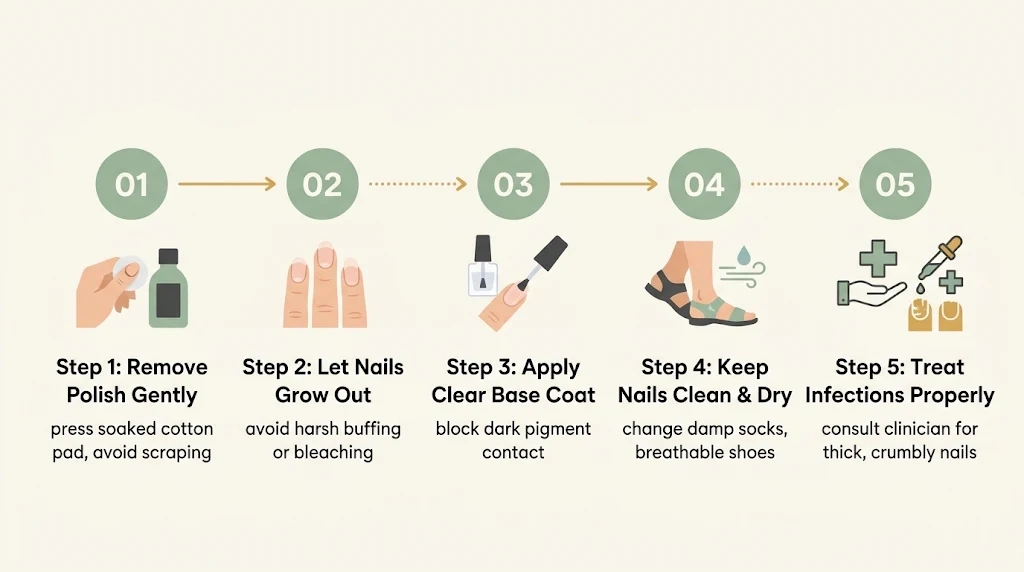
The right approach depends on why your nails became yellow in the first place.
If the discoloration follows a dark manicure and your nails otherwise look normal, gentle cosmetic care may be enough. When the nail is thick, painful, lifting, or crumbling, treating the underlying problem matters much more than whitening its surface.
Remove Old Polish Gently
If you’re wearing nail polish, remove it with a suitable nail polish remover and a soft cotton pad.
Press the soaked pad against the polish briefly before wiping. Avoid scraping the nail plate or repeatedly rubbing with excessive force.
Once the polish is removed, look carefully at the nail surface and surrounding skin.
If your nails are smooth and the yellow color closely matches the area previously covered by polish, staining becomes a reasonable possibility.
Allow Stained Nails to Grow Out
Staining within the nail plate may not disappear immediately after cleaning.
Instead, the affected portion generally moves toward the tip as new nail grows from the base.
Fingernails typically take several months to replace fully, while toenails can take considerably longer.
During this period, avoid aggressive buffing or repeated attempts to bleach the nail.
Keeping your nails short, neat, and moisturized can help them look better while the discolored portion grows out.
Protect Your Nails From Further Damage
Use a protective base coat before applying strongly pigmented nail polish.
A clear base coat creates a layer between your natural nail and the colored polish, helping reduce direct pigment contact.
If you’re shopping for a basic option, consider a protective nail base coat designed for regular manicures.
A base coat can help reduce future cosmetic staining, but it cannot treat fungal infections or underlying medical conditions.
Keep Nails Clean, Dry, and Comfortable
Wash your hands regularly with mild soap and water, then dry them thoroughly.
For toenails, change damp socks promptly, choose breathable footwear, and avoid shoes that repeatedly squeeze your toes.
These habits are particularly important if you frequently experience sweaty feet or athlete’s foot.
For daily upkeep, a simple step-by-step nail care routine can help you maintain healthy-looking nails without excessive trimming or buffing.
Get Appropriate Treatment for Suspected Infections
If your nails are yellow, thick, brittle, or crumbling, ask a healthcare professional whether fungal testing or treatment is appropriate.
Depending on the diagnosis and severity, treatment may involve topical antifungal preparations or prescription tablets.
Don’t expect an infected nail to look normal overnight. Even after successful treatment, the damaged section may need time to grow out.
Pro Tip
Take a clear photo of your bare nails in consistent lighting every few weeks. Comparing photos can help you notice whether healthy-looking nail is growing from the base or discoloration is spreading. Photos are useful for monitoring changes, but they don’t replace a diagnosis.
Do Home Remedies Actually Whiten Yellow Nails?
Online beauty advice often recommends lemon juice, baking soda, hydrogen peroxide, toothpaste, or vinegar for yellow nails.
Although some of these ingredients may affect surface stains, there’s limited reliable evidence that homemade whitening treatments safely and consistently correct nail discoloration.
They also don’t address important causes such as fungal infections, psoriasis, or nail separation.
What About Lemon Juice and Baking Soda?
Lemon juice is acidic, while baking soda can act as an abrasive when rubbed onto the nail.
Frequent or aggressive use may irritate the skin around your nails or worsen dryness.
If your nails are already peeling, damaged, or separated from the nail bed, these approaches are especially unappealing.
A safer choice for ordinary polish stains is gentle removal, moisturizing, and allowing the stained nail to grow out.
Can Hydrogen Peroxide Remove Yellow Nails?
Hydrogen peroxide is sometimes promoted as a nail-whitening ingredient, but applying concentrated or repeatedly used peroxide can irritate or damage surrounding skin.
It should not be treated as a cure for fungal nail infections.
If you have unexplained discoloration, prioritize finding the cause instead of repeatedly bleaching the nail.
Does Vinegar Treat Yellow Toenails?
Vinegar soaks are another popular home remedy, especially for suspected fungal nails.
However, evidence is insufficient to consider vinegar a reliable treatment for a confirmed nail fungal infection.
Soaking may also irritate damaged skin, and prolonged moisture exposure can be unhelpful for vulnerable nails.
If you suspect an infection, discuss proven treatment options with a pharmacist or clinician rather than relying on vinegar alone.
How Long Does It Take for Yellow Nails to Return to Normal?
The timeline depends on the cause of the discoloration and how quickly your nails grow.
Cosmetic staining: Mild surface discoloration may fade with time, but pigment trapped within the nail plate may remain until the stained portion grows out.
Nail trauma: A damaged nail may take several months to recover, provided the nail-growing area has not been permanently injured.
Fungal infections: Treatment can last months. A healthy-looking replacement nail may take even longer to become fully visible.
Underlying medical conditions: Improvement depends on the condition, its treatment, and the response of your nails.
As a general guide, fingernails often take approximately four to six months to grow out fully. Toenails may require twelve to eighteen months.
If the color continues spreading, the nail becomes increasingly damaged, or you don’t know why the change occurred, don’t simply wait for it to disappear.
How Can You Prevent Your Nails From Turning Yellow Again?
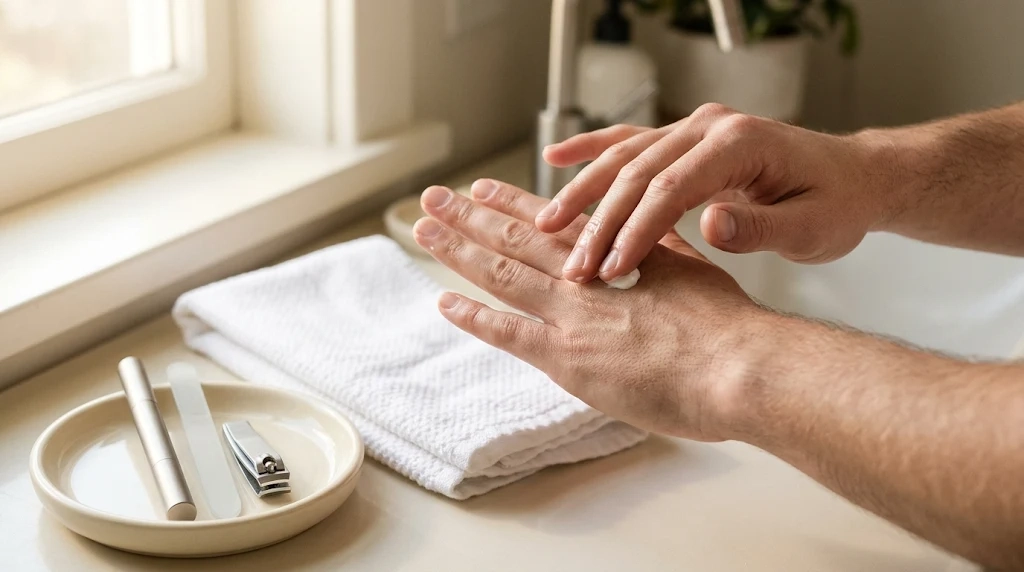
You can’t prevent every medical cause of yellow nails, but a few consistent habits can reduce avoidable staining and damage.
Do
- Use a base coat before dark polish.
- Remove manicures gently.
- Keep feet clean and dry.
- Wear properly fitting shoes.
- Moisturize nails and cuticles.
- Clean reusable nail tools.
- Monitor unexplained changes.
Don’t
- Scrape away nail stains.
- Peel off gel manicures.
- Over-buff your natural nails.
- Share unclean nail tools.
- Wear damp socks for hours.
- Ignore painful nail changes.
- Cover suspected infections with polish.
Build a Gentle Daily Nail Routine
Healthy-looking nails benefit from consistency more than complicated beauty treatments.
Start by moisturizing your hands after washing them. Massage a small amount of hand cream around your fingertips and nail folds.
A simple cuticle oil pen can make regular moisturizing convenient, particularly if you enjoy frequent manicures.
Moisturizers support the surrounding skin and help manage dryness. They won’t remove discoloration caused by infection or disease.
You can follow a more complete daily and weekly nail care routine if you want a consistent approach to maintaining your natural nails.
Choose Clean Nail Tools
Keep your nail clippers, files, and reusable manicure tools clean and dry between uses.
Use separate tools for nails that may be infected, and avoid sharing personal grooming equipment.
A stainless steel nail clipper set can help with regular maintenance when used and cleaned appropriately.
Remember that trimming and cleaning support nail hygiene but cannot eliminate an established fungal infection on their own.
When Should You See a Doctor About Yellow Nails?
Yellow nails don’t always require treatment, especially when the discoloration clearly follows a recent manicure.
However, arrange a medical evaluation if you notice:
- Yellow discoloration without an obvious cause
- Progressive thickening or crumbling
- Nails lifting away from their nail beds
- Discoloration spreading across several nails
- Persistent pain, tenderness, or swelling
- Unusually slow nail growth
- Changes that continue despite stopping potential staining products
Seek prompt medical care for significant redness, warmth, worsening pain, pus, or rapidly spreading swelling around a nail.
If you have diabetes, circulation problems, or a weakened immune system, seek professional advice early when a nail infection is suspected.
Yellow, unusually thick or slow-growing nails accompanied by unexplained leg swelling or breathing symptoms also need medical assessment. Sudden or severe breathing difficulty requires urgent care.
A clinician may examine your nails, review your medical history, or take a sample when an infection is suspected.
Important
Yellow nail discoloration is a symptom, not a diagnosis. Cosmetic treatments can hide changes that need attention. If the cause is uncertain or your nail’s shape, thickness, or texture is changing, a healthcare professional can help identify the underlying problem.
Frequently Asked Questions About Yellow Nails
Q: Why are my nails yellow after removing nail polish?
A: Dark or strongly pigmented polish can stain your natural nails, particularly when you skip a base coat. If your nails remain smooth and comfortable, the discoloration may be cosmetic and can gradually grow out.
Q: Can yellow nails indicate a vitamin deficiency?
A: Nutritional deficiencies can affect nail health, but yellow discoloration alone isn’t a reliable sign of a particular vitamin deficiency. Avoid taking supplements based only on nail color. A clinician can evaluate other symptoms and determine whether testing is appropriate.
Q: Why are my toenails yellow but my fingernails normal?
A: Toenails experience more pressure from footwear and are more commonly affected by fungal nail infections. If a yellow toenail is thick, brittle, or lifting, have it assessed rather than assuming it’s simply stained.
Q: Will yellow nails go away on their own?
A: Yellow discoloration caused by nail polish may gradually disappear as your nails grow. Fungal infections and medical conditions often need targeted treatment, especially when the nail becomes thickened or damaged.
Q: Can I wear nail polish over yellow nails?
A: If the yellow color is clearly a harmless polish stain and your nails are otherwise healthy, another manicure may be reasonable. Avoid covering unexplained discoloration, painful nails, lifting, or suspected infections before the problem is assessed.
Final Thoughts: What Should You Do If Your Nails Are Yellow?
If you’ve been asking, “Why are my nails yellow?” start by examining your recent manicures, nail texture, and any accompanying symptoms.
Simple polish stains may only require gentle care and time. Thickening, crumbling, lifting, pain, or persistent unexplained discoloration can signal a condition that needs professional attention.
Protect your natural nails, avoid harsh whitening tricks, and choose treatments based on the actual cause. Save this guide to your Pinterest nail care board so you can revisit these tips whenever your nails need extra attention.
Medical note: This article is for general educational purposes and does not replace personalized medical advice, diagnosis, or treatment.
Affiliate disclosure: As an Amazon Associate, we earn from qualifying purchases.

Hi, I’m Jessica, the creator behind Unique Lash & Nails Katy.
I created this website for anyone who loves beautiful nails as much as I do. Here, I share trendy nail designs, seasonal manicure ideas, easy nail care tips, honest product recommendations, and step-by-step guides to help you create salon-worthy nails at home. Whether you’re looking for everyday inspiration or your next favorite nail trend, I hope you’ll find something you love.