How Nail Polish, Base Coat, Gel and Acrylics Affect Ridged Nails
Quick Answer
Nail polish, ridge-filling base coats, gel polish, and acrylics can all change how ridged nails look, but they do not necessarily remove the ridges themselves. A ridge-filling base coat under regular nail polish is often the gentlest cosmetic option. Gel can create a smooth, long-lasting finish, while acrylics provide substantial coverage but require more intensive preparation and removal. If your nails are thin, brittle, or damaged, avoid covering the problem with enhancements and consider professional advice.
You notice tiny lines running down your nails. Your favorite pink polish suddenly looks streaky, and that glossy Pinterest manicure doesn’t seem quite so easy to recreate.
Should you apply a thicker base coat, switch to gel, or cover everything with acrylics?
The answer depends on your nail condition, not just the finish you want. Here’s how each manicure product affects ridged nails, what can make the texture worse, and how to create a beautiful manicure without unnecessary damage.


Why Do Your Nails Have Ridges in the First Place?
Before choosing nail polish, look at the direction and appearance of your ridges. Not every ridge means the same thing, and cosmetic coverage isn’t always the right response.
Vertical Ridges: Lines From Cuticle to Tip
Vertical nail ridges run from the base of your nail toward the free edge. They’re common, especially as you get older.
Your nail plate forms in the nail matrix, a specialized area of tissue beneath the skin near your cuticle. Natural changes in nail growth can create slightly uneven surfaces.
Other factors, including dryness, repeated exposure to water, skin conditions, and manicure-related damage, may contribute to visible texture.
Fine vertical ridges aren’t automatically a sign of unhealthy nails. If your nails are otherwise strong, comfortable, and normally colored, you may only need a smoother manicure finish.
To understand how your nails develop their surface, explore what the nail matrix does and how it affects nail growth.
Horizontal Ridges: Lines Across the Nail
Horizontal ridges deserve more attention, particularly when they’re deep or appear unexpectedly.
Deep grooves extending across the nail, called Beau’s lines, may develop when nail growth temporarily slows or stops. Possible triggers include significant illness, injury, or another health condition.
Gel polish or acrylics may hide these grooves temporarily, but they cannot correct the underlying cause.
Important Nail Health Warning
If you develop sudden deep grooves, a new dark stripe, pain, swelling, nail lifting, or rapidly worsening changes, consult a dermatologist before applying cosmetic enhancements. Nail products can conceal changes that need medical evaluation.
Does Regular Nail Polish Make Ridged Nails Better or Worse?
Regular nail polish is often a practical starting point when your nails have mild vertical ridges.
It adds a thin colored coating to the surface of your nail without requiring the same curing process as gel or structural preparation as acrylic enhancements.
However, the result depends heavily on the formula and application technique.
How Regular Polish Can Improve the Appearance of Ridges
Opaque nail polish can visually minimize shallow ridges by providing consistent color across the nail plate.
Creamy formulas are often more forgiving than very sheer polishes because they help hide slight differences in surface texture.
Glossy top coats can also soften the appearance of unevenness by creating a more reflective finish.
For subtle ridges, try these colors:
- Dusty rose: Offers a soft, elegant appearance without emphasizing every line.
- Milky pink: Creates a clean manicure when paired with a smoothing base coat.
- Classic nude: Provides a natural-looking finish when you choose an opaque formula.
- Berry or burgundy: Delivers fuller coverage that can disguise slight unevenness.
- Creamy beige: Works particularly well for understated everyday manicures.
Metallic and chrome finishes can sometimes make ridges more noticeable because reflected light highlights the changing contours of the nail.
Can Nail Polish Cause More Ridges?
Polish itself doesn’t automatically create permanent ridges. However, repeated harsh removal, picking, scraping, or excessive filing during manicures may injure or thin the nail plate.
When nails become thinner or develop peeling layers, their existing texture can look more pronounced.
For a gentler routine, avoid aggressively scraping off stubborn polish. Use a suitable remover, moisturize afterward, and stop if the nail surface becomes painful or irritated.
How Does Base Coat Affect Ridged Nails?
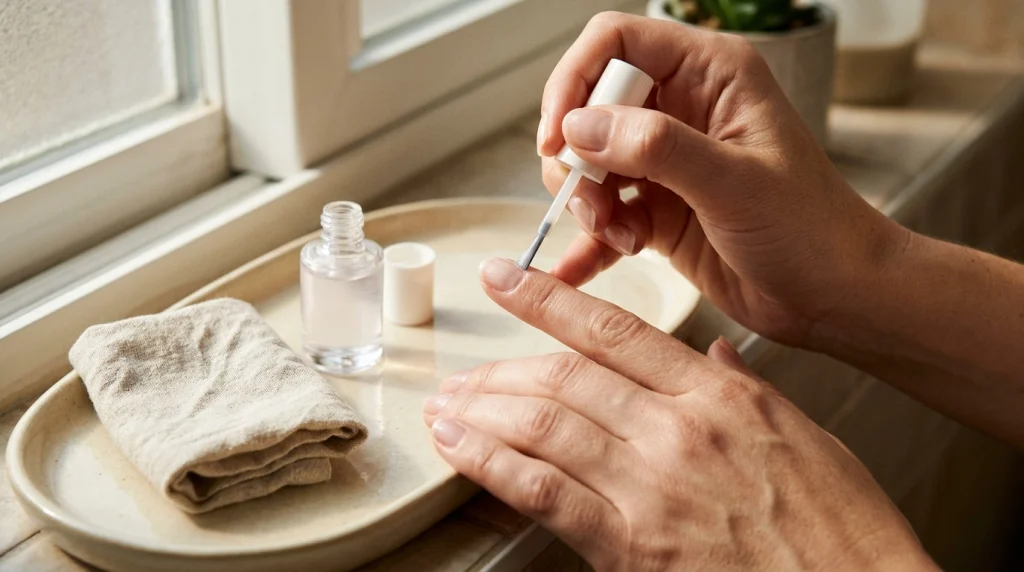
For mild ridging, base coat may make a bigger visual difference than the color you apply over it.
A regular base coat helps prepare the nail surface for polish and can reduce pigment staining. A dedicated ridge-filling base coat goes further by creating a more even cosmetic surface.
What Is a Ridge-Filling Base Coat?
A ridge-filling base coat is formulated to reduce the visibility of small grooves and uneven areas.
Depending on the product, film-forming ingredients and smoothing particles help the coating settle into minor depressions, producing a more uniform layer for colored polish.
Think of it as a cosmetic primer for your nails.
It doesn’t rebuild the nail matrix, erase deep grooves, or cure a nail condition. The improvement lasts only while the coating remains in place.
Regular Base Coat vs. Ridge-Filling Base Coat
| Feature | Regular Base Coat | Ridge-Filling Base Coat |
|---|---|---|
| Primary purpose | Prepare the nail for polish | Visually smooth uneven texture |
| Ridge coverage | Limited | Better for shallow ridges |
| Finish | Clear or slightly tinted | Often milky or softly opaque |
| Best for | Relatively smooth nails | Nails with visible surface lines |
If your primary concern is visible vertical ridges, choose a product specifically labeled as a ridge filler rather than assuming every strengthening base coat will smooth your nails.
How to Apply Ridge-Filling Base Coat Properly
- Clean your nails gently. Remove old polish and wash away residue. Allow the nail surface to dry before applying the product.
- Apply one even coat. Use controlled strokes from the cuticle area toward the tip without flooding the surrounding skin.
- Allow it to dry. Follow the manufacturer’s instructions before adding color.
- Apply two thin color coats. Thin layers usually give you better control than one heavy application.
- Finish with a glossy top coat. Seal the color and create a consistent reflective finish.
Pro Tip
Don’t try to fill every ridge with a thick puddle of base coat. Start with one thin, even layer and follow the product instructions. Excess product can dry unevenly and create a bulky manicure.
How Does Gel Polish Affect Ridged Nails?
Gel polish is popular because it creates a shiny, durable finish that generally lasts longer than traditional nail polish.
For ridged nails, gel can be especially appealing because some formulas produce a smooth-looking coating over surface irregularities.
But a smooth finish doesn’t mean the natural nail underneath has become healthier.
Can Gel Polish Hide Nail Ridges?
Yes. Properly applied gel polish can visually soften mild ridges, especially when a compatible smoothing base layer is used.
The coating creates a more uniform surface, while the glossy finish reduces the appearance of some textural differences.
However, deeper grooves may remain visible. Adding excessive gel to conceal them can result in an unnatural shape or improper curing.
Can Gel Manicures Damage Ridged Nails?
Gel manicures can contribute to brittleness, peeling, and cracking, particularly with repeated aggressive preparation or removal.
Picking or peeling off gel may remove layers of the natural nail plate along with the coating.
Improper filing can also make nails thinner, which may make ridges and surface irregularities more obvious afterward.
Another consideration is the possibility of allergic reactions to certain nail-product ingredients, especially when uncured gel contacts the skin.
If your nails are already brittle or visibly damaged, regular polish may be a more suitable cosmetic choice.
How to Make Gel Manicures Safer
- Choose a qualified technician who uses clean, properly maintained tools.
- Avoid unnecessary filing of the natural nail surface.
- Keep uncured gel away from your skin.
- Use a curing lamp appropriate for the specific gel system.
- Apply broad-spectrum SPF 30 or higher to your hands or use suitable UV-protective manicure gloves.
- Never peel the gel off when it begins lifting.
- Take a break from gel if your nails become brittle, sore, or damaged.
The American Academy of Dermatology recommends considering traditional polish when you experience recurring nail problems and taking breaks from gel manicures when needed.
How Do Acrylic Nails Affect Natural Nail Ridges?
Acrylic enhancements create an artificial structure over your natural nails using a specialized liquid-and-powder system.
Unlike ordinary polish, acrylic can substantially change the shape, length, and visible surface of a nail.
That makes it effective for cosmetic coverage, but it also introduces additional risks.
Do Acrylic Nails Completely Cover Ridges?
A properly constructed acrylic enhancement can conceal many visible surface ridges because the artificial structure covers the natural nail.
It can also create a new shape and smooth appearance even when your natural nail is uneven.
However, the ridges remain beneath the enhancement.
When the acrylic is removed, your underlying nail texture will still be present unless it has changed through natural growth.
Why Acrylics May Be Riskier for Damaged Nails
Acrylic application generally requires surface preparation to help the product adhere. Excessive filing may thin the natural nail plate.
Removal can create further problems if the enhancement is forcibly lifted or scraped away.
Possible consequences include:
- Thinner, more fragile natural nails.
- Peeling or splitting of the nail plate.
- Temporary sensitivity after removal.
- Skin irritation or allergic contact dermatitis.
- Moisture-related problems when enhancements lift and create gaps.
Artificial nails aren’t a good way to conceal suspected infections or significant nail damage.
If you want to understand why changes in nail growth sometimes remain visible long after a manicure, see this guide to how nail health changes over time.
Should You Get Acrylics If Your Nails Have Ridges?
If your ridges are mild, longstanding, and your nails are otherwise healthy, a professionally applied acrylic manicure may be an option for occasional wear.
Still, acrylics aren’t necessary just to hide ridges. A ridge-filling base coat with regular polish usually requires less intensive preparation.
For nails that are already splitting, thin, painful, or changing unexpectedly, avoid acrylics until you’ve addressed the underlying problem.
Regular Polish vs. Gel vs. Acrylics: Which Is Best for Ridged Nails?
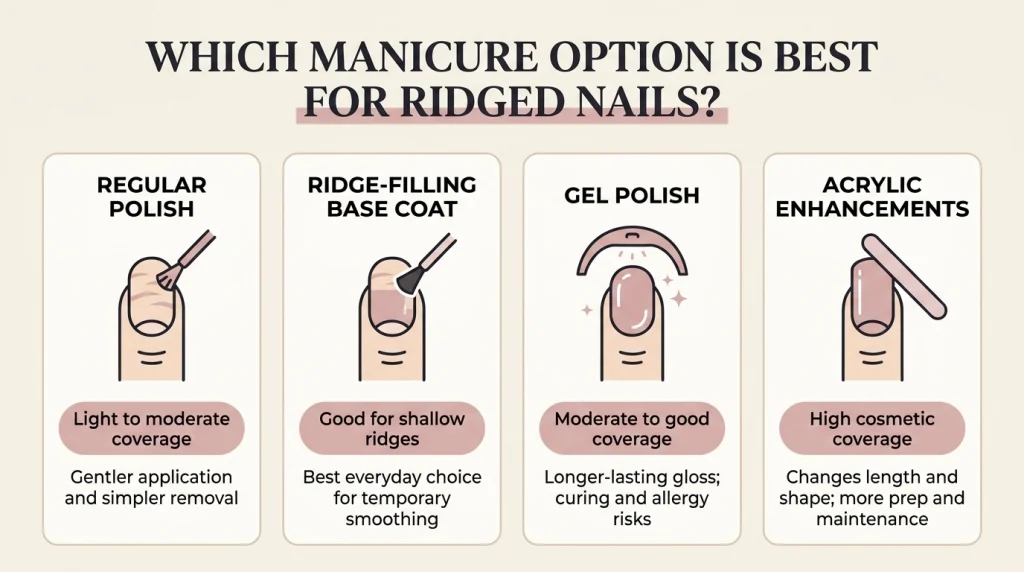
The best choice isn’t always the manicure that provides the thickest coverage.
You need to balance cosmetic results, preparation, maintenance, removal, and the condition of your natural nails.
| Option | Ridge Coverage | Main Consideration |
|---|---|---|
| Regular polish | Light to moderate | Gentler application and simpler removal |
| Ridge-filling base coat | Good for shallow ridges | Temporary cosmetic smoothing |
| Gel polish | Moderate to good | Curing, removal, and allergy risks |
| Acrylic enhancements | High cosmetic coverage | More preparation and maintenance |
Best everyday choice: A ridge-filling base coat followed by regular nail polish.
Best for a longer-lasting glossy finish: Professionally applied gel, if your nails are healthy and tolerate the products.
Best for changing length and shape: Acrylic enhancements, but not as a treatment for nail ridges.
Best for fragile or damaged nails: Gentle nail care and a break from intensive enhancements, with medical evaluation when appropriate.
How Can You Make Ridged Nails Look Smooth Without Damaging Them?

You don’t need to aggressively buff the surface to achieve a polished appearance.
A simple manicure routine can reduce visible texture while preserving as much of your natural nail as possible.
Step 1: Inspect Your Natural Nails
Check for changes in color, thickness, attachment, or shape. Notice whether the ridges are vertical or horizontal and whether they appeared recently.
If something looks unusual or painful, postpone the manicure until you’ve had it evaluated.
Step 2: Shape Gently
Use a fine nail file to shape the free edge. File with controlled movements and avoid sawing aggressively into the sides.
There’s no need to flatten the entire nail plate with a coarse buffer. Repeated surface buffing can make the nail thinner.
Step 3: Moisturize and Prepare
Apply moisturizer regularly to your nails and surrounding skin. Before polishing, make sure the nail surface is clean and dry according to your base coat’s instructions.
Healthy cuticles and surrounding skin help protect the nail-growth area.
For more detail, learn how nail folds protect your nails and why they need gentle care.
Step 4: Use a Smoothing Base Coat
Apply a thin layer of ridge-filling base coat, focusing on an even application rather than building excessive thickness.
Let the coat dry fully before continuing.
Step 5: Apply Opaque Polish
Choose a creamy, opaque shade and apply two thin coats. Avoid repeatedly brushing semi-dry polish, which can create streaks.
Let each layer dry according to the product directions.
Step 6: Seal and Maintain
Finish with a compatible glossy top coat.
After the manicure dries, keep your hands moisturized and wear gloves when doing extended wet work or handling household cleaning products.
Which Nail Products Are Worth Considering for Ridged Nails?
You don’t need an entire collection of specialized products. A few carefully selected essentials can make your manicure routine easier.
Disclosure: As an Amazon Associate, we earn from qualifying purchases. Product links below are affiliate search links. Availability and current pricing may vary.
Recommended Product Type
Ridge-Filling Base Coat
A dedicated ridge filler is the most relevant cosmetic product when your main goal is reducing the appearance of shallow vertical nail ridges.
Look for a formula that dries evenly and works with your favorite regular nail polish.
Recommended Product Type
Opaque Cream Nail Polish
Choose a smooth cream finish if very sheer or reflective shades tend to highlight your ridges.
Dusty pink, soft mauve, and creamy nude shades are versatile choices for everyday wear.
Recommended Product Type
Cuticle Oil and Nail Moisturizer
Regular moisturizing helps reduce dryness around the nails and may improve comfort and flexibility.
Choose a product you enjoy using consistently rather than relying on occasional intensive treatments.
What Should You Do and Avoid When Caring for Ridged Nails?
DO
- Moisturize nails and cuticles regularly.
- Use a ridge-filling base coat for mild texture.
- Keep nails at a manageable length.
- Remove polish gently.
- Wear protective gloves during wet chores.
- Monitor new nail changes.
DON’T
- Buff deeply to erase ridges.
- Peel off gel or acrylic enhancements.
- Cut or damage your cuticles.
- Cover painful or infected nails.
- Use thick coatings to hide unexplained grooves.
- Ignore persistent discoloration or lifting.
How Long Does It Take for Nail Ridges to Improve?
Cosmetic improvement can happen during a single manicure, but changing the natural nail plate takes much longer.
A ridge-filling base coat may make shallow ridges look smoother as soon as the product has dried and the manicure is finished.
However, it doesn’t permanently change the nail that has already grown.
Fingernails commonly take several months to grow from base to tip. If ridges developed because of a temporary injury or another reversible cause, smoother new nail may gradually grow out after that cause has resolved.
Age-related vertical ridges may remain visible because they reflect ongoing characteristics of nail growth.
Moisturizing can improve dryness and help reduce breakage, but it won’t necessarily eliminate natural ridge patterns.
The goal should be comfortable, healthy nails rather than forcing every nail to become perfectly smooth.
When Should You Stop Using Nail Products and See a Dermatologist?
Most mild vertical ridges don’t require treatment. Still, certain nail changes deserve medical attention rather than another manicure.
Arrange an evaluation if you notice:
- Deep horizontal grooves that appear unexpectedly.
- A new or changing dark brown or black stripe.
- Pain, redness, swelling, or discharge near a nail.
- Nail lifting without a clear explanation.
- Persistent thickening, crumbling, or unusual discoloration.
- Sudden changes involving several nails.
- Significant splitting or fragility that continues despite gentle care.
You can also review common signs of unhealthy nails and changes worth checking to better understand what to watch for.
Remember that nail appearance alone cannot reliably diagnose a vitamin deficiency or medical condition.
Frequently Asked Questions About Ridged Nails and Nail Products
Q: Can nail polish hide vertical nail ridges?
A: Yes. Opaque regular polish combined with a ridge-filling base coat can make mild vertical ridges less noticeable. The improvement is cosmetic and disappears when the coating is removed.
Q: Is gel polish bad for nails with ridges?
A: Gel polish isn’t automatically harmful to every ridged nail. However, repeated filing, improper removal, and certain product reactions can damage nails. If your nails are already thin or brittle, consider regular polish instead.
Q: Should you buff ridges before applying nail polish?
A: Avoid aggressive buffing. Removing too much of the nail surface can increase thinning and fragility. A ridge-filling base coat is generally a better cosmetic option for shallow ridges.
Q: Do acrylic nails permanently fix nail ridges?
A: No. Acrylics cover the nail with an artificial structure but don’t correct the underlying growth pattern. The ridges may still be present after the acrylic is removed.
Q: Which base coat is best for ridged nails?
A: Look for a base coat specifically described as ridge-filling or smoothing. Choose a formula compatible with regular nail polish and follow the manufacturer’s application instructions.
Final Thoughts: Choose Smoother Nails Without Sacrificing Nail Health
Ridged nails don’t have to stop you from enjoying beautiful manicures. For mild vertical ridges, a ridge-filling base coat and creamy regular polish are often enough to create a smoother appearance.
Gel and acrylic enhancements can offer more coverage, but they also require greater care during application and removal. Protect your natural nails first, and don’t ignore unexpected changes beneath the polish.
Love practical nail-care advice? Save this guide to your Pinterest nail-care board so you can choose your next manicure with confidence.

Hi, I’m Jessica, the creator behind Unique Lash & Nails Katy.
I created this website for anyone who loves beautiful nails as much as I do. Here, I share trendy nail designs, seasonal manicure ideas, easy nail care tips, honest product recommendations, and step-by-step guides to help you create salon-worthy nails at home. Whether you’re looking for everyday inspiration or your next favorite nail trend, I hope you’ll find something you love.