What Is the Nail Matrix? The Nail Growth Area Explained
Quick Answer
The nail matrix is the living tissue that makes your fingernails and toenails. Most of it sits hidden beneath the skin at the base of each nail; the pale crescent you may see there, called the lunula, is its visible portion. An injury or illness that affects the matrix can change the way a nail grows, but a change in your nail does not automatically mean the matrix is damaged.
Here’s a detail you can check on your own hand: the pale half-moon at the base of a nail is connected to the tissue that makes the nail. Yet you can’t see most of that tissue. It’s tucked beneath the skin, working as new nail slowly moves forward.
Once you know where the nail matrix sits, ridges, dents, and changes after an injury make more sense. You’ll also know which changes are worth showing to a dermatologist instead of covering with polish.


Where is the nail matrix?
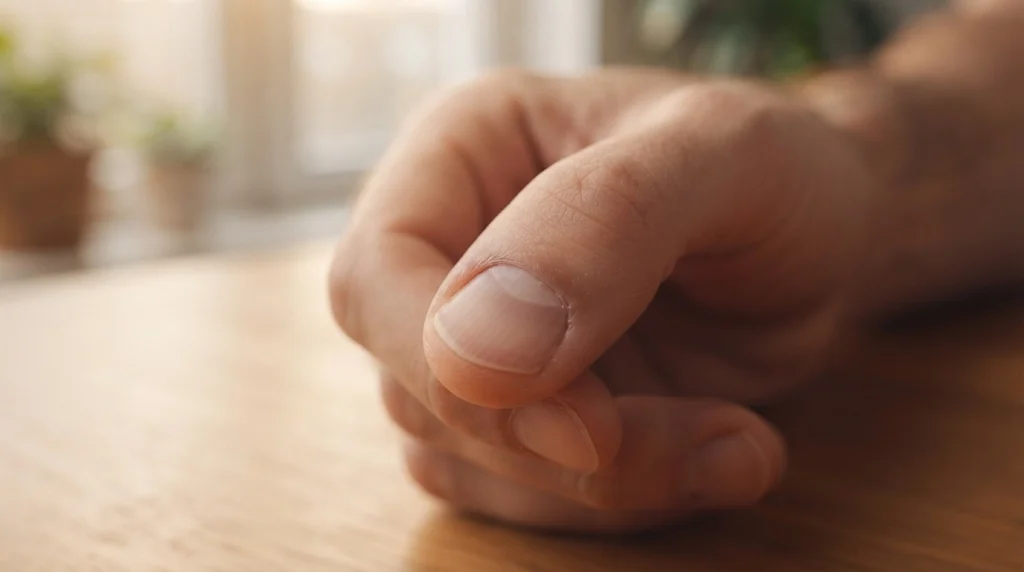
Look at the base of one fingernail, where the nail disappears beneath a fold of skin. The main nail-producing part of the matrix, called the germinal matrix, lies under that fold and the base of the nail. Another part, called the sterile matrix, extends beneath the nail farther toward your fingertip. Together, these tissues help form and support the nail as it grows.
You might see a whitish crescent at the base of a thumbnail. That’s the lunula, the visible part of the matrix. Its size varies from nail to nail and person to person. If you can’t see a lunula on a particular finger, that alone isn’t a sign that something is wrong.
You cannot inspect most of your matrix by looking at the nail’s surface. That matters when you’re trying to explain a change: a groove might reflect a temporary interruption in growth, while a lifted nail could involve the nail bed or another part of the nail unit. Appearance alone won’t always tell you which tissue is affected.
What does the nail matrix actually do?
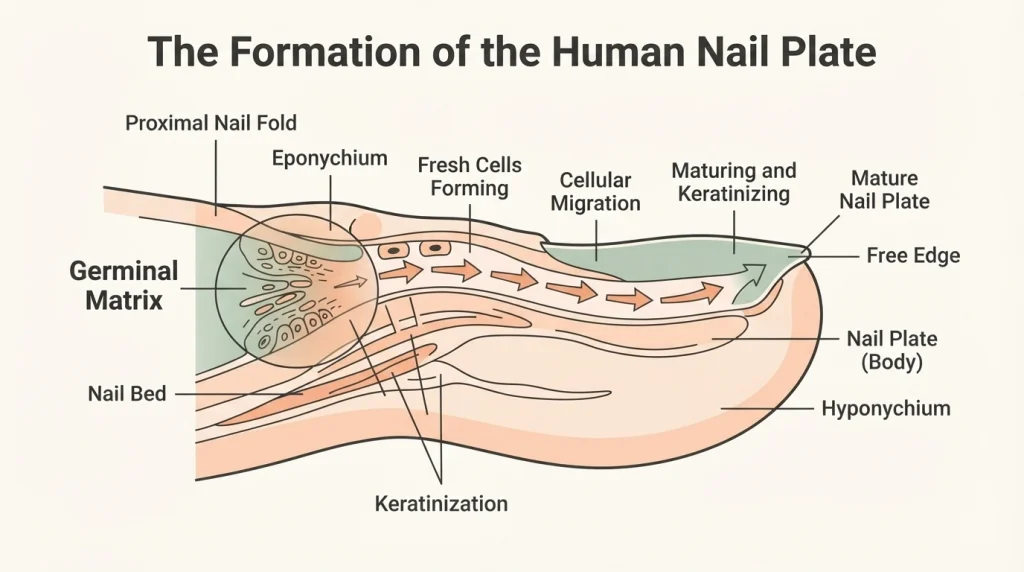
Your matrix produces new nail cells. As fresh cells form, older cells are pushed forward and become the hard nail plate you can see and trim. That visible plate is the result of growth happening behind it. Cutting its free edge won’t reach the matrix tucked near the base.
The germinal matrix does most of the nail-producing work. The sterile matrix contributes to the underside of the nail and helps keep it attached as it moves over the nail bed. You don’t need to remember those names to care for your nails. The useful point is that a problem in the growth area can show up later in the nail that emerges from it.
Think of a mark on a newly grown nail as a record of something that happened earlier. If growth was briefly disrupted, the affected section may move outward over time. That’s one reason a change close to your cuticle deserves a different look from a chipped free edge.
Is the nail matrix the same as the nail bed or cuticle?
No. These parts sit close together, but they have different jobs:
- Nail matrix: Living tissue that makes new nail cells. Much of it is hidden at the nail’s base.
- Nail plate: The hard, visible nail that grows forward and that you polish or trim.
- Nail bed: Tissue beneath the visible nail plate that helps support it.
- Cuticle: A thin seal of tissue where the nail meets the skin at its base.
- Lunula: The pale crescent you may see near the base of the nail; it is the visible portion of the matrix.
This distinction helps when you’re describing a concern. If a nail is lifting away from the skin beneath it, you’re seeing a change in attachment. If a new dent repeatedly appears as the nail grows out, a clinician may consider whether growth at the matrix has been interrupted. You can describe what you see without having to diagnose the exact part yourself.
What can happen if the nail matrix is damaged?
A temporary disruption to the matrix can change the nail it produces. You may notice a dent, groove, unusual texture, or a nail that grows differently for a while. A more serious injury near the nail’s base can affect regrowth. The outcome depends on what caused the problem and how much tissue was injured.
For example, slamming a finger in a door can injure several nail structures at once. A manicure that presses hard beneath the skin at the nail’s base can also irritate this delicate area. Illness and some skin conditions may interrupt growth without any obvious knock to the finger. If you’d like a closer look at possible causes, see what can damage nail growth.
A damaged nail can often grow back, especially when the matrix remains able to produce new cells. Severe damage can sometimes leave a lasting change. Because you can’t see the full matrix yourself, it’s difficult to predict regrowth from a photo or from how the nail looks on the first day. This guide to damaged nail regrowth explains what to watch for as a new nail appears.
When to get help after an injury
If an injury causes severe pain, a deep cut, a crushed fingertip, or a nail that is partly torn away, seek medical care promptly. Don’t try to pierce a painful, blood-filled nail or pull off an attached nail yourself.
Which nail changes might involve the matrix?
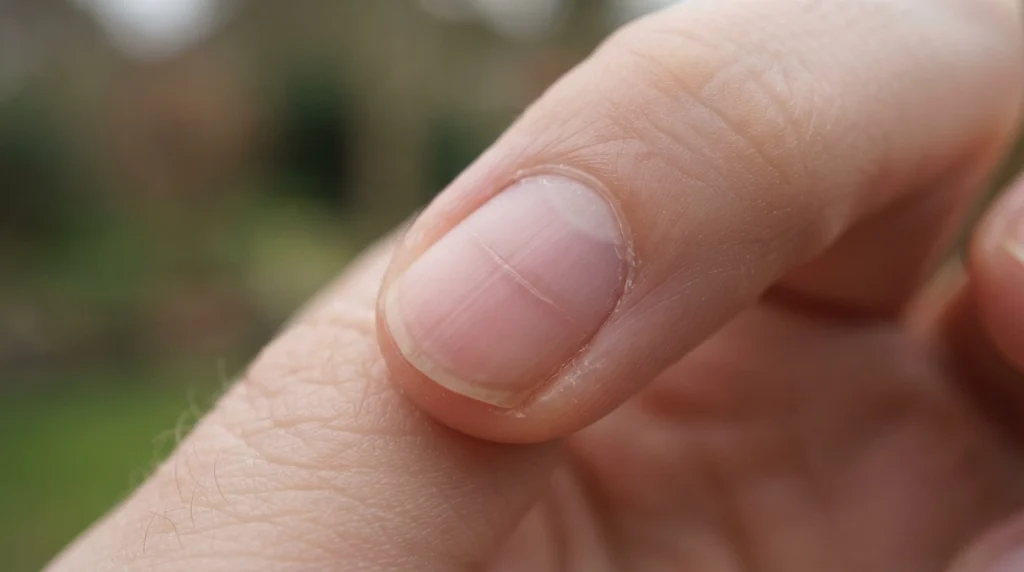
The matrix is one possible source of a nail change, but it isn’t the only one. The nail bed, surrounding skin, medications, and health conditions can affect appearance too. Use the following clues to describe what’s happening, then let a healthcare professional determine the cause if the change persists or worries you.
A groove running across the nail
A horizontal depression can form when nail growth slows or pauses for a time. These grooves are often called Beau’s lines. A recent illness or an injury may be relevant, particularly if you notice a similar line on several nails. You may see the groove shift toward the tip as the nail grows.
Dents, pitting, or a rough new surface
Small pits or a change in texture can have several causes, including skin conditions that affect the nails. A single rough patch after a known injury tells a different story from new pits across many nails. Take note of which nails are affected and whether you also have changes to your skin.
A nail that splits or grows back unevenly
If a split keeps starting in the same place near the base, or a nail regrows with a persistent deformity after an injury, ask a dermatologist to examine it. Repeatedly filing the split smooth may improve how it feels, but it won’t explain why new growth looks different.
A new or changing dark streak
Dark nail streaks have more than one possible cause. Still, a new or changing dark streak should be checked by a dermatologist, especially when it affects one nail. Don’t assume it’s a bruise or hide it beneath an opaque manicure while you wait to see whether it changes.
For a broader look at changes in nail color, shape, and texture, see signs of unhealthy nails. Remember that the appearance of a nail alone cannot confirm matrix damage.
How can you protect the nail matrix during manicures?
You don’t need a special treatment to make your matrix work. Everyday care focuses on avoiding injury to the area around the nail’s base and keeping the surrounding skin comfortable.
- Leave the cuticle seal intact. Avoid cutting or scraping the thin tissue at the base of the nail. It helps protect the space where the nail emerges.
- Ask for gentle prep. If a manicure tool hurts or digs into the skin near your nail’s base, ask the technician to stop. Discomfort is a reason to change the technique.
- Don’t pick at lifting products. Pulling off gel or an enhancement can injure the visible nail and surrounding tissues. Follow the appropriate removal method instead.
- Protect your fingertips. Use appropriate gloves for work that could crush or cut your fingers, and give your toes enough room in your shoes.
- Care for the surrounding skin. A moisturizer can help dry skin and cuticles feel more comfortable. It cannot repair a severely injured matrix or guarantee faster nail growth.
If you want a manageable upkeep plan, try a simple nail care routine. Gentle, consistent habits are easier to keep than frequent aggressive cuticle work.
Practical tip
If you spot an unfamiliar mark, take a clear photo of the bare nail in good light and note the date. A later photo can help you show a dermatologist whether the mark moved outward with growth or changed near the base.
When should you see a dermatologist about a nail change?
Book an assessment for a new or changing dark streak, a nail that begins lifting, unexplained pitting, a persistent change in growth, or redness and swelling around the nail. Get prompt care after a significant injury, particularly when there’s severe pain or an open wound.
You don’t need to decide whether the problem is in the matrix before making an appointment. Tell the clinician when you first noticed it, whether you remember an injury or illness, which nails are affected, and whether the change is growing out. Those details are more useful than a guess at the diagnosis.
Frequently asked questions about the nail matrix
Q: Can you see your nail matrix?
A: You can’t see most of it because it sits beneath the skin and nail at the base. The pale lunula, when visible, is the portion you can see.
Q: Does having no visible lunula mean your matrix is unhealthy?
A: No. Some healthy nails have lunulas that are difficult to see. If your nail is otherwise unchanged, an invisible half-moon by itself isn’t evidence of matrix damage.
Q: Can a damaged nail matrix heal?
A: It often can after a minor injury, and normal-looking nail may grow again. A severe injury can sometimes cause a lasting change. Have a clinician examine a deep injury or persistent change.
Q: Does cuticle oil make the nail matrix grow nails faster?
A: Cuticle oil can condition dry skin around your nails, but you shouldn’t count on it to speed up matrix activity or fix an injury. Protecting the area from trauma is the more useful goal.
Q: Are all nail ridges caused by matrix damage?
A: No. Ridges have several possible explanations, and their direction, depth, and timing matter. A new deep groove or a persistent change is worth discussing with a dermatologist.
What should you remember about the nail matrix?
Your nail matrix makes new nail beneath the skin at the base of each finger and toe. Treat that area gently, and pay attention to changes that persist, hurt, or appear without a clear reason. Save this guide to Pinterest so you can find the anatomy and warning signs again when you need them.

Hi, I’m Jessica, the creator behind Unique Lash & Nails Katy.
I created this website for anyone who loves beautiful nails as much as I do. Here, I share trendy nail designs, seasonal manicure ideas, easy nail care tips, honest product recommendations, and step-by-step guides to help you create salon-worthy nails at home. Whether you’re looking for everyday inspiration or your next favorite nail trend, I hope you’ll find something you love.