How to Make Ridged Nails Look Smoother: Easy Tips
Quick Answer
To make ridged nails look smoother, apply a ridge-filling base coat, add two thin layers of nail polish, and finish with a glossy top coat. Moisturize your nails and cuticles daily. Avoid aggressive buffing, which can thin your natural nails. These methods disguise harmless surface ridges without removing significant nail material.
You’ve carefully painted your nails, chosen a beautiful color, and applied a shiny top coat. But instead of a flawless finish, tiny lines and grooves are still visible beneath your polish. Sound familiar?
Nail ridges can make even a fresh manicure look uneven. Fortunately, you don’t need to file away your natural nail surface to create a smoother appearance.
Whether you prefer glossy nude nails, bold Pinterest-inspired manicures, or natural-looking nails without polish, there are several gentle ways to improve their appearance.
This guide explains how to make ridged nails look smoother, which products actually help, what to avoid, and how to build a routine that protects your nails.


Why Do Your Nails Have Ridges?
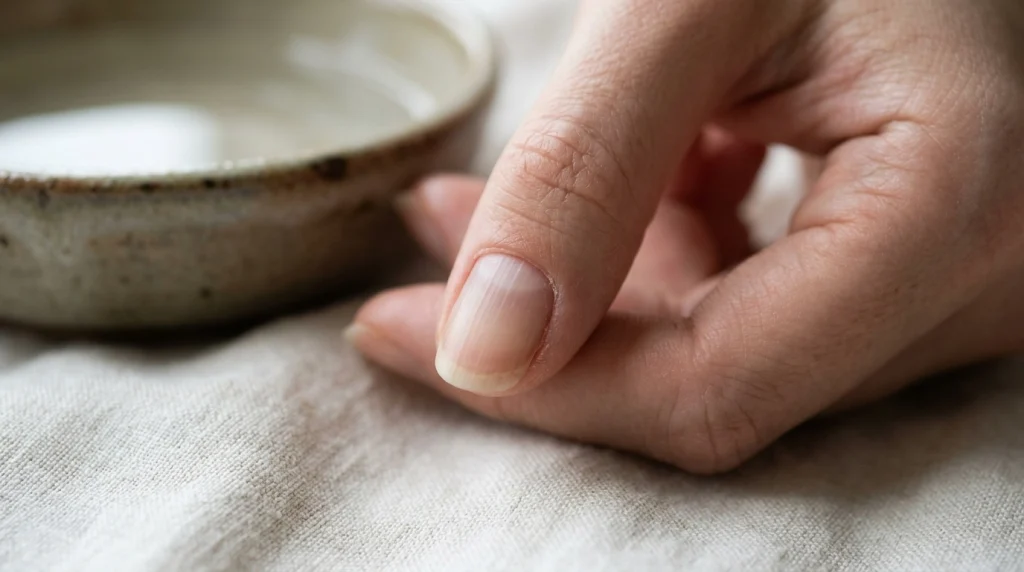
Before choosing a smoothing method, it helps to understand why your nails have ridges in the first place.
Your visible nail plate consists primarily of hardened keratin. New nail grows from the nail matrix beneath the skin near the base of your nail. Changes in how the nail forms can create raised lines, shallow grooves, or uneven texture.
Not every ridge means something is wrong. Some are a normal variation in nail appearance.
Vertical Nail Ridges
Vertical ridges extend from the cuticle toward the nail tip. They’re common and often become more noticeable with age.
You might notice that your nails:
- Have several fine lines running lengthwise.
- Feel slightly uneven when touched.
- Look textured underneath glossy polish.
- Have ridges that become more visible in certain lighting.
These ridges are frequently harmless, especially when they’ve developed gradually and your nails otherwise look healthy.
Dryness, repeated exposure to water, and manicure damage can also contribute to rough-looking or brittle nails.
Horizontal Nail Ridges
Horizontal ridges extend across the nail rather than along its length.
Deep horizontal grooves, sometimes called Beau’s lines, can appear when nail growth has been temporarily interrupted by an illness, injury, or another health-related event.
Important Nail Health Warning
If you suddenly develop deep horizontal grooves, painful nail changes, nail lifting, unusual discoloration, or a new dark streak, consult a healthcare professional before trying cosmetic treatments. Nail polish can conceal a visible change without addressing its cause.
If your ridges are ordinary, shallow vertical lines and your nails are otherwise healthy, cosmetic smoothing methods may be appropriate.
What Is the Best Way to Make Ridged Nails Look Smoother?
For most people, a ridge-filling base coat is the easiest place to start.
Unlike a standard transparent base coat, a ridge-filling formula is designed to create a more even-looking surface. It helps disguise shallow grooves before colored polish is applied.
However, your best method depends on whether you want a polished manicure, a natural finish, or a longer-term care routine.
Method 1: Apply a Ridge-Filling Base Coat
Best for: Visible vertical ridges that show through regular nail polish.
Ridge fillers contain film-forming ingredients and other components that help create a more uniform-looking coating across the nail.
They don’t permanently remove ridges. Instead, they visually level minor surface irregularities.
For shallow ridges, a single thin coat may be enough. More noticeable ridges may need a second coat if the manufacturer’s instructions allow it.
How to use it:
- Remove old polish carefully and wash your hands.
- Dry your nails thoroughly.
- Apply one thin layer of ridge-filling base coat.
- Allow the product to dry according to its instructions.
- Inspect the surface before applying nail color.
- Add another thin coat only if needed and permitted by the product directions.
Pros: Easy to apply, beginner-friendly, and useful beneath many regular nail polishes.
Cons: The effect is temporary, and deep grooves may remain visible.
Pro Tip
Choose a ridge filler with a slightly milky or blurring finish if you want to wear your nails without colored polish. This can soften the appearance of fine lines while maintaining a natural manicure look.
Method 2: Use Gentle Buffing Only When Appropriate
Best for: Healthy, relatively strong nails with very slight surface roughness.
Buffing can temporarily reduce the appearance of small irregularities by polishing the outer nail surface.
But there’s an important drawback: buffing removes some nail material.
Repeated or aggressive buffing can weaken the nail plate, especially if your nails are already thin, brittle, splitting, or peeling.
For that reason, buffing shouldn’t be your main strategy for hiding prominent ridges.
If your nails are strong and you choose to buff:
- Use a fine, gentle finishing buffer intended for natural nails.
- Apply minimal pressure.
- Use only a few light passes.
- Stop immediately if your nails become sensitive or noticeably thinner.
- Avoid repeating the process just because the ridges remain visible.
Never attempt to grind deep ridges completely flat.
If your nails already look fragile, skip buffing entirely and use a ridge-filling coating instead.
For a different approach to glossy bare nails, explore our guide on how to shine nails without polish.
Method 3: Choose a Nail Polish That Disguises Texture
Best for: Anyone who wants smoother-looking nails without additional surface filing.
Your nail polish color and finish can influence how noticeable ridges appear.
Very sheer formulas can allow the underlying nail texture to show through. Certain metallic and highly reflective finishes may highlight surface irregularities under direct light.
More opaque creams often create a visually uniform color, especially when paired with a smoothing base coat.
Try these combinations:
- Soft pink cream: Creates a clean everyday manicure.
- Milky nude: Gives nails a subtle, polished appearance.
- Opaque beige: Helps reduce visible color differences across the nail.
- Classic red cream: Provides bold, even-looking coverage.
- Muted mauve: Offers a soft manicure that works for many occasions.
Color alone won’t physically smooth the surface. The combination of base coat, thin color layers, and top coat is more important.
Method 4: Apply a Glossy Top Coat
Best for: Improving the appearance of a finished manicure.
A clear top coat provides an additional film over your nail color and creates a reflective surface.
When applied over a well-prepared manicure, it can soften the visual appearance of minor imperfections.
Choose a regular top coat compatible with your chosen nail polish.
Apply one even layer using light brush strokes. Avoid pressing the brush into the colored polish, which may create streaks or drag marks.
A thick layer isn’t automatically better. Excess product can collect near the sidewalls, dry unevenly, or create bubbles.
Remember that a glossy top coat changes the finish rather than permanently correcting the natural nail texture.
Method 5: Moisturize Nails and Cuticles Every Day
Best for: Dry nails, rough cuticles, and long-term nail maintenance.
Moisturizing won’t erase ridges created by the way your nails grow.
However, keeping your nails and surrounding skin conditioned can reduce dry, rough-looking texture and make your manicure area look more cared for.
Try a simple jojoba-based cuticle oil, fragrance-free hand cream, or petroleum jelly.
Massage a small amount of moisturizer over your nails and the surrounding skin after washing your hands.
At bedtime, apply cuticle oil or cream again if your fingertips feel dry.
If you’re deciding between moisturizing products, our article on nail oil vs. cuticle oil explains how to choose a formula that fits your routine.
Consistent conditioning helps protect your existing nails, but it cannot guarantee that new nails will grow completely ridge-free.
How Can You Create a Smoother-Looking Manicure at Home?
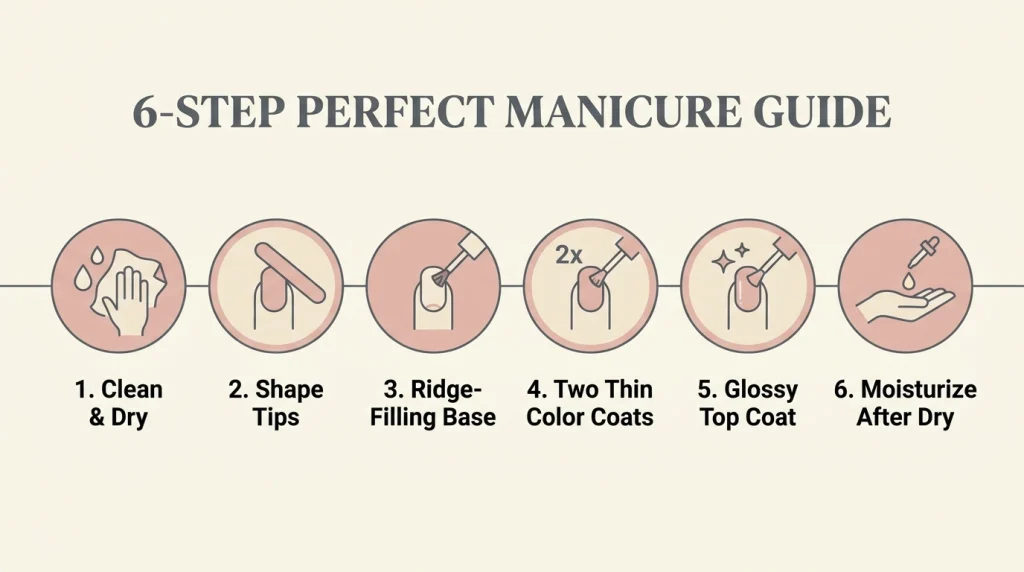
The following routine combines several cosmetic methods into one manageable manicure.
TIME NEEDED
30–45 minutes
DIFFICULTY
Beginner
ITEMS NEEDED
5 basic items
RESULT LASTS
Until polish wears off
What You’ll Need
- Gentle nail file
- Ridge-filling base coat
- Regular nail polish in your preferred color
- Compatible glossy top coat
- Cuticle oil or moisturizing hand cream
Step 1: Clean and Dry Your Nails
Remove your existing nail polish using a suitable remover. Wash away residue and dry your hands thoroughly.
Ensure your nails are clean and free from oil before applying base coat. Excess oil can interfere with polish adhesion.
Common mistake: Applying polish immediately after using cuticle oil. This can make an otherwise smooth manicure lift or peel prematurely.
Step 2: Shape Your Nail Tips
Use a gentle nail file to shape the free edges of your nails.
A short oval or squoval shape can look neat and is convenient for everyday activities.
Concentrate on the nail tips rather than filing the top surface.
Common mistake: Using a coarse file across the entire nail plate to remove visible ridges.
Step 3: Apply Ridge-Filling Base Coat
Start near the cuticle without touching the skin and glide the brush toward the nail tip.
Keep your application thin and even. Allow the coat to dry completely before continuing.
Common mistake: Applying one very thick layer instead of following the manufacturer’s coating instructions.
Step 4: Add Two Thin Layers of Nail Color
Apply your first thin coat of nail polish, allowing it to dry sufficiently before adding another.
The second coat improves color coverage and can make the underlying texture less noticeable.
Use gentle strokes and avoid repeatedly brushing over partially dried polish.
Common mistake: Applying thick coats that remain soft underneath and develop dents or uneven patches.
Step 5: Seal With a Glossy Top Coat
Apply a thin, even top coat over the colored polish.
Lightly cap the free edge when appropriate for your product to help protect the manicure.
Allow your nails enough drying time before handling objects or completing chores.
Common mistake: Touching or pressing the polish before it has dried, leaving marks that resemble surface ridges.
Step 6: Moisturize After the Manicure Dries
Once your manicure is fully dry, apply a little cuticle oil to the skin around your nails.
Follow with hand cream if your hands feel dry.
Common mistake: Assuming cuticle oil will flatten the nail plate. Its purpose is conditioning, not physically removing ridges.
Which Nail Products Help Hide Ridges?
You don’t need an expensive collection of manicure products to improve the appearance of shallow nail ridges.
These three product categories are the most practical starting points.
Disclosure: As an Amazon Associate, we earn from qualifying purchases.
Recommended Product Type
Ridge-Filling Nail Base Coat
A smoothing base coat helps reduce the visible appearance of shallow ridges without aggressive filing. Look for formulas specifically labeled as ridge-filling or smoothing.
Recommended Product Type
Glossy Regular Nail Top Coat
A compatible glossy top coat adds a smooth-looking reflective layer over your manicure. Choose a formula that works with regular nail polish rather than a gel product requiring a curing lamp.
Recommended Product Type
Jojoba-Based Cuticle Oil
A simple cuticle oil conditions dry nail folds and helps your manicure look neat. Choose a fragrance-free option if your skin is sensitive.
Can You Make Ridged Nails Look Smooth Without Polish?
Yes, you can improve the appearance of ridged nails without wearing colored polish, although natural ridges may remain visible.
Start by keeping your nail tips neatly shaped and the surrounding skin moisturized.
Massage a small amount of nail oil over the exposed nail surface and cuticle area. This can temporarily improve shine and reduce a dry appearance.
If you prefer a bare-nail look, avoid trying to achieve perfectly flat nails through repeated buffing.
Natural nail texture is normal, and some visible lines don’t need correction.
You can also consider a sheer smoothing treatment if you want subtle coverage without traditional nail color.
How Long Does It Take for Nail Ridges to Improve?
The answer depends on what caused the ridges and whether you’re asking about appearance or actual nail growth.
- Immediately: A ridge-filling base coat can improve the appearance of shallow ridges once applied and dried.
- Within days: Moisturizer can make dry skin and nail surfaces look more conditioned.
- Over several weeks: Consistent protective care may reduce additional dryness-related damage.
- Over several months: Damaged nail material gradually grows toward the tip and is trimmed away.
Fingernails typically take several months to replace most or all of the visible nail plate. Growth varies with age, health, and individual circumstances.
Normal age-related vertical ridges may remain even with excellent nail care.
Products that promise to eliminate all ridges within a few days should be viewed cautiously.
What Should You Do and Avoid With Ridged Nails?
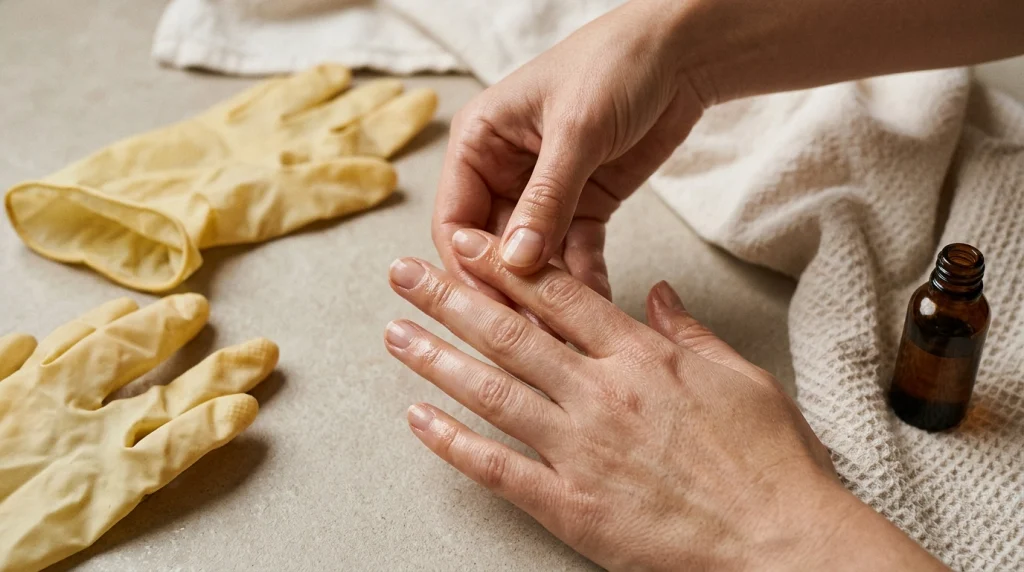
DO
- Use a ridge-filling base coat.
- Moisturize daily.
- Keep nails neatly trimmed.
- Wear gloves during wet chores.
- Remove polish gently.
DON’T
- Buff deeply or repeatedly.
- Pick at your cuticles.
- Peel off gel manicures.
- Ignore sudden changes.
- Expect instant permanent results.
How Can You Prevent Your Nails From Becoming Rougher?
Not every ridge is preventable. However, reducing everyday nail damage can help protect the surface you already have.
Protect Your Nails From Excess Water Exposure
Repeated wetting and drying may contribute to nail brittleness.
Wear suitable protective gloves when washing dishes or handling household cleaning products.
Afterward, dry your hands and apply moisturizer.
Avoid Picking or Cutting Healthy Cuticles
The nail folds and cuticle region help protect the area where your nails grow.
Repeated picking or forceful pushing can irritate the tissue and sometimes affect nail growth.
For more information about nail growth and protection, see what the nail matrix is and how it works.
Remove Gel and Acrylic Products Carefully
Don’t peel or scrape gel, acrylic, or other enhancements from your nails.
Improper removal may take layers of natural nail material with the product, leaving nails thinner and more uneven.
If you wear gel manicures regularly, follow our guide to protecting your nails during gel manicures.
Maintain a Simple Routine
A manageable routine is easier to follow than a complicated treatment schedule.
Keep your nails clean, gently file the tips when needed, moisturize regularly, and use a protective base coat when painting them.
Don’t apply multiple hardening products without checking whether they’re suitable for your nail condition.
Why Do Your Nails Still Look Ridged After Applying Polish?
Sometimes your manicure looks uneven even after following all the usual steps.
These common issues may explain why.
Problem: Vertical Lines Show Through Polish
Immediate fix: On your next manicure, start with a ridge-filling base coat and choose an opaque cream polish.
Prevention: Avoid relying on several thick layers of colored polish to fill uneven areas.
Problem: The Polish Looks Bumpy
Immediate fix: Allow the manicure to dry properly. If the surface is severely uneven, remove it gently and start again.
Prevention: Apply thin layers and avoid repeatedly brushing over partially dry polish.
Problem: Your Nails Feel Thin After Buffing
Immediate fix: Stop buffing and protect your nails from additional friction and chemical exposure.
Prevention: Use cosmetic ridge fillers rather than repeatedly removing nail material. Seek professional advice if your nails are painful or separating.
Problem: Ridges Keep Returning
Immediate fix: Recognize that polish only conceals existing texture; it doesn’t change how your nail naturally grows.
Prevention: Maintain gentle nail care and get new or significant changes examined by a clinician.
Frequently Asked Questions About Ridged Nails
Q: Can nail ridges be permanently removed?
A: Not always. Natural vertical ridges can be a normal feature of your nails. Ridge fillers temporarily improve their appearance, while some ridges caused by injury or illness may improve as new nail grows.
Q: Is it safe to buff ridged nails?
A: Very light, occasional buffing may be tolerated by strong nails, but buffing removes nail material. If your nails are thin, peeling, or brittle, avoid surface buffing and choose a smoothing base coat instead.
Q: Does cuticle oil remove nail ridges?
A: No. Cuticle oil moisturizes and conditions the nail area, but it doesn’t permanently remove ridges. It may temporarily make dry-looking nails appear smoother and shinier.
Q: What nail polish hides ridges best?
A: An opaque cream polish over a ridge-filling base coat is a practical option. Apply thin layers and finish with a compatible glossy top coat to create a more even-looking manicure.
Q: Do vertical nail ridges mean I have a vitamin deficiency?
A: Not necessarily. Vertical ridges commonly occur with normal aging. Although some nail changes can be associated with nutritional or medical conditions, ridges alone don’t establish a deficiency. Avoid taking supplements solely to treat ridges without professional advice.
Final Thoughts: Smooth-Looking Nails Start With Gentle Care
Learning how to make ridged nails look smoother doesn’t require aggressive filing or complicated treatments. For ordinary shallow ridges, a ridge-filling base coat, thin layers of polish, and a glossy top coat offer a practical cosmetic solution.
Keep your nails moisturized, protect them from unnecessary damage, and remember that natural nail texture isn’t something you must eliminate.
Save this guide to your Pinterest nail-care board so you’ll have an easy smoothing routine ready for your next manicure.

Hi, I’m Jessica, the creator behind Unique Lash & Nails Katy.
I created this website for anyone who loves beautiful nails as much as I do. Here, I share trendy nail designs, seasonal manicure ideas, easy nail care tips, honest product recommendations, and step-by-step guides to help you create salon-worthy nails at home. Whether you’re looking for everyday inspiration or your next favorite nail trend, I hope you’ll find something you love.