How Nail Polish, Gel Polish and Acrylics Affect Peeling Nails
Quick Answer
Regular nail polish, gel polish, and acrylics can all affect peeling nails, but the risks are different. Regular polish is usually the gentlest option when applied and removed carefully. Gel polish can worsen peeling through aggressive preparation, picking, and removal. Acrylics can add stress and require filing that weakens already fragile nails. If your nails are peeling, prioritize gentle removal, daily moisturizing, and a break from damaging enhancements.
Your nails looked beautiful under that fresh manicure. Then you removed the color and discovered thin, flaky layers at the tips. Now you’re wondering whether nail polish, gel polish, or acrylics caused the damage.
Here’s something important: the manicure itself isn’t always the biggest problem. How your nails are prepared, how products are removed, and how often you repeat these treatments can make an enormous difference.
Understanding how nail polish, gel polish and acrylics affect peeling nails helps you enjoy beautiful manicures without repeatedly weakening your natural nails. Let’s compare the risks and find a gentler approach.


Why Do Nails Peel After Wearing Nail Products?
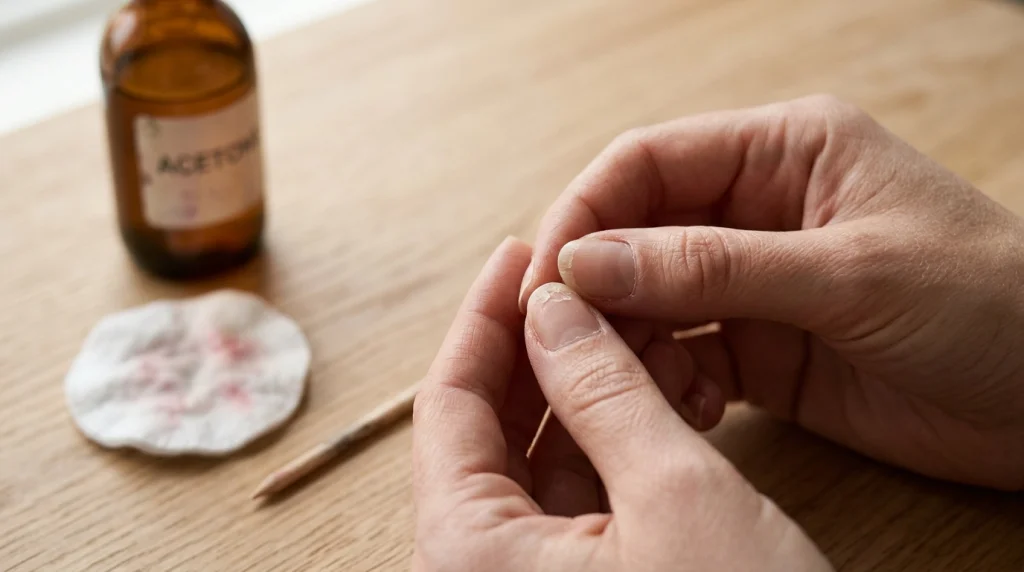
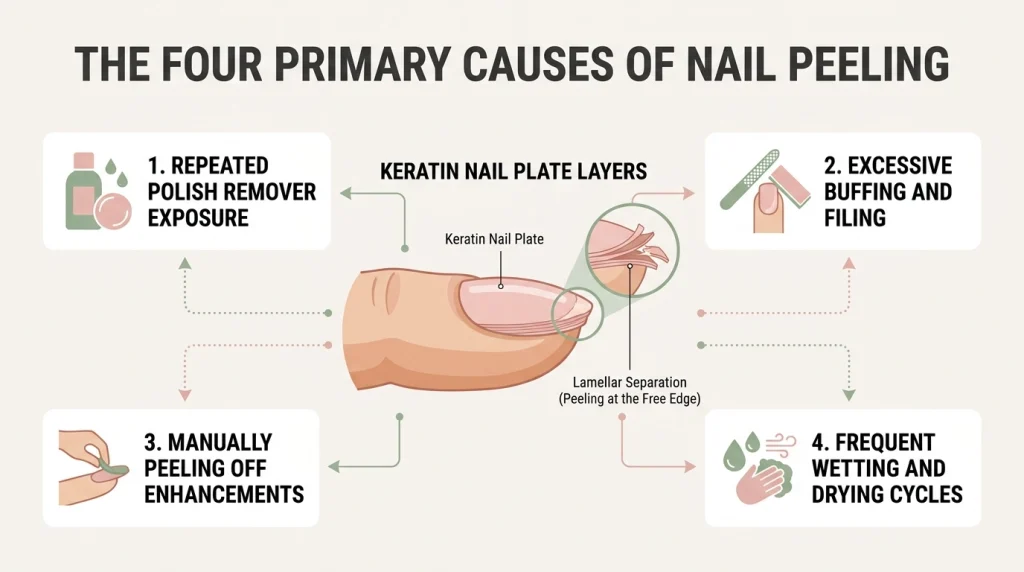
Peeling nails usually develop when thin layers of the nail plate begin separating, especially near the free edge. Dermatologists call this condition lamellar splitting, or onychoschizia.
Your nail plate consists primarily of tightly packed keratinized cells. Although it feels solid, its layers can become vulnerable to repeated moisture exposure, mechanical stress, and abrasive treatments.
Several manicure-related habits can contribute to this damage.
Repeated Exposure to Nail Polish Remover
Nail polish removers dissolve cosmetic coatings so you can wipe them away. However, frequent exposure to solvents, including acetone, can leave your nails and surrounding skin feeling dry.
This becomes particularly problematic when you remove and reapply polish several times per week without moisturizing afterward.
Acetone isn’t automatically harmful when used correctly. It’s often necessary for removing certain nail coatings. The concern is excessive exposure combined with rough removal techniques.
Excessive Buffing and Filing
Buffing removes material from the nail surface. A small amount of preparation may be part of certain manicure systems, but repeated aggressive filing can make natural nails thinner.
When your nail plate loses thickness, everyday activities like typing, washing dishes, and opening containers may create additional stress.
Peeling Off Nail Products
Picking at lifting gel polish or pulling off artificial enhancements can remove superficial layers of your natural nail along with the product.
That’s why your nails sometimes look rough, white, or noticeably thinner immediately after removal.
Repeated Wetting and Drying
Water exposure can also contribute to fragile nails. Frequent soaking, handwashing, and cleaning may encourage nail layers to split over time.
If your nails are already damaged by manicures, wet work can make the problem more noticeable.
For practical prevention strategies, explore these gentle ways to prevent nail peeling.
How Does Regular Nail Polish Affect Peeling Nails?
Traditional nail polish is generally the most manageable option when your nails are mildly fragile. Unlike gel polish, regular lacquer dries without a curing lamp and usually doesn’t require significant nail-surface filing.
However, regular polish isn’t completely free of potential problems.
Can Regular Nail Polish Make Nails Peel?
Yes, particularly when you combine frequent color changes with harsh removal habits.
Regular polish can contribute indirectly to peeling through:
- Repeated use of drying polish removers.
- Scraping stubborn glitter or long-wear coatings.
- Picking off chipped polish instead of dissolving it.
- Frequent buffing before applying another manicure.
- Ignoring dryness after removing color.
The polish film itself isn’t necessarily destroying your nails. Often, the repeated application and removal cycle creates the larger problem.
Is Regular Nail Polish Safe for Already Peeling Nails?
If your nails have mild peeling without pain, swelling, or separation from the nail bed, a simple traditional manicure may be an option.
Choose a gentle base coat, apply thin color layers, and avoid filing the upper nail surface. Remove the coating carefully when it starts wearing away.
If your nails are significantly thin, tender, or actively splitting, leaving them bare temporarily may be more comfortable.
Pro Tip
Choose sheer or translucent polish while monitoring mild peeling. You’ll still enjoy a polished appearance while being able to notice significant discoloration or changes more easily than under opaque, dark colors.
How Does Gel Polish Affect Peeling Nails?
Gel polish is popular because of its glossy appearance and chip-resistant finish. Many gel manicures remain attractive for around two weeks, depending on the product and your daily activities.
Unfortunately, the preparation and removal processes can be harder on already fragile nails.
Does Gel Polish Cause Nail Peeling?
Gel manicures can contribute to brittleness, peeling, and cracking, especially when removal damages the nail surface.
The American Academy of Dermatology identifies these concerns and recommends taking breaks between gel manicures when nails become fragile.
Gel polish bonds firmly to your nail plate. When the coating begins lifting, it’s tempting to pull it away. Unfortunately, doing so may remove portions of your natural nail’s outer layers.
Over time, repeated picking or scraping can create rough, thin, flexible nails.
Why Does Gel Removal Sometimes Leave Nails Thin?
Many soak-off gels require acetone and sufficient contact time for the coating to soften.
If the product hasn’t softened enough, forceful scraping can damage the underlying nail. Aggressive electric filing may also remove natural nail material.
Some gel products aren’t designed to soak off completely, so their removal requirements differ. Your technician should identify the exact product before choosing a removal method.
Never assume that every gel coating can be safely peeled away or dissolved in the same way.
What About UV and LED Nail Lamps?
Gel polish requires curing under a compatible lamp. Both traditional UV lamps and many LED nail lamps emit ultraviolet radiation.
Repeated UV exposure raises additional skin-health considerations separate from nail peeling.
The American Academy of Dermatology recommends applying broad-spectrum, water-resistant SPF 30 or higher sunscreen to your hands before a gel manicure, or wearing suitable opaque fingertip-free UV-protective gloves.
Make sure your nail products and curing lamp are compatible, too. Incomplete curing can increase exposure to potentially irritating or sensitizing uncured ingredients.
Warning
Never peel off gel polish simply because an edge is lifting. Pulling the coating away can remove natural nail layers and worsen existing peeling. Arrange proper removal instead.
How Do Acrylic Nails Affect Peeling Nails?
Acrylic enhancements create length and structure using a liquid-and-powder system that hardens into a durable artificial nail.
They can look beautiful, especially when you love dramatic shapes or intricate Pinterest-inspired designs.
But when your natural nails are already peeling, acrylics deserve extra caution.
Can Acrylic Nails Make Peeling Worse?
Yes. Acrylic application commonly involves preparing the nail surface to help the enhancement adhere. Excessive filing during this process can reduce the thickness of your natural nails.
Acrylic extensions can also create additional mechanical leverage. If a long enhancement catches on something, the force may affect the natural nail underneath.
Repeated filling, rebalance appointments, and removal sessions can compound damage when techniques are too aggressive.
Why Do Nails Sometimes Peel After Acrylic Removal?
Acrylic removal may involve acetone soaking, careful product reduction, or professional filing, depending on the system.
Problems arise when someone pulls, twists, or pries the enhancements away.
This can leave the natural nail visibly rough and thin. In more severe cases, trauma may contribute to separation between the nail plate and nail bed.
If an acrylic nail feels painful, becomes loose, or develops discoloration underneath, don’t simply cover the problem with more product.
Should You Put Acrylics Over Peeling Nails?
Generally, it’s better to address active peeling before applying a new set.
Acrylics may hide visible damage, but covering an already weakened nail doesn’t reverse the underlying problem.
Instead, keep your natural nails short and protected while the damaged portions grow out.
For a broader recovery approach, follow this guide to making your nails healthy again.
Regular Polish vs. Gel Polish vs. Acrylics: Which Is Gentlest?
If your main concern is peeling nails, the easiest manicure to remove with minimal surface preparation is usually the better choice.
| Factor | Regular Polish | Gel Polish | Acrylics |
|---|---|---|---|
| Surface preparation | Usually minimal | Varies by system | Often more intensive |
| Removal | Polish remover | Soaking or professional filing | Professional reduction and removal |
| Main peeling risk | Frequent remover use and picking | Peeling, scraping, and over-filing | Filing, removal trauma, and leverage |
| For fragile nails | Often the gentlest option | Use caution | Best avoided during active damage |
Bottom line: If your nails are peeling, regular polish is generally preferable to repeated gel or acrylic enhancements, provided you’re gentle with application and removal.
For substantial damage, a temporary break from all cosmetic coatings may be more appropriate.
What Are the Warning Signs of Manicure-Related Nail Damage?
Peeling isn’t the only sign that your manicure routine needs attention.
Watch for these changes:
- Flaking nail tips: Thin layers separate near the free edge.
- Unusual flexibility: Nails bend more easily after repeated treatments.
- Rough white patches: The surface looks uneven after product removal.
- Frequent splitting: Tips break or separate during ordinary activities.
- Tenderness: Nails feel uncomfortable after filing or enhancement removal.
- Lifting: Part of the nail separates from the underlying nail bed.
Not every nail change results from cosmetics. Skin conditions, infections, and certain medical problems can also affect nail appearance.
If you notice persistent discoloration, significant nail lifting, pain, or unusual changes across several nails, consult a dermatologist.
You can also review the signs of unhealthy nails to understand which changes deserve attention.
How Can You Protect Peeling Nails While Wearing Polish?
You don’t necessarily have to abandon every manicure forever. The goal is to reduce avoidable damage and choose treatments that suit your nails’ current condition.
Keep Your Nails Short
Short nails experience less leverage when they catch on clothing, keyboards, or household objects.
Use a fine-grit file and gently smooth rough tips. Avoid sawing aggressively across damaged edges.
Stop Buffing Away Every Imperfection
It’s tempting to polish rough nail surfaces until they look perfectly smooth.
Unfortunately, repeated buffing removes additional nail material. A slightly uneven nail surface is often preferable to a thinner one.
Moisturize After Handwashing
Apply hand cream or a simple ointment to your nails and surrounding skin after washing.
Moisturizing supports the condition of the exposed nail and cuticle area, although it cannot permanently repair layers that have already separated.
Wear Gloves During Wet Chores
Dishwashing and household cleaning repeatedly expose your nails to water, detergents, and friction.
Wear appropriately selected protective gloves, keep their interiors dry, and moisturize your hands afterward.
Use the Correct Removal Method
Traditional polish, soak-off gel, hard gel, and acrylics don’t all require the same removal process.
Follow the manufacturer’s instructions for your exact product. When you’re uncertain, let a qualified nail technician handle removal.
Do
- Moisturize daily.
- File rough edges gently.
- Protect hands from wet work.
- Remove products correctly.
- Take breaks when damage appears.
Don’t
- Peel off gel polish.
- Force acrylics loose.
- Overbuff thin nails.
- Hide painful nail changes.
- Ignore persistent irritation.
How Do You Help Peeling Nails Recover After Gel or Acrylics?
Recovery starts by reducing the stress that contributed to the damage.
You don’t need an elaborate routine. A few consistent habits can help protect your nails while healthier nail grows forward.
1. Remove Existing Enhancements Safely
If your gel or acrylic manicure is lifting, arrange proper removal. Don’t pry it away with another nail or metal tool.
Once the coating is removed, examine your natural nails for thinning, splitting, tenderness, and discoloration.
2. Trim and Smooth Damaged Tips
Keep nails at a comfortable short length. Gently file any peeling edges that catch on fabric or hair.
Never pull away a loose nail layer. Doing so can extend the split into otherwise intact nail material.
3. Apply Moisturizer Consistently
Massage a fragrance-free hand cream or petroleum jelly around your nails and cuticles several times daily, particularly after washing.
A simple cuticle oil may also make this routine easier to maintain.
4. Take a Break From Enhancements
Consider avoiding gel polish and acrylics while your nails are visibly damaged.
A one- to two-week break may help you reduce further exposure and establish better care habits. However, severely damaged areas generally need to grow out rather than magically repair themselves during that short period.
5. Protect New Nail Growth
Keep your hands protected during household chores, avoid unnecessary filing, and don’t use your nail tips as tools.
For an easy maintenance schedule, try this daily nail care routine.
How Long Do Peeling Nails Take to Recover?
Nail recovery depends on how much of the nail plate is damaged and whether the underlying nail-producing tissue is healthy.
Moisturizing may make the surrounding skin feel more comfortable quickly. You may also notice fewer snags after trimming rough tips and changing your habits.
But existing splits don’t fuse back together like a cut in living skin.
Fingernails typically grow around 3 millimeters per month, although individual growth rates vary. Replacing an entire fingernail often takes roughly four to six months.
That means damage near the tips may disappear relatively soon as you trim the nails, while more extensive damage can take months to grow out.
Look for gradual improvement, fewer new splits, and healthier-looking growth near the cuticle rather than expecting overnight results.
Which Nail Care Products Are Worth Using?
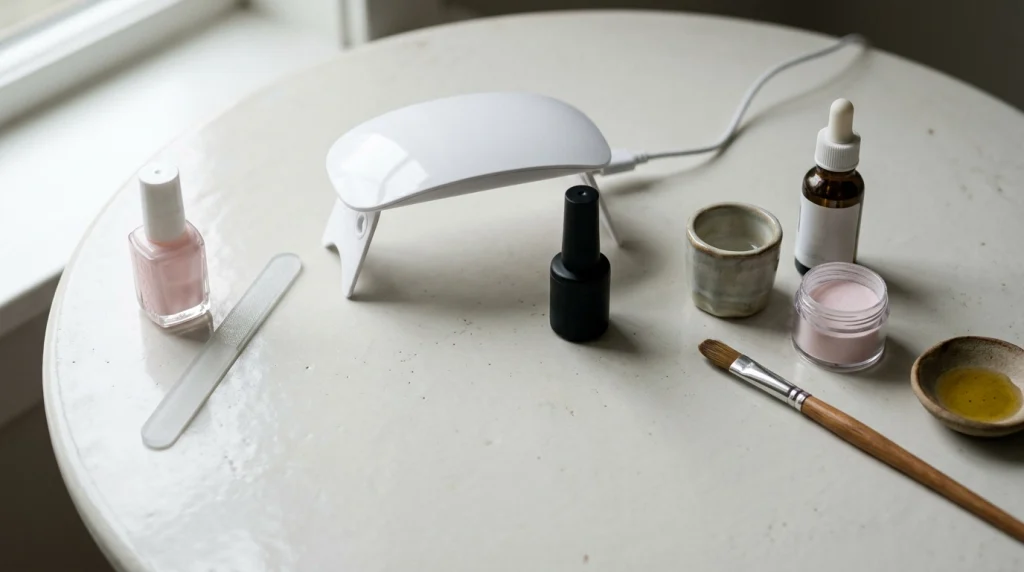
You don’t need expensive treatments to support peeling nails. Start with a few basic products that make gentle daily care easier.
1. Jojoba-Based Cuticle Oil
A simple cuticle oil can help condition dry skin around the nails and make moisturizing more convenient.
Apply a small amount around your cuticles and exposed nail edges, especially after frequent handwashing.
Recommended Product
Jojoba-Based Cuticle Oil
A practical option for conditioning dry cuticles and maintaining a consistent nail moisturizing routine.
As an Amazon Associate, we earn from qualifying purchases.
2. Fine Glass Nail File
A smooth glass nail file can help you gently shape short natural nails and control rough edges.
Use light pressure. The goal is to eliminate snags without thinning the surface.
Recommended Product
Glass Nail File for Natural Nails
Useful for carefully smoothing peeling nail tips without aggressive surface buffing.
As an Amazon Associate, we earn from qualifying purchases.
3. Fragrance-Free Hand Cream
Regular moisturizing helps maintain the condition of the skin around your nails and reduces discomfort associated with dryness.
Choose a gentle cream that you’ll actually use after washing your hands.
Recommended Product
Fragrance-Free Hand Cream
A useful everyday choice for dry hands and cuticles, particularly after frequent washing.
As an Amazon Associate, we earn from qualifying purchases.
When Should You Stop Getting Manicures and See a Dermatologist?
Minor peeling at the tips may improve with gentler habits. However, some nail changes require professional evaluation rather than another cosmetic treatment.
Seek medical advice when you notice:
- Persistent pain, redness, swelling, or pus around a nail.
- A nail separating significantly from its nail bed.
- New unexplained dark streaks or concerning discoloration.
- Itching, blistering, or rash after using nail products.
- Progressive nail changes despite reducing cosmetic treatments.
- Peeling or splitting affecting multiple nails without an obvious cause.
Gel and acrylic systems may contain ingredients capable of triggering allergic contact dermatitis in susceptible individuals. An allergic reaction can affect the skin around your nails and sometimes other areas.
Stop using a suspected product and consult a qualified clinician if you develop concerning symptoms.
A professional can help determine whether your nail changes relate to manicure damage, an infection, a skin condition, or another underlying issue.
Frequently Asked Questions
Q: Can I wear nail polish if my nails are peeling?
A: Mild peeling doesn’t always prevent you from wearing traditional polish. Choose gentle preparation and removal methods. Avoid covering nails that are painful, infected-looking, significantly lifted, or severely damaged.
Q: Are gel nails worse than regular polish for peeling nails?
A: Gel polish generally requires more involved removal and may increase the risk of damage when picked, scraped, or over-filed. Regular polish is usually easier to remove gently, making it a more practical option for fragile nails.
Q: Do acrylic nails permanently damage natural nails?
A: Acrylic-related surface damage often grows out over time when the nail matrix remains healthy. Severe trauma, infection, or damage to the nail-producing structures can have more lasting effects and should be assessed by a professional.
Q: Should I let my nails breathe between gel manicures?
A: Nails don’t breathe through their surface. However, taking a manicure break reduces repeated filing, solvents, and other treatment-related stress. It also gives you time to moisturize and inspect your natural nails.
Q: Will peeling nails repair themselves?
A: Existing separated nail layers don’t permanently reattach. Keeping your nails short, reducing damage, and maintaining gentle care can protect new growth while the affected portions gradually grow out.
Final Thoughts: Which Manicure Is Best for Peeling Nails?
Understanding how nail polish, gel polish and acrylics affect peeling nails makes it easier to choose a manicure without sacrificing your natural nail health. Regular polish is generally the gentlest option, while gel and acrylic enhancements require more caution when peeling is already present.
Focus on careful removal, daily moisturizing, shorter nails, and protecting new growth. Beautiful nails don’t have to mean constant enhancements.
Save this guide to your Pinterest nail-care board so you can revisit these tips before your next manicure.

Hi, I’m Jessica, the creator behind Unique Lash & Nails Katy.
I created this website for anyone who loves beautiful nails as much as I do. Here, I share trendy nail designs, seasonal manicure ideas, easy nail care tips, honest product recommendations, and step-by-step guides to help you create salon-worthy nails at home. Whether you’re looking for everyday inspiration or your next favorite nail trend, I hope you’ll find something you love.