How to Keep Nails Clean: Easy Daily Hygiene Tips
Quick Answer
To keep nails clean, wash your hands with mild soap and running water, gently clean beneath the nail tips, and dry your hands completely. Keep your nails at a manageable length, moisturize your cuticles daily, and use gloves for messy chores. Avoid digging beneath your nails or cutting healthy cuticles. A few consistent habits are more effective than aggressive scrubbing.
Clean nails can make even the simplest manicure look polished. But when dirt collects beneath your tips or your cuticles become dry, your nails can quickly lose that fresh appearance.
The good news? You don’t need expensive salon treatments, harsh cleansers, or a complicated beauty routine.
Learning how to keep nails clean is mostly about gentle washing, proper drying, and preventing buildup before it becomes noticeable. This guide shows you exactly what to do, whether you wear short natural nails, long nails, or a beautiful gel manicure.
Time Needed
2–5 minutes
Difficulty
Beginner
Items Needed
4 basic supplies
Results Last
With daily care


What Do You Need to Keep Your Nails Clean?
You probably already have most of the supplies you need. For everyday nail hygiene, gentle products are usually better than powerful cleaning solutions.
- Mild hand soap: Helps remove dirt, oils, and microorganisms during regular handwashing.
- Soft nail brush: Useful for loosening visible debris beneath the free edges without aggressive scraping.
- Clean towel: Helps dry your fingertips and the spaces around your nails.
- Hand cream or cuticle oil: Moisturizes the skin surrounding your nails after washing.
- Nail clippers and fine nail file: Optional tools for keeping your nail length manageable and smoothing rough edges.
A soft nail cleaning brush can be particularly helpful if you garden, cook frequently, or wear longer nails.
Choose one with soft bristles that are easy to rinse and dry. A stiff brush can irritate the delicate skin around your nails.
How to Keep Nails Clean Step by Step
This simple method removes everyday buildup without unnecessary scraping or harsh chemicals. Follow these steps whenever your nails need extra attention.
Step 1: Wash Your Hands With Mild Soap
1. Wash With Soap and Water
Wet your hands with clean running water, apply mild soap, and rub your palms, fingers, fingertips, and the backs of your hands together.
Scrub for at least 20 seconds, including around your nails. This helps loosen everyday dirt and removes germs from your hands.
Common mistake: Washing only your palms while forgetting the fingertips and undersides of the nails.
Step 2: Gently Clean Beneath Your Nail Tips
2. Remove Visible Dirt Carefully
If you notice visible buildup, use a damp, soft nail brush with a little soap. Gently brush across the accessible underside of each nail tip.
Work only where the nail extends beyond your fingertip. Avoid pushing a brush or cleaning tool deeply beneath the attached nail.
Common mistake: Using sharp metal tools to dig out dirt. This can injure the skin beneath the nail and encourage nail separation.
Step 3: Rinse Away Soap and Loosened Debris
3. Rinse Thoroughly
Hold your hands under clean running water and rinse every fingertip thoroughly. Pay attention to the areas around the nail edges.
If dirt remains, repeat the gentle brushing rather than increasing the pressure. You should never need to scrape painfully to make your nails look clean.
Common mistake: Leaving soap residue trapped around nail edges, which can contribute to skin irritation.
Step 4: Dry Your Hands and Nails Completely
4. Dry Every Fingertip
Pat your hands dry with a clean towel. Include the spaces between your fingers, the nail folds, and the accessible areas beneath longer nail tips.
Drying matters because prolonged moisture can soften your nails and irritate nearby skin. It is especially important when you frequently wash dishes or work with water.
Common mistake: Leaving moisture around the nail folds after washing or wearing damp gloves for extended periods.
Step 5: Trim and Smooth Rough Nail Edges
5. Keep Your Nail Length Manageable
Check for uneven tips, snags, or excess length that makes cleaning difficult. Use clean clippers when trimming is needed, then smooth rough edges with a fine nail file.
You don’t have to keep your nails extremely short. However, shorter, smoothly shaped nails generally provide less space for visible debris to collect.
Common mistake: Cutting nails so close to the skin that the fingertips become painful or irritated.
Step 6: Moisturize Your Cuticles and Fingertips
6. Apply Moisturizer
Finish with a small amount of hand cream or cuticle oil. Massage it gently into the skin around each nail.
Regular moisturizing can reduce dryness and make your cuticles appear smoother. Healthy surrounding skin is also less likely to develop uncomfortable cracks and hangnails.
Common mistake: Applying moisturizer only to the backs of your hands while ignoring dry fingertips and nail folds.
Pro Tip
Keep a small hand cream beside your sink. Applying it after handwashing makes moisturizing easier to remember and helps protect the skin around your nails from repeated dryness.
How Can You Keep Your Nails Clean Every Day?
A deep cleaning session isn’t necessary every day. Instead, build a few habits into activities you already do.
Wash Your Hands at the Right Times
Wash before preparing or eating food, after using the bathroom, after handling garbage, and whenever your hands are visibly dirty.
Make sure your fingertips receive the same attention as your palms. If you wear long nails, spend a little extra time rubbing around the free edges.
Keep a Nail Brush for Messy Activities
Gardening, painting, and working with soil can leave stubborn particles under your nails.
Use a soft brush afterward if ordinary handwashing doesn’t remove the visible debris. Clean the brush itself, rinse it thoroughly, and let it air-dry between uses.
Moisturize After Frequent Washing
Frequent washing and cleaning products may dry the surrounding skin. Apply hand cream after washing when practical, particularly when your fingertips begin to feel tight.
For a broader maintenance plan, follow this daily nail care routine to keep your nails looking neat between manicures.
Wear Gloves During Household Chores
Dishwashing, household cleaning, and gardening expose your nails to water, dirt, and sometimes irritating chemicals.
Wear suitable protective gloves for the task. Replace damaged gloves, and dry your hands after removing them.
This simple habit makes it easier to maintain clean nails without excessive washing or scrubbing afterward.
How Do You Keep Dirt From Building Up Under Your Nails?
The easiest way to deal with under-nail dirt is to reduce how much accumulates in the first place.
Keep your nails at a practical length, avoid using them to scrape surfaces, and wash promptly after dirty activities.
If you prefer long nails, clean the accessible underside carefully whenever buildup becomes visible. Pay attention to gaps around artificial nails, especially when an enhancement begins to lift.
Never force a tool into a narrow space beneath an attached nail. The skin underneath helps support the nail plate, and repeated trauma can cause problems.
For an explanation of which cleansing methods are gentle enough for regular use, see this guide to the best way to clean your nails.
How Do You Keep Long Nails and Acrylic Nails Clean?
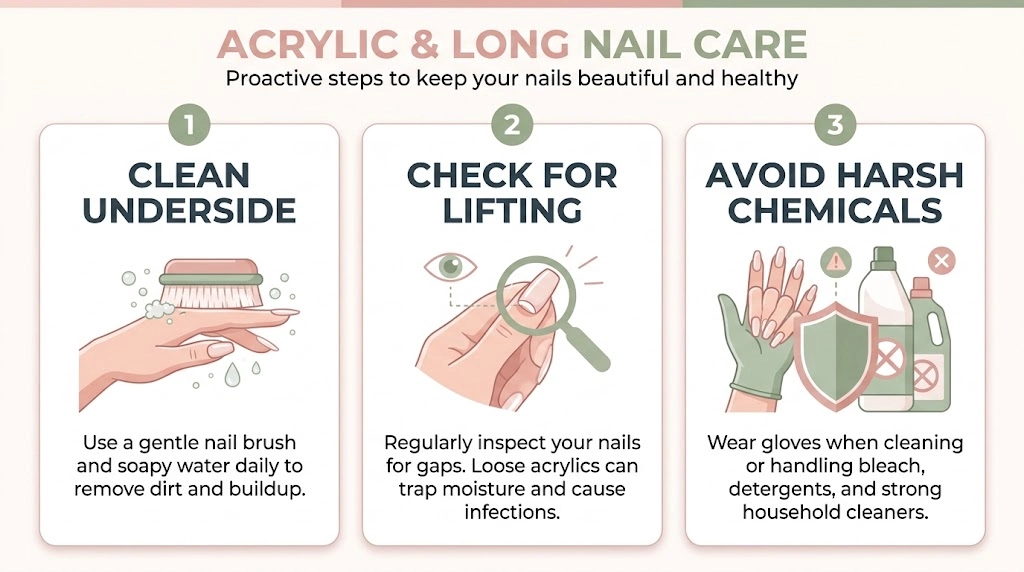
Long manicures can look beautiful, but the additional free edge creates more room for debris to collect. Acrylic and gel enhancements also require special attention to lifting and trapped moisture.
Clean the Accessible Underside Gently
Use mild soap, water, and a soft nail brush to remove loose dirt from beneath the extensions. Focus on accessible areas without forcing the brush against the natural nail.
Rinse thoroughly and dry carefully. A clean, dry towel can help remove moisture around the edges.
Check for Lifting
Look for spaces where artificial material separates from your natural nail. These gaps can trap moisture and debris.
Don’t fill an unexplained gap with glue or cover a discolored area with fresh polish. Ask a qualified nail professional to inspect the enhancement, and seek medical advice if you notice pain, unusual discoloration, or signs of infection.
Avoid Household Chemicals
Bleach and strong household cleaners are not appropriate everyday nail cleansers. They may irritate your skin and can affect manicure materials.
Use products specifically intended for nail care, and follow your nail technician’s instructions for maintaining your particular enhancement system.
Warning
Don’t ignore green, yellow, brown, or dark discoloration beneath a lifting artificial nail. Discoloration has several possible causes and needs appropriate assessment rather than being hidden beneath another manicure.
What Should You Avoid When Cleaning Your Nails?
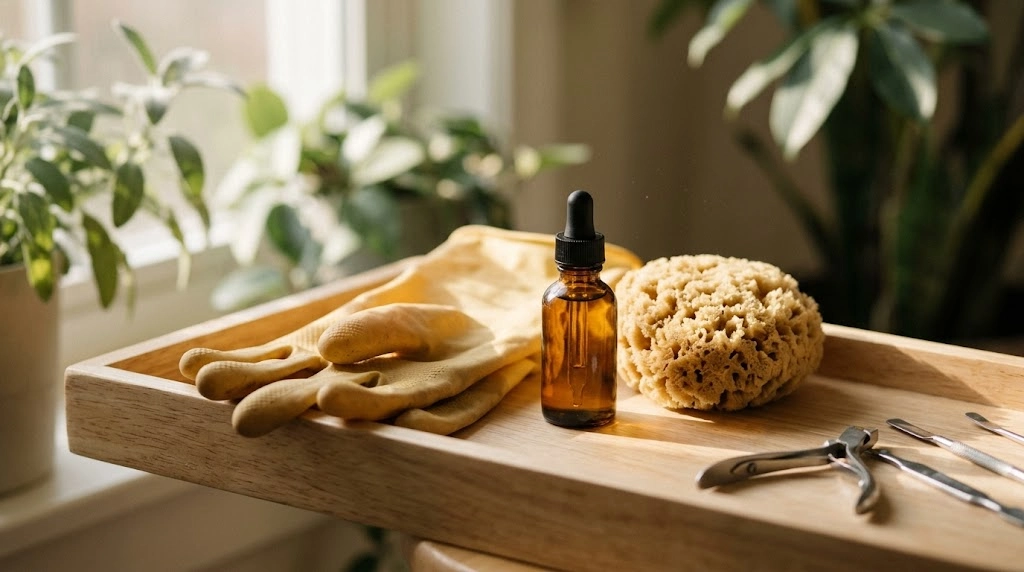
Overcleaning can create problems that ordinary dirt never would. Your goal is to remove debris while keeping your nail plate and nearby skin intact.
DO
- Use mild soap and clean water.
- Brush gently when needed.
- Dry your hands thoroughly.
- Keep nail tools clean.
- Moisturize your cuticles.
- Wear gloves for messy chores.
DON’T
- Dig beneath attached nails.
- Scrub until your skin hurts.
- Apply bleach to your nails.
- Cut healthy cuticles deeply.
- Share unclean manicure tools.
- Ignore painful nail changes.
One particularly common mistake is confusing cuticle removal with nail cleaning.
The cuticle helps seal the area where the nail grows from your skin. Cutting aggressively around that area can create tiny wounds and increase the chance of irritation or infection.
Moisturizing and gentle maintenance are safer choices for everyday care.
How Often Should You Clean Your Nails?
Your cleaning schedule depends on your activities, nail length, and how easily debris collects.
Daily: Wash your hands at appropriate times, pay attention to your fingertips, and moisturize when needed.
After messy activities: Remove visible dirt using gentle washing and, when necessary, a soft brush.
Once a week: Inspect your nails, clean your nail tools, and file any rough edges.
Every one to two weeks: Check whether trimming would make your nails easier to manage. Trim sooner if they become uncomfortable or accumulate dirt frequently.
These are practical maintenance suggestions rather than strict rules. There’s no need to scrub clean nails repeatedly just to follow a schedule.
For additional advice on preventing everyday nail damage, explore these simple ways to protect your nails.
Why Do Your Nails Still Look Dirty After Washing?
Sometimes your nails don’t look clean even after you’ve washed them thoroughly. The problem isn’t always removable dirt.
Problem: Dark Material Beneath the Nail
Immediate fix: Wash with soap and water and gently brush accessible debris. If a mark remains attached to or beneath the nail, don’t dig at it. Prevention: Wear gloves for gardening and messy work.
Problem: Nails Look Yellow
Immediate fix: Remove regular polish gently if appropriate and examine the bare nail. Pigment staining is one possible cause, but persistent yellowing, thickening, or crumbling deserves medical evaluation. Prevention: Use a suitable base coat before dark regular polish and avoid concealing unexplained changes.
Problem: Dry Skin Makes Nails Look Untidy
Immediate fix: Apply fragrance-free hand cream or cuticle oil to dry skin. Avoid pulling loose skin. Prevention: Moisturize after handwashing and protect your hands during wet chores.
Problem: Dirt Keeps Returning Quickly
Immediate fix: Wash after the activity causing buildup. Prevention: Adjust your nail length, wear appropriate gloves, and avoid using your nails as scraping tools.
What Products Actually Help Keep Nails Clean?
You don’t need a large collection of nail products. A few simple supplies cover most everyday needs.
Soft Nail Cleaning Brush
Recommended Product Type
Soft-Bristle Nail Cleaning Brush
A small, soft brush is useful for removing loose dirt beneath the free edges after gardening or other messy activities. Choose one that can be rinsed and dried easily.
As an Amazon Associate, we earn from qualifying purchases.
Gentle Glass Nail File
A glass nail file can smooth rough tips that otherwise catch on fabric or collect debris. Use gentle pressure and replace damaged tools.
Moisturizing Cuticle Oil
A jojoba-based cuticle oil is a convenient option for moisturizing dry nail folds. It isn’t a cleanser, but it helps maintain a neat appearance after washing.
Fragrance-Free Hand Cream
For easily irritated skin, a fragrance-free hand cream can be more practical than scented nail treatments.
Use these products according to your needs. None replaces washing with soap and water when your hands are visibly dirty.
What Are the Best Habits for Naturally Clean Nails?
Once you know the basic cleaning method, small changes can make maintaining your nails much easier.
Keep a Nail File in Your Bag
A snagged nail can catch dirt and fibers throughout the day. Smoothing the edge early may prevent it from splitting further.
Clean Your Manicure Tools
Remove visible debris from reusable tools after use. Wash them according to their material and manufacturer’s instructions, then dry and store them properly.
Tools that contact broken skin require particular care. Don’t share personal manicure tools casually, and make sure professional salons follow appropriate disinfection procedures.
Inspect Your Nails Between Manicures
Regular polish, gel, and acrylic products can hide changes in the natural nail.
Whenever you safely remove a manicure, look for unusual discoloration, thickening, separation, or irritated surrounding skin.
This quick habit helps you identify a potential concern before covering it with another nail design.
Pro Tip
Keep two separate routines: frequent handwashing for hygiene, and occasional gentle nail brushing only when visible debris needs removal. This helps prevent unnecessary friction and dryness.
When Should You See a Healthcare Professional?
Not every nail change is caused by dirt, staining, or a poorly maintained manicure.
Contact a qualified healthcare professional if you notice:
- Increasing pain, swelling, warmth, or redness around a nail.
- Pus or drainage near the nail fold.
- Persistent green, yellow, or brown discoloration.
- Thick, crumbly nails or substantial nail separation.
- A new or changing dark streak that doesn’t have an obvious explanation.
- Repeated irritation around artificial nails or nail products.
These changes may need medical assessment rather than cosmetic cleaning. Seek prompt care for rapidly worsening redness, severe pain, or fever.
Important Safety Reminder
Never try to scrape away unexplained discoloration or painful material beneath an attached nail. Stop cleaning if it hurts, and get professional advice for persistent changes.
Frequently Asked Questions About Keeping Nails Clean
Q: How do I keep my nails clean all the time?
A: Wash your hands regularly, remove visible dirt gently, dry your fingertips, and moisturize your cuticles. Keep nails at a manageable length and wear protective gloves for dirty tasks.
Q: What is the safest way to clean under fingernails?
A: Use mild soap, running water, and a soft nail brush when needed. Clean only the accessible underside of the free edge without digging beneath the attached nail.
Q: Can I use baking soda to clean my nails?
A: Baking soda isn’t necessary for everyday nail hygiene. Soap and water are sufficient for most routine dirt. Abrasive mixtures may irritate sensitive skin, especially when used repeatedly.
Q: How can I keep long nails clean?
A: Wash your hands carefully, gently brush accessible debris beneath the tips, and dry thoroughly. Avoid lifting objects with your nails, and inspect artificial enhancements for separation.
Q: Does hand sanitizer clean dirt from under nails?
A: Hand sanitizer can reduce many germs when used properly, but it doesn’t physically remove visible dirt beneath nails. When your hands are visibly dirty, wash with soap and water.
Final Thoughts: Keep Your Nails Clean With Simple Daily Care
Knowing how to keep nails clean doesn’t require expensive products or intense scrubbing. Gentle handwashing, occasional soft brushing, thorough drying, and regular moisturizing are the habits that matter most.
Protect your nails during messy activities and pay attention to changes that ordinary cleaning can’t fix. That way, your nails can stay fresh, comfortable, and ready for your favorite manicure.
Love easy nail-care tips? Save this guide to your Pinterest nail-care board so you can revisit the routine whenever your nails need a refresh.

Hi, I’m Jessica, the creator behind Unique Lash & Nails Katy.
I created this website for anyone who loves beautiful nails as much as I do. Here, I share trendy nail designs, seasonal manicure ideas, easy nail care tips, honest product recommendations, and step-by-step guides to help you create salon-worthy nails at home. Whether you’re looking for everyday inspiration or your next favorite nail trend, I hope you’ll find something you love.