Why Is My Nail Black? Causes and Warning Signs
Quick Answer
Why is my nail black? A black fingernail or toenail often results from trapped blood after an injury or repeated pressure from tight shoes. Other causes include natural nail pigmentation, fungal infections, staining, and, rarely, nail melanoma. If you notice a new dark streak, spreading discoloration, or a black nail without an obvious cause, arrange a medical evaluation rather than assuming it’s harmless.
Noticing a black spot or dark streak on your nail can be unsettling, especially when you don’t remember injuring your finger or toe. You might wonder whether it’s just a bruise, a fungal infection, or something more serious.
The reassuring news is that many dark nail changes have treatable or harmless causes. However, the appearance of a nail alone cannot always tell you what’s happening underneath.
This guide explains the possible reasons your nail looks black, the warning signs worth knowing, and the safest steps to take next.


Why Is My Nail Black? 7 Possible Causes
A black nail isn’t a diagnosis by itself. The color can come from blood, pigment, microorganisms, or substances on the nail surface. The pattern and circumstances help narrow down the possibilities.
1. Blood Trapped Under Your Nail (Subungual Hematoma)
One of the most common reasons for a black nail is a subungual hematoma, which means blood has collected beneath the nail plate.
This happens when tiny blood vessels in the nail bed break after an injury. The trapped blood may look red, purple, brown, or almost completely black as it changes over time.
Common triggers include:
- Accidentally hitting your finger with a heavy object.
- Slamming your finger in a door.
- Dropping something on your toe.
- Running or hiking in shoes that press against your toenails.
- Repeated pressure from footwear that doesn’t fit properly.
A fresh injury may cause throbbing pain because blood creates pressure under the rigid nail. An older bruise may be painless even though the dark discoloration remains visible.
What usually happens next? As your nail grows, the trapped blood generally moves toward the tip. A clear section of new nail may gradually appear near your cuticle.
Helpful Clue
A dark patch that gradually moves toward the free edge as the nail grows can indicate an old bruise. However, this observation doesn’t replace a medical examination when the cause is uncertain.
2. Repeated Pressure From Tight Shoes
Your toenail can turn black even if you never dropped anything on your foot. Repeatedly hitting the inside of your shoe can cause small injuries beneath the nail.
This commonly affects runners, hikers, dancers, and anyone who spends long periods walking in poorly fitting footwear.
You might notice:
- A dark patch beneath your big toenail or another toe.
- Tenderness after a long walk or workout.
- Black discoloration that becomes more noticeable after repeated activity.
- Occasional lifting or shedding of a severely damaged nail.
To reduce repeated injuries, choose shoes with enough space in the toe box. Your toes shouldn’t press firmly against the front when walking downhill or exercising.
Keeping your toenails comfortably trimmed may also reduce pressure, but avoid cutting them extremely short.
3. Fungal Nail Infection
Some fungal infections can cause nails to become discolored. While yellow, white, and brown changes are more typical, certain infections can produce dark brown or nearly black pigmentation.
Fungal nail infections are often accompanied by other changes, including:
- Thickening of the nail plate.
- A brittle or crumbly nail edge.
- Debris collecting beneath the nail.
- Separation of the nail from the nail bed.
- Persistent changes affecting one or several nails.
However, a black nail isn’t automatically a fungal infection. Nail injuries, pigment changes, and melanoma can sometimes resemble fungal disease.
If you suspect fungus, a healthcare professional may collect a sample for laboratory testing before recommending treatment.
Important: Over-the-counter antifungal products aren’t appropriate for every dark nail. Treating an unexplained black streak as fungus could delay diagnosis of another condition.
4. Natural Nail Pigmentation (Melanonychia)
Melanonychia describes brown or black pigmentation within the nail. It often appears as a vertical stripe extending from the base toward the tip.
The pigment comes from melanin, the same substance responsible for much of your skin and hair color.
Some cases are harmless and may be associated with:
- Normal pigmentation, particularly in people with darker skin tones.
- Hormonal changes.
- Repeated nail friction or inflammation.
- Certain medications.
- Benign pigmented growths in the nail matrix.
You may notice pigmentation in more than one nail, or a band that has remained stable for years.
Still, you shouldn’t assume a streak is benign based only on your skin tone or how long you think it has been present. A new or changing band deserves professional assessment.
5. Nail Melanoma
Nail melanoma is a rare but serious form of skin cancer that can develop in the nail unit, including the tissue responsible for producing your nail.
One possible sign is a brown or black vertical streak. Unlike a typical bruise, concerning pigment may persist at the nail base or change rather than simply growing out.
Possible warning signs include:
- A new dark streak, especially in a single nail.
- A band that becomes wider or develops uneven borders.
- Multiple shades of brown or black within the streak.
- Dark pigment extending onto the cuticle or surrounding skin.
- Nail splitting, distortion, lifting, bleeding, or a new bump.
Not every dark stripe is cancer. Many are benign. The important point is that you cannot reliably distinguish melanoma from other causes using photographs or home inspection alone.
Warning: Don’t Ignore a New Dark Streak
If a dark band appears without an obvious explanation, changes over time, or extends onto nearby skin, arrange a prompt dermatologist appointment. Nail melanoma may not cause pain, and early evaluation matters.
6. Staining From Nail Products or Dyes
Sometimes your nail looks black because pigment has stained its surface rather than developing beneath it.
Possible sources include dark nail polish, hair dye, henna, pigments, and certain chemicals.
Surface staining is more likely when the color appeared after contact with a product and affects exposed portions of the nail.
Remove any polish gently and inspect the bare nail in good lighting. Avoid aggressive scraping or buffing, which can damage the nail plate.
If the dark color appears to originate underneath the nail, doesn’t match a known exposure, or forms a persistent streak, seek an examination instead of assuming it’s cosmetic staining.
7. Bacterial Infection or Other Nail Conditions
Some bacterial infections can produce dark green, green-black, or brownish nail discoloration, particularly when the nail has lifted away from its underlying bed.
One example is an infection associated with Pseudomonas bacteria, sometimes called green nail syndrome.
Other medical conditions, medications, and inflammatory nail disorders can also change nail pigmentation or structure.
If your nail is becoming loose, painful, swollen, or increasingly discolored, a clinician can determine whether infection or another nail condition is responsible.
What Does the Shape and Color of a Black Nail Mean?
Looking closely at the pattern can help you describe the problem to a healthcare professional. It cannot confirm the diagnosis, but these differences may be useful.
A Black Spot Under One Nail
A rounded dark spot that appeared after an injury may represent a small collection of trapped blood. It may start reddish-purple and gradually darken.
If there’s no injury history, don’t assume it’s a bruise. A persistent, unexplained spot should be assessed.
A Vertical Black Line
A line extending from the cuticle toward the nail tip may be melanonychia. Causes range from harmless pigment production to uncommon nail tumors.
Any new, widening, irregular, or otherwise unexplained band should be evaluated by a dermatologist.
The Entire Nail Looks Black
Widespread black discoloration may follow substantial trauma or repeated pressure. Sometimes an extensively bruised nail loosens and eventually falls off.
Other causes are possible, so significant discoloration without a clear injury shouldn’t be ignored.
A Black Nail With Pain
Pain after a crush injury may result from pressure caused by blood trapped under the nail. Severe pain, marked swelling, or difficulty using the finger or toe can also indicate a more substantial injury.
Seek prompt medical care rather than attempting to release the pressure yourself.
A Black Nail Without Pain
A painless nail can still have an underlying condition. Old bruises and benign pigmentation often cause little discomfort, but nail melanoma can also be painless.
Use changes in appearance and professional evaluation, not pain alone, to determine whether you need medical attention.
When Should You Worry About a Black Nail?
Most people want to know one thing immediately: Is my black nail dangerous?
The answer depends on what caused the discoloration. The following signs can help you decide how urgently to seek care.
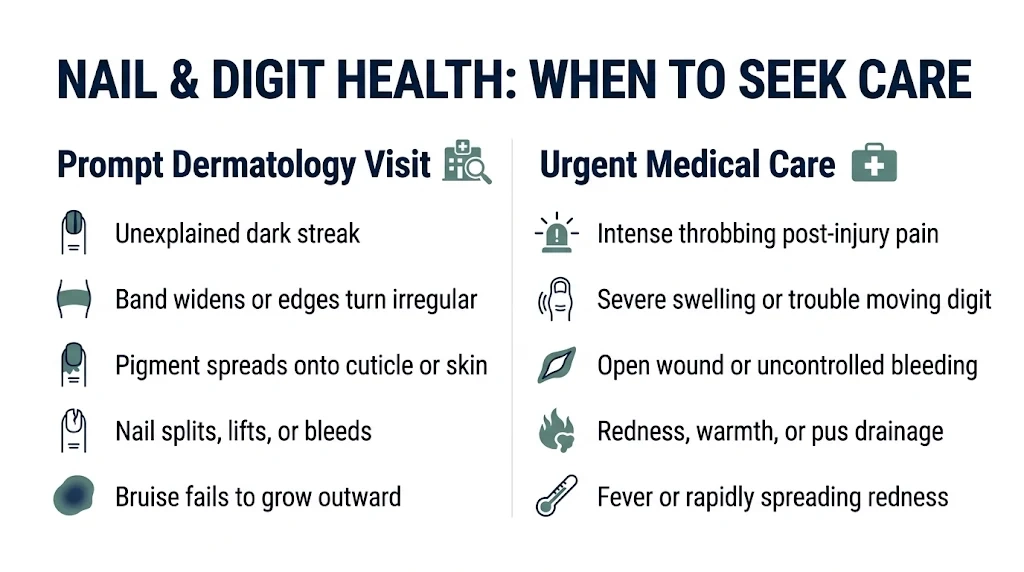
Arrange a Prompt Dermatology Appointment If:
- A black or brown streak appears without an obvious cause.
- A dark band widens, darkens, or develops irregular edges.
- Pigment extends onto the cuticle or surrounding skin.
- The nail splits, lifts, bleeds, or develops a bump.
- A suspected bruise doesn’t appear to grow outward with the nail over time.
- Discoloration persists without a convincing explanation.
Seek Urgent Medical Care If:
- You have intense throbbing pain after a nail injury.
- Your finger or toe is significantly swollen, deformed, or difficult to move.
- You have an open wound, uncontrolled bleeding, or suspected fracture.
- Redness, warmth, swelling, or drainage suggests an infection that is worsening.
- You develop fever or rapidly spreading redness around an affected nail.
If you have diabetes, poor circulation, or a weakened immune system, seek medical advice early for nail injuries or suspected infections.
Safety Reminder
Don’t drill, puncture, burn, or pierce your nail at home to release trapped blood. A trained healthcare professional can determine whether drainage is appropriate and check for additional injury.
How Can You Treat a Black Nail Safely?
The right treatment depends on the underlying cause. There’s no single cream, oil, or home remedy that treats every black nail.
For a Minor Nail Bruise
If you recently injured your nail, the pain is mild, and the injury appears minor, basic supportive care may be reasonable.
- Rest the affected finger or toe. Avoid activities that repeatedly put pressure on the injured area.
- Apply a cold compress. Wrap a cold pack in a clean towel and apply it for short intervals to ease discomfort.
- Elevate the injured area. Keeping it raised may help reduce swelling soon after the injury.
- Protect the nail. Wear comfortable footwear or avoid activities that could cause another injury.
- Monitor healing. Look for a gradual return of clear nail growth from the base.
If the injury is severe or pain is substantial, don’t rely solely on home care. A clinician may need to assess the nail bed or surrounding bone.
For a Painful Subungual Hematoma
A healthcare professional may perform a procedure called nail trephination to drain trapped blood and relieve pressure.
This treatment is generally considered for suitable recent injuries with significant pain. It isn’t necessary for every bruise, and the decision depends on factors such as the injury’s timing and severity.
Never attempt this procedure yourself using a needle, heated object, or nail drill.
For a Suspected Fungal Nail Infection
If a fungal infection is confirmed, treatment may involve a prescription topical medication or an oral antifungal, depending on how much of the nail is involved.
Oral antifungals aren’t suitable for everyone. Some require medication-interaction checks or blood testing.
A doctor may recommend laboratory testing because several nonfungal nail conditions look similar.
For Natural Nail Pigmentation
If your dermatologist identifies a harmless pigment band, treatment may not be necessary.
Your dermatologist might recommend periodic examination or photographs when monitoring is appropriate. Changes in a known pigment band should still be reported.
For a Suspicious Nail Lesion
If your dermatologist suspects melanoma or another nail tumor, you may need a specialized examination and potentially a biopsy.
A biopsy allows a laboratory to examine tissue under a microscope. When performed for the right reason, it can distinguish serious conditions from benign pigmentation.
Early diagnosis offers the best opportunity for effective treatment.
How Long Does It Take for a Black Nail to Heal?
The timeline depends on whether the nail is bruised, infected, stained, or affected by another condition.
For a bruise, discomfort may improve much sooner than the appearance of the nail. The discoloration remains visible until the affected portion grows outward.
- Fingernails: Complete regrowth commonly takes around 4-6 months, though the timing varies.
- Toenails: Full replacement often takes approximately 12-18 months and can take longer in some cases.
- Minor bruises: Small discolorations may disappear sooner if they’re already near the nail tip.
- Fungal changes: Visible improvement can take months, even after treatment starts working.
If your nail is black because of a persistent pigment-producing condition, it won’t necessarily clear simply by waiting for growth.
Practical Tip
If a clinician has confirmed that your discoloration is a bruise and advised observation, taking dated photographs in consistent lighting can help you document its movement as the nail grows.
Will My Black Nail Fall Off?
Not necessarily. Many bruised nails remain attached and gradually return to normal as new nail grows.
However, a significantly injured nail can separate from the nail bed and eventually detach. This may happen after a crush injury or repeated pressure.
If your nail begins lifting:
- Don’t pull it off while it’s still attached.
- Keep the area clean and protected.
- Avoid catching the loose edge on clothing or other objects.
- Ask a clinician how to manage a damaged or partially detached nail.
The new nail may grow back normally, but damage to the nail matrix can sometimes lead to long-term changes in shape or thickness.
How Can You Prevent Black Fingernails and Toenails?
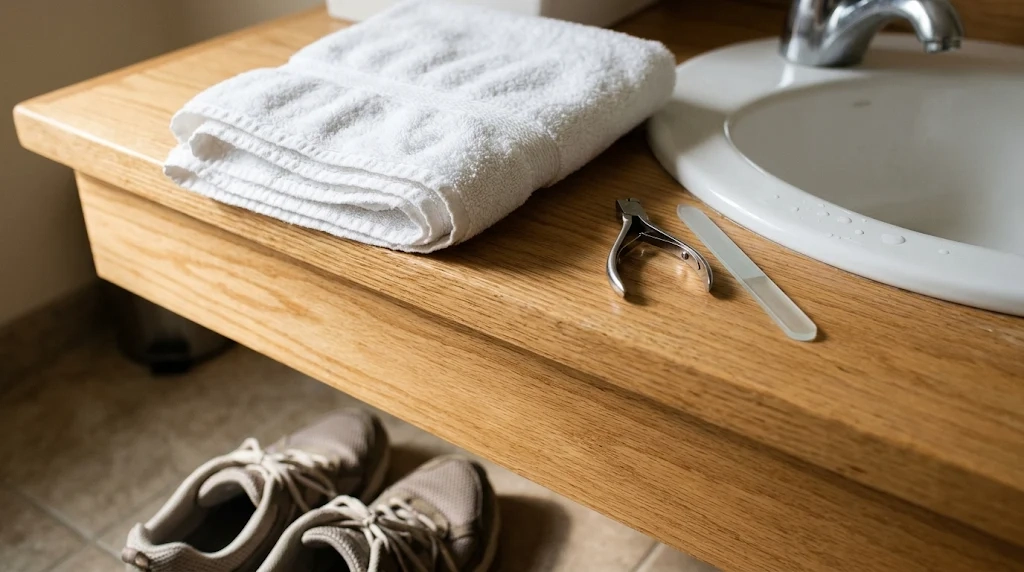
Not every cause of dark nails is preventable, but you can lower the risk of injuries and certain infections with a few practical habits.
Do
- Wear shoes with enough toe room.
- Trim nails carefully.
- Dry your feet after washing.
- Use clean nail tools.
- Check nails regularly for changes.
- Seek care for unexplained streaks.
Don’t
- Ignore persistent dark streaks.
- Force off damaged nails.
- Drill a painful nail at home.
- Share unclean nail equipment.
- Wear shoes that crush your toes.
- Cover concerning changes indefinitely.
Choose Footwear That Fits Your Activity
Your toes need enough room to move without repeatedly hitting the front of your shoes. Check the fit while standing, and remember that feet may swell during prolonged exercise.
For running and hiking, secure lacing can reduce sliding while a spacious toe box helps prevent repetitive nail trauma.
Maintain Gentle Nail Care Habits
Keep your nails clean and reasonably short, but don’t cut deeply into the corners. Use a nail clipper that is clean and appropriate for the nail thickness.
If you visit a nail salon, choose one that follows proper sanitation practices. Avoid aggressive trimming and unnecessary damage to the cuticle.
Let Your Nails Be Visible Occasionally
Dark polish, gels, and nail enhancements can make it harder to notice early nail changes.
Inspect your natural nails whenever products are removed. Look for new spots, streaks, lifting, or changes in the surrounding skin.
If you spot something concerning, postpone your next manicure until you’ve had it examined.
Should You Cover a Black Nail With Nail Polish?
If you know the discoloration is an uncomplicated, healing bruise, cosmetic coverage may sometimes be possible once the nail and surrounding skin are intact and comfortable.
However, avoid applying polish or artificial nail products over an unexplained black streak, a painful injury, an infected area, or a nail that’s lifting.
Covering the nail can make changes harder to monitor and may delay medical assessment. Artificial nails can also create additional stress on an already damaged nail plate.
Your nail health matters more than temporarily hiding its appearance.
What Happens During a Doctor’s Examination?
Knowing what to expect can make seeking medical advice less intimidating.
Your healthcare professional will typically ask when the discoloration began, whether you’ve had an injury, and whether the spot has changed.
They may also ask about medications, previous nail conditions, and personal or family history of melanoma.
Depending on the appearance, the examination may involve:
- Visual inspection: Checking nail color, shape, borders, and surrounding skin.
- Dermoscopy: Using a magnifying device to examine pigment patterns in more detail.
- Fungal testing: Collecting nail material when infection is suspected.
- Imaging: Ordering an X-ray if an injury suggests a possible fracture.
- Biopsy: Sampling suspicious tissue when necessary to establish a diagnosis.
Not everyone needs every test. Your clinician will select the appropriate evaluation based on the nail’s appearance and your history.
Common Mistakes to Avoid When Your Nail Turns Black
Mistake 1: Assuming Every Black Nail Is a Bruise
A bruise is common, but not the only explanation. Arrange an examination for new or unexplained discoloration, particularly when it forms a vertical streak.
Mistake 2: Trying to Drain the Nail at Home
Puncturing your nail can cause additional injury or infection. Seek urgent professional care if trapped blood is causing severe pressure and pain.
Mistake 3: Using Antifungal Treatments Without a Diagnosis
Not all dark nails are fungal. An accurate diagnosis helps you avoid ineffective treatment and delays in identifying other conditions.
Mistake 4: Waiting for a Suspicious Streak to Hurt
Pain isn’t a reliable indicator of seriousness. A new or changing pigment band should be evaluated even when you feel completely comfortable.
Frequently Asked Questions About Black Nails
Q: Why is my nail black but doesn’t hurt?
A: A painless black nail may result from an older bruise, benign pigmentation, staining, or another condition. Because some serious nail disorders are also painless, have new or unexplained discoloration checked.
Q: Why is my toenail black without an injury?
A: Repeated pressure from shoes can cause unnoticed bruising. Pigment changes, infections, and other conditions are also possible. A black toenail without a clear explanation should be medically assessed.
Q: Can a black nail go back to normal?
A: Yes, many bruised nails return to their normal appearance as new nail grows. Recovery may take several months, and some conditions require treatment rather than waiting.
Q: Does a black line on my nail mean cancer?
A: Not necessarily. Many dark nail bands are benign. However, melanoma can also appear as a dark line, so a new or changing streak needs examination by a dermatologist.
Q: How do I get rid of a black nail quickly?
A: There isn’t a safe instant remedy for every cause. A minor bruise usually grows out naturally, while infections or suspicious pigment changes require diagnosis and appropriate treatment.
The Bottom Line: Why Is My Nail Black?
A black nail may be caused by something as common as a bruise or repeated shoe pressure. It can also result from pigmentation, infection, or, rarely, melanoma.
The safest approach is to consider the pattern, any recent injuries, and whether the discoloration changes. Never ignore a new or evolving dark streak, particularly when it has no clear explanation.
Save this guide to your Pinterest nail-care board so you can revisit the warning signs and gentle nail-care tips whenever you need them.
Medical disclaimer: This article is for educational purposes only and does not replace diagnosis or treatment from a qualified healthcare professional. If you have unexplained nail discoloration, severe pain, or signs of infection, seek appropriate medical care.

Hi, I’m Jessica, the creator behind Unique Lash & Nails Katy.
I created this website for anyone who loves beautiful nails as much as I do. Here, I share trendy nail designs, seasonal manicure ideas, easy nail care tips, honest product recommendations, and step-by-step guides to help you create salon-worthy nails at home. Whether you’re looking for everyday inspiration or your next favorite nail trend, I hope you’ll find something you love.