Which Vitamin Deficiency Causes Black Nails? Signs You Shouldn’t Ignore
Quick Answer
Vitamin B12 deficiency—and sometimes folate deficiency—can be associated with brown or black nail pigmentation. However, a single black nail is more commonly caused by an injury, repeated pressure, infection, or natural pigmentation. A new or changing dark streak should be examined by a dermatologist because nail melanoma can look similar.
Noticing a black spot or stripe under your nail can be unsettling. It’s tempting to assume that you’re missing a vitamin, especially when social media posts promise that a supplement will restore normal nail color.
The truth is more nuanced. Nutritional deficiencies can affect your nails, but they aren’t the most common explanation for one suddenly turning black. The number of affected nails, the shape of the discoloration, and whether it moves as your nail grows provide much better clues.
Important
Don’t diagnose a vitamin deficiency from nail color alone. A clinician may need to examine the nail and order blood tests. Seek prompt medical care for a new dark streak, pigment spreading onto nearby skin, unexplained bleeding, a splitting nail, or a dark area that doesn’t grow outward.


Can Vitamin B12 Deficiency Make Your Nails Look Black?
Yes, vitamin B12 deficiency has been associated with melanonychia, the medical term for brown or black pigmentation within a nail. The color may appear as vertical bands or more widespread darkening. It can affect several fingernails or toenails rather than appearing as one isolated bruise.
Vitamin B12 supports red blood cell formation, nerve function, and DNA production. When your level becomes low, changes in melanin production may contribute to nail and skin pigmentation. The exact appearance varies, though, and many people with B12 deficiency never develop dark nails.
Nail pigmentation by itself isn’t enough to confirm a deficiency. B12 deficiency is more convincing when the nail change appears alongside symptoms such as:
- Unusual tiredness or weakness
- Pale skin or shortness of breath
- A smooth, sore, or red tongue
- Tingling or numbness in your hands and feet
- Balance problems or muscle weakness
- Memory, concentration, or mood changes
- Loss of appetite or unexplained weight loss
Numbness, balance trouble, or other neurological symptoms deserve timely medical attention. Nerve damage from prolonged B12 deficiency can become difficult to reverse, so you shouldn’t wait for your nails to improve before arranging an evaluation.
Your risk may be higher if you eat a vegan diet without fortified foods or supplements, have pernicious anemia, have undergone stomach or intestinal surgery, or live with a condition that affects nutrient absorption. Long-term use of certain medicines, including metformin and acid-suppressing drugs, may also affect B12 status in some people.
Can Folate Deficiency Cause Dark Nail Pigmentation?
Folate deficiency is another nutritional condition associated with melanonychia. Folate, also called vitamin B9, helps your body make DNA and healthy blood cells. A deficiency may contribute to nail pigmentation, fatigue, mouth sores, weakness, and anemia.
Folate and B12 deficiencies can produce similar blood-related symptoms. That overlap is why guessing between them—or taking a high-dose folic acid supplement before testing—isn’t a safe plan. Folic acid can improve the anemia caused by B12 deficiency while allowing related nerve damage to continue unnoticed.
A clinician can assess both nutrients and interpret them alongside your complete blood count, symptoms, diet, medicines, and medical history. Treatment should address the confirmed problem and its cause rather than nail color alone.
Does Iron Deficiency Cause Black Nails?
Iron deficiency is widely blamed for almost every nail change, but black nails aren’t its classic sign. Low iron is better known for pale, brittle, thin, or spoon-shaped nails. Spoon nails curve upward at the edges and may develop when iron deficiency becomes significant or prolonged.
You might also experience fatigue, dizziness, headaches, shortness of breath, a fast heartbeat, restless legs, or cravings for non-food substances such as ice. Heavy periods, pregnancy, a low-iron diet, digestive conditions, and hidden blood loss are possible contributors.
A black area can still appear in someone who happens to have low iron, but that doesn’t prove the two are connected. If your nail is dark rather than pale or spoon-shaped, other causes should be considered first.
For a broader comparison, see the common signs of vitamin deficiency in nails and what B12-deficiency nails may look like.
What Else Can Make a Nail Turn Black?
 Save
SaveMost dark nails can’t be explained by nutrition alone. Before reaching for supplements, look at what happened before the color appeared and how the nail is changing.
A bruise beneath the nail
A subungual hematoma is trapped blood beneath the nail plate. It may follow an obvious event, such as shutting your finger in a door or dropping something on your toe. Running, hiking, tight shoes, or repeated pressure can create the same problem without one memorable injury.
The spot usually starts red, purple, or deep brown before looking black. It should slowly move toward the tip as the nail grows. A fresh bruise can throb because pressure builds beneath the nail.
Severe pain, a large collection of blood, a cut, or a possible fracture warrants prompt care. Don’t puncture or burn a hole through the nail at home; doing so can cause infection or further injury.
Fungal nail infection
Nail fungus often makes a toenail thick, brittle, crumbly, or lifted. Its color may be yellow, white, brown, or occasionally very dark. Debris can collect beneath the nail, and nearby nails may gradually develop similar changes.
Dark color alone doesn’t confirm fungus. Psoriasis, injury, and other conditions can imitate it, so clinicians sometimes test a nail clipping before prescribing treatment. This matters because oral antifungal medicines can have side effects and won’t help a nonfungal condition.
Natural nail pigmentation
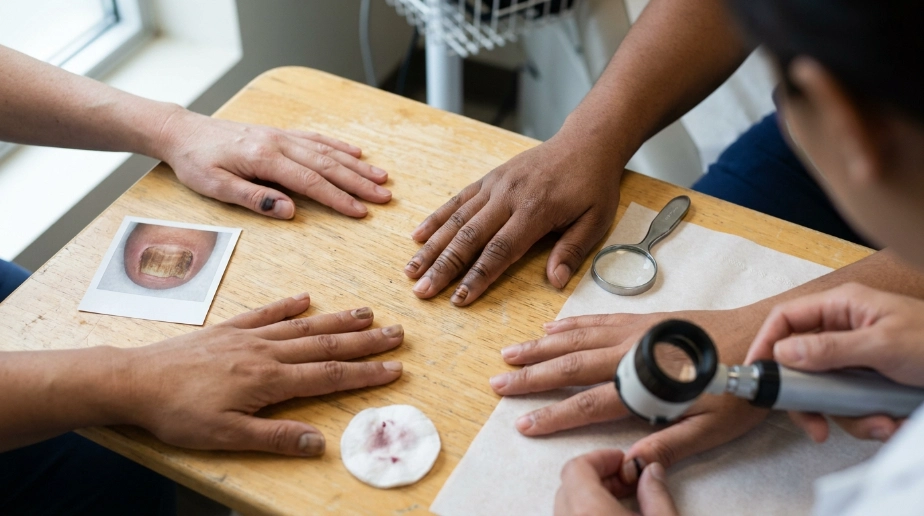
Brown or black longitudinal bands can be normal, particularly in people with darker skin tones. Benign pigmentation may affect several nails and remain stable over time. Pregnancy, repeated friction, nail biting, inflammatory skin conditions, and some medicines can also activate pigment-producing cells in the nail matrix.
Even if you commonly have pigmented nail bands, a stripe that is new, widening, changing, or noticeably different from your other nails deserves examination.
Staining and nail products
Dark polish can stain the nail plate, especially when you skip base coat or wear heavily pigmented shades repeatedly. The stain sits in the nail rather than beneath it and should grow out. Hair dye, tobacco, chemicals, and dirt trapped around a lifted nail may also create discoloration.
Remove polish gently so you can inspect the full nail in bright light. Don’t scrape, aggressively buff, or dig underneath it. Those habits thin the plate and can introduce bacteria.
Subungual melanoma
Subungual or nail-unit melanoma is uncommon, but it’s the most important cause not to miss. It can begin as a brown or black vertical band on a fingernail or toenail, often without pain. Because it may resemble a bruise or harmless pigmentation, appearance alone can’t reliably rule it out.
The American Academy of Dermatology advises having a new or changing dark streak examined. Features that raise concern include a widening or irregular band, several shades within it, pigment extending onto the surrounding skin, nail splitting, lifting, bleeding, or a bump beneath the nail.
Don’t Wait for Pain
Early nail melanoma may not hurt. Book a dermatologist or medical appointment for a new or changing band even when the nail feels completely normal.
How Can You Tell a Deficiency From a Bruised Nail?
You can’t make a definite diagnosis at home, but the pattern offers useful clues.
- One nail with a dark patch: Injury or repeated pressure is more likely, particularly if the mark moves toward the edge as the nail grows.
- Several nails with similar bands: Natural pigmentation, medication effects, a systemic condition, or a nutritional deficiency becomes more plausible.
- A thick, crumbly nail: Fungus or another nail disorder may be responsible.
- A new vertical stripe that widens: This requires professional assessment to exclude nail melanoma.
- Pigment on the nearby cuticle or skin: Arrange prompt dermatology care.
- Dark polish on the surface: Staining may be responsible, but the color should gradually disappear as the nail grows.
Take a clear photograph in natural light and repeat it every few weeks. Include a ruler or another consistent reference. Photos can help a clinician see whether the mark is widening or moving, but they’re not a substitute for an examination.
Pro Tip
Watch the edge nearest your cuticle. A bruise usually leaves a growing strip of clear nail behind it, while pigment produced in the nail matrix may continue appearing from the base.
When Should You See a Doctor About a Black Nail?
Arrange an appointment with a dermatologist or primary-care clinician if you don’t know why your nail changed color. You should be seen sooner when you notice:
- A new brown or black band on one nail
- A band that becomes wider, darker, irregular, or multicolored
- Pigment spreading onto the cuticle or surrounding skin
- A nail that splits, lifts, bleeds, or develops a lump
- A mark that stays in place instead of growing toward the tip
- Darkening without any remembered injury
- Redness, warmth, swelling, pus, or worsening pain
- Fatigue, numbness, balance trouble, breathlessness, or other systemic symptoms
Get urgent care after a significant crush injury, especially if the finger or toe looks misshapen, feels numb, won’t move normally, or has an open wound. People with diabetes, poor circulation, or a weakened immune system should seek medical advice early because nail and foot infections can become more serious.
You can compare the change with other signs of unhealthy nails, but don’t use photographs online to rule out a serious condition.
How Is a Possible Vitamin Deficiency Diagnosed?
 Save
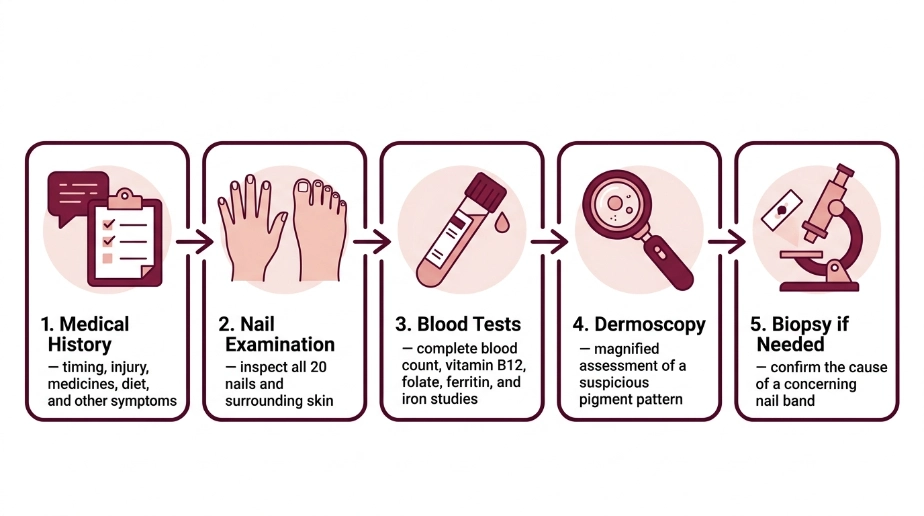
SaveYour clinician will usually begin by asking when the discoloration appeared, whether the nail was injured, what medicines you take, and whether you have symptoms elsewhere in your body. They may examine all 20 nails and the nearby skin rather than focusing only on the darkest one.
If a nutritional problem is possible, testing may include:
- A complete blood count to look for anemia and changes in red blood cells
- A serum vitamin B12 level
- Folate testing when your history or blood results support it
- Ferritin and other iron studies when iron deficiency is suspected
- Additional tests for B12 absorption or related metabolic markers when results are unclear
A suspicious pigmented band may require dermoscopy, which lets a dermatologist inspect the pattern under magnification. In some cases, a biopsy of the nail matrix or nail bed is needed to establish the diagnosis. Although that can sound alarming, identifying the cause is safer than treating an unexplained stripe as a cosmetic issue.
Will Supplements Make Black Nails Clear?
Supplements may help when testing confirms a deficiency, but they won’t remove a bruise, cure nail fungus, or treat melanoma. The right treatment depends on the cause.
B12 deficiency may be treated with oral tablets or injections. The form and duration depend partly on whether the problem comes from diet or poor absorption. Folate deficiency is commonly treated with folic acid after B12 status has been assessed. Iron therapy should likewise follow appropriate testing because excessive iron can be harmful.
Don’t take megadoses simply because a nail looks dark. Supplements can interact with medicines, mask another deficiency, or delay the correct diagnosis. Your clinician can recommend an appropriate dose and investigate why the nutrient became low.
Even with successful treatment, visible change is slow. Existing pigment doesn’t instantly disappear; clearer nail must grow from the base. Fingernails can take roughly six months to replace themselves, while toenails may take 12 to 18 months.
How Should You Care for a Dark Nail While It Grows?
Gentle care won’t cure the underlying condition, but it can prevent added trauma and make changes easier to monitor.
Do
- +Keep the nail clean, dry, and neatly trimmed.
- +Wear roomy shoes if a toenail is affected.
- +Photograph the nail regularly in consistent light.
Don’t
- −Drill, puncture, or cut into the dark area.
- −Cover an unexplained change with extensions.
- −Use bleach, lemon juice, or harsh scraping.
Keeping unexplained discoloration visible makes it easier to track. If you want a simple maintenance plan, follow a gentle nail-care routine. For a nail that has already been injured, review what to expect when a damaged nail grows back.
Frequently Asked Questions About Black Nails
Q: Can low vitamin B12 cause black lines on your nails?
A: Vitamin B12 deficiency can be associated with brown or black nail bands, often affecting more than one nail. A dark line can have several other causes, so blood testing and a nail examination are more reliable than appearance alone.
Q: Is one black fingernail usually a vitamin deficiency?
A: No. One black fingernail is more suggestive of injury, repeated pressure, a local nail condition, or pigmentation than a body-wide deficiency. A new unexplained band should still be evaluated.
Q: How do you know whether a black nail is a bruise?
A: A bruise commonly follows an impact or repeated shoe pressure and gradually travels toward the tip with nail growth. If the mark stays at the base, widens, or has no clear cause, arrange a medical assessment.
Q: Can a fungal infection make your nail black?
A: Fungal infections can make a nail brown or unusually dark, usually with thickening, crumbling, lifting, or debris. Testing may be needed because several nail disorders can resemble fungus.
Q: Can black nail pigmentation return to normal?
A: It may return to normal when the underlying cause is reversible, but the discolored nail must grow out. Permanent or persistent pigmentation depends on its cause, which is why diagnosis should come before treatment.
What’s the Most Important Takeaway?
Vitamin B12 or folate deficiency can contribute to dark nail pigmentation, but neither should be assumed from nail color alone. A new or changing black streak—especially on one nail—deserves professional examination rather than a trial of supplements.
Save this guide on Pinterest so you can compare the warning signs later, and contact a dermatologist if an unexplained dark mark changes or fails to grow out.

Hi, I’m Jessica, the creator behind Unique Lash & Nails Katy.
I created this website for anyone who loves beautiful nails as much as I do. Here, I share trendy nail designs, seasonal manicure ideas, easy nail care tips, honest product recommendations, and step-by-step guides to help you create salon-worthy nails at home. Whether you’re looking for everyday inspiration or your next favorite nail trend, I hope you’ll find something you love.