What Organ Affects the Health of Your Nails?
Quick Answer
Your liver has the biggest influence on nail health, since it produces the proteins your nails are built from and filters the toxins that would otherwise damage them. Your kidneys, thyroid, heart, and lungs can also leave marks on your nails. Yellowing, clubbing, and white “Terry’s nails” are the classic signs linked to liver issues, but most nail changes come from polish, dryness, or minor injury instead.
Ever caught yourself staring at your nails and wondering if that weird ridge or dull color means something’s actually wrong inside you? You’re not being paranoid — nails really do reflect what’s happening in your body, and the liver plays a starring role in that connection. Here’s what your nails can (and can’t) tell you about your organs.


Why Your Nails Are Connected to Your Organs
Your nails aren’t just dead keratin sitting on your fingertips. They grow from a living bed of tissue that’s fed by your bloodstream, and that blood carries everything your organs are processing — good and bad. When an organ struggles to do its job, the nutrients, proteins, and oxygen reaching your nail bed change, and that shows up as color shifts, texture changes, or growth problems.
This is why doctors still check nails during physical exams. It’s not a fringe diagnostic tool — it’s a genuinely useful, non-invasive window into your internal health.
Warning
Nail changes alone should never be used to self-diagnose a liver or organ condition. They’re a clue, not a verdict — always pair unusual nail symptoms with a visit to your doctor and actual bloodwork.
The Liver: The Organ With the Strongest Nail Connection
 Save
SaveYour liver produces albumin, the main protein your body uses to build strong nail keratin. It also filters bilirubin, a yellow-pigmented waste product. When your liver isn’t functioning well, bilirubin builds up and albumin production drops, and both of those changes show up directly in your nail bed.
Three nail patterns are specifically linked to liver dysfunction:
- Terry’s nails — the nail bed turns mostly white with just a thin pink or brown band near the tip. This happens when reduced blood flow and low albumin change how light reflects through the nail.
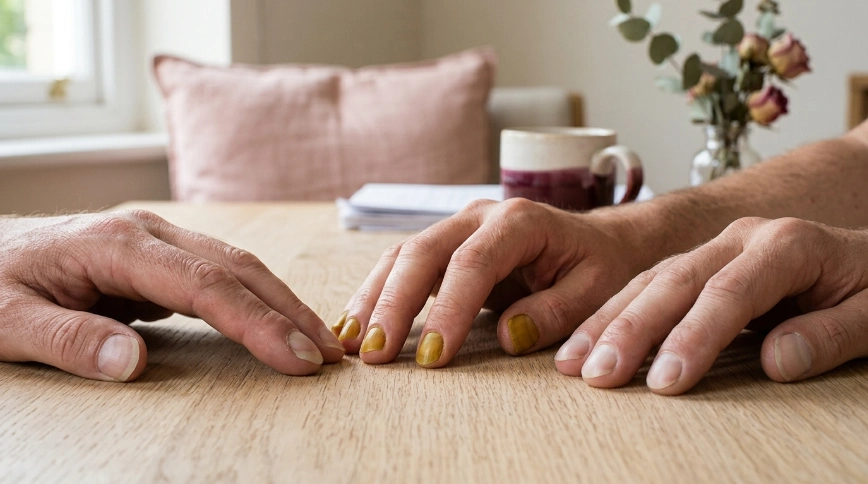
- Yellow nail discoloration — caused by bilirubin buildup, often paired with yellowing skin or eyes (jaundice).
- Clubbing — the nail curves downward and the fingertip rounds out, linked to chronic liver disease as well as lung and heart conditions.
What Other Organs Show Up in Your Nails?
The liver gets most of the attention, but it’s not the only organ with a nail “signature.”
- Kidneys — half-and-half nails, where the top half is brownish-red and the bottom half is white, are associated with kidney disease.
- Heart and lungs — bluish nail beds can point to poor oxygen circulation, while clubbing overlaps with chronic lung conditions too.
- Thyroid — brittle, splitting nails or nails separating from the nail bed (onycholysis) are common with thyroid imbalances.
- Digestive system — poor nutrient absorption from conditions like celiac disease can cause spoon-shaped nails or persistent ridging.
Signs Your Nails Might Be Flagging an Organ Issue
Yellowing that doesn’t come from polish or nail fungus
If your nails are yellow but you haven’t worn dark polish recently and there’s no fungal thickening, get it checked, especially if your skin or eyes look yellow too.
Nails that look mostly white with just a pink tip
This is the classic Terry’s nails pattern. It’s subtle and easy to dismiss, but it’s worth mentioning to a doctor, especially alongside fatigue or swelling.
Downward curving, rounded fingertips
Clubbing develops slowly over months, so compare old photos of your hands if you’re unsure whether the shape has actually changed.
Nails lifting away from the finger with no injury
Onycholysis with no trauma or fungal cause can point to thyroid issues and deserves a conversation with your doctor.
Do’s and Don’ts When You Notice Nail Changes
 Save
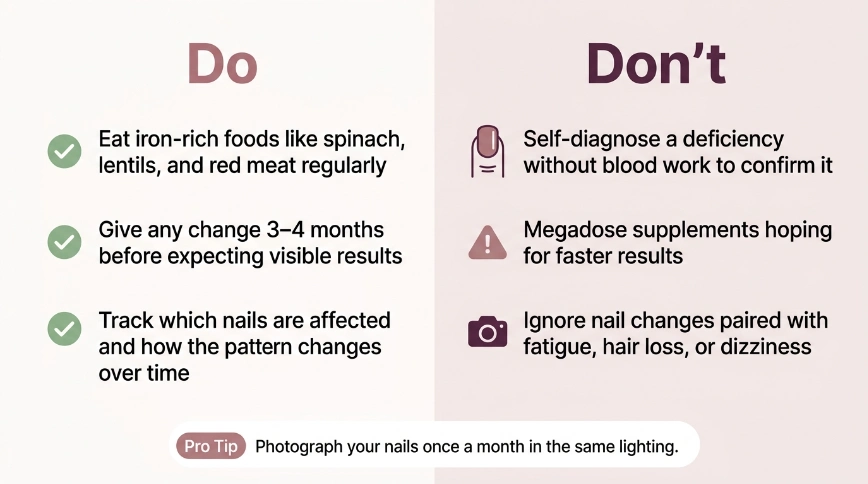
SaveDo
- +Photograph changes over time so you can track progression accurately
- +Rule out simple causes first — old polish stains, fungus, or minor trauma
- +Mention nail changes to your doctor alongside any other symptoms you’re having
Don’t
- −Assume every yellow or ridged nail means liver disease
- −Skip a doctor visit because you found reassurance online
- −Cover unusual nail changes with dark polish instead of investigating them
Pro Tip
Check your nails in natural daylight, not under bathroom LED lighting. Warm artificial light can make healthy pink nail beds look yellowish, leading to unnecessary worry.
While you’re paying closer attention to your nail health, it’s worth knowing the broader signs of unhealthy nails beyond organ-related changes, and understanding what causes weak nails in the first place, since nutrition and habits play a much bigger role than most people realize.
Pro Tip
If you’re unsure whether discoloration is nail-based or skin-based, press gently on the nail bed. If the color returns evenly when you release, it’s more likely a nail bed issue tied to circulation or an organ system rather than surface staining.
Supporting Healthy Nails While You Watch for Changes
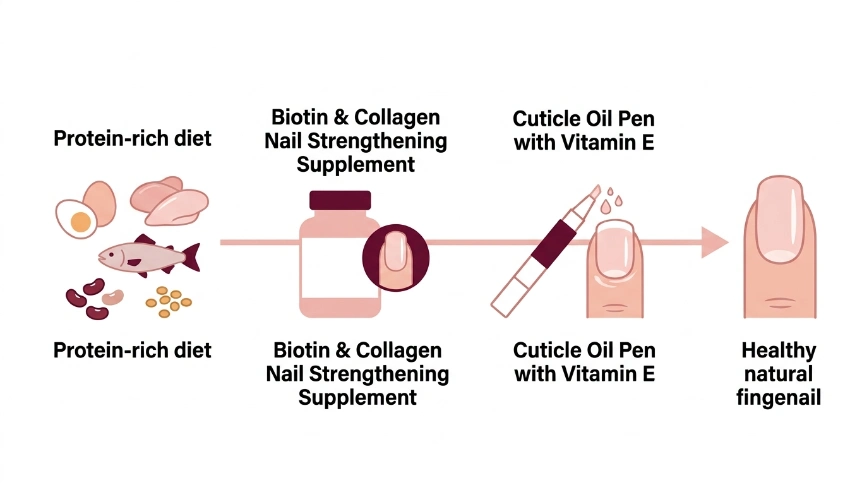
Whatever’s going on internally, you can still support your nails from the outside. A protein-rich diet supports the keratin your liver helps produce, and keeping your cuticles moisturized prevents surface damage that can be mistaken for something more serious.
 Save
SaveRecommended Product
Biotin & Collagen Nail Strengthening Supplement
★★★★☆ Highly rated on Amazon
Supports keratin production from the inside, which is especially useful if diet alone isn’t giving your nails enough building blocks.
As an Amazon Associate, we earn from qualifying purchases.
Also worth a look: how to repair damaged, weak nails if you’re already noticing brittleness alongside discoloration, and whether healthy nails should be hard or soft so you know what normal texture actually feels like.
Recommended Product
Cuticle Oil Pen with Vitamin E
★★★★☆ Highly rated on Amazon
Keeps the nail bed hydrated so surface dryness doesn’t mimic or worsen the appearance of underlying nail bed changes.
As an Amazon Associate, we earn from qualifying purchases.
Frequently Asked Questions
Q: Can nail changes appear before other liver symptoms show up?
A: Sometimes, yes. Nail changes like Terry’s nails can appear early because they reflect protein and circulation changes that start before more obvious symptoms like jaundice develop.
Q: Is yellow nail always a sign of a serious problem?
A: No. Nail fungus and dark polish staining cause the vast majority of yellow nails. Liver-related yellowing usually comes with other signs like yellow skin or eyes.
Q: How long does it take for organ-related nail changes to resolve?
A: Since nails grow slowly, roughly 3mm per month on average, it can take several months of the underlying condition improving before nail appearance fully normalizes.
Q: Should I see a dermatologist or a general doctor first?
A: Start with your general doctor. If organ involvement is suspected, they’ll order bloodwork and refer you onward if needed, rather than a dermatologist making that call alone.
The Bottom Line
Your liver has the closest relationship with nail health of any organ, but kidneys, thyroid, heart, and lungs all leave their own fingerprints too. Most nail quirks are harmless, but persistent yellowing, clubbing, or unusual color patterns are worth a real conversation with your doctor. Save this guide to Pinterest so you always know what to check for next time your nails look a little off.

Hi, I’m Jessica, the creator behind Unique Lash & Nails Katy.
I created this website for anyone who loves beautiful nails as much as I do. Here, I share trendy nail designs, seasonal manicure ideas, easy nail care tips, honest product recommendations, and step-by-step guides to help you create salon-worthy nails at home. Whether you’re looking for everyday inspiration or your next favorite nail trend, I hope you’ll find something you love.