Which Multivitamin Is Best for Nails? What to Look for Before You Buy
Quick Answer
The best multivitamin for your nails is usually a once-daily formula made for your age and life stage, independently tested by USP, NSF, UL, or ConsumerLab, and providing roughly 100% of the Daily Value for most nutrients—not megadoses. Look for biotin, vitamin B12, folate, vitamin C, vitamin D, and zinc. Choose iron only when you need it, because more iron or biotin is not automatically better for your nails.
The supplement aisle makes nail care look simple: take a brightly colored gummy and wait for stronger tips. Your nails are more complicated than that. A multivitamin can fill a genuine nutrition gap, but it cannot repair damage from repeated gel removal, constant water exposure, or an untreated health condition.
You need a formula that fits your body, not the bottle with the biggest biotin number. Here is how to compare your options and decide whether a multivitamin belongs in your routine at all.


What Should the Best Multivitamin for Nails Contain?
Start with a balanced formula rather than a “beauty blend” built around one oversized ingredient. Nails are made mainly from keratin, a protein. Your body also needs adequate calories, protein, vitamins, and minerals to produce normal nail tissue. No single vitamin does the whole job.
- Biotin: This B vitamin supports normal energy metabolism. Adults need about 30 micrograms a day. True deficiency can cause brittle nails, but deficiency is rare, and evidence that high doses strengthen the nails of well-nourished people is limited.
- Vitamin B12 and folate: Both support healthy blood-cell production and rapidly dividing cells. They matter most when your diet, medication, or a medical condition puts you at risk of deficiency.
- Vitamin C: Your body needs it to make collagen and absorb non-heme iron from plant foods. A normal daily amount is enough; more is not a shortcut to faster nail growth.
- Vitamin D: It supports wider health functions, but a supplement should match your diet, sun exposure, and any blood-test result rather than promise a cosmetic cure.
- Zinc: Zinc supports cell growth and protein synthesis. Too little can affect your nails, but chronically high doses can cause copper deficiency and other problems.
- Iron: Iron is important when you have iron deficiency or iron-deficiency anemia. It is not an ingredient everyone should take “just in case.”
Warning
High-dose biotin can distort certain laboratory results, including some thyroid and heart-related tests. Tell your doctor and the laboratory about every supplement you take before bloodwork. Do not stop a prescribed supplement without medical advice.
Which Type of Multivitamin Is Best for You?
 Save
SaveA basic once-daily multivitamin is the best default
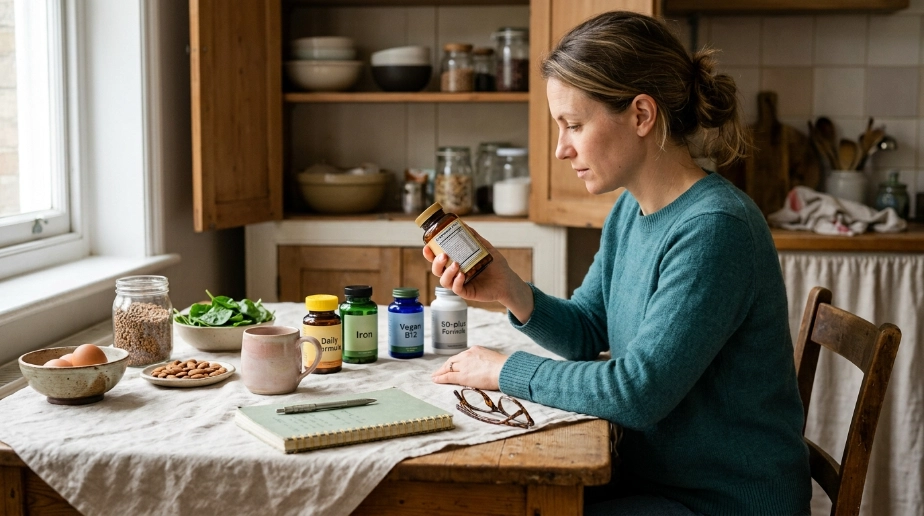
If you eat an inconsistent diet but have no known deficiency, choose a standard adult formula with amounts near 100% Daily Value. This approach covers small gaps without piling several high-dose products on top of one another. A tablet or capsule is often easier to formulate with minerals than a gummy, although the best format is one you can take consistently.
Look for a recognizable independent verification mark such as USP, NSF, UL, or ConsumerLab. A seal does not prove that the product will transform your nails. It gives you more confidence that the bottle contains the listed ingredients and has been checked against quality standards.
Recommended Product Type
Third-Party-Tested Women’s Once-Daily Multivitamin
A balanced formula is a sensible starting point when you want nutritional coverage without beauty-supplement megadoses.
As an Amazon Associate, we earn from qualifying purchases.
An iron-containing formula may suit menstruating adults
If you have heavy periods, follow a low-iron diet, donate blood frequently, or have been told that your ferritin or hemoglobin is low, your clinician may recommend iron. A women’s multivitamin often contains iron, while formulas for men and older adults often leave it out. That difference is intentional.
Do not diagnose iron deficiency from peeling nails alone. Fatigue, shortness of breath, dizziness, pale skin, or spoon-shaped nails deserve medical attention and appropriate blood tests. Excess iron can cause constipation, nausea, and toxicity, so your test result and clinician should guide the dose.
A vegan-friendly formula should emphasize B12
If you avoid animal foods, check the label for vitamin B12 and confirm that the serving supplies an appropriate amount. Plant-based diets can provide protein, iron, zinc, and folate, but B12 requires special attention because reliable natural sources are mainly animal foods. You may need a separate B12 strategy rather than choosing a “nails” gummy at random.
Recommended Product Type
Third-Party-Tested Vegan Multivitamin With B12
This category makes more sense than a generic beauty gummy when your eating pattern creates a predictable B12 gap.
As an Amazon Associate, we earn from qualifying purchases.
A prenatal multivitamin is for pregnancy planning—not prettier nails
If you are pregnant, breastfeeding, or could become pregnant, choose a prenatal based on guidance from your obstetric clinician. Prenatals contain nutrients in amounts designed for pregnancy, including folic acid and often iron. Do not use one as a beauty supplement simply because the nutrient panel looks “stronger.” Your needs and safe amounts change during pregnancy.
A 50-plus formula may be better after menopause
After menopause, you may no longer need routine supplemental iron unless testing shows otherwise. Formulas for older adults commonly adjust iron and place more emphasis on nutrients such as vitamins D and B12. Your medications and medical history still matter, so review the label with a pharmacist if you take prescriptions.
Is Biotin the Best Vitamin for Stronger Nails?
Biotin gets the most attention, but the marketing runs ahead of the evidence. Small studies in people with thin or brittle nails have reported harder nails after high-dose biotin. Those studies were limited, and they do not show that megadoses help everyone. Most people already get enough biotin from foods such as eggs, fish, meat, nuts, seeds, sweet potatoes, spinach, and broccoli.
A balanced multivitamin may contain around the adult recommended amount or a modest multiple of it. Beauty products sometimes provide thousands of micrograms. That larger number does not prove a larger benefit. If you are not deficient, extra biotin may do nothing noticeable while still interfering with laboratory tests.
Pro Tip
Photograph the supplement facts panel before buying. Compare serving size, Daily Value percentages, independent testing, and duplicated ingredients from other products. Front-label phrases such as “beauty complex” tell you far less.
How Can You Tell Whether Your Nails Need Nutrition or Better Care?
Brittleness does not automatically mean vitamin deficiency. Frequent handwashing, cleaning chemicals, acetone, filing the nail plate, picking off gel, and cycles of soaking and drying can all weaken nails. Before adding a supplement, look honestly at what your hands go through each week.
Pair nutrition with external protection. Wear gloves for dishwashing, keep nails at a practical length, avoid using them as tools, and moisturize after washing. This guide to moisturizing and hydrating nails naturally explains how to reduce dryness, while the comparison of the best oils for weak, damaged, or brittle nails can help you choose a simple topical routine.
See a healthcare professional when a nail change is sudden, painful, severe, limited to one nail, or accompanied by swelling, bleeding, a dark streak, clubbing, or separation from the nail bed. Thick, yellow, or crumbly nails may involve fungus or another nail disorder; a multivitamin will not treat an infection.
How Do You Read a Multivitamin Label Without Getting Fooled?
- Check the serving size. A bottle may advertise 60 gummies but require four gummies per day. Calculate the actual daily serving and monthly cost.
- Prefer sensible amounts. For general use, roughly 100% Daily Value for most nutrients is usually more rational than several thousand percent unless a clinician recommends otherwise.
- Look for independent testing. Find a USP, NSF, UL, or ConsumerLab mark and verify it through the certifier when possible.
- Watch duplicated nutrients. Add the amounts from your multivitamin, beauty gummy, fortified drink, and separate mineral pills. Upper limits apply to many nutrients.
- Question proprietary blends. If individual quantities are hidden, you cannot judge the dose or compare it properly.
- Ignore miracle timelines. Claims that a pill repairs damaged nails in days do not match nail biology.
Do
- +Choose for your age and life stage
- +Check for independent verification
- +Review medicines with a pharmacist
Don’t
- −Stack several beauty supplements
- −Take iron without a reason
- −Expect supplements to treat disease
Are Gummies, Tablets, or Capsules Better for Nails?
The delivery form does not make nutrients target your nails. Gummies are easy to remember, but they may contain added sugar, stick to teeth, and leave out bulky minerals such as iron. They also look like candy, so keeping them away from children is essential.
Tablets and capsules often provide a broader mineral profile with less sugar. On the other hand, a large pill is useless if you cannot swallow it consistently. Compare the complete label, testing, dose, and tolerability rather than assuming one format is stronger.
Alternative Format
Third-Party-Tested Adult Multivitamin Gummies
Gummies may improve consistency if swallowing pills is difficult, but check the sugar, serving size, and missing minerals before choosing them.
As an Amazon Associate, we earn from qualifying purchases.
How Long Will a Multivitamin Take to Improve Your Nails?
Do not judge a supplement after one week. Fingernails grow only a few millimeters per month, so any change must appear gradually in new nail growing from the base. You may need about three to six months to see whether the new nail is less brittle. A complete fingernail can take roughly four to six months to replace itself, while toenails take considerably longer.
Track the right thing. Take one clear photo each month in the same lighting and watch the new growth near the cuticle. The free edge still contains old damage and may keep splitting until it grows out. You can also support the process with these practical ideas for the healthiest things to put on your nails.
If nothing changes after several months, do not keep increasing the dose. Reconsider repeated water or chemical exposure, protein intake, skin conditions, thyroid problems, anemia, infection, and medication effects with a qualified professional.
What Makes a Nail Supplement Unsafe?
A supplement can be wrong for you even when its ingredients are “natural.” Vitamins and minerals can interact with medicines, affect medical conditions, or build up at excessive doses. The risk increases when you combine a multivitamin with separate hair, skin, and nail products.
- High-dose biotin can interfere with laboratory tests and lead to misleading results.
- Excess iron can cause digestive symptoms and serious poisoning, especially if children swallow it.
- Too much zinc over time can reduce copper absorption and affect health.
- Preformed vitamin A can be harmful at excessive levels and needs special caution in pregnancy.
- Vitamin K can matter if you take warfarin or another anticoagulant, so consistency and professional guidance are important.
Ask a doctor or pharmacist before starting a supplement if you are pregnant or breastfeeding, have kidney or liver disease, take prescriptions, are preparing for surgery, or have unexplained nail changes. Bring the bottle or a photo of the full label—not just the brand name.
What Else Helps Nails More Than a Megadose?
 Save
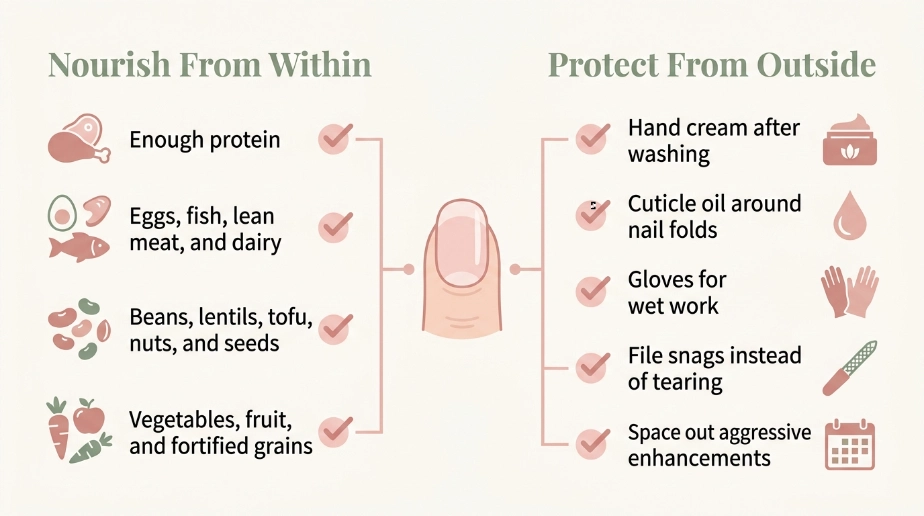
SaveBuild meals around enough protein and a range of whole foods. Eggs, fish, lean meat, dairy, beans, lentils, tofu, nuts, seeds, vegetables, fruit, and fortified grains collectively supply the building blocks involved in nail growth. If you exclude major food groups, a registered dietitian can help you close the gaps without guessing.
Protecting the nail you already have is just as important. Apply hand cream after washing, massage cuticle oil around the nail folds, wear gloves for wet work, file snags instead of tearing them, and space out aggressive enhancements. If your goal is length, combine those habits with this guide on what Vaseline can and cannot do for nail growth.
Pro Tip
Use one change at a time when possible. If you start a multivitamin, cuticle oil, nail strengthener, and new diet on the same day, you will never know which change helped—or which one caused a reaction.
Frequently Asked Questions About Multivitamins for Nails
Q: What is the single best vitamin for brittle nails?
A: There is no universal best vitamin. Biotin may help some people with brittle nails, but evidence is limited and true deficiency is uncommon. A confirmed deficiency in iron, zinc, B12, or another nutrient should be treated specifically.
Q: Can a regular multivitamin make your nails grow faster?
A: It may support normal growth if it corrects a nutrient gap. If your diet already meets your needs, a multivitamin is unlikely to push nail growth beyond your normal rate.
Q: How much biotin should you take for nails?
A: Adults need about 30 micrograms of biotin daily from food and supplements combined. High-dose products have not been proven necessary for most people and can interfere with lab tests, so discuss them with your clinician.
Q: Should you choose a multivitamin with iron for weak nails?
A: Choose iron when your life stage, diet, symptoms, or blood tests show a need—not merely because your nails feel weak. Too much iron can be harmful, so ask a clinician before taking a high-dose iron product.
Q: Can you take a multivitamin and a hair, skin, and nails vitamin together?
A: Do not combine them automatically. Their ingredients often overlap, which can push vitamin A, zinc, iron, or other nutrients too high. Compare both labels and ask a pharmacist to check the total doses.
So, Which Multivitamin Should You Choose?
Choose a life-stage-appropriate, independently tested multivitamin with balanced doses, and treat iron or other deficiencies only when you have a real reason. Give new nail growth several months, protect your hands from damage, and get unusual changes checked instead of trying to supplement them away. Save this guide on Pinterest so you can compare labels the next time you shop.

Hi, I’m Jessica, the creator behind Unique Lash & Nails Katy.
I created this website for anyone who loves beautiful nails as much as I do. Here, I share trendy nail designs, seasonal manicure ideas, easy nail care tips, honest product recommendations, and step-by-step guides to help you create salon-worthy nails at home. Whether you’re looking for everyday inspiration or your next favorite nail trend, I hope you’ll find something you love.