How Moisturizing and Nail Oil Help Ridged Nails
Quick Answer
Moisturizing and nail oil help ridged nails by conditioning dry nail plates, softening surrounding skin, and reducing the brittleness that can make ridges more noticeable. Apply a fragrance-free hand cream after washing, massage a small amount of cuticle oil around each nail, and use a richer moisturizer at bedtime. These habits can improve comfort and appearance, but they cannot erase structural ridges or treat a medical cause.
Noticing little lines running along your nails can make you wonder whether you need a special treatment—or whether your nails are trying to tell you something. The good news is that many vertical ridges are harmless, and a simple moisturizing routine can make dry, rough nails look and feel better.
Here’s what nail oil and moisturizer actually do, how to combine them without overcomplicating your day, and when a nail change deserves more than cosmetic care.


Why Do Your Nails Develop Ridges?
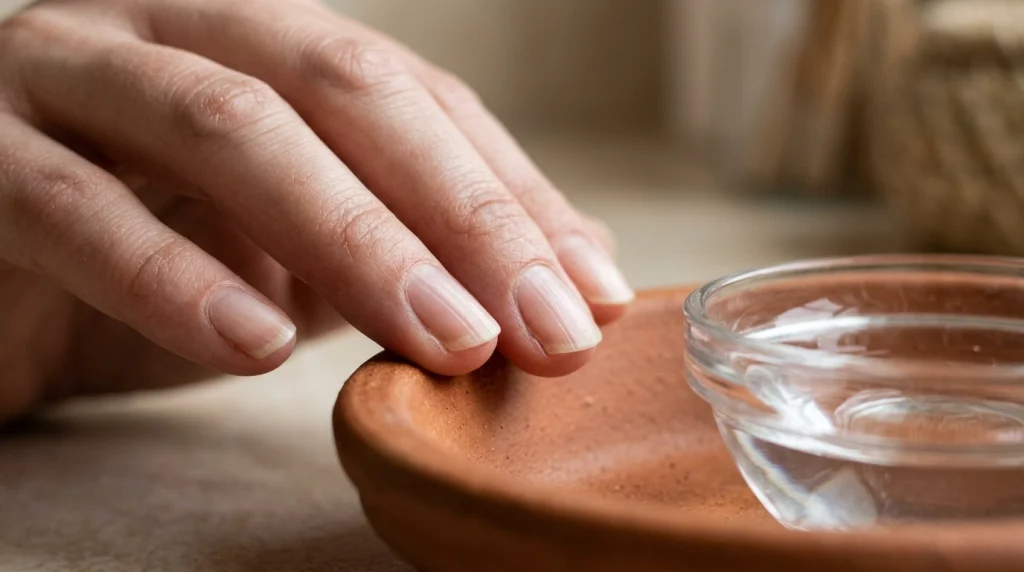
A ridge is a raised or depressed line in the nail plate. The direction of that line matters. Vertical ridges run from the cuticle toward the fingertip. These often become more visible with age as nail growth and the texture of the nail plate change. Some people naturally have more prominent ridges than others.
Dryness does not necessarily create the underlying ridge, but a dull surface, peeling edge, or flaky surrounding skin can make existing ridges seem more obvious. Frequent handwashing, cleaning chemicals, repeated wetting and drying, and aggressive manicures may also contribute to brittle nails.
Are vertical ridges normal?
Usually, yes. Fine vertical lines on several nails, especially if they have appeared gradually and cause no discomfort, are often a normal variation. A ridge does not automatically mean you’re deficient in a vitamin. If the ridges are paired with cracking or peeling, however, your everyday nail-care habits are worth reviewing.
Are horizontal ridges different?
Yes. Horizontal grooves cross the nail from side to side and may occur when nail growth has been interrupted by an illness, injury, or another issue. New or deep horizontal grooves, sudden nail distortion, and changes in nail color should be assessed by a healthcare professional rather than treated with oil alone.
The nail plate grows from the nail matrix, the tissue beneath the nail base. That explains why topical oil can condition an existing nail surface but cannot instantly change the way the nail was formed.
What Does Moisturizer Actually Do for Ridged Nails?
A moisturizer supports both your nails and the living skin around them. A cream typically combines water, ingredients that attract water, skin-softening emollients, and components that limit moisture loss. When applied regularly, it can make tight, rough cuticles more comfortable and reduce the dryness associated with brittle nails.
Your hard nail plate is made primarily of keratinized cells. It’s not living skin, and it cannot heal an established groove the way a small skin scratch heals. But keeping the nail area conditioned may reduce splitting and snagging, helping you preserve more of the nail as it grows.
What ingredients should you look for?
- Glycerin: A humectant that helps draw water into the outer layers of skin.
- Petrolatum: A protective occlusive that helps limit moisture loss, especially overnight.
- Mineral oil: An emollient that helps soften skin and limit water loss.
- Urea: An ingredient found in some nail and hand creams; appropriately formulated products can soften dry, rough skin.
- Ceramides: Lipids commonly used in moisturizers to support the skin barrier around your nails.
Choose a fragrance-free cream if your nail folds get irritated easily. A simple product you use consistently is more helpful than an expensive treatment that stays in a drawer.
How Does Nail Oil Help Ridged Nails?
Nail oil is a convenient conditioning step. Oils such as jojoba, mineral oil, and sunflower seed oil spread over the nail and surrounding skin, leaving them softer and less dry-looking. As the surface becomes better conditioned, shallow ridges may catch the light less harshly and appear less prominent.
That visual effect is not proof the ridges have disappeared. Oil cannot rebuild a damaged nail matrix, remove a permanent groove, or correct an underlying medical condition. Think of it as daily maintenance, not a cure.
Jojoba oil: a lightweight everyday option
Jojoba is technically a liquid wax. Its lightweight texture makes it practical for a quick massage around the nail base and sides. It’s particularly useful if you dislike greasy fingertips and want something that fits into your daytime routine.
Mineral oil: simple and straightforward
Mineral oil is an uncomplicated conditioning ingredient that helps reduce moisture loss. It can work well for people who want a no-frills formula without a long list of botanical extracts or fragrance ingredients.
Vitamin E oil: optional, not magical
Vitamin E appears in many cuticle formulas, but it is not essential for managing ridges. Some concentrated vitamin E products can irritate sensitive skin. If you notice itching or redness after an oil, stop using it and switch to a gentler product.
Wondering whether oil is enough by itself? Our guide to what nail oil can and cannot do for dry nails explains why combining an oil with moisturizer is often more practical.
Should You Use Nail Oil or Hand Cream First?
You don’t have to follow a strict layering ritual, but a simple order makes both products easier to use. Start with clean hands, apply your moisturizing cream, and work a small drop of oil over the nail plate and the skin at its base. If you prefer oil first, that’s fine too. The important part is covering the dry areas consistently.
For very dry skin, finish with a thin layer of petrolatum at night. It helps limit water loss while you sleep. Avoid using so much product that your fingertips become slippery.
If you want to compare texture, convenience, and skin benefits, see nail cream versus nail oil for dry nails.
Which Moisturizing Methods Work Best?
Method 1: Hand cream after washing
Best for: Anyone who washes their hands frequently or has dry hands and nail folds.
After washing, dry your hands gently and rub a pea-sized amount of fragrance-free cream over your fingers, nails, and skin at the nail base. This takes less than a minute and helps replace the comfortable feel lost after cleansing.
Pros: Easy to remember, inexpensive, and helpful for the whole hand. Cons: Needs repeating after frequent washing.
Method 2: Cuticle oil massage
Best for: Dry-looking ridges, rough cuticle edges, and people who want a portable routine.
Put one small drop on each nail or use a brush pen. Massage around the base and sidewalls for about 10 to 20 seconds per nail. You do not need to flood the cuticle area. Give the oil a moment to settle before touching paper or your phone.
Pros: Targeted, quick, and portable. Cons: Can feel greasy; it does not replace a cream for very dry surrounding skin.
Method 3: Overnight protective moisture
Best for: Nails that feel very dry or brittle after repeated exposure to water and cleaners.
At bedtime, apply a rich fragrance-free cream, then a little petrolatum to particularly dry areas. Optional clean cotton gloves can help keep product off your bedding. Don’t cover a painful, swollen, or possibly infected nail without seeking medical advice.
Pros: Provides longer-lasting protection when you’re not washing your hands. Cons: Richer products may feel heavy if you dislike overnight residue.
What Is a Simple Daily Routine for Ridged Nails?
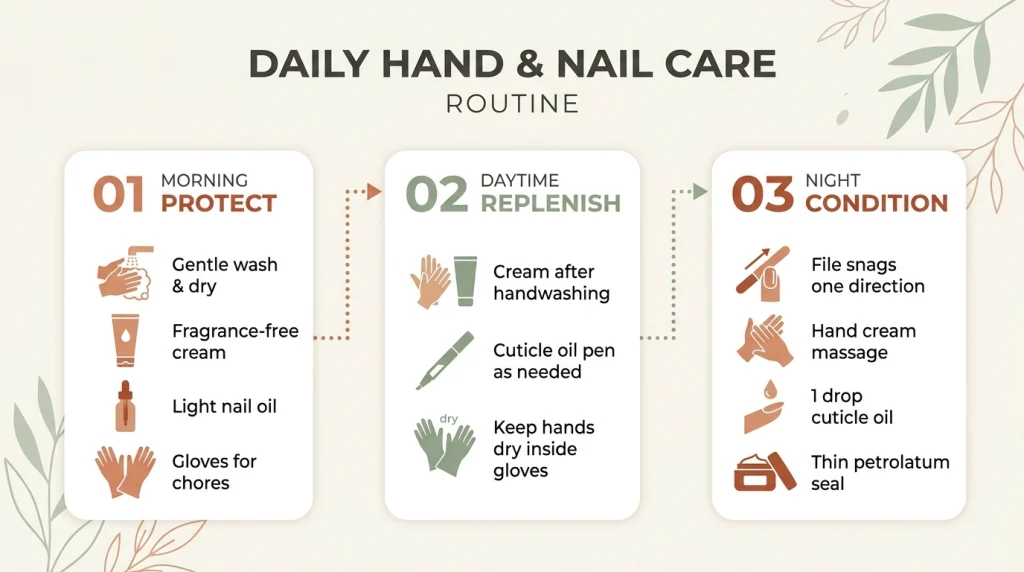
You don’t need ten different products. Start with this easy schedule and adapt it to how dry your hands feel.
Morning: protect before the day starts
- Wash your hands with a gentle cleanser and dry carefully.
- Massage a fragrance-free cream over your hands, nail plates, and nail folds.
- Add a small amount of nail oil if your nails still look dry or your cuticles feel tight.
- Wear protective gloves when doing dishes or using household cleaners.
During the day: replenish as needed
Keep a small tube of hand cream near your sink or desk. Reapply after washing, especially when soap or alcohol-based products leave your hands tight. Use a nail-oil pen when convenient, not according to an unrealistic hourly schedule.
If you work with water regularly, properly fitted protective gloves are particularly useful. However, don’t keep sweaty or wet gloves on for long periods; give your hands time to dry between tasks.
Night: condition the nail area
- Check your nails for snags and gently file rough tips in one direction.
- Apply hand cream and work it into the skin around the nail.
- Massage one small drop of cuticle oil over each nail.
- Seal especially dry spots with a thin coat of petrolatum, if needed.
Pro Tip
Take one photo of your nails in the same lighting every two to four weeks. Comparing images over time is more useful than checking each ridge every morning, because changes in natural nail growth are slow.
How Long Before Ridged Nails Look Better?
Dry surrounding skin may feel softer after the first application, and oil can give the nail surface an immediate, temporary sheen. If repeated dryness contributes to peeling and splitting, you may notice less roughness after several weeks of consistent care and better protection.
Actual changes in how the nail grows take much longer. Fingernails generally grow only a few millimeters per month, and replacing an entire fingernail can take roughly four to six months. A pre-existing structural ridge may remain visible even after several months of excellent care.
Use realistic expectations: your first goal is less dryness, fewer snags, and healthier-looking surrounding skin, not perfectly flat nails. If one nail suddenly develops a new deep ridge or the texture continues to worsen, seek an evaluation rather than extending a home routine indefinitely.
What Should You Avoid When Caring for Ridged Nails?

Do
- Moisturize after handwashing.
- Protect hands during wet chores.
- Keep nails comfortably short.
- File snagging edges gently.
- Choose formulas your skin tolerates.
Don’t
- Buff deeply to erase every ridge.
- Cut or aggressively push cuticles.
- Peel off gel or acrylic products.
- Apply irritating DIY acids to nails.
- Assume all nail changes are dryness.
Be careful with ridge buffing
A buffer can briefly make a nail feel smoother, but repeated aggressive buffing removes part of the nail plate. If your nails already split or bend easily, avoid trying to sand down the raised lines. A ridge-filling base coat, if tolerated, can be a less abrasive cosmetic option when you want a smoother polish finish.
Keep your cuticle barrier intact
The skin around the nail base helps protect the area where new nail grows. Cutting living skin, digging beneath the fold, or pushing it back forcefully may cause irritation and increase the risk of infection. Learn the difference between the cuticle and living nail-fold skin before your next manicure.
Which Products Are Worth Buying for Ridged Nails?
Start with a basic cream and one simple conditioning product. You do not need an expensive ridge-removal kit. These are product categories rather than promises that a particular formula will eliminate ridges.
Recommended Product
Jojoba Cuticle Oil Pen
A portable oil pen is handy for conditioning dry nail edges without carrying a large bottle.
Browse Jojoba Cuticle Oil on Amazon
As an Amazon Associate, we earn from qualifying purchases.
Recommended Product
Fragrance-Free Hand Cream
Look for glycerin, ceramides, or petrolatum if your hands and nail folds become dry after washing.
As an Amazon Associate, we earn from qualifying purchases.
Optional Product
Plain Petroleum Jelly
A small amount at bedtime can help protect very dry surrounding skin from additional moisture loss.
Browse Petroleum Jelly on Amazon
As an Amazon Associate, we earn from qualifying purchases.
When Should You Ask a Dermatologist About Nail Ridges?
Warning
Nail oil cannot treat infection, inflammatory nail disease, or a growth problem. Seek medical evaluation for sudden deep horizontal grooves, pain, swelling, nail lifting, marked distortion, or a new or changing dark streak.
Sometimes nail changes reflect an injury, a skin condition, or a broader health issue. A dermatologist can examine the pattern and decide whether you need testing or treatment. Pay particular attention when only one nail changes rapidly, when multiple nails suddenly look different, or when the change is accompanied by skin symptoms.
For general nail-health guidance, the American Academy of Dermatology recommends protecting nails from excess water exposure, avoiding cuticle damage, and consulting a dermatologist about concerning changes. Your moisturizing routine should support appropriate care, not replace a diagnosis.
Frequently Asked Questions About Nail Oil and Ridges
Q: Can nail oil get rid of vertical ridges permanently?
A: No. Nail oil can improve dryness and temporarily make a ridged surface look smoother, but it does not permanently remove age-related or structural ridges.
Q: How often should you apply cuticle oil to ridged nails?
A: Once daily is a reasonable starting point. Apply it again when the nail folds feel dry, and use hand cream after washing whenever needed.
Q: Is jojoba oil better than coconut oil for nail ridges?
A: There is no strong evidence that either oil removes ridges. Jojoba is often more convenient because of its lightweight feel, while coconut oil may feel heavier. Choose what your skin tolerates.
Q: Does drinking more water make nail ridges disappear?
A: Staying adequately hydrated is good for general health, but extra water is not a proven way to erase ridges. Moisturizing and reducing nail damage address local dryness more directly.
Q: Should you buff ridged nails before applying oil?
A: Not routinely. Repeated buffing can thin an already brittle nail plate. Condition the nails first, and consider a ridge-filling base coat for a temporary cosmetic finish.
Make Moisturizing a Small Habit, Not a Big Project
Moisturizer and nail oil can make ridged nails feel more comfortable, look less dry, and resist everyday brittleness when you pair them with gentle habits. They cannot erase every ridge, and that’s okay. Your most useful routine is the one you’ll actually follow: cream after washing, a little cuticle oil, and protection during messy chores.
Save this guide to your Pinterest nail-care board so your next self-care night starts with healthy habits instead of harsh fixes.

Hi, I’m Jessica, the creator behind Unique Lash & Nails Katy.
I created this website for anyone who loves beautiful nails as much as I do. Here, I share trendy nail designs, seasonal manicure ideas, easy nail care tips, honest product recommendations, and step-by-step guides to help you create salon-worthy nails at home. Whether you’re looking for everyday inspiration or your next favorite nail trend, I hope you’ll find something you love.