Common Filing and Nail Care Mistakes That Cause Splitting or Cracking
Quick Answer
The most common filing and nail care mistakes that cause splitting or cracking include aggressive back-and-forth filing, using coarse files, over-buffing, trimming nails too short, peeling off gel polish, and skipping moisturizer. Repeated water exposure and using your nails as tools can make breakage worse. To protect your nails, file gently in one direction, keep the edges smooth, moisturize daily, and wear gloves during wet chores.
You carefully shape your nails, apply your favorite polish, and admire your manicure. Then, a few days later, you notice a tiny split at the tip or a crack along the edge. Frustrating, right?
What you might not realize is that some everyday nail care habits can gradually weaken your natural nails. Even a routine that looks perfectly harmless may contribute to peeling, cracking, and repeated breakage.
The good news? You can change many of these habits without expensive treatments. This guide explains the common filing and nail care mistakes that damage nails, how to recognize them, and what you can do differently.


Why Do Nails Split or Crack So Easily?
Your fingernails are made primarily of keratin, a tough protein arranged in layers. Although nails look solid, their structure can become vulnerable to damage from repeated mechanical stress, excessive moisture exposure, and harsh cosmetic treatments.
When the outer layers begin separating, you may notice peeling at the tips. A deeper break can create a crack that extends across or along the nail.
Some people naturally have more fragile nails. Aging, certain skin conditions, and medical problems can also contribute to brittleness. However, everyday habits are often important factors you can control.
Common contributors include:
- Repeated wetting and drying of your hands.
- Aggressive filing or buffing.
- Frequent contact with cleaning chemicals.
- Picking or peeling off nail enhancements.
- Physical pressure on long nails.
- Dryness around the nails and fingertips.
- Using damaged or excessively abrasive tools.
Understanding these causes helps you choose the right prevention methods instead of repeatedly covering damaged nails with polish.
How Can You Tell Whether Your Nails Are Becoming Damaged?
Nail damage doesn’t always begin with a dramatic break. Often, your nails show smaller warning signs first.
- Peeling tips: Thin layers separate at the free edge of your nail.
- Frequent snags: Rough corners catch on clothing or hair.
- Vertical cracks: A split travels lengthwise along the nail plate.
- Excessive flexibility: Nails feel unusually thin or bend easily after manicures.
- Repeated breakage: Nails crack before reaching your preferred length.
- Surface roughness: Nails become uneven after frequent buffing or removal treatments.
These signs can be associated with cosmetic or mechanical damage, but they aren’t enough to diagnose the underlying cause.
Important Warning
If a nail crack extends into the attached nail bed, causes bleeding or significant pain, or comes with redness, swelling, or drainage, avoid further filing and seek medical advice. Unexplained or persistent nail changes also deserve evaluation by a healthcare professional.
12 Common Filing and Nail Care Mistakes That Cause Splitting or Cracking
1. Filing Your Nails Back and Forth Too Aggressively
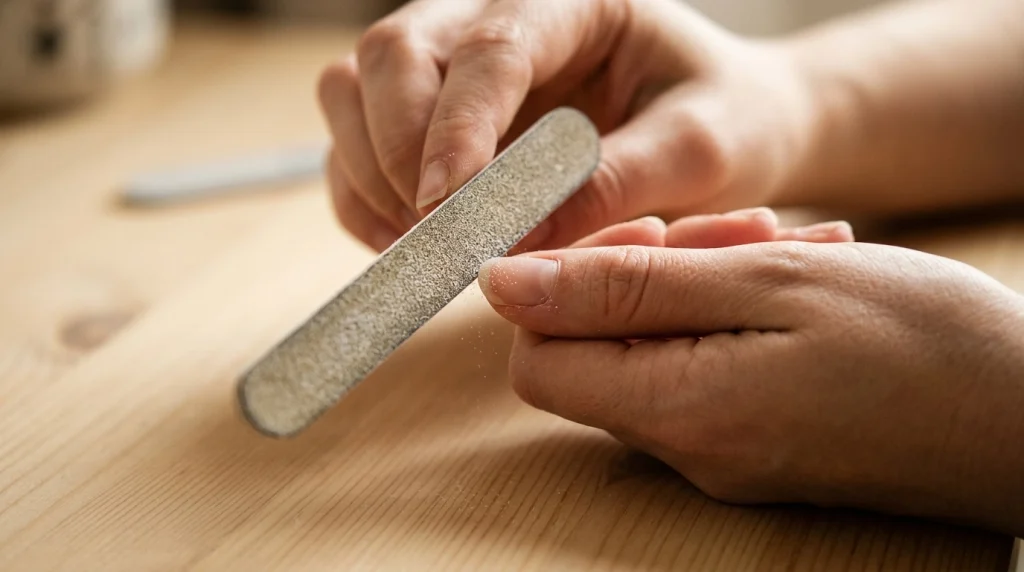
One of the most common nail filing mistakes is dragging a file rapidly from side to side with heavy pressure.
Repeated aggressive friction can stress already fragile nail edges. If your nails are peeling or brittle, this habit may make the damage worse.
What to do instead: Use light, controlled strokes in one direction. Work from one side toward the center, then repeat from the opposite side.
You don’t need to remove large amounts of nail material to create a smooth shape.
2. Using a Nail File That Is Too Coarse
Not every nail file is suitable for natural nails. A rough file designed for artificial enhancements may remove material too aggressively from a thin natural nail.
When the free edge becomes uneven, it can catch on fabric and develop additional splits.
What to do instead: Choose a fine-grit file or a smooth glass nail file for routine natural-nail shaping. A file around 180–240 grit is a practical starting point, although the ideal choice depends on your nails and the tool.
Use minimal pressure and replace worn or damaged files.
3. Filing Too Much Off the Nail Edges
It’s tempting to keep narrowing your nails until they look perfectly symmetrical. However, excessive filing along the sidewalls can remove supporting nail material.
This is particularly problematic when your nails are long or naturally thin.
What to do instead: Preserve the natural sidewalls and focus on smoothing the free edge. A softly rounded or squoval shape is often easier to maintain when your nails break frequently.
4. Over-Buffing the Surface of Your Nails
Buffing can temporarily make nails appear smooth and glossy, but repeated surface abrasion removes part of the nail plate.
Because your nail plate cannot rebuild the material that has already been filed away, you must wait for new nail growth to replace it.
What to do instead: Avoid routine surface buffing if your nails are thin, peeling, or sensitive. If you use a buffer for cosmetic purposes, follow the product instructions and avoid repeated passes over the same area.
5. Filing Deeply into a Nail Crack
When you discover a split, your first instinct might be to file until the damaged area disappears.
Unfortunately, excessive filing can enlarge the problem if the crack extends into the attached portion of your nail.
What to do instead: If the split is limited to the free edge, carefully shorten the nail and smooth any sharp corners. Never file into a painful crack or exposed nail bed.
6. Skipping Cuticle Oil and Hand Moisturizer
Dry fingertips and brittle nail edges often appear together. Frequent handwashing, cleaning products, and dry weather can make it harder to maintain comfortable, well-conditioned nails.
Moisturizing won’t repair a split that has already formed, but it can help reduce dryness and improve the flexibility of the surrounding skin and nail area.
What to do instead: Apply a fragrance-free hand cream after washing your hands. Massage a small amount of cuticle oil around the nail folds when they feel dry.
For a more detailed comparison, explore our guide to building a healthy nail care routine.
7. Exposing Your Nails to Water and Detergents Repeatedly
Washing dishes, cleaning bathrooms, and using detergents without protection can contribute to brittle nails.
Repeated wetting and drying puts stress on the nail plate. Cleaning chemicals may also irritate the surrounding skin.
What to do instead: Wear protective gloves during wet household chores. Dry your hands thoroughly afterward and apply moisturizer.
If you spend long periods cleaning, consider cotton-lined reusable gloves that fit comfortably and allow you to maintain a secure grip.
8. Peeling Off Gel Polish or Acrylic Products
Peeling an old gel manicure can be satisfying, but it may remove superficial layers of your natural nail along with the product.
The same problem can occur when you forcefully pry away acrylics, press-ons, or adhesive products.
What to do instead: Follow the correct removal procedure for your particular nail enhancement. Some products require careful soaking, while others need professional removal.
Never pull an enhancement away from a painful or already damaged nail.
9. Cutting Your Nails Too Short
Shorter nails usually experience less leverage and are often easier to protect. However, cutting into the attached nail or surrounding skin can cause tenderness and injury.
What to do instead: Use clean, sharp clippers and leave a small amount of free edge. Trim fingernails almost straight across, then slightly round the corners with a fine file.
Don’t try to achieve a shorter length by cutting into sensitive tissue.
10. Using Your Fingernails as Everyday Tools
Opening cans, scraping labels, removing stickers, and prying apart packaging may seem harmless.
Unfortunately, these activities place pressure on the nail tips and can cause sudden cracks or worsen existing weak spots.
What to do instead: Use a proper tool rather than your nails. A small change in your daily habits can prevent unnecessary mechanical damage.
11. Cutting or Aggressively Pushing Back Cuticles
Your cuticle area helps protect the point where new nails emerge. Cutting healthy cuticle tissue or pushing aggressively can damage the surrounding skin and increase infection risk.
This won’t necessarily cause every type of nail split, but it creates unnecessary trauma around an area essential to nail health.
What to do instead: Leave healthy cuticles intact. Moisturize the area, and avoid any manicure technique that causes pain, bleeding, or irritation.
12. Ignoring Early Signs of Nail Damage
A tiny snag can turn into a larger break when it repeatedly catches on clothing. Similarly, thin nails may continue deteriorating if you keep buffing or applying enhancements without changing the underlying habits.
What to do instead: Examine your nails during weekly maintenance. Smooth minor rough edges gently, shorten repeatedly snagging tips, and reduce activities that cause damage.
Our article on common nail health mistakes explains more everyday habits worth avoiding.
What Is the Correct Way to File Nails Without Causing Splitting?
You don’t need advanced nail-art skills to file your natural nails properly. The goal is to create a smooth edge while removing as little material as necessary.
Time needed: 5–10 minutes
Difficulty: Beginner
Items needed: Fine nail file, clean clippers if needed, hand moisturizer
Maintenance: Check weekly and smooth snags as needed
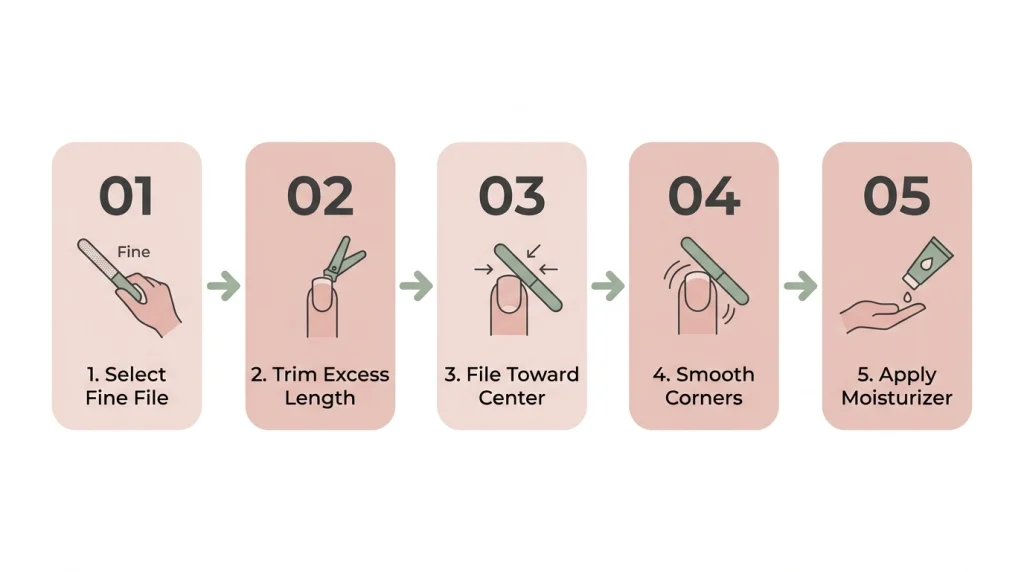
Step 1: Choose a Gentle Nail File
Select a clean, fine-grit file intended for natural nails. Check that its edges aren’t chipped or excessively rough.
Common mistake: Using a coarse enhancement file on thin natural nails.
Step 2: Trim Excess Length First
If your nails are significantly longer than you want, use clean clippers to remove some length before filing. Trimming carefully reduces the amount of abrasive work needed.
Common mistake: Trying to file away excessive length using heavy pressure.
Step 3: File Gently Toward the Center
Place the file against one edge and move toward the center using light strokes. Repeat from the opposite side until you achieve your preferred shape.
Common mistake: Sawing rapidly across the tip until the edge feels thin or rough.
Step 4: Smooth the Corners
Check both corners for sharp points. Round them slightly so they won’t catch on clothes or hair.
Common mistake: Filing deeply into the sidewalls to create an exaggerated narrow shape.
Step 5: Finish with Moisturizer
Remove filing dust, wash your hands gently if needed, dry them, and apply a moisturizing cream to the nails and surrounding skin.
Common mistake: Finishing with more buffing when your nails already have thin or peeling areas.
Pro Tip
Instead of filing your nails every day to perfect the shape, aim for gentle maintenance. Check the edges after your weekly trim and only smooth areas that actually need attention. Less unnecessary abrasion means less mechanical stress.
Which Nail Shapes Are Better for Nails That Split?
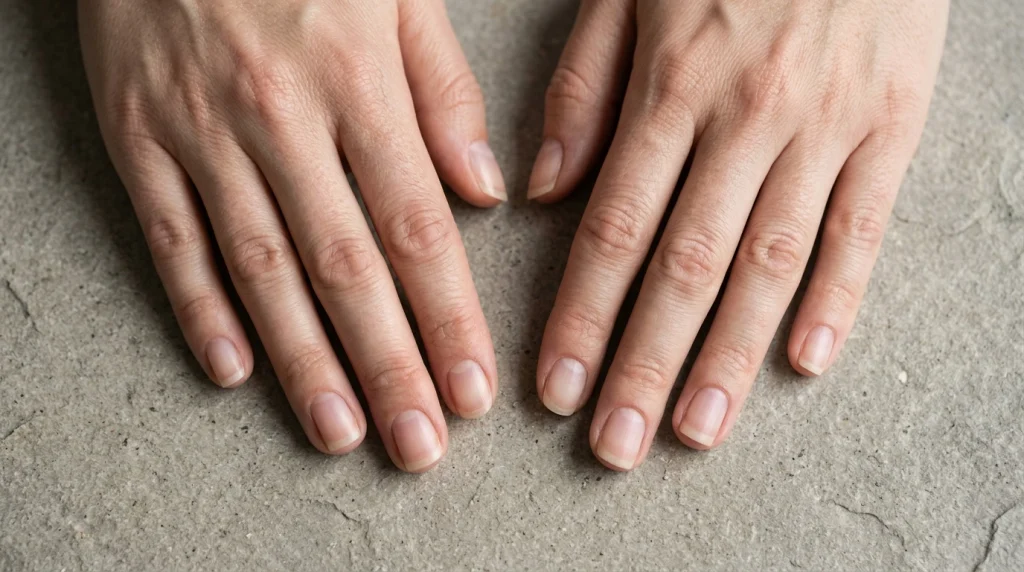
Your preferred nail shape affects how much pressure the free edge experiences during daily activities.
Short Round Nails
A short, rounded shape has minimal sharp corners and usually catches less easily on surrounding objects.
Best for: Very short nails, frequent breakage, and low-maintenance manicures.
Squoval Nails
Squoval nails combine a relatively straight free edge with softly rounded corners. They offer a neat appearance without creating sharp points.
Best for: People who want a polished look while keeping nail corners smooth and practical.
Long Almond or Stiletto Nails
These shapes can look beautiful, especially in Pinterest nail-art designs. However, longer tips have more leverage when they strike an object.
If your nails are currently cracking, temporarily switching to shorter round or squoval nails may help reduce additional stress.
What Daily Nail Care Habits Help Prevent Splitting?
You don’t need a complicated beauty routine. A few small actions repeated consistently can protect your nails from avoidable damage.
DO
- Keep nails at a comfortable length.
- File gently with a fine file.
- Apply moisturizer after washing.
- Wear gloves for wet cleaning.
- Use clean manicure tools.
- Remove nail products carefully.
DON’T
- File aggressively back and forth.
- Buff thin nail surfaces repeatedly.
- Peel gel polish away.
- Use nails to open packages.
- Cut healthy cuticles deeply.
- Ignore painful nail changes.
For a practical schedule, see our guide on how often you should care for your nails.
What Products Can Help You Care for Splitting Nails?
Most people don’t need a large collection of nail treatments. A few gentle tools and moisturizing products are a more sensible starting point.
Choose products based on your specific needs rather than expecting one treatment to repair every damaged nail.
Fine Glass Nail File
Recommended Nail Care Tool
Fine Glass Nail File for Natural Nails
A fine glass file can help you smooth natural nail edges using controlled, gentle strokes. Choose one with an evenly textured surface and a protective case.
As an Amazon Associate, we earn from qualifying purchases.
Jojoba-Based Cuticle Oil
A cuticle oil can make moisturizing dry nail folds more convenient, especially if you prefer a quick application before bed.
Recommended Moisturizer
Jojoba-Based Cuticle Oil
Useful for conditioning dry cuticles and surrounding skin, although it cannot permanently bond a split nail back together.
As an Amazon Associate, we earn from qualifying purchases.
Fragrance-Free Hand Cream
A rich, fragrance-free hand cream is particularly helpful if you wash your hands frequently or live in a dry climate.
Everyday Nail Care Essential
Fragrance-Free Moisturizing Hand Cream
Choose a cream containing ingredients such as glycerin or petrolatum to help maintain moisture around your nails.
As an Amazon Associate, we earn from qualifying purchases.
Reusable Household Cleaning Gloves
If frequent wet work contributes to your nail problems, protective gloves may be more useful than another cosmetic treatment.
Protective Nail Care Essential
Cotton-Lined Reusable Cleaning Gloves
These gloves help limit repeated exposure to water and household cleaning products during chores.
As an Amazon Associate, we earn from qualifying purchases.
What Should You Do When a Nail Has Already Split?
The safest response depends on the location and severity of the damage. Don’t treat a deep, painful crack like a minor cosmetic snag.
Problem: A tiny split at the free edge
Immediate fix: Carefully shorten the nail if necessary and smooth the free edge with a fine file. Prevention: Keep the nail at a manageable length and avoid catching it on objects.
Problem: Peeling layers at the nail tips
Immediate fix: Stop aggressive buffing and reduce unnecessary filing. Prevention: Moisturize consistently, protect your hands from frequent wet work, and allow the affected portion to grow out.
Problem: Thin nails after gel removal
Immediate fix: Avoid further scraping or cosmetic abrasion. Prevention: Use appropriate removal methods and minimize unnecessary enhancement treatments while damaged nail material grows out.
Problem: A deep or painful nail crack
Immediate fix: Stop filing the affected area. Protect it from further injury and seek appropriate medical care, especially if there is bleeding, swelling, or exposed tissue. Prevention: Address the underlying cause once the injury has been evaluated.
How Long Does It Take for Damaged Nails to Recover?
The answer depends on the damage. A minor snag at the free edge may disappear as soon as you trim and smooth it.
However, a nail plate that has been thinned by filing or damaged during enhancement removal cannot instantly rebuild itself.
Fingernails generally take several months to grow from the base to the tip. A complete replacement commonly takes around four to six months, although growth rates vary between individuals.
This means your care routine should focus on protecting new growth rather than expecting an overnight repair.
For additional context, see our guide explaining the different parts of a nail and how they work together.
Can Nail Hardeners Stop Splitting or Cracking?
Nail hardeners may temporarily change how a nail feels, but making a nail more rigid isn’t always beneficial.
Some hardening products can increase stiffness, and certain ingredients may be unsuitable for already brittle nails. Products containing formaldehyde deserve particular caution because they may worsen brittleness or cause irritation.
If your nails are splitting, prioritize gentle handling, protection from wet work, and regular moisturizing before adding another treatment.
For persistent problems, a dermatologist can help determine whether a treatment is appropriate or whether an underlying condition needs attention.
Frequently Asked Questions About Nail Filing and Splitting
Q: Can filing your nails too much cause splitting?
A: Yes. Excessive filing, particularly with heavy pressure or coarse abrasives, can weaken fragile nail edges. Use a fine file gently and stop once your nails are smooth.
Q: Is a glass nail file better for splitting nails?
A: A well-made fine glass file can be a gentle option for natural nails. However, technique matters more than the material alone. Even a glass file can cause problems if used aggressively.
Q: Should you file nails when they are wet or dry?
A: For routine shaping, dry nails are generally easier to assess and file precisely. If your nails are softened after prolonged water exposure, wait until they have dried before doing detailed filing.
Q: Can cuticle oil repair a cracked nail?
A: No. Cuticle oil can condition the nail area and surrounding skin, but it cannot permanently repair a physical crack. Damaged nail material must usually be protected and allowed to grow out.
Q: Why do my nails keep splitting even when I moisturize?
A: Moisturizing addresses only one factor. Repeated water exposure, mechanical stress, cosmetic treatments, aging, and certain medical conditions may also contribute. Persistent or unexplained splitting deserves professional evaluation.
Final Thoughts: Protect Your Nails by Changing Small Habits
Many common filing and nail care mistakes that cause splitting or cracking are surprisingly easy to overlook. Filing too aggressively, over-buffing, skipping moisturizer, and exposing your nails to frequent wet work can all contribute to damage.
Start with gentle filing, comfortable nail lengths, daily moisturizing, and protective gloves. Small, consistent habits can help you maintain smoother nails while damaged portions gradually grow out.
Save this guide to your Pinterest nail care board so you can revisit these tips before your next at-home manicure.

Hi, I’m Jessica, the creator behind Unique Lash & Nails Katy.
I created this website for anyone who loves beautiful nails as much as I do. Here, I share trendy nail designs, seasonal manicure ideas, easy nail care tips, honest product recommendations, and step-by-step guides to help you create salon-worthy nails at home. Whether you’re looking for everyday inspiration or your next favorite nail trend, I hope you’ll find something you love.