How to Protect Brittle Nails During Work, Winter and Summer
Quick Answer
To protect brittle nails during work, winter, and summer, keep your nails short and smoothly filed, moisturize after handwashing, and wear appropriate protective gloves for wet chores. In winter, focus on preventing dryness from cold air and indoor heating. In summer, rinse and dry your hands after swimming and avoid prolonged water exposure. Gentle manicures and consistent daily care help prevent new splits while damaged nails grow out.
Your nails look beautiful after a manicure, but a few busy workdays or a change in weather can leave them peeling, splitting, and catching on everything. If that sounds familiar, you don’t need to give up pretty nails. You need a protection routine that fits your actual day.
This guide explains how to protect brittle nails at work, during freezing winter weather, and throughout summer. You’ll also learn which products are genuinely useful and which popular nail treatments may make fragile nails worse.
Time needed
5–10 minutes daily
Difficulty
Beginner
Items needed
4–5 basic essentials
Results
Ongoing protection


Why Do Your Nails Become Brittle During Work and Seasonal Changes?
Your nail plate contains layers of hardened keratin. When those layers experience repeated water exposure, chemical irritation, or mechanical stress, the free edge can begin to split or peel. Dry skin around your nails may make the problem more noticeable.
Brittle nails aren’t always caused by dehydration or vitamin deficiency. Genetics, aging, underlying health conditions, and previous manicure damage can also contribute. Understanding your particular triggers is more useful than trying every nail-strengthening product on the shelf.
Repeated Water and Cleaning Product Exposure
Washing dishes, cleaning work surfaces, and repeatedly washing your hands expose your nails to wet-to-dry cycles. This can contribute to splitting, particularly when nails are already fragile.
Cleaning products may also irritate the nail folds and surrounding skin. Your solution isn’t to stop washing your hands. Instead, moisturize afterward and protect your hands during longer wet tasks.
Cold Air and Indoor Heating
Winter weather often combines cold outdoor air with dry indoor heating. That environment can make your fingertips feel rough and your cuticles tight. Existing nail splits may catch more easily on sweaters, scarves, and gloves.
Consistent moisturizing and protective clothing become especially helpful during these months.
Frequent Swimming and Summer Activities
Summer creates different challenges. Swimming, gardening, outdoor cleaning, and frequent showers can increase water or chemical exposure. Chlorinated pool water may also irritate sensitive skin around your nails.
Rather than avoiding summer activities, rinse and dry your hands afterward and restore moisture when needed.
Daily Friction and Manicure Damage
Long nails experience more leverage when you type, open packaging, or handle equipment. Aggressive buffing and peeling off gel polish can also remove portions of the nail surface.
If your nails are already thin, another hard manicure may hide the damage without addressing its cause. Learn more about the difference between dry nails and brittle nails before choosing your next treatment.
What Should You Keep on Hand to Protect Brittle Nails?
You don’t need an expensive nail-care collection. A few practical items can help you prevent common daily damage.
- Fragrance-free hand cream: Choose a cream containing glycerin, petrolatum, or ceramides to support the skin barrier.
- Cuticle oil: A simple jojoba-based oil or nail-conditioning oil can soften dry skin around your nails.
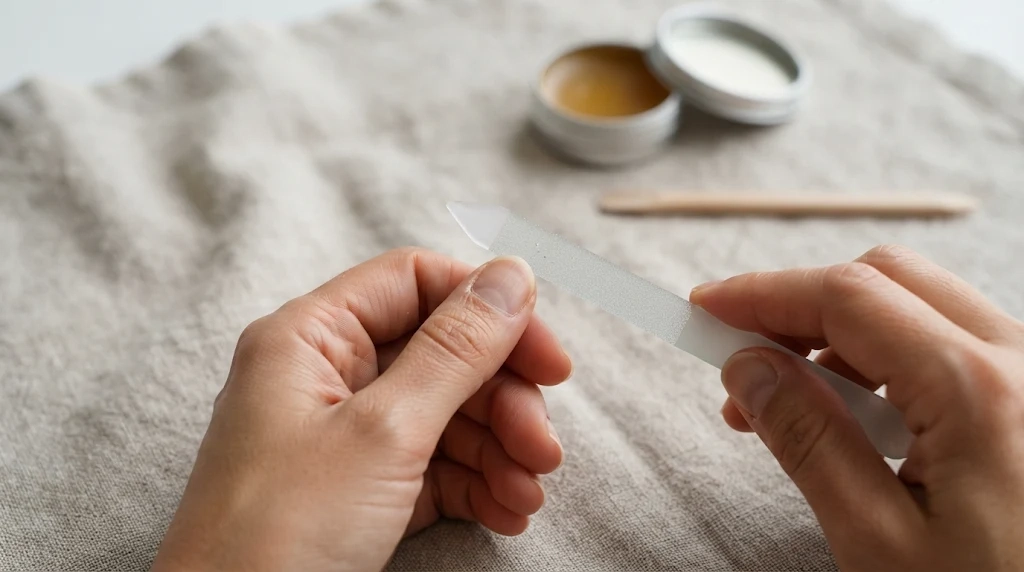
- Glass nail file: A fine file helps smooth edges without aggressive scraping.
- Protective gloves: Use job-appropriate gloves for dishwashing, cleaning, or other wet tasks.
- Petroleum jelly: A small amount helps protect very dry nail folds, especially before bedtime.
Keep your moisturizer close to your sink, your file in a clean pouch, and your gloves wherever you handle water or cleaning supplies. Making the supplies convenient encourages consistent care.
How Can You Protect Brittle Nails During Work?

Workplace protection depends on what your hands do all day. An office worker may deal with keyboard contact and packaging, while a cleaner, healthcare worker, or hairstylist may encounter frequent washing and chemical exposure.
The same basic principle applies: reduce avoidable trauma without compromising workplace hygiene or safety rules.
1. Keep Your Nails Short Enough for Your Tasks
Short, gently rounded nails are less likely to catch on clothing, gloves, and everyday objects. Trim your nails straight across, then soften sharp corners with a fine file.
For very fragile nails, aim for a length where your fingertip touches a flat surface before the nail edge does. This reduces repeated pressure on the free edge.
Common mistake: Growing weak nails longer before they stop splitting. Extra length creates more opportunities for accidental bending and breakage.
2. Wear Gloves for Wet or Chemical Tasks
Wear protective gloves for dishwashing and cleaning. Cotton-lined gloves can improve comfort when appropriate, especially during tasks involving prolonged contact with water.
Change gloves if water enters them, and dry your hands after removing them. Avoid leaving your fingers trapped in damp gloves for extended periods.
Workplace safety comes first. Follow your employer’s protective-equipment requirements for chemicals, healthcare, food handling, and machinery. Ordinary household gloves may not protect against every workplace hazard.
Common mistake: Wearing the same damp gloves repeatedly. Moisture inside gloves can irritate your skin and undermine your protection routine.
3. Moisturize After Frequent Handwashing
Keep a small tube of fragrance-free cream at your desk or in your work bag. After washing and drying your hands, massage a little into your fingertips, nails, and surrounding skin.
If your job requires special hand hygiene, follow those policies and use approved moisturizing products when permitted.
Common mistake: Applying lotion only to the backs of your hands while overlooking the nails and nail folds.
4. Stop Using Your Fingernails as Tools
Use a letter opener, appropriate scraper, or other suitable tool instead of your nail tips. Opening cans, scraping stickers, and prying apart packaging can produce tiny cracks that later become larger splits.
When typing, use the pads of your fingers rather than repeatedly striking keys with long nail tips. Small adjustments help reduce unnecessary impact throughout the workday.
Common mistake: Ignoring a tiny snag because the nail hasn’t fully broken. Smooth the rough edge before it catches and tears farther.
Pro Tip
Build a tiny work nail-care kit with fragrance-free cream, a glass file, and clean nail clippers. A 30-second nail-edge check during a break can help you catch damage before it worsens.
If you regularly work with your hands, explore these additional nail protection tips for work.
How Do You Protect Brittle Nails During Winter?
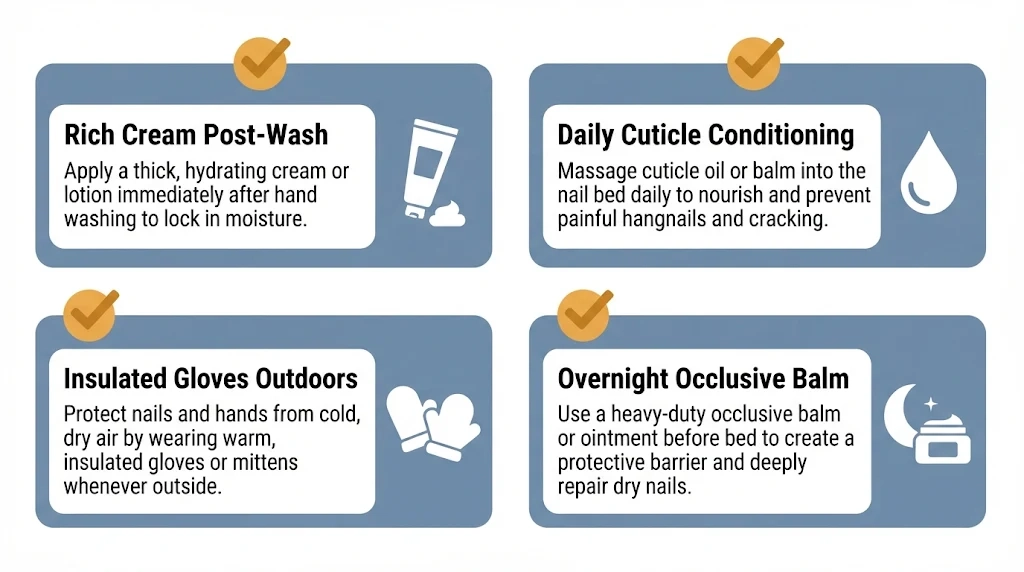
Winter nail care should focus on minimizing dryness, reducing exposure to cold air, and preventing fragile nail tips from snagging on heavy clothing.
Apply Rich Hand Cream After Washing
Switch to a thicker, fragrance-free cream if lightweight summer lotion no longer keeps your fingertips comfortable. Ingredients such as glycerin and petrolatum help support moisture retention in the surrounding skin.
Apply cream after washing, before going outside when practical, and again before bed. Pay attention to the corners of your nails, where dry skin and hangnails often develop.
Wear Warm Gloves Outdoors
Cold wind can leave exposed hands uncomfortable and dry. Wear clean, comfortable winter gloves when temperatures drop, particularly if your hands already feel tight or irritated.
Choose gloves that don’t pull sharply against the nail tips. If a rough seam catches your nails, consider a softer lining or a more comfortable fit.
Use Cuticle Oil Consistently
Massage a small amount of nail-conditioning oil around the cuticle and sidewalls once or twice daily if your skin tolerates it. This can improve the feel of dry nail folds and make rough skin less tempting to pick.
Oil does not permanently repair existing nail splits. Its role is supportive conditioning while you prevent new damage.
Protect Your Nails Before Bed
For especially dry fingertips, apply fragrance-free cream followed by a thin layer of petroleum jelly around your nail folds. Lightweight cotton gloves may help keep the product in place overnight.
Don’t apply heavy ointments to areas that are infected, draining, or unusually painful without medical advice.
Pro Tip
Keep a hand-cream tube beside your winter gloves. Apply cream after washing before leaving home, then wear your gloves outdoors. Pairing the two habits makes protection easier to remember.
For a more detailed seasonal plan, see how to protect your nails in winter.
How Can You Keep Brittle Nails Protected in Summer?
Warm weather brings swimming, beach trips, gardening, and frequent water exposure. If your nails are fragile, these activities may increase peeling or breakage when combined with existing damage.
Fortunately, summer protection doesn’t require avoiding the pool or skipping your favorite nail color.
Rinse and Dry Your Hands After Swimming
After swimming, rinse your hands with clean water when available, especially if pool chemicals irritate your skin. Dry your fingertips and the spaces around your nails carefully.
Apply hand cream afterward if your skin feels tight. Avoid scraping the surface of your nails or immediately picking at softened edges.
Wear Gloves for Gardening and Outdoor Cleaning
Digging in soil, handling rough gardening materials, and washing outdoor furniture can place mechanical stress on your nail tips.
Wear gloves suited to the task, keep nail edges smooth, and clean your hands gently afterward. Avoid digging underneath the nails with sharp metal tools.
Choose Gentle Summer Manicures
Bright polish can look beautiful on short nails. However, frequent changes between gel, acrylic, dip, and regular polish may involve repeated filing and remover exposure.
If your nails are already peeling, consider a simple manicure with minimal surface preparation and gentle removal. Avoid peeling off gel or acrylic products when they lift.
Protect the Skin Around Your Nails from Sun Exposure
Your hands are often exposed to sunlight while driving, gardening, or spending time outdoors. Apply broad-spectrum SPF 30 or higher sunscreen to exposed skin and reapply according to the label, especially after swimming or washing.
Sunscreen protects skin rather than repairing brittle nail plates, but healthy skin care is part of caring for your hands overall.
Warning
If a nail is lifting from the nail bed, changing color unexpectedly, or becoming painful, don’t hide the problem under an artificial nail or fresh gel manicure. Nail changes can have causes that need medical evaluation.
What Daily Routine Helps Prevent Brittle Nail Breakage?
A simple routine is usually easier to maintain than a complicated treatment schedule. Adjust these steps for your job, climate, and skin sensitivity.
Morning: Moisturize and Check Your Nail Edges
After washing your hands, apply a little cream to your nails and fingertips. Check for sharp corners or peeling edges that could catch on clothing.
If a snag is present, gently smooth only the damaged edge with a clean fine-grit file. Avoid buffing the entire nail surface.
During Work: Prevent Avoidable Stress
Use the correct protective gloves for wet jobs and tools for tasks that would otherwise strain your nails. Reapply moisturizer when practical and permitted by your workplace.
If you notice one nail repeatedly catching on objects, shorten that nail instead of trying to preserve its length.
After Work: Clean Gently and Recondition
Wash away dirt and product residue without aggressive scraping. Dry your hands, apply cream, and massage a small amount of cuticle oil around any rough or dry nail folds.
Let your hands recover from unnecessary friction rather than immediately starting a new manicure.
Bedtime: Give Dry Fingertips Extra Attention
Apply a richer cream or a small amount of petroleum jelly around your nails. This can be especially comfortable during winter or after a day of frequent handwashing.
For additional daily-care ideas, see how to take care of your nails daily.
What Should You Do and Avoid When Your Nails Are Brittle?
Do
- Keep nails comfortably short and smooth.
- Moisturize after handwashing.
- Wear suitable gloves for wet work.
- Condition dry cuticles gently.
- Allow damaged nails to grow out.
- Use appropriate tools instead of nails.
Don’t
- Peel off gel or acrylic manicures.
- Buff already-thin nail surfaces.
- Pull or bite damaged nail edges.
- Use harsh formaldehyde hardeners.
- Keep hands inside wet gloves.
- Ignore painful or unusual changes.
Which Products Are Useful for Protecting Brittle Nails?
Choose products that address specific problems such as dry skin, rough nail edges, or repeated water exposure. No cosmetic product can instantly restore a nail plate that has already split.
Recommended Product
Fragrance-Free Moisturizing Hand Cream
A rich, fragrance-free cream is a practical everyday option for dry hands and nail folds. Look for glycerin, ceramides, or petrolatum rather than relying on perfume or packaging claims.
As an Amazon Associate, we earn from qualifying purchases.
Recommended Product
Glass Nail File for Natural Nails
A fine glass file makes it easier to smooth tiny snags and maintain short, rounded tips without aggressively scraping the nail plate.
As an Amazon Associate, we earn from qualifying purchases.
Recommended Product
Jojoba Nail and Cuticle Oil
A small nail-oil pen is convenient for conditioning dry nail folds after washing or before bedtime. Choose a simple formula if your skin is sensitive to fragrance.
As an Amazon Associate, we earn from qualifying purchases.
Recommended Product
Cotton-Lined Household Cleaning Gloves
Comfortable reusable gloves can reduce water and detergent contact during dishwashing and suitable household chores. Check the manufacturer’s instructions for chemical compatibility.
As an Amazon Associate, we earn from qualifying purchases.
How Long Does It Take for Brittle Nails to Improve?
Dry skin around your nails may feel more comfortable within several days of regular moisturizing. However, a damaged nail plate cannot instantly heal in the same way living skin does.
Fingernails grow slowly, and replacing a complete nail can take roughly four to six months, sometimes longer. A split near the tip may disappear sooner once it grows far enough to be trimmed.
During the first few weeks, pay attention to whether you are experiencing fewer new splits rather than expecting old peeling layers to disappear. Photographing your nails once a month can help you notice gradual changes without checking them constantly.
If brittleness continues despite reducing damage, or if several nails change suddenly, ask a healthcare professional whether an underlying condition needs investigation.
What Should You Do If Your Nails Keep Splitting or Peeling?
Your nail tips keep peeling
Trim the damaged tips and gently smooth the rough edges. Reduce wet-to-dry cycles and avoid peeling off loose layers. The existing separation must grow out, so focus on preventing additional stress.
Your cuticles keep cracking
Apply fragrance-free cream frequently and petroleum jelly to dry skin at bedtime. Avoid pulling hangnails. If redness, swelling, or pain develops, have the area checked for inflammation or infection.
Your nails feel thin after gel removal
Avoid additional filing, scraping, and aggressive polish removal. Keep nails short while the affected surface grows forward. Consider a break from enhancements if repeated applications worsen the problem.
Your nails break despite careful treatment
Review potential triggers such as workplace chemicals, frequent manicures, and repetitive trauma. If the problem persists, consult a dermatologist to evaluate possible medical causes instead of adding supplements without guidance.
When Should You See a Dermatologist for Brittle Nails?
Mild splitting can often be managed by changing everyday nail-care habits. However, not every nail problem is cosmetic.
Seek professional advice if you notice any of these changes:
- A new or changing dark streak under a nail.
- Persistent pain, swelling, bleeding, or drainage.
- A nail separating significantly from the nail bed.
- Unexplained thickening, discoloration, or crumbling.
- Sudden changes affecting multiple nails.
- Persistent brittleness that does not improve despite gentle care.
Some nail changes can be associated with skin conditions, fungal infections, iron deficiency, thyroid disorders, or other medical issues. A clinician can determine whether testing or treatment is appropriate.
Don’t assume biotin supplements will solve brittle nails. Evidence for their benefit is limited, and high-dose biotin can interfere with important laboratory tests.
Frequently Asked Questions About Protecting Brittle Nails
Q: How can you protect brittle nails if you wash your hands constantly at work?
A: Follow your workplace’s hand-hygiene requirements, dry your hands carefully, and apply approved fragrance-free moisturizer when practical. Use task-appropriate gloves for prolonged wet work and keep your nail tips short.
Q: Is winter worse than summer for brittle nails?
A: Winter may worsen dryness because of cold air and indoor heating, while summer can increase exposure to swimming, detergents, and outdoor activities. Your main triggers determine which season causes more trouble.
Q: Should you apply cuticle oil every day?
A: Daily use is reasonable if your skin tolerates the product. Massage a small amount around dry nail folds, especially after washing or before bed. Cuticle oil conditions the area but cannot permanently repair existing nail splits.
Q: Can nail polish protect brittle nails from breaking?
A: Regular polish may provide a temporary surface coating, but it does not treat the underlying cause of brittle nails. Frequent remover use, harsh hardeners, and aggressive application or removal techniques can make damage worse.
Q: Can brittle nails become strong again?
A: Many brittle nails improve when avoidable damage is reduced and new nail grows. How much improvement you see depends on the cause. Persistent brittleness may require medical evaluation rather than more cosmetic products.
How Will You Keep Your Nails Protected All Year?
Protecting brittle nails doesn’t require a different complicated routine for every season. Keep your nails short, moisturize your fingertips, choose gentle manicures, and reduce unnecessary exposure to water, chemicals, and friction.
During winter, give dry skin extra care. In summer, pay attention to swimming and outdoor activities. At work, prioritize the right protective equipment and avoid using your nails as tools. Consistent habits give new nail growth a better chance to stay intact.
Save this guide on Pinterest so you have a practical nail-protection checklist ready for every season.

Hi, I’m Jessica, the creator behind Unique Lash & Nails Katy.
I created this website for anyone who loves beautiful nails as much as I do. Here, I share trendy nail designs, seasonal manicure ideas, easy nail care tips, honest product recommendations, and step-by-step guides to help you create salon-worthy nails at home. Whether you’re looking for everyday inspiration or your next favorite nail trend, I hope you’ll find something you love.