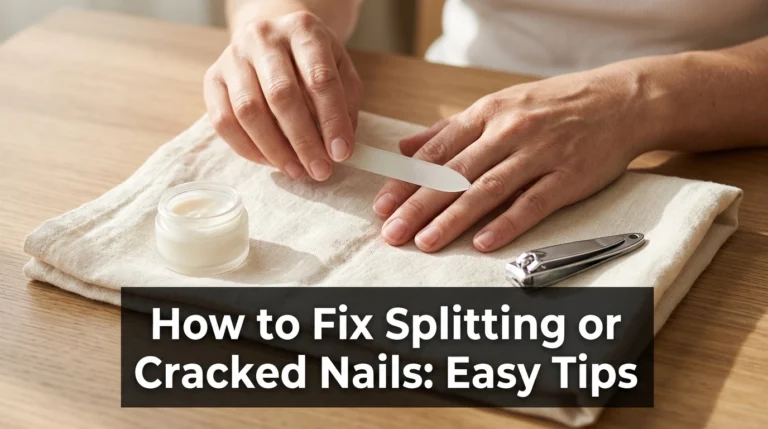
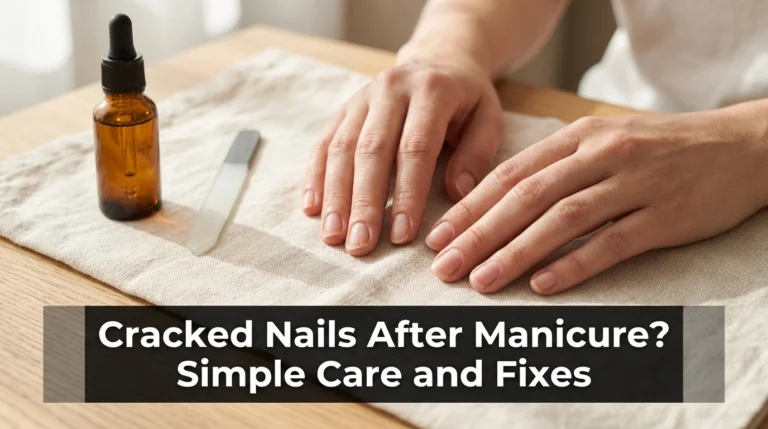
Prevent Nails From Splitting or Cracking: Easy Tips
Quick Answer
To prevent nails from splitting or cracking, keep them short, file rough edges gently, moisturize your nails and cuticles daily, and wear protective gloves during wet household chores. Avoid peeling off gel polish, aggressive buffing, and using your nails as tools. These small habits help protect the nail plate while damaged areas gradually grow out.
Time Needed
3–5 minutes daily
Difficulty
Beginner
Items Needed
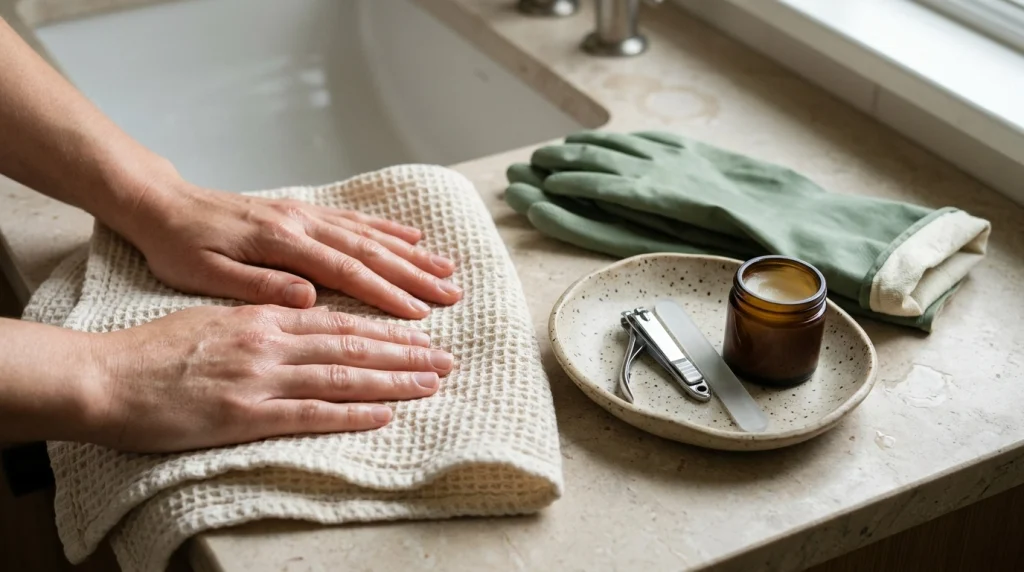
File, moisturizer, gloves
Results
Gradual with nail growth
Watching your natural nails split, peel, or crack can be frustrating, especially when you’re trying to grow them longer or maintain a beautiful manicure. A perfectly shaped nail can suddenly develop a tiny split that catches on everything.
The good news is that many cases of brittle nails are influenced by everyday habits you can change. You don’t necessarily need expensive salon treatments or complicated nail-strengthening routines.
This guide explains how to protect fragile nails, reduce avoidable damage, and build a realistic routine that fits your lifestyle.


Why Do Nails Keep Splitting or Cracking?
Your nails are made primarily of keratin, a structural protein arranged in layers. Although nails feel hard, they need enough flexibility to tolerate normal pressure and everyday activities.
Splitting can develop when repeated exposure, friction, chemical products, or mechanical stress weakens the nail plate.
Some people experience horizontal peeling at the nail tips, while others notice cracks running lengthwise. These patterns may have different causes, so understanding what you’re seeing matters.
Repeated Water Exposure
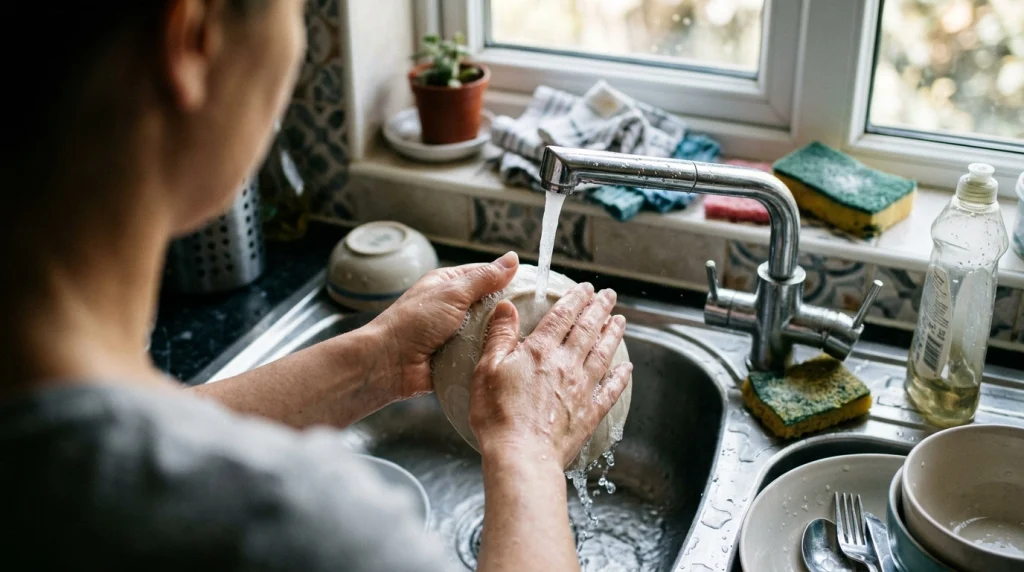
Frequent washing, dishwashing, and other wet activities repeatedly expose your nails to water. This can contribute to changes in the nail plate that make splitting and peeling more likely.
If you regularly clean your home, wash dishes without gloves, or work with your hands in water, your nails may experience more stress than you realize.
Harsh Nail Products and Removal Methods
Frequent exposure to polish removers, cleaning chemicals, and aggressive nail treatments can contribute to brittleness.
Peeling away gel polish is particularly risky because attached layers of the natural nail may come away with the coating.
Excessive Filing and Buffing
Filing helps maintain smooth edges, but aggressive filing can create damage rather than prevent it.
Repeatedly buffing the surface also removes nail material. If your nails are already thin, this can leave them more vulnerable to cracking.
Physical Stress on Your Nails
Long nails are more likely to catch on fabric, strike hard surfaces, or bend under pressure.
Opening containers, scraping labels, and picking at objects with your fingernails can cause small injuries that eventually become larger splits.
Health and Nutritional Factors
Some persistent nail changes are associated with skin conditions, infections, medications, aging, or underlying medical problems. Nutritional deficiencies are possible but are not the explanation for every brittle nail.
If your nails change suddenly or repeatedly split despite gentle care, a healthcare professional can help investigate the cause.
What Should You Avoid When Your Nails Are Already Cracking?
Warning
Never pull apart a split nail, apply household superglue to damaged skin, or cover a painful injury with artificial nails. If a crack extends into the attached nail, causes bleeding, or exposes sensitive tissue, seek appropriate medical care instead of attempting a cosmetic repair.
Your first priority is preventing an existing crack from catching and becoming worse.
Avoid aggressively filing into a crack, picking at damaged layers, or applying repeated coatings to hide a nail that is painful or lifting.
For a simple prevention routine, follow our guide to building a healthy nail care routine.
What Do You Need to Prevent Nail Splitting?
You only need a few practical items to maintain a gentle routine:
- Fine-grit nail file: Smooths rough edges with controlled pressure.
- Sharp nail clippers: Helps maintain a manageable nail length.
- Hand cream: Moisturizes the nails and surrounding skin.
- Cuticle oil: Provides a convenient way to condition dry nail folds and cuticles.
- Protective cleaning gloves: Reduces direct contact with water and detergents.
- Gentle polish remover: Useful if you regularly wear traditional nail polish.
You don’t have to buy everything immediately. Start with a moisturizer, a gentle file, and gloves for household chores. Those address several common sources of nail damage.
How to Prevent Nails From Splitting or Cracking Step by Step
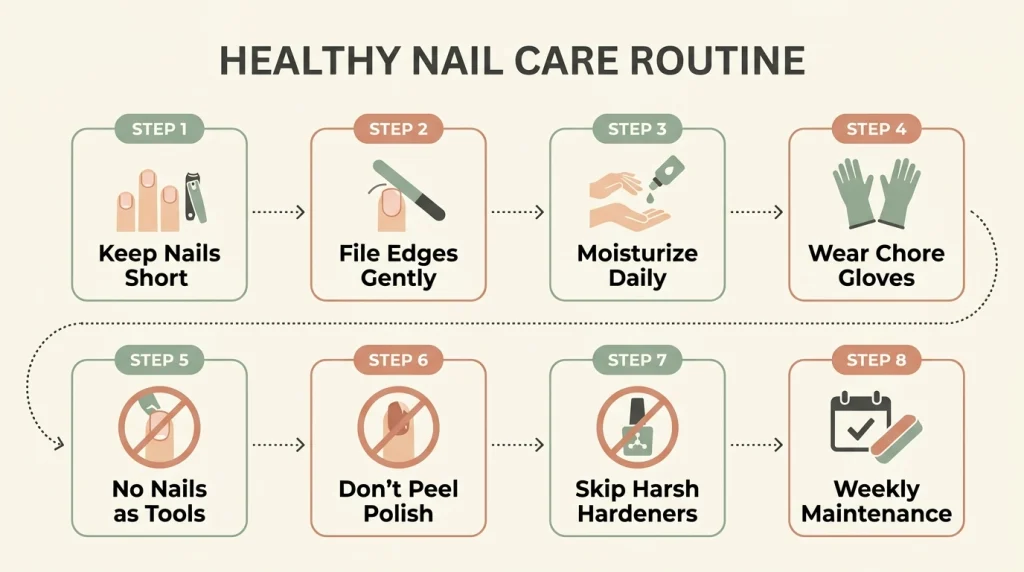
These eight practical steps focus on protecting your existing nails while healthier nail material gradually grows forward.
Step 1: Keep Your Nails at a Practical Length
Trim nails regularly so the free edge doesn’t extend far beyond your fingertip while you’re experiencing frequent breakage. Use clean, sharp clippers and remove small amounts at a time.
A shorter length reduces leverage when your nails accidentally hit a hard surface or catch on clothing.
Common mistake: Cutting nails extremely short or digging into the corners. This can cause discomfort and irritate surrounding skin.
Step 2: File Rough Edges Gently
Use a fine-grit nail file to smooth uneven edges before they catch on fabric. Work with light pressure, using controlled strokes rather than aggressive sawing.
A softly rounded or squoval shape often works well for shorter nails because sharp corners are less likely to snag.
Common mistake: Filing repeatedly into a visible split to make it disappear. Removing too much nail can make the damaged area even weaker.
Pro Tip
Keep a small nail file in your handbag. Smoothing a snag when you first notice it can prevent the edge from catching and tearing further.
Step 3: Moisturize Nails and Cuticles Every Day
After washing and drying your hands, massage a small amount of hand cream into each nail and the surrounding skin.
At bedtime, apply a moisturizer or cuticle oil and massage it gently around the nail folds. Products containing petrolatum, glycerin, or other moisturizing ingredients can help condition dry areas.
Common mistake: Applying moisturizer only to the palms while ignoring the nails and fingertips.
If your cuticle area is constantly rough or irritated, read our explanation of what cuticles are and how to care for them safely.
Step 4: Wear Gloves During Household Chores
Put on suitable protective gloves before washing dishes, cleaning bathrooms, or handling detergents.
For longer wet tasks, cotton-lined gloves can improve comfort. Change gloves if the inside becomes excessively damp.
Dry your hands thoroughly after finishing and apply moisturizer if your skin feels dry.
Common mistake: Wearing protective gloves for deep cleaning but skipping them during frequent short dishwashing sessions.
Step 5: Stop Using Your Nails as Tools
Use the correct tool to open cans, remove stickers, scrape residue, or separate tightly fitted objects.
Even small repeated bending forces can contribute to nail damage. If your nails are particularly fragile, pay attention to tasks that put pressure directly on their tips.
Common mistake: Assuming a nail is strong enough to pry something open because it has polish or a strengthening coating.
Step 6: Remove Nail Polish Without Peeling
When removing traditional nail polish, follow the remover’s directions and avoid unnecessary rubbing.
For gel or artificial nail products, use the appropriate removal method. Do not lift or peel off a coating that remains attached to your natural nail.
Moisturize your nails afterward and avoid repeated unnecessary product changes when they’re already brittle.
Common mistake: Pulling off a loose corner of gel polish, which can remove superficial layers of the natural nail.
Step 7: Avoid Aggressive Nail Hardeners and Buffing
More hardness doesn’t always mean healthier nails. Extremely rigid nails may still crack under pressure, and some hardening formulas can worsen brittleness.
Avoid formaldehyde-containing nail hardeners when treating brittle nails, and don’t repeatedly buff away the nail surface to make it look smoother.
If you prefer wearing polish, consider asking a dermatologist or qualified nail professional about suitable protective options.
Common mistake: Applying multiple strengthening treatments without checking whether they are making nails more brittle or irritating the surrounding skin.
Step 8: Repeat a Simple Daily and Weekly Routine
After each handwashing session, dry your hands and apply cream when needed. Before bed, moisturize your nails and cuticle area.
Once a week, inspect your nails for snags, gently smooth rough edges, and trim them if they’re becoming difficult to manage.
Watch for changes in color, thickness, pain, or separation from the nail bed.
Common mistake: Trying many treatments for a few days, then abandoning the routine before new nail growth becomes visible.
For additional maintenance ideas, see our daily nail care guide for healthier-looking nails.
What Are the Best Products for Brittle, Splitting Nails?
The most useful products generally support gentle maintenance and reduce exposure to everyday sources of damage. You don’t need an expensive collection of nail treatments.
Affiliate disclosure: As an Amazon Associate, we earn from qualifying purchases.
1. Fine Glass Nail File
Recommended Product
Fine Glass Nail File for Natural Nails
A fine glass nail file offers a reusable option for smoothing small snags without aggressively removing large amounts of nail material.
As an Amazon Associate, we earn from qualifying purchases.
2. Moisturizing Cuticle Oil
Recommended Product
Jojoba-Based Cuticle Oil
Cuticle oil makes daily conditioning convenient, especially if the skin surrounding your nails frequently feels dry or rough. It won’t repair an existing split, but it can complement regular moisturizing.
As an Amazon Associate, we earn from qualifying purchases.
3. Protective Cleaning Gloves
Recommended Product
Cotton-Lined Household Cleaning Gloves
Protective gloves help reduce your nails’ contact with water and cleaning agents during everyday chores. Choose a comfortable fit so you can use them consistently.
As an Amazon Associate, we earn from qualifying purchases.
What Are the Do’s and Don’ts for Preventing Nail Cracks?
DO
- Keep nails reasonably short.
- Moisturize after handwashing.
- File rough edges gently.
- Wear gloves for wet chores.
- Remove polish carefully.
- Maintain clean manicure tools.
DON’T
- Peel away gel polish.
- Use nails to pry objects.
- Overbuff your nail surface.
- Cut deeply into cuticles.
- Ignore painful nail changes.
- Expect overnight repair.
How Long Does It Take for Splitting Nails to Improve?
You may notice fewer new snags soon after shortening your nails and changing the habits that cause damage. However, an existing split doesn’t permanently fuse back together through moisturizing.
Damaged sections need time to grow forward until they can be safely trimmed away. Fingernails grow at approximately 3 millimeters per month on average, although growth varies from person to person.
A complete fingernail replacement typically takes several months. If damage begins close to the base, visible improvement may take longer than a small split near the tip.
The goal is consistent protection rather than expecting a dramatic transformation in a week.
What Should You Do If Your Nails Still Keep Splitting?
Problem: Your nails keep peeling at the tips
Smooth loose snags carefully, shorten the free edge, and minimize repeated wetting and drying. Continue moisturizing and avoid peeling nail layers apart.
Problem: Your nails split after gel manicures
Stop peeling or scraping the coating. Use professional removal when necessary, avoid further trauma, and consider a temporary break from damaging application or removal methods.
Problem: One nail develops the same vertical crack repeatedly
A recurring split in the same location may indicate persistent trauma or a nail-growth problem. Have it evaluated, especially if the crack extends toward the nail base or is accompanied by discoloration or pain.
Problem: Your nails remain brittle despite good care
Review your exposure to detergents, frequent wet work, and cosmetic treatments. If the problem persists or involves other unusual nail changes, consult a dermatologist rather than purchasing more supplements or hardeners.
Can Food or Supplements Prevent Nail Splitting?
A balanced diet supports normal nail growth, but eating a particular food won’t instantly repair a cracked nail.
Protein and sufficient essential nutrients are important for general health. However, brittle nails alone do not prove that you have a vitamin deficiency.
Biotin supplements are frequently marketed for nail strength, but evidence supporting their routine use is limited. High doses can also interfere with certain laboratory tests, including tests used in urgent medical evaluations.
Don’t start high-dose supplements solely because of a nail problem. If you suspect a deficiency, ask your healthcare professional whether testing is appropriate.
When Should You See a Dermatologist for Splitting Nails?
Most minor nail snags can be managed with gentle care, but some changes deserve professional attention.
- A split causes persistent pain or bleeding.
- Redness, swelling, warmth, or pus develops.
- Your nail begins lifting away from the nail bed.
- A new dark streak or unusual discoloration appears.
- The same nail repeatedly splits from its base.
- Several nails change shape or thickness unexpectedly.
- Brittleness persists despite avoiding obvious sources of damage.
A dermatologist can assess whether your nail changes are related to irritation, infection, an inflammatory condition, or another cause.
If you’re new to nail care and want to prevent avoidable damage, our basic nail care guide for beginners covers the foundational habits.
Frequently Asked Questions About Splitting and Cracking Nails
Q: What is the main cause of splitting fingernails?
Repeated wetting and drying, exposure to cleaning chemicals, and mechanical damage are common contributors. Aging, certain skin conditions, and other health factors can also play a role.
Q: Can cuticle oil stop nails from cracking?
Cuticle oil helps condition the nails and surrounding skin, but it cannot permanently repair an existing crack. Combine moisturizing with gentle trimming and protection from repeated damage.
Q: Should I stop wearing nail polish if my nails are splitting?
Not everyone needs to avoid regular polish entirely. However, if application or removal is contributing to damage, reduce those treatments and allow the affected nail to grow out.
Q: Does drinking more water make brittle nails stronger?
Staying hydrated supports general health, but drinking extra water isn’t a proven treatment for brittle nails when you’re already adequately hydrated. Protecting nails from repeated wet work and using moisturizers are more practical targeted steps.
Q: Can a split nail heal itself?
The damaged nail plate cannot heal like living skin. A minor split near the tip may be trimmed as the nail grows, while deeper or painful splits may require professional assessment.
Final Thoughts: Keep Your Nails Protected Every Day
Learning how to prevent nails from splitting or cracking starts with simple habits: keep nails at a manageable length, moisturize regularly, file gently, and protect your hands from unnecessary exposure and pressure.
Be consistent, give damaged nails time to grow, and seek professional advice when changes are painful or persistent.
Save this guide to your Pinterest nail care board so you can revisit these easy prevention tips whenever your nails need extra attention.

Hi, I’m Jessica, the creator behind Unique Lash & Nails Katy.
I created this website for anyone who loves beautiful nails as much as I do. Here, I share trendy nail designs, seasonal manicure ideas, easy nail care tips, honest product recommendations, and step-by-step guides to help you create salon-worthy nails at home. Whether you’re looking for everyday inspiration or your next favorite nail trend, I hope you’ll find something you love.