How to Strengthen Weak Toenails: 9 Simple Habits
Quick Answer
To strengthen weak toenails, trim them straight across without cutting too short, smooth snags gently, moisturize the nails and surrounding skin, and wear shoes with enough room for your toes. Keep feet clean and dry, avoid aggressive pedicures, and give damaged nail time to grow out. If a nail is thick, yellow, crumbling, painful, or lifting, have it checked rather than treating it as simple dryness.
When your toenails keep peeling, splitting, or breaking, a pretty pedicure can feel impossible. The encouraging part is that you don’t need an elaborate treatment to start protecting them. You need a few consistent habits, the right amount of moisture, and less pressure from your shoes. Here’s how to build a routine that helps your toenails grow out in better condition without promising an overnight transformation.


Why are your toenails weak or splitting?
Toenails are made of compact layers of keratin. Once a section of nail has split or peeled, no cream can permanently fuse it back into its original structure. Your goal is to prevent further damage while a healthier nail grows from the base.
Other causes need more attention. Fungal nail infections may make a toenail yellow, thick, crumbly, or detached. Psoriasis, injury to the nail’s growth area, aging, and certain health conditions can change nail texture as well. Nutritional deficiencies are possible, but a brittle toenail alone doesn’t prove that you’re low in iron, biotin, or calcium.
If several nails changed at once, or the weakness started without an obvious reason, compare the pattern with this guide to common causes of weak nails. Knowing what you’re dealing with helps you avoid spending money on the wrong fix.
How can you strengthen weak toenails at home?
Think of these as nine ways to reduce breakage rather than nine miracle cures. Start with the habits that match your problem: trimming for snagging edges, shoe changes for repeated impact, and medical evaluation when a nail looks infected.
1. Trim toenails straight across and leave a little free edge
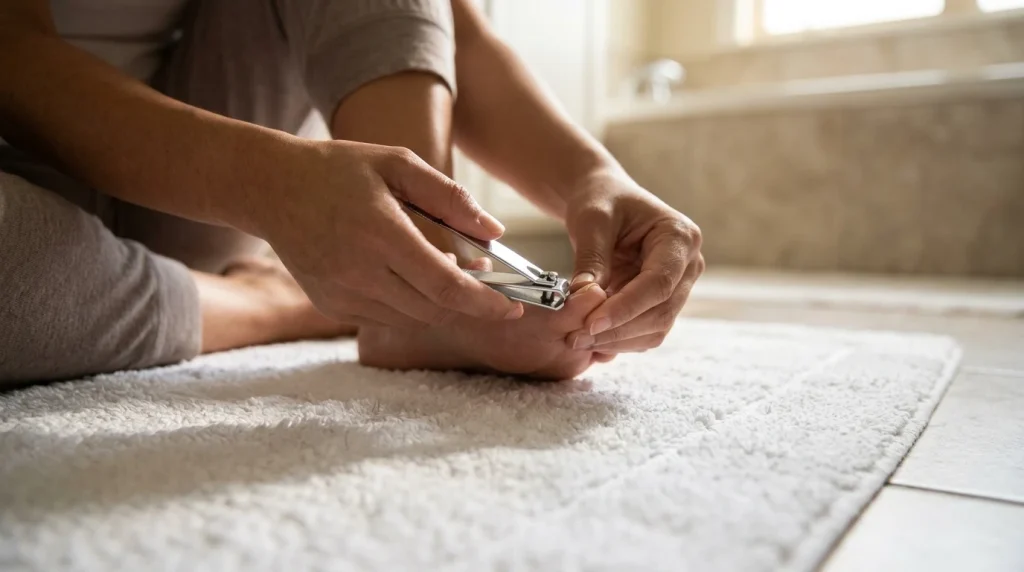
Best for: Toenails that split at the tip or keep catching on tights and socks.
Use clean, sharp toenail clippers after a shower, when the nail is easier to cut. Make small clips straight across, leaving the edge at a comfortable length near the end of your toe. Then use a fine file to smooth any sharp points without digging down the sides. A shorter, even edge is less likely to hit your shoe or snag on fabric.
Watch out: Cutting deeply into the corners or clipping the nail down to the sensitive skin can encourage ingrown nails and injury. If you can’t see the edge clearly, or a thick nail is difficult to cut safely, ask a podiatrist for help.
For more gentle grooming basics, see this simple nail-care routine and adapt its advice to toenails.
2. Moisturize the nail surface and cuticle area every day
Best for: Dry-looking toenails with rough edges and flaky skin nearby.
After washing and thoroughly drying your feet, rub a small amount of fragrance-free cream or cuticle oil over each nail and around its base. A simple jojoba-based oil is an optional choice; an ordinary moisturizer works too. Regular moisturizing helps keep the nail and surrounding skin from feeling excessively dry, which can reduce the tendency of dry edges to catch and split.
Apply cream to the tops and soles of your feet if they’re dry, but don’t leave moisturizer pooled between your toes. That area needs to stay dry. Moisturizing won’t reverse deep nail damage, and it cannot treat a fungal infection.
3. Give your toes more room inside your shoes
Best for: Big toenails that break after running, long walks, or wearing narrow shoes.
Your toenails can be repeatedly traumatized when the toe box presses on them. Check your shoes while standing: your toes should lie comfortably without being squeezed together or hitting the front when you walk downhill. Choose a roomy toe box, secure heel fit, and breathable upper. Try your usual socks when assessing a new pair.
If your toenails are fragile, alternate narrow fashion shoes with more spacious footwear instead of wearing pressure-heavy styles every day. Changing footwear can help prevent new impact damage, although existing cracks still have to grow out.
4. Keep feet clean, dry, and comfortable
Best for: Sweaty feet, damp socks, or toenails that seem to deteriorate during workouts.
Wash your feet with mild soap and lukewarm water, then dry carefully, especially between the toes. Put on fresh socks daily and change them after exercise. Moisture-wicking socks and breathable shoes can help if you sweat heavily. Let shoes dry between wears instead of placing damp feet back into the same pair every morning.
Keeping moisture under control helps lower the risk of the fungal conditions that can damage nails. Wear shower sandals in shared locker rooms and pool showers, and don’t share clippers, towels, or footwear.
5. Take a gentler approach to pedicures and polish
Best for: Toenails that became thin or rough after gel removal, buffing, or repeated salon visits.
Choose gentle polish removal instead of scraping or peeling coatings off. Avoid grinding the natural nail to make a product adhere, and don’t cut the protective cuticle. If your toenails are already peeling, keeping them bare for a while can make changes easier to monitor and lets you focus on reducing further mechanical damage.
Regular polish is an option when nails are otherwise healthy, but it won’t strengthen the nail growing beneath it. A clear coating may temporarily smooth a minor surface snag; it doesn’t treat infection or repair a split that reaches attached tissue.
For additional recovery ideas, explore how to care for damaged, weak nails.
6. File snags gently instead of buffing the whole nail
Best for: Toenails with tiny chips, sharp corners, or rough free edges.
Hold a fine-grit nail file against the free edge and use light strokes in one direction until the snag feels smooth. Work only on the edge that catches; you usually don’t need to sand the broad surface of the nail. Keep your file clean, and replace disposable files when worn or contaminated.
Gentle filing can stop a small rough spot from turning into a larger tear. However, if a crack runs into the attached pink nail or causes pain, don’t file through it. Protect the toe from pressure and get advice if the split is deep or worsening.
7. Support normal nail growth with everyday nutrition
Best for: Anyone hoping to improve long-term nail health rather than hide the surface.
Your body needs adequate protein and a varied diet to produce normal nail tissue. Include regular sources of protein, iron-containing foods, and a mix of fruits, vegetables, and whole grains. You don’t need a special “nail diet” if you’re already eating enough and have no diagnosed deficiency.
Biotin gummies and high-dose supplements are often promoted for brittle nails, but evidence for benefit in otherwise healthy people is limited. Biotin can also interfere with certain laboratory tests. Don’t start iron supplements without an appropriate medical reason, since excess iron can be harmful.
8. Treat suspected nail fungus as a different problem
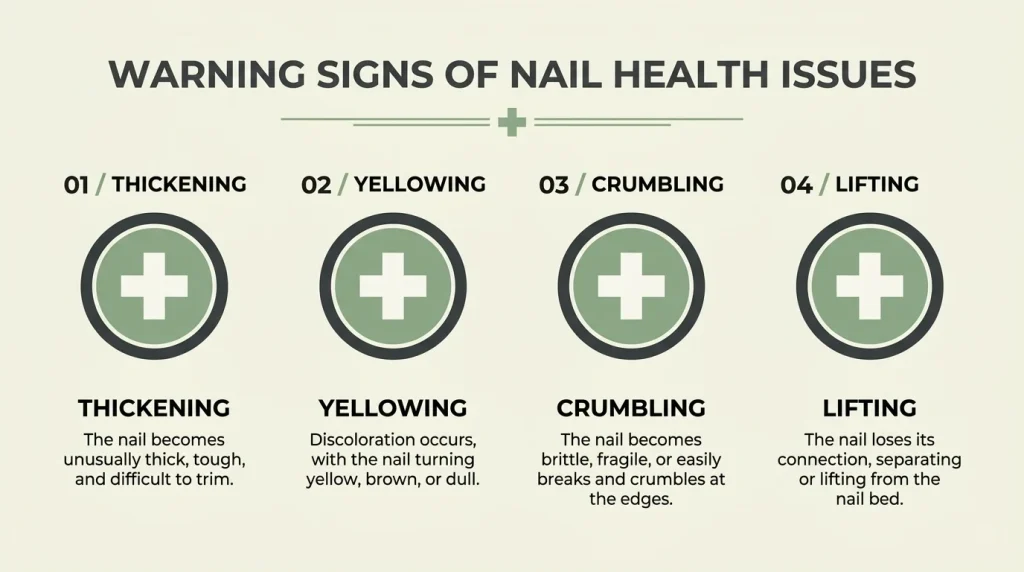
Best for: Nails that are brittle and turning yellow or white, thickening, lifting, or crumbling.
Those changes may indicate a fungal infection, but nail trauma and psoriasis can look similar. A dermatologist or podiatrist can examine the nail and sometimes test a clipping before recommending treatment. Nail-specific antifungal medication may be needed for months; ordinary skin antifungal cream does not reliably clear an infection inside the nail plate.
Keep the nail clean, dry, and trimmed only as safely possible while you arrange advice. The guide to natural care for suspected fungal nails explains why vinegar and essential oils shouldn’t be treated as guaranteed cures.
Watch out: Scraping beneath the nail, drilling holes, or applying bleach can cause injury without solving the infection.
9. Pay attention to repeated or unexplained changes
Best for: Weakness affecting several nails, recurring breakage, or nails that suddenly look different.
Keep a short record of when you noticed the problem, which toes are affected, and whether a new pair of shoes or pedicure came first. A photo in consistent lighting once a month can help you see whether healthier nail is emerging from the base.
When there is no clear mechanical cause, a healthcare professional can decide whether infection, skin disease, medication effects, or another health issue should be investigated. Testing for a nutrient deficiency may be appropriate in some cases, but nail appearance alone is not a reliable diagnosis.
What simple routine helps weak toenails stay protected?
Consistency matters more than owning a shelf full of products. Use this manageable schedule and adjust it to your feet:
- Every morning: Check that your socks are dry and your shoes don’t squeeze your toes. Change sweaty socks after a workout.
- After showering: Dry between your toes thoroughly. Apply a little moisturizer to your nails and dry surrounding skin, avoiding the spaces between toes.
- Once a week: Look for rough edges, new color changes, or pressure spots. Smooth a small snag with a clean file rather than waiting for it to tear.
- When trimming is needed: Clip straight across with clean toenail clippers. Toenails grow slowly, so they may not need clipping every week.
- Once a month: Compare a photo of your toenails with your starting point, especially the new growth closest to the cuticle.
How long does it take weak toenails to become stronger?
You may reduce snagging today, but visible recovery usually takes months. A carefully clipped edge, more comfortable shoes, and regular moisture can immediately make fragile toenails easier to manage. That doesn’t mean the existing damaged nail plate has been rebuilt.
New toenail grows slowly from its base, and a completely lost or severely damaged toenail can take about 12 to 18 months to grow back. A small damaged area near the tip may disappear sooner as you trim it away. Progress will also depend on whether the original problem, such as shoe pressure or infection, has been addressed.
Don’t measure success by whether every ridge vanishes in seven days. Instead, look for fewer new splits, less pressure discomfort, and a smoother band of incoming nail over several months. If the condition continues to worsen, change your plan rather than waiting indefinitely.
Which products are actually useful for weak toenails?
A few inexpensive tools can make daily care easier. None of these products is a cure for fungal infection or an underlying medical condition, so choose based on the specific task you need help with.
Recommended tool
Straight-Edge Toenail Clippers
Choose a sharp, easy-grip clipper that lets you make controlled cuts across the nail instead of crushing or digging into its corners.
Browse Toenail Clippers on Amazon
As an Amazon Associate, we earn from qualifying purchases.
Optional moisturizer
Jojoba Cuticle Oil
A small bottle is convenient for applying a light layer to dry nails and cuticle-area skin; plain fragrance-free cream is a budget-friendly alternative.
As an Amazon Associate, we earn from qualifying purchases.
Everyday comfort
Moisture-Wicking Socks
Look for smooth toe seams and breathable fabric if your feet sweat, because dry, comfortable socks reduce prolonged dampness and rubbing.
As an Amazon Associate, we earn from qualifying purchases.
What should you do and avoid while toenails recover?
Do
- Keep nails comfortably short and evenly filed.
- Dry between toes and change damp socks.
- Choose footwear with enough toe space.
- Moisturize dry nails and surrounding skin.
Don’t
- Cut deep into nail corners.
- Peel off gel or buff thin nails repeatedly.
- Share nail tools or wear persistently damp shoes.
- Assume discoloration is only a cosmetic problem.
What extra tricks help prevent toenail breakage?
Pro Tip
Check your longest toe, not just your big toe. Some people have a second toe that extends farther forward, so it may be the one taking repeated hits inside a sneaker. If that nail always breaks first, shoe length and toe-box shape deserve a closer look.
Another useful habit is to keep a dedicated toenail clipper rather than using the same tools indiscriminately across feet and hands. Clean and dry your tools after use, and never share them with someone who may have a fungal infection.
When should weak toenails be checked by a professional?
Simple dryness or a small chipped free edge can often be handled with gentle home care. A toenail that looks increasingly abnormal needs a different approach. Don’t wait for a beauty treatment to solve a possible medical condition.
Warning
Seek medical assessment for increasing pain, redness, swelling, pus, a nail separating from the bed, persistent thick yellow or crumbly changes, or a new or changing dark stripe—especially pigment extending onto the nearby skin. If you have diabetes, poor circulation, or reduced foot sensation, get professional advice promptly about nail problems or wounds.
If you’re uncertain whether your nail looks damaged or unhealthy, this guide to signs of unhealthy nails can help you describe what you’re seeing before an appointment. It isn’t a substitute for an examination.
Frequently asked questions about strengthening weak toenails
Q: What is the fastest way to strengthen weak toenails?
A: Trim snagging free edges straight across, smooth them gently, and switch to shoes that don’t press on your toes. These changes can reduce breakage quickly, but healthier nail still needs months to grow in.
Q: Does cuticle oil really make toenails stronger?
A: Oil can help condition dry nails and surrounding skin, but it cannot rebuild a damaged nail plate or cure fungus. A fragrance-free moisturizer can serve a similar daily-care purpose.
Q: Why do my big toenails keep cracking?
A: Repeated pressure from tight shoes, impact during exercise, and old injury are possible causes. If cracking comes with thickening, yellowing, pain, or lifting, ask a clinician to check for infection or other nail conditions.
Q: Should I take biotin for brittle toenails?
A: Not automatically. Evidence for biotin supplements is limited unless there’s a specific need, and high doses can interfere with some blood tests. Discuss persistent nail changes or suspected deficiencies with a healthcare professional.
Q: Can I wear toenail polish while my nails recover?
A: Regular polish may be fine on otherwise healthy nails if you remove it gently. Leave suspiciously discolored, painful, thickened, or lifting nails visible so a clinician can assess them instead of covering the changes.
Ready to give your toenails a healthier start?
The most reliable approach to strengthening weak toenails is simple: minimize pressure, trim gently, control moisture, and protect new growth. You don’t need a miracle hardener—just a routine you can keep doing as the damaged nail grows out. Save this guide to Pinterest so you can revisit your toenail-care checklist before your next pedicure.

Hi, I’m Jessica, the creator behind Unique Lash & Nails Katy.
I created this website for anyone who loves beautiful nails as much as I do. Here, I share trendy nail designs, seasonal manicure ideas, easy nail care tips, honest product recommendations, and step-by-step guides to help you create salon-worthy nails at home. Whether you’re looking for everyday inspiration or your next favorite nail trend, I hope you’ll find something you love.