Is Lemon Juice Good for Nails? What It Really Does for Growth
Quick Answer
Lemon juice does not have good evidence behind it as a treatment for faster nail growth. Its acidity may help make some superficial staining look less noticeable, but repeated use can also dry or irritate your nails and surrounding skin. If longer nails are your goal, moisturizing, protecting your tips from breakage, eating a balanced diet, and avoiding nail trauma are more useful habits.
Lemon juice appears in countless DIY beauty recipes, so it’s easy to assume that soaking your fingertips in it might whiten, strengthen, or even grow your nails.
The reality is less dramatic. Lemon juice contains citric acid, but putting acid on your nail plate doesn’t switch on faster growth at the root of your nail. Any visible improvement is more likely to involve surface appearance rather than a meaningful change in how quickly new nail is produced.
Here’s what lemon juice may do, what it probably won’t do, and what you can use instead if your real goal is longer, healthier-looking natural nails.


What does lemon juice actually do to your nails?
 Save
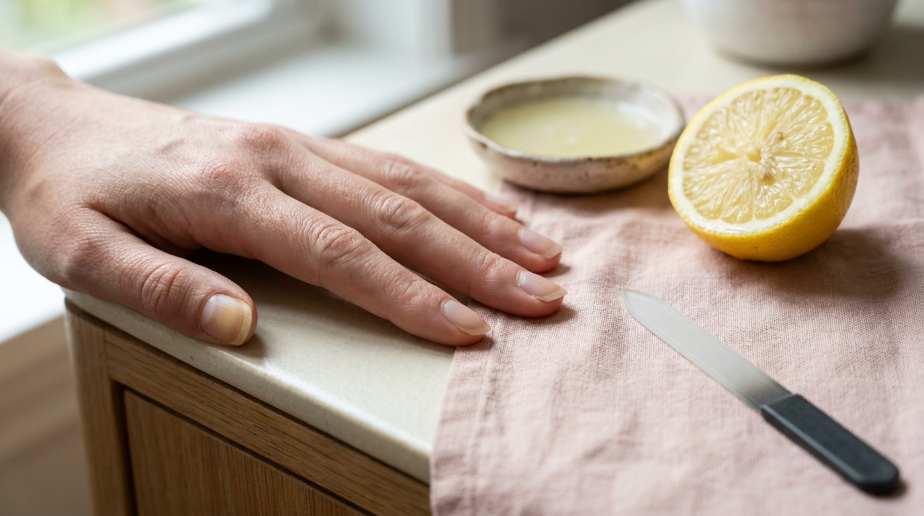
SaveFresh lemon juice is acidic. When you apply it to the surface of your nails, that acidity can interact with residue and some superficial discoloration sitting on or near the surface of the nail plate.
That’s why people sometimes report that their nails look a little brighter after a lemon treatment. The important distinction is that brighter-looking nails are not the same thing as faster-growing nails.
Lemon juice also doesn’t repair a damaged nail plate. The visible part of your nail is already formed tissue. If it has been thinned by aggressive filing, peeled during gel removal, or split at the tip, lemon juice cannot rebuild those missing layers.
Damaged areas generally have to grow forward until you can gradually trim them away. If you’re dealing with peeling or fragile nails, this guide on how to make your nails healthy again gives you a gentler recovery approach.
Can lemon juice make your nails grow faster?
There’s no convincing reason to expect lemon juice applied to your nails to noticeably accelerate normal nail growth.
Your fingernail is produced by the nail matrix, which sits underneath the skin at the base of your nail. New nail gradually moves forward from this growth area. Putting lemon juice on the visible tip doesn’t directly control that biological process.
This is the same reason many viral nail-growth remedies are disappointing. They focus on coating the old, visible nail instead of understanding where new nail actually comes from.
If your nails seem like they never get longer, breakage may be the bigger problem. You can be producing new nail normally while losing almost the same amount from splitting, peeling, biting, or catching the tips on objects.
For that reason, preventing breakage often gives you a more noticeable result than trying to force faster biological growth. See what helps nails grow fastest for a complete length-retention routine.
Does the vitamin C in lemon juice help nail growth?
This is where two very different ideas often get mixed together.
Vitamin C is an essential nutrient, and citrus fruit can absolutely be part of a healthy diet. Your overall nutritional status matters for normal tissue growth.
However, eating nutrient-rich foods and rubbing lemon juice onto your nails are not equivalent.
Applying lemon juice to the nail plate isn’t a reliable way to deliver nutrients to the nail matrix. If you want to support normal nail growth nutritionally, focus on your whole diet instead: adequate protein, fruits, vegetables, whole grains, healthy fats, and foods containing nutrients such as iron and zinc.
You can also compare drinks that can support healthy nail growth without relying on a single miracle ingredient.
Are there any real benefits of lemon juice for nails?
There are a few reasons people continue using lemon in DIY manicures, but you should keep the benefits in perspective.
It may temporarily improve the look of mild surface staining
If your nails have minor superficial staining from polish, pigments, food preparation, or everyday residue, a brief lemon treatment may make the surface appear somewhat brighter.
That doesn’t mean lemon can safely remove every type of discoloration. Persistent yellow, brown, green, white, or dark discoloration can have many causes, and repeatedly bleaching the surface may hide a change you should actually be paying attention to.
It can remove some oily residue
Because lemon juice is acidic and watery, it may leave the nail surface feeling very clean. Unfortunately, that squeaky-clean feeling isn’t always a benefit.
Removing too much oil and repeatedly exposing the nail and surrounding skin to acidic ingredients can leave your fingertips feeling dry or tight.
It’s inexpensive and easy to find
Lemon juice is accessible, which explains much of its popularity in home beauty treatments. Accessibility, however, doesn’t automatically make an ingredient better than products designed specifically for nail and cuticle care.
Can lemon juice damage or dry your nails?
It can cause problems, particularly when you use it frequently, soak for a long time, or already have dry, cracked skin around your nails.
Warning
Avoid leaving citrus juice on your hands before going into strong sunlight. Citrus compounds on skin combined with ultraviolet light can trigger a burn-like reaction called phytophotodermatitis. Wash your hands thoroughly after handling lemon juice.
You should be especially cautious if you have hangnails, tiny cuts, irritated cuticles, eczema-prone skin, or soreness around the nail folds. Lemon juice can sting compromised skin and make an already uncomfortable manicure situation worse.
Using lemon repeatedly can also work against your goal if dryness leads to rough cuticles, peeling edges, or more temptation to pick at your nails.
If dryness is your main concern, moisturizing is a much more useful strategy. Petroleum jelly, for example, can help seal moisture into dry nail folds and cuticles. See how Vaseline can be used for dry nails and cuticles.
What is the safest way to try lemon juice on stained nails?
 Save
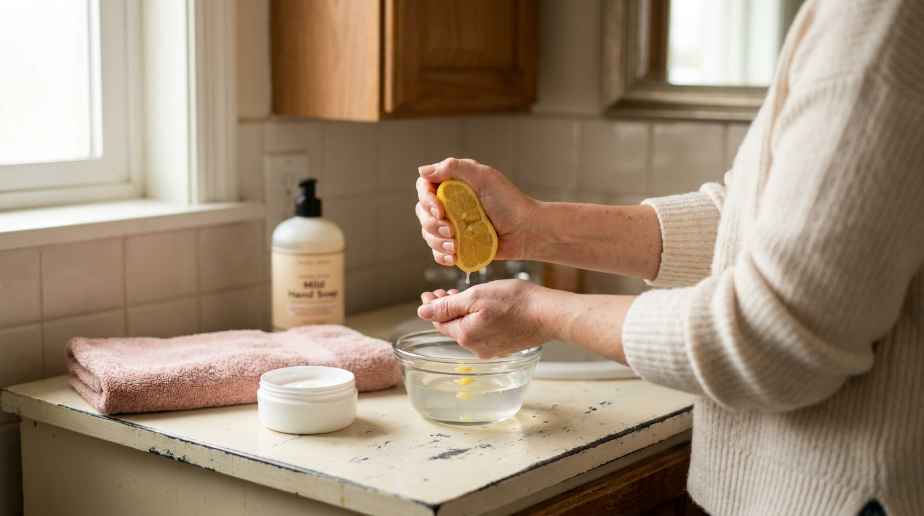
SaveIf your nails are otherwise healthy and you still want to test lemon for mild cosmetic staining, keep the exposure short and treat it as an occasional appearance trick rather than a nail-growth treatment.
- Check your skin first. Skip lemon completely if you have cuts, painful hangnails, irritated cuticles, or inflamed skin.
- Dilute the juice. Mix a small amount of fresh lemon juice with water rather than soaking your fingers in undiluted juice.
- Keep contact brief. You don’t need a long soak. A few minutes is enough to see whether it makes any cosmetic difference.
- Rinse thoroughly. Wash your fingertips with mild soap and water so citrus residue isn’t left on your skin.
- Dry completely. Pat your hands and nails dry rather than leaving them wet.
- Moisturize afterward. Apply hand cream, cuticle oil, or a small amount of petroleum jelly around your nails.
Pro Tip
Take a photo of your bare nails before trying any DIY brightening method. It makes it easier to judge whether the treatment actually changed anything instead of relying on memory.
Don’t repeat the process every day. If your nail color isn’t changing, stronger and longer lemon treatments aren’t necessarily the answer.
What works better than lemon juice for growing longer nails?
If your real goal is length, focus on preserving the nail your body is already producing.
Moisturize your nails and cuticles every day
Massage hand cream or cuticle oil around the nail folds after washing your hands and before bed. Moisture helps dry nails remain more flexible, which can reduce the cycle of rough edges, splitting, and breakage.
A jojoba-based cuticle oil is an easy option if you want something you can keep beside your bed or desk.
File snags before they become breaks
A tiny rough corner can catch on hair, clothing, bedding, or a handbag and suddenly take several millimeters of length with it.
Keep a fine glass nail file nearby and smooth the snag as soon as you notice it. Gentle maintenance is much better than aggressively thinning the entire nail.
Protect your hands during wet chores
Long periods of dishwashing, household cleaning, and repeated soaking can make fragile nails harder to maintain.
Wear reusable household cleaning gloves when your hands would otherwise stay wet for an extended period.
Stop peeling polish and enhancements
Peeling gel, dip, press-on adhesive, or regular polish can pull superficial nail layers away with the product. That can leave the nail thinner and more likely to bend or split.
Use the correct removal process instead of turning lifting polish into something to pick at.
Follow a simple routine consistently
Your nails don’t need a new DIY treatment every night. A repeatable routine of moisture, gentle filing, sensible trimming, and protection is much easier on them.
If you want the full routine, follow this guide on how to properly care for your nails.
What should you do—and avoid—if you want longer nails?
Do
- +Moisturize nails and cuticles every day
- +File small snags before they split
- +Wash citrus residue from your hands thoroughly
Don’t
- −Expect lemon juice to dramatically speed nail growth
- −Put lemon juice on broken or irritated skin
- −Leave citrus juice on your skin before sun exposure
How long does it actually take for nails to grow?
Nail growth is gradual. You’re much more likely to notice meaningful changes over several weeks than over several days.
This is another reason before-and-after videos for “three-day nail growth hacks” can be misleading. Tiny differences in camera angle, filing, cuticle position, or where the nail is measured can make growth look more dramatic than it really is.
Instead of checking your nail length every morning, photograph your nails every two weeks from the same angle. You’ll get a much clearer picture of whether your nails are retaining length.
Also watch the base of the nail. If a smoother-looking section is gradually emerging near the cuticle while the old damaged tip moves forward, your nail is doing exactly what you want it to do.
When is nail discoloration more than a cosmetic stain?
 Save
SaveLemon juice shouldn’t become your default treatment for every nail color change.
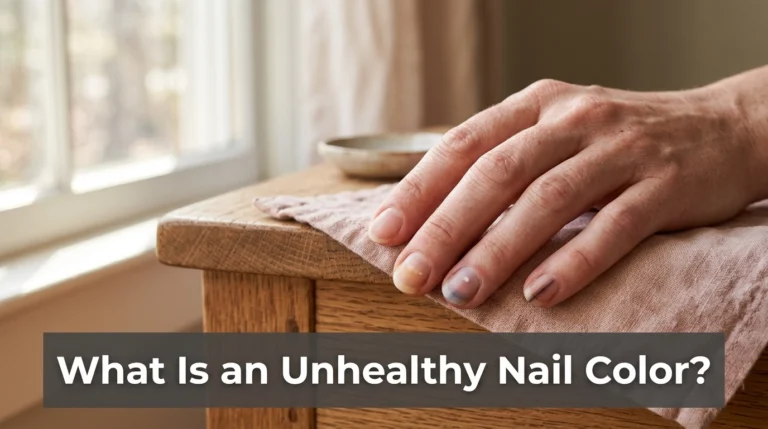
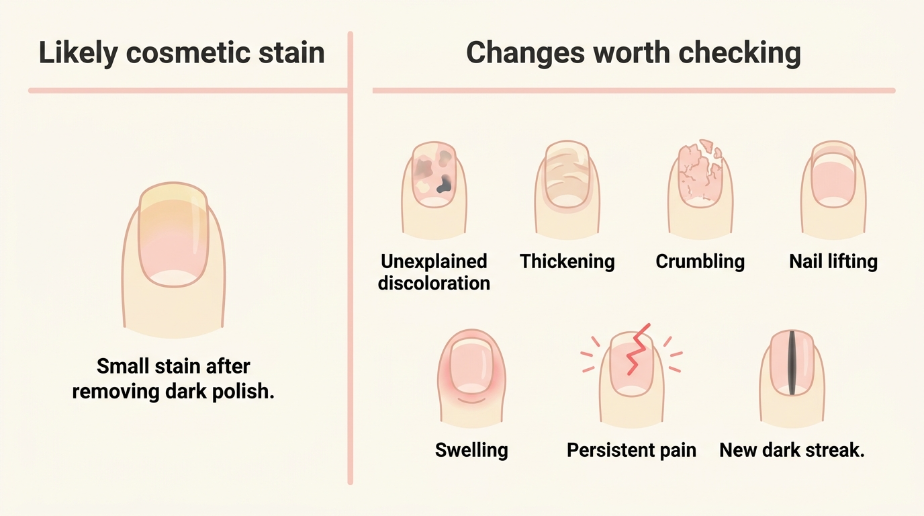
A small stain after removing dark polish is very different from a nail that develops unexplained discoloration, thickening, crumbling, lifting, persistent pain, swelling, or a new dark streak.
If a nail change is new, worsening, unexplained, painful, or persistent, consider having it evaluated rather than repeatedly covering or bleaching it.
You can first compare your nails with these common signs of unhealthy nails, but an online guide can’t diagnose the cause of an unusual nail change.
Frequently asked questions about lemon juice and nails
Q: Does lemon juice make nails stronger?
A: Lemon juice isn’t a proven nail-strengthening treatment. If your nails break easily, daily moisturizing, gentler filing, protection from prolonged water exposure, and reducing manicure trauma are more useful places to start.
Q: Can I put lemon juice on my nails every day?
A: Daily use isn’t necessary and may increase dryness or irritation, especially around damaged cuticles or sensitive skin. If you use lemon for mild surface staining, keep it occasional, brief, and rinse thoroughly afterward.
Q: Does lemon juice whiten yellow nails?
A: It may make some mild superficial staining look less noticeable, but it won’t treat every cause of yellow nails. Persistent or unexplained discoloration should not simply be assumed to be a stain.
Q: Is lemon and olive oil good for nail growth?
A: The oil may help condition dry nails and surrounding skin, but adding lemon doesn’t turn the mixture into a proven growth accelerator. If moisture is what your nails need, you can use a simple cuticle oil without the acidic ingredient.
Q: What is the best home remedy for growing nails?
A: Think routine rather than remedy. Moisturize your nails and cuticles, protect your hands during wet chores, file snags immediately, stop biting or peeling, and eat a balanced diet. Those habits help you keep more of the nail length you naturally grow.
So, is lemon juice good for your nails?
Lemon juice is better viewed as an occasional DIY brightening ingredient than a nail-growth treatment. It may make minor surface staining look less obvious, but there’s no good reason to expect it to make healthy fingernails suddenly grow faster.
If length is your goal, put your effort into moisture, protection, gentle nail care, balanced nutrition, and preventing breakage. Those habits aren’t as dramatic as a viral lemon hack, but they’re much more useful for keeping the new nail you actually grow. Save this guide to Pinterest so you can come back to the safer routine whenever you’re tempted by another DIY nail-growth trick.

Hi, I’m Jessica, the creator behind Unique Lash & Nails Katy.
I created this website for anyone who loves beautiful nails as much as I do. Here, I share trendy nail designs, seasonal manicure ideas, easy nail care tips, honest product recommendations, and step-by-step guides to help you create salon-worthy nails at home. Whether you’re looking for everyday inspiration or your next favorite nail trend, I hope you’ll find something you love.