How to Make Thin Nails Stronger: Easy Care That Works
Quick Answer
To make thin nails stronger, keep them short, moisturize your nails and cuticles after washing, and wear gloves for dishes and cleaning. Stop peeling off gel, aggressive buffing, and frequent polish changes. These habits reduce new damage right away, but healthier nail needs months to grow from the base.
How to Make Thin Nails Stronger
If your nails bend like paper, split at the tips, or peel every time they grow, you’re probably tired of trying another miracle-strengthening polish. Your nails don’t need a punishing routine. They need less daily damage and steady care while healthier nail grows in. Here’s a realistic approach that fits around your manicure habits, including the products worth buying and the ones you can skip.


Why Are Your Nails Thin and Bendy?
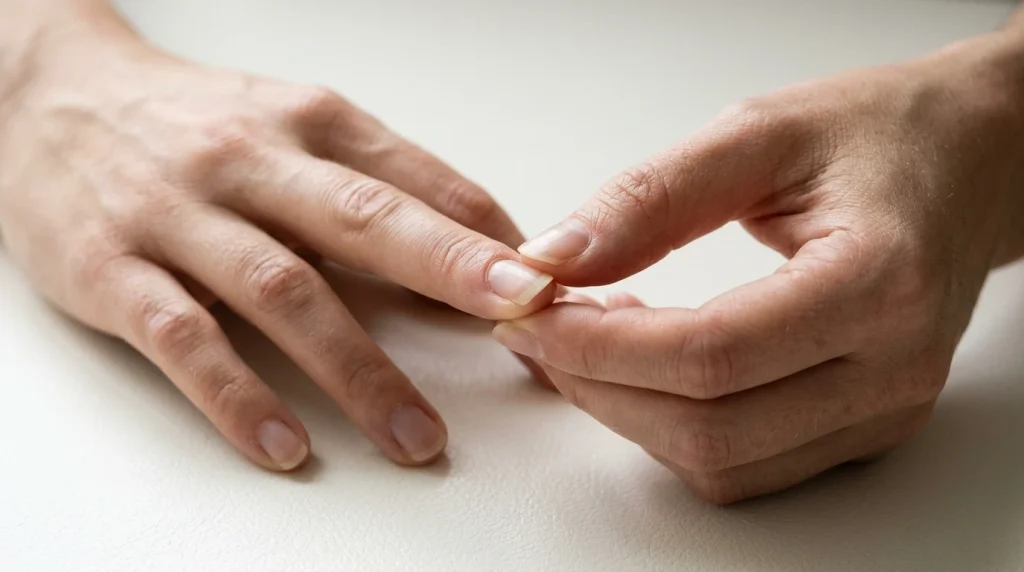
Your nail plate is made mostly of keratin, with water and natural lipids helping it stay flexible. Some people naturally have thinner nails, so a bendy nail isn’t automatically unhealthy. The concern is when your nails suddenly become noticeably thinner or start peeling, cracking, or tearing more easily than they used to.
Repeated wetting and drying is a common culprit. Every round of dishwashing, cleaning, and handwashing exposes your nails to moisture; frequent cycles can contribute to splitting. Detergents and polish removers add more stress, especially when you don’t moisturize afterward. Filing the surface, scraping off gel, and removing artificial nails can also strip or damage layers of the nail plate.
Pay attention to the pattern. If the damage began after a rough manicure, the cause may be fairly obvious. If it’s happening to nearly every nail without a clear explanation, a healthcare professional can help check for skin conditions, medication effects, or nutritional and other medical issues. Don’t assume every weak nail means you’re deficient in vitamins.
What Actually Helps Thin Nails Get Stronger?
You can’t permanently thicken the part of a nail that’s already grown out by rubbing in an oil or painting on a treatment. You can protect that nail from breaking, keep it more flexible, and give new growth a better chance. Start with these five methods rather than trying everything at once.
1. Moisturize Your Nails and Cuticles Every Day
Best for: nails that peel in thin layers, feel dry, or split at the free edge.
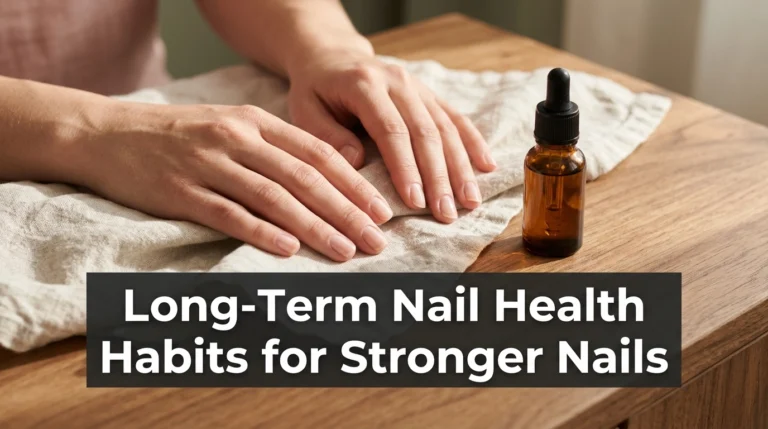
After each handwash, pat your hands dry and work a small amount of fragrance-free hand cream across your nails, surrounding skin, and cuticles. Look for simple moisturizing ingredients such as glycerin or petrolatum. At bedtime, add a thin film of petroleum jelly or a plain cuticle oil if you like the feel of oil better.
Use a pea-sized amount of cream for both hands to start, adding more as needed. There’s no need to leave your fingertips greasy all day. Keep the bottle near your sink so moisturizing becomes automatic rather than another task you forget.
Why it helps: a moisturized nail is less likely to become excessively dry and brittle. Trade-off: cream won’t instantly rebuild missing nail layers, and visible improvements depend on consistency.
2. Keep Nails Short and Shape the Edges Gently
Best for: flexible nails that catch on sweaters, snag your hair, or tear before they reach your desired length.
Trim your nails so the free edge barely extends past your fingertip while they’re recovering. Aim for a short oval or softly rounded square. These shapes smooth off sharp corners that otherwise catch against clothes and hard surfaces. Use sharp clippers for length, then a fine-grit file to refine the edge with light strokes.
A fine glass nail file is an easy option because it gives you control without requiring heavy pressure. Hold it almost perpendicular to the free edge and smooth visible snags; don’t saw into the sidewalls or file the top surface of your nails.
Why it helps: less length means less leverage when your nail hits something. Trade-off: you’ll need to wear a shorter manicure for a while, but short nails can still look polished with a sheer pink or nude color.
3. Protect Your Nails From Water and Cleaning Products
Best for: anyone washing dishes, cleaning frequently, or keeping their hands wet for long stretches.
Wear protective gloves for dishes, bathroom cleaning, and other wet chores. Choose cotton-lined household gloves, or use soft cotton liners under a waterproof pair if your hands get sweaty. Replace torn gloves, and dry your hands thoroughly after taking them off.
Don’t avoid normal handwashing. The goal is to reduce unnecessary prolonged water and detergent exposure while keeping good hygiene. Reapply hand cream after washing, especially if your nails feel tight or chalky.
Why it helps: frequent wet-dry cycles and irritants can make nails more prone to splitting. Trade-off: gloves take an extra moment to put on, but they protect the entire hand as well as your manicure.
4. Give Your Nails a Break From Harsh Manicure Removal
Best for: nails that became thin after acrylics, gel manicures, dip powder, or aggressive salon filing.
If your nails are peeling or sore after a removal, consider wearing them bare or with a simple traditional polish while damaged areas grow out. Avoid repeated buffing to make the surface look smooth: that takes away more of a nail plate that’s already thin. Ask your nail technician to leave the cuticles intact and minimize filing on the natural nail.
Never peel gel or press-on adhesive from a nail that’s resisting. For gel polish, follow the proper removal method using acetone on the nail with the surrounding skin protected, or book a technician who removes it without force. Acetone can dry the nail, but scraping or peeling off resistant gel can cause significantly more mechanical damage.
Why it helps: it prevents repeated stripping of the nail plate. Trade-off: you may have to postpone long extensions and complex designs until your nails become less fragile.
5. Support Normal Growth With Regular Meals, Not Miracle Gummies
Best for: anyone tempted to buy high-dose supplements before considering everyday nutrition.
Your body needs adequate protein and nutrients to grow nails normally. Build meals around foods you enjoy, such as eggs, beans, fish, tofu, yogurt, vegetables, and whole grains. If you eat a restricted diet or have other signs of a deficiency, ask a clinician whether any testing or dietary changes would be useful.
Biotin gummies are heavily promoted for thin nails, but evidence that supplements strengthen nails in people without a deficiency is limited. High doses can interfere with certain blood tests, including some thyroid and heart-related tests. Tell your healthcare team about supplements you take rather than starting large doses based on a beauty claim.
Why it helps: balanced nutrition supports the nail your body is producing. Trade-off: it isn’t an overnight beauty hack, and more supplements are not automatically better.
Which Products Are Worth Buying for Thin Nails?
You don’t need a ten-step nail kit. Spend first on items that prevent breakage or make the protective routine easier. The picks below are product types, not promises that one brand can change your natural nail thickness.
Recommended Product
Fine-Grain Glass Nail File
A smooth glass file helps you remove tiny snags before they turn into full splits. Choose one that feels gentle rather than gritty, and wash and dry it according to its directions.
As an Amazon Associate, we earn from qualifying purchases.
Recommended Product
Fragrance-Free Hand Cream
Look for a straightforward glycerin-rich or petrolatum-containing moisturizer. Unlike a trendy strengthening serum, this can become part of your routine after every handwash.
As an Amazon Associate, we earn from qualifying purchases.
Recommended Product
Cotton-Lined Reusable Cleaning Gloves
Pick a comfortable waterproof pair that covers your wrists. Gloves are a practical way to protect thin nails from prolonged wet work and irritating cleaners.
As an Amazon Associate, we earn from qualifying purchases.
Should You Use a Nail Hardener or Strengthening Polish?
Be selective. Some products create a temporary coating that makes a nail feel less bendy, but a harder nail isn’t always a healthier nail. Excessive stiffness can make already brittle nails crack when they hit something. Formaldehyde-containing hardeners are especially worth avoiding because they can cause irritation and excessive brittleness.
If you love wearing polish, a simple traditional manicure may be a reasonable cosmetic choice when your nails and surrounding skin are comfortable. Apply thin layers, let them dry, and avoid the cycle of removing and repainting every day. Stop using any product that causes burning, itching, peeling skin, or worsening cracks.
Important
Don’t hide a painful, lifting, discolored, or infected-looking nail under hard gel or artificial extensions. Covering an unresolved problem may delay diagnosis and further damage the nail.
How Long Does It Take for Thin Nails to Get Stronger?
Think in terms of weeks for fewer snags and months for replacement growth. A shorter shape may reduce breakage immediately. Regular moisturizing and protecting your nails from wet work can help limit additional splitting over the following weeks, although results differ from person to person.
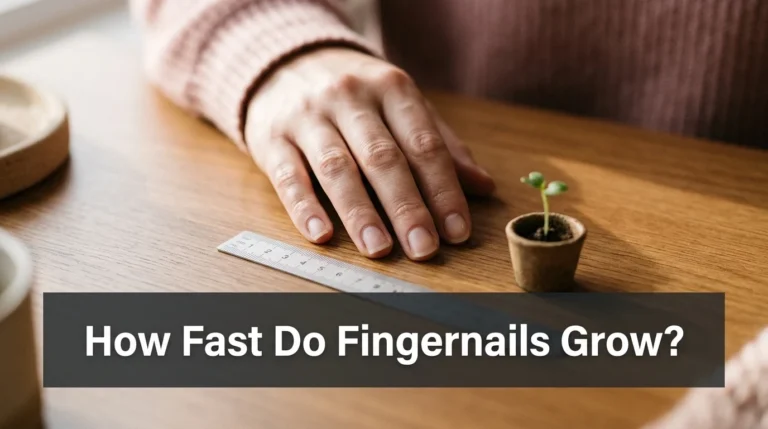
Fingernails usually grow around 3 millimeters per month. Replacing a full nail generally takes about six months or longer. That means a damaged nail plate doesn’t suddenly become thick again at the tips: the visibly healthier part gradually moves forward from the nail base as it grows.
Take one photo of your bare nails every four weeks in similar lighting. Look for smoother new growth near the cuticles and fewer fresh splits rather than judging progress by length alone. If your nails keep getting worse despite gentler care, it’s time to look for another cause.
What Is a Simple Two-Week Routine for Thin Nails?
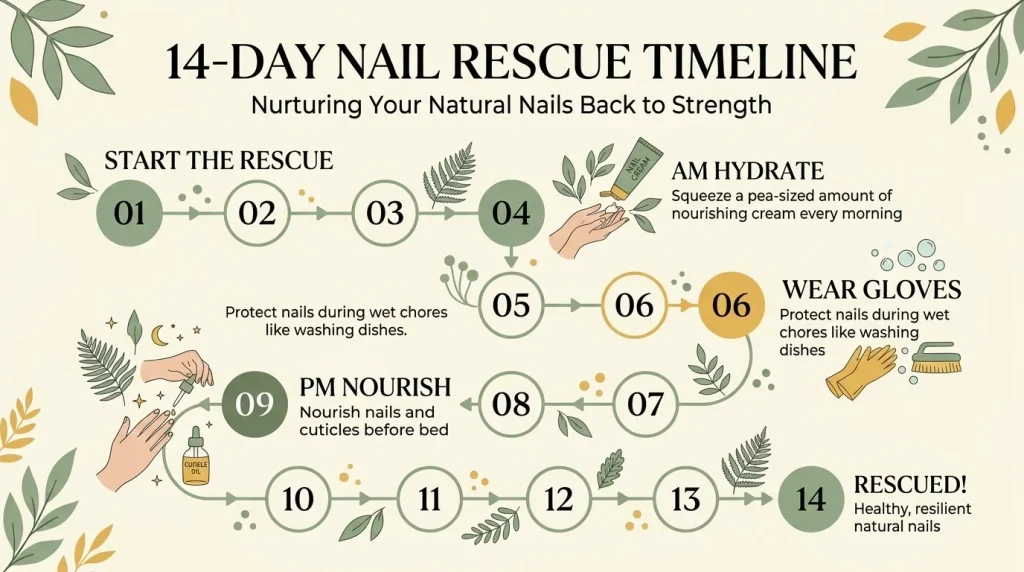
Use the first 14 days to make protection a habit. You aren’t trying to grow an entirely new nail in two weeks; you’re trying to stop losing the length you already have.
- Day 1: Trim any damaged free edges short. Smooth corners gently and photograph your bare nails.
- Every morning: Apply hand cream across your nails and cuticles. Put gloves next to the kitchen sink so you’ll remember them.
- After washing: Dry your hands and reapply a little moisturizer. Keep a small tube in your bag if you’re away from home.
- During chores: Wear waterproof, preferably cotton-lined gloves for wet cleaning. Avoid opening cans or scraping labels with your fingernails.
- Every evening: Massage in cream or a little petroleum jelly. File only new snags instead of filing the nail surface.
- At the end of week two: Compare the number of new splits or tears, not just nail length. Continue the routine if you’re noticing less damage.
What Should You Do and Avoid While Nails Recover?
Do
- Moisturize after handwashing.
- Keep tips short and smooth.
- Wear gloves for wet chores.
- Leave cuticles intact.
- Track new growth monthly.
Don’t
- Peel or scrape off gel.
- Buff away the nail surface.
- Use nails as tools.
- Cut or pick your cuticles.
- Rely on high-dose beauty supplements.
What Small Changes Make the Biggest Difference?
Keep a Mini Nail Rescue Kit at Your Desk
A tiny file and hand cream prevent the classic problem of discovering a snag, ignoring it, and then catching it on your sweater. File the snag gently as soon as possible rather than picking at the peeling layer.
Ask Your Nail Technician to Skip Surface Buffing
Tell your technician you’re growing out thin nails and want minimal preparation of the natural nail. A glossy finish isn’t worth removing more layers of the nail plate, especially if you’re already dealing with peeling.
Choose Nail Art That Doesn’t Need Aggressive Removal
You can still enjoy a pretty manicure. Try a short, natural shape with regular polish, tiny dots, or a simple French tip rather than long, heavy enhancements. The design should work around your nail’s condition, not disguise it at any cost.
Pay Attention to Your Skin, Too
Cracked cuticles and inflamed nail folds can make a nail-care routine uncomfortable. Switch to fragrance-free products if your skin gets irritated and avoid digging under the free edge with sharp tools. If redness, swelling, or pain persists, get medical advice.
When Should You See a Dermatologist About Thin Nails?
Get an assessment if your nails suddenly change, become progressively thinner, or fail to improve after you’ve reduced obvious sources of damage. Seek care promptly if you notice pain, swelling, bleeding, a new dark streak, nail lifting, or marked color changes. These signs deserve more than a new bottle of polish.
A clinician may ask about recent manicures, work exposure, skin symptoms, medications, and your general health. Sometimes a skin condition or another medical issue needs treatment. You don’t need to diagnose yourself or order random supplements before making an appointment.
Frequently Asked Questions About Thin Nails
Q: Can naturally thin nails become thick?
A: Your natural nail thickness varies, and home treatments can’t reliably change your genetics. You can make thin nails less likely to split by shortening them, moisturizing regularly, and protecting them from repeated damage.
Q: Does cuticle oil actually strengthen thin nails?
A: Cuticle oil helps condition dry nail folds and may reduce dryness, but it doesn’t rebuild nail layers that have been filed away. Plain hand cream or petroleum jelly can be just as useful for a simple moisturizing routine.
Q: Are thin nails after gel manicures permanent?
A: Damage caused by filing or peeling can often grow out over several months if the nail-growing area wasn’t injured. Avoid further trauma, keep nails short, and see a dermatologist if the nail is painful or not growing normally.
Q: Is Vaseline good for thin nails?
A: Petroleum jelly is an inexpensive way to help lock in moisture around your nails and cuticles. Apply a thin layer at night, especially after hand cream, but don’t expect it to instantly thicken the nail plate.
Q: Should I stop painting my nails while they’re thin?
A: Not necessarily. If your nails are comfortable and intact, occasional traditional polish may be fine. Skip frequent removal, harsh buffing, and extensions while damaged nails grow out, and leave painful or abnormal nails uncovered for evaluation.
Your Stronger-Nail Plan Starts With Protection
You don’t need miracle gummies or a complicated salon treatment to give thin nails a better chance. Keep them short, moisturized, and protected from wet chores and rough removal while healthy nail grows forward. Save this guide to your Pinterest nail-care board so the routine is easy to follow whenever your nails need extra care.

Hi, I’m Jessica, the creator behind Unique Lash & Nails Katy.
I created this website for anyone who loves beautiful nails as much as I do. Here, I share trendy nail designs, seasonal manicure ideas, easy nail care tips, honest product recommendations, and step-by-step guides to help you create salon-worthy nails at home. Whether you’re looking for everyday inspiration or your next favorite nail trend, I hope you’ll find something you love.