How Water Affects Nail Strength: Stop Peeling
Quick Answer
Water temporarily softens your nails because the nail plate absorbs moisture. The bigger threat to nail strength is repeated wetting and drying, especially with soaps and detergents, which can contribute to peeling and splitting. You don’t need to avoid washing your hands: limit prolonged soaking, wear gloves for wet chores, dry gently, and moisturize afterward.
Here’s a nail-care surprise: the same water that makes your nails feel flexible after a shower can contribute to breakage when exposure happens again and again. Your nails aren’t waterproof, even though they look hard.
Understanding how water affects nail strength helps you protect your natural nails without skipping showers, swimming, or your favorite manicure. The trick isn’t avoiding moisture altogether; it’s reducing the stressful cycle of soaking, drying, and snagging softened edges.


Why Does Water Change the Strength of Your Nails?
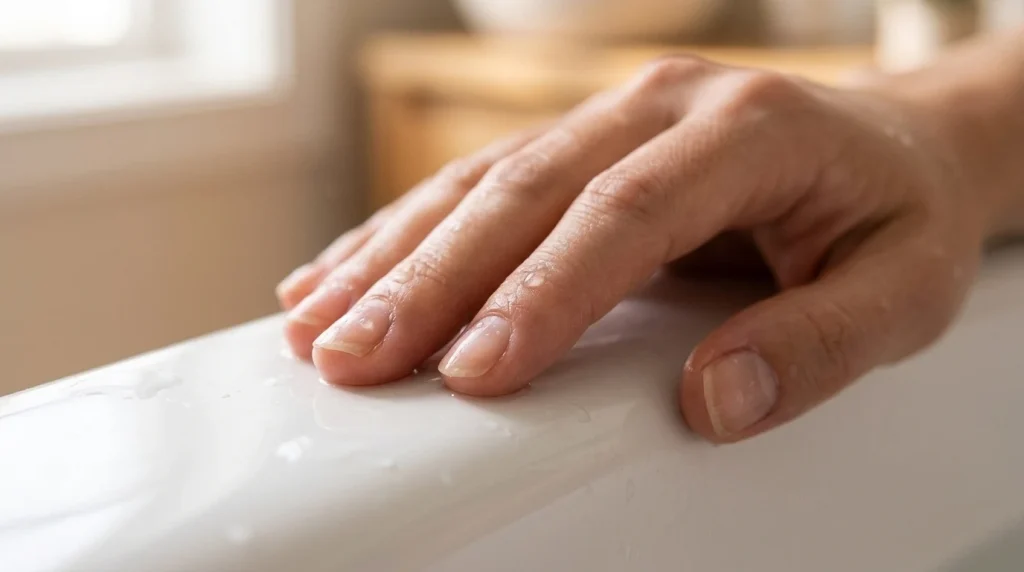
Your visible nail plate is made mainly of tightly packed keratin cells. Those cells are no longer living, but the plate can still absorb water. As moisture enters the nail, it affects the way the keratin structure behaves. That’s why a nail can feel a little softer and more bendable immediately after a long bath.
Some flexibility is normal and useful. A nail that bends slightly may tolerate an everyday bump better than one that is extremely rigid. But softness from soaking isn’t the same thing as lasting strength, and repeatedly changing the nail’s moisture level can stress its layered structure.
What happens while your nails are wet?
During prolonged contact with water, the nail plate takes up moisture and can swell slightly. You may notice the free edge bends more easily or catches on fabric after washing your hair. This temporary change doesn’t mean the nail is growing faster, repairing itself, or becoming healthier.
The nail usually firms up as it dries. The problem comes when that process repeats frequently, particularly if the edge is already thin from filing or manicure removal.
Why does repeated wetting and drying matter more?
Each wet-and-dry cycle changes the conditions inside the nail plate. Over time, repeated exposure can weaken the connection between its layers, contributing to lamellar splitting, also called onychoschizia. This is the familiar peeling you see when thin sheets lift from a nail tip.
It’s not simply a case of brittle nails containing too little water. Research comparing brittle and normal nails hasn’t consistently found a meaningful difference in their measured water content. Your exposure habits, products, and the condition of the nail plate matter more than chasing a magic hydration percentage.
Is Water Bad for Your Nails, or Is Too Much Water the Problem?
Normal water contact is not the enemy. Washing your hands, taking a regular shower, and rinsing off after swimming are important parts of staying clean. The concern is prolonged or repeated soaking, especially when followed by drying, detergents, or physical stress on a softened nail.
Washing your hands is different from scrubbing dishes barehanded for an hour. The latter adds prolonged exposure to cleaning agents that can irritate skin.
People who frequently wash, shampoo, clean, or work with wet materials may notice more peeling, although water isn’t the only possible cause. Nail thickness, previous gel removal, skin conditions, age, and repetitive impacts can all influence how much damage develops.
Pro Tip
Count your long wet chores, not every splash. Protecting your hands during dishwashing or cleaning often changes your exposure more than worrying about ordinary handwashing.
What Are the Signs Water Exposure May Be Weakening Your Nails?
You can’t diagnose the cause of brittle nails by appearance alone, but a few patterns suggest your daily routine may be contributing:
- Peeling tips: Thin layers separate along the free edge, especially on the fingers you use most.
- Repeated splitting: A corner keeps catching, lifting, or cracking before your nail reaches the length you want.
- Softness after soaking: Nails feel unusually flexible after a bath or a long session washing dishes.
- Rough, snagging edges: Previously smooth tips start catching on hair, sweaters, or towels.
- Dry surrounding skin: Cuticles and fingertips feel tight or irritated after frequent soap-and-water exposure.
None of these signs proves water is the sole cause. If you also notice discoloration, lifting, tenderness, or an unexplained change across several nails, use this guide to recognize signs of unhealthy nails and consider professional advice.
Why Do Nails Seem Weaker After Showers, Dishwashing, and Swimming?
Long showers and baths
Extended soaking can leave the nail plate temporarily more flexible. If you immediately pick at a chipped manicure or file a flimsy tip, you may pull apart layers that were already vulnerable. A comfortably warm shower is fine; the practical change is to avoid using freshly soaked nails as tools.
Dishwashing and household cleaning
This is a bigger nail-strength challenge because water and cleaning products often come together. Dish soap removes grease from plates, while repeated exposure can also leave your fingertips feeling dry. Gloves reduce direct contact with both the water and the cleaning solution.
Swimming pools, beaches, and hot tubs
Long stretches in pool or ocean water can temporarily soften your nails just like other soaking. Pool chemicals and salt may also leave your skin feeling dry or irritated, although neither automatically means your nails will be damaged. Rinse after swimming, dry your hands, and apply moisturizer.
Don’t rely on polish to make your nails completely waterproof. A manicure may cover the upper surface, but water can still contact the tips and surrounding areas, especially once an edge begins lifting.
How Can You Protect Nail Strength Without Giving Up Water?
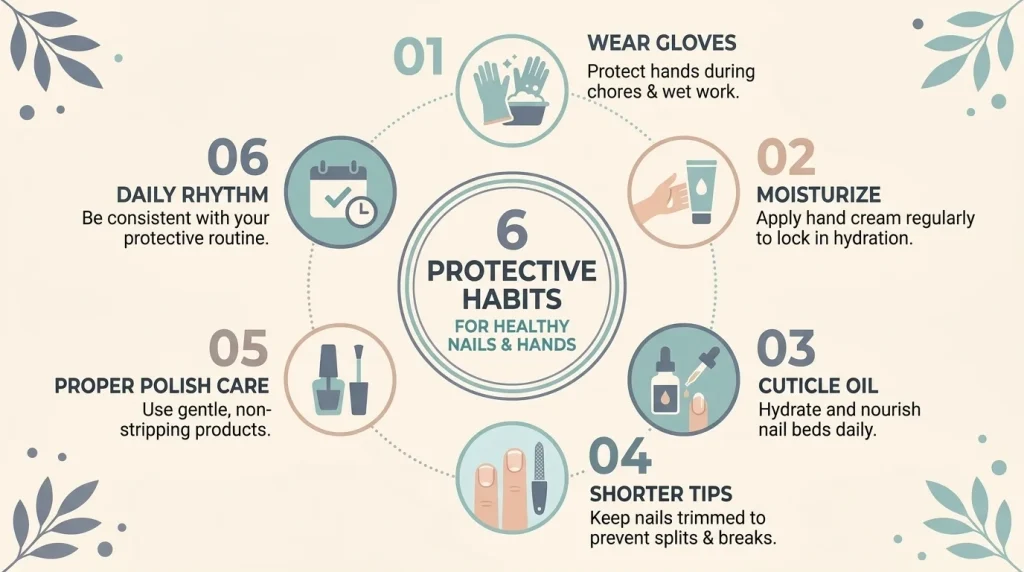
The most effective routine is simple enough to repeat every day. These habits target the wet-and-dry cycle instead of promising a miracle cure.
1. Wear gloves for the wet chores that last longest
Keep a pair of well-fitting, reusable household gloves near your sink. Put them on before washing dishes, cleaning bathrooms, or hand-washing clothes. If your hands become sweaty, take a break, dry them, and change damp cotton liners when necessary. Wet skin trapped inside gloves for a long time isn’t the goal.
A basic pair of reusable dishwashing gloves is a more useful nail-care purchase than another bottle promising overnight growth.
2. Moisturize right after washing your hands
Gently pat your hands dry, including around each nail, then apply hand cream while the skin is still comfortable and not dripping wet. Look for practical moisturizing ingredients such as glycerin and petrolatum. Cream won’t glue a split nail back together, but it helps care for the skin and nail surroundings exposed to frequent washing.
Keep a fragrance-free moisturizing hand cream beside your most-used sink. A product you actually apply is more helpful than an elaborate routine you forget.
3. Use cuticle oil for the dry edges
Massage a tiny drop of oil around the base and sides of each nail before bed. You don’t need to flood the nail plate. This habit is especially useful when the skin beside your nails looks flaky or catches on clothing.
A simple jojoba cuticle oil is convenient, but plain petroleum jelly is also a reasonable budget-friendly option. Neither one can reverse a peeled layer instantly; the purpose is gentle, consistent care.
4. Keep peeling nails shorter while they recover
A long, fragile tip acts like a lever: small knocks create more force at an already splitting edge. Trim nails to a comfortable length and smooth snags gently with a fine-grit or glass file. You don’t have to file into the healthy nail plate or buff away peeling layers.
If your nails were weakened by gel removal or frequent manicures, follow a gentle routine for recovering damaged nails rather than repeatedly covering the same problem.
5. Change how you handle polish after water exposure
Wait until your nails are dry before applying polish, because moisture or surface residue can interfere with a smooth application. Never peel off a lifting gel manicure, even if it seems ready to slide away after a bath. That can remove surface layers of your natural nail too.
Use the removal method appropriate for your product, and avoid aggressively scraping, buffing, or prying at the nail. A pretty manicure should sit on a healthy foundation, not hide ongoing damage.
6. Build a low-effort daily rhythm
Before wet chores, reach for gloves. After washing, dry gently and apply cream. At bedtime, add a little moisturizer or oil around your nails and inspect any rough tips before they snag. Once a week, tidy the length with clean clippers and a gentle file.
For a more complete maintenance plan, use our simple nail-care routine alongside these water-protection habits.
What Should You Do If Your Nails Are Already Peeling or Splitting?
Start by stopping whatever keeps aggravating the tips. You cannot press a separated nail layer back into a permanently repaired nail plate, but you can keep a small split from catching and spreading.
- Smooth the loose edge: Clip or gently file only the portion that is safe to shorten. Don’t yank a peeling layer upward.
- Reduce repeat soaking: Use gloves for chores and avoid unnecessary long nail soaks.
- Keep the area comfortable: Moisturize your hands and nail folds after washing and before bed.
- Pause damaging manicure habits: Skip peeling polish, harsh buffing, and aggressive artificial-nail removal while the area grows out.
- Watch the new growth: Check whether the nail emerging from the base looks healthier over the following months.
Warning
Don’t pull off a split that extends into the attached part of your nail, or attempt to glue down a painful or lifted nail. If the nail is separating from the bed, bleeding, inflamed, or unusually tender, have it assessed rather than covering it with gel or acrylic.
Does Drinking More Water Make Your Nails Stronger?
Drinking enough water supports normal body function, but extra glasses aren’t a proven treatment for brittle nails. Water you drink and water your fingertips absorb during dishwashing are not the same kind of exposure, so there’s no contradiction in staying hydrated while protecting your hands from prolonged soaking.
Your nails grow from the nail matrix near their base. Growth depends on overall health and adequate nutrition, too. Correcting a genuine nutrient deficiency may help future growth, but drinking more water won’t erase damage from peeling off gel.
A balanced eating pattern with adequate protein and important nutrients is more useful than chasing a trendy nail drink. You can explore foods that support stronger, healthier nails if you’re improving your routine from the inside as well.
How Long Does It Take for Water-Damaged Nails to Get Stronger?
A soaked nail may feel firmer once dry, but that isn’t the same as repairing a peeling tip. With gloves and regular moisturizer, surrounding skin may feel better sooner. A split nail must be protected as it grows forward.
Fingernails typically grow only a few millimeters per month, so replacing a substantial length of damaged nail can take several months. There isn’t an honest seven-day deadline for getting your old nail plate back. Progress may look like fewer fresh splits, less snagging, and a smoother new section emerging near the cuticle.
Take a clear photo of your bare nails every few weeks under similar lighting. Compare the new growth, not just the stubborn damaged tips. That makes improvement easier to notice without obsessively checking every day.
Do You Need Nail Hardeners or Expensive Treatments?
Not necessarily. Start with protection and a moisturizer before buying a shelf full of products. A hardener can make some nails feel more rigid, but very stiff nails may still crack under pressure, and certain hardening formulas can irritate skin or worsen brittleness when overused.
If you love polish, a carefully applied regular manicure may help you avoid picking at rough edges, but it isn’t a cure for underlying splitting. Remove it gently and inspect the natural nail between applications. Be cautious with products that promise to repair all nail damage overnight.
What is worth keeping? A pair of cleaning gloves, one comfortable hand moisturizer, optional cuticle oil, and a gentle nail file cover most everyday needs. You can add a protective cosmetic product later if it suits your nails, but none replaces safer wet-work habits.
What Should You Do and Avoid to Keep Nails Strong?
Do
- Wear gloves for prolonged wet work.
- Moisturize after handwashing.
- Keep vulnerable tips short and smooth.
- Let freshly soaked nails dry before manicuring.
Don’t
- Soak weak nails as a growth treatment.
- Leave sweaty or wet gloves on for hours.
- Peel away loose gel or nail layers.
- Assume every split comes from water alone.
When Could a Nail Problem Need Medical Attention?
Water-related wear usually shows up as fragile edges, but other nail problems can look similar. Seek advice from a dermatologist or other qualified clinician for persistent or unexplained changes, especially if several nails are involved without obvious wet-work exposure.
Get a new or changing dark streak examined, and don’t ignore nail lifting, increasing pain, redness, swelling, drainage, unusual thickening, or greenish discoloration. These changes can have causes that moisturizing and gloves won’t treat. Avoid hiding a concerning nail under fresh polish while you’re waiting for an assessment.
Frequently Asked Questions About Water and Nail Strength
Q: Does soaking your nails in water make them stronger?
A: No. Soaking may make nails temporarily softer and more flexible, but it doesn’t build permanent strength. Repeated soaking and drying can contribute to peeling in susceptible nails.
Q: Is hot water worse for nails than cold water?
A: Very hot water can irritate or dry the surrounding skin, particularly with soap. For nail strength, prolonged exposure and repeated wet-and-dry cycles matter more than trying to find a perfect water temperature.
Q: Can washing your hands too often cause peeling nails?
A: Frequent handwashing can contribute to brittleness, especially alongside strong cleansers and existing nail damage. Keep washing when needed for hygiene; dry carefully and moisturize afterward.
Q: Does swimming ruin gel or natural nails?
A: An occasional swim doesn’t automatically ruin either one. Long soaking can soften natural nails, and already-lifting polish may catch or peel. Rinse, dry, moisturize, and never pull at a loose gel edge.
Q: Can cuticle oil reverse water damage?
A: Cuticle oil can condition the skin around your nails, but it can’t fuse a split nail plate back together. Protect damaged tips and allow healthier nail to grow forward while keeping up gentle care.
What Is the Biggest Takeaway for Stronger Nails?
How water affects nail strength comes down to balance: normal washing is necessary, while frequent soaking, drying, and detergent exposure can leave fragile nails more likely to peel. Protect your hands during long wet chores, moisturize afterward, and handle softened nails gently. Save this guide to Pinterest so your easy water-smart nail routine is ready whenever you need it.

Hi, I’m Jessica, the creator behind Unique Lash & Nails Katy.
I created this website for anyone who loves beautiful nails as much as I do. Here, I share trendy nail designs, seasonal manicure ideas, easy nail care tips, honest product recommendations, and step-by-step guides to help you create salon-worthy nails at home. Whether you’re looking for everyday inspiration or your next favorite nail trend, I hope you’ll find something you love.