When Does Nail Discoloration Need Professional Attention?
Quick Answer
Nail discoloration needs professional attention when it appears without an obvious cause, persists, spreads, or occurs with pain, swelling, nail thickening, or separation. A new or changing dark stripe should be examined promptly by a dermatologist. Sudden blue or gray nails accompanied by breathing difficulty, chest pain, or blue lips require emergency medical care.
You notice a yellow spot beneath your manicure, a green patch on one fingernail, or a dark line that wasn’t there before. Naturally, you wonder whether it’s leftover polish, a minor infection, or something more serious.
Most nail color changes aren’t medical emergencies. However, some can indicate fungal infections, bacterial problems, inflammatory conditions, or, rarely, skin cancer. Knowing the difference helps you avoid unnecessary worry without overlooking important warning signs.
This guide explains when nail discoloration needs professional attention, what different nail colors may mean, and how to protect your nails while arranging appropriate care.


What Nail Discoloration Signs Should You Never Ignore?
The most important clues aren’t simply the color of your nails. Pay attention to how quickly the discoloration developed, whether it affects one nail or several, and what other symptoms accompany it.
Arrange a professional evaluation if you notice any of the following:
- A new brown or black vertical stripe: Particularly if it widens, changes shape, or affects a single nail without an obvious explanation.
- Pigment spreading onto surrounding skin: Darkening around the cuticle or nail folds deserves prompt dermatology assessment.
- Persistent green discoloration: This may indicate bacterial colonization, especially when the nail has lifted.
- Yellow or white nails with thickening: Fungal infection is one possibility, particularly when the nails become brittle or crumbly.
- Pain, redness, warmth, or swelling: These symptoms may indicate inflammation or infection around the nail.
- Unexplained nail lifting or splitting: Changes in nail attachment or structure can accompany several medical conditions.
- Unexpected discoloration of multiple nails: A clinician may need to consider medications, infections, or underlying health conditions.
Important Warning
A new or changing dark streak under a nail should not be dismissed as a harmless bruise. Although nail melanoma is uncommon, early assessment is important. If you develop sudden blue or gray nail beds together with blue lips, chest pain, difficulty breathing, or confusion, seek emergency care immediately.
What Do Different Nail Discoloration Colors Mean?
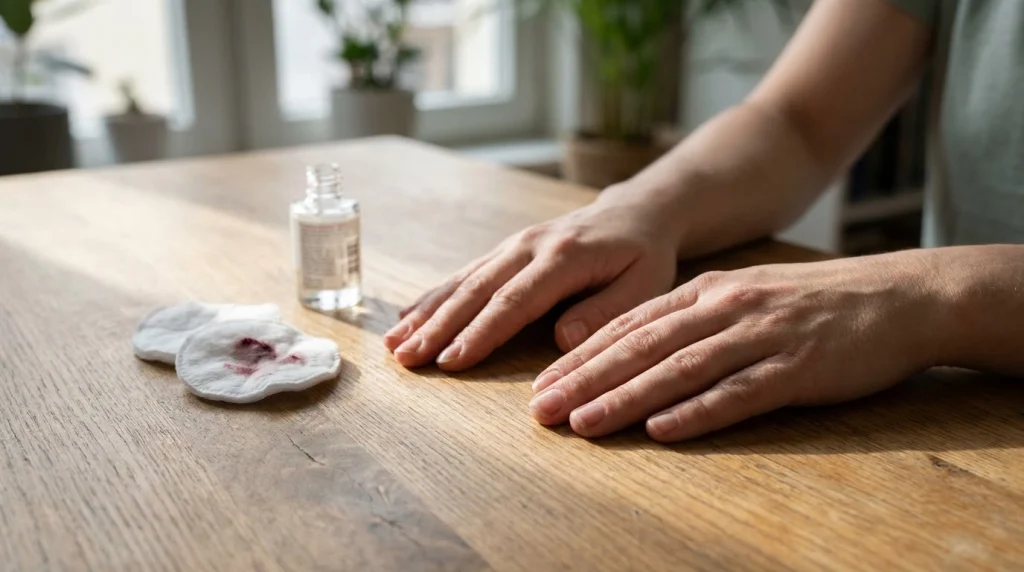
Different nail colors offer useful clues, but they cannot establish a diagnosis on their own. A dermatologist or other qualified healthcare professional considers your nail’s appearance, health history, and accompanying symptoms.
1. Yellow Nails: Staining, Fungus, or Another Condition?
Yellow nail discoloration is common, especially if you regularly wear highly pigmented nail polish. Dark reds, deep purples, and other saturated shades may leave temporary staining on the nail plate.
However, persistent yellowing can also occur with fungal nail infections. Look for additional changes such as:
- Thickened nail plates
- Brittle, rough, or crumbly nail edges
- Debris collecting beneath the nail
- Progressive discoloration spreading across the nail
- Partial separation from the nail bed
Unusually slow-growing, thickened yellow nails can occasionally occur with other medical conditions, including rare yellow nail syndrome. That diagnosis requires professional assessment.
When to seek care: Schedule a medical appointment when yellowing persists without an obvious staining cause, worsens, or accompanies thickening, discomfort, or nail lifting.
2. Green Nails: Could Bacteria Be Responsible?
Green discoloration can occur when bacteria, particularly Pseudomonas aeruginosa, colonize the space beneath a partially detached nail. This is sometimes called green nail syndrome.
Moisture trapped beneath artificial nails, repeated exposure to water, or an existing area of nail separation may create favorable conditions for bacterial growth.
You might notice:
- Green, blue-green, or green-black patches
- Discoloration beneath a lifted nail
- Changes after repeated wet work or artificial nail use
- Occasional tenderness or changes in surrounding skin
A green nail isn’t automatically dangerous, but the underlying problem should be evaluated rather than covered with fresh polish.
When to seek care: Contact a clinician when green discoloration appears, especially if it spreads, persists, or accompanies pain, redness, or swelling.
3. Black or Brown Nails: Bruising or Something More Serious?
A dark nail can result from bleeding beneath the nail after an injury. This is called a subungual hematoma. Tight shoes, repetitive running, and accidentally hitting your finger can all cause it.
Bruising often begins as a dark red, purple, brown, or black patch. Over time, the discoloration generally moves toward the nail tip as the nail grows.
However, some brown or black nail changes are caused by increased pigment production, known as melanonychia. Causes include normal pigmentation, medications, inflammation, and, rarely, melanoma.
Warning signs include:
- A new dark stripe appearing without a known injury
- A stripe becoming wider or more irregular
- Multiple shades within the same pigmented band
- Dark pigmentation extending onto surrounding skin
- Nail splitting, bleeding, or developing a lump
When to seek care: Arrange prompt dermatology evaluation for a new or changing dark nail band. Do not wait for pain; early nail melanoma may be painless.
4. White Nails: Harmless Spots or Health Concerns?
Small white spots, called leukonychia, frequently develop after minor trauma to the nail matrix. You might not even remember bumping or pressing your nail.
These spots often move outward with nail growth and don’t require special treatment.
Other white changes deserve closer attention. A powdery white surface may occur with certain fungal infections, while widespread changes in nail color can sometimes accompany systemic illness.
When to seek care: Get checked if your nails become extensively white, develop unexplained changes across several fingers, or show additional symptoms such as thickening or separation.
5. Blue or Purple Nails: Circulation or Oxygen Problems?
Blue or purple nail beds can sometimes appear after exposure to cold temperatures because blood vessels narrow and circulation changes.
However, blue or gray discoloration can also indicate inadequate oxygenation or a circulation problem. The context is especially important.
Seek emergency medical attention if sudden blue or gray discoloration accompanies breathing difficulties, chest pain, confusion, faintness, or blue or gray lips or tongue.
If your fingers or toes repeatedly change color in the cold, make an appointment to discuss possible circulation conditions such as Raynaud’s phenomenon.
6. Red or Reddish-Brown Nails: Injury or Inflammation?
Red discoloration may result from nail-bed bleeding, irritation, or inflammation. A painful, swollen nail fold can indicate paronychia, an infection or inflammation around the nail.
Thin reddish-brown lines beneath the nail may represent splinter hemorrhages. These commonly follow trauma but occasionally occur with other medical conditions.
When to seek care: Seek evaluation for unexplained or recurrent bleeding, multiple new streaks without injury, worsening redness, or associated symptoms such as fever.
How Can You Tell Whether Nail Discoloration Is Harmless?
Some changes are more consistent with everyday staining or minor injury, although appearance alone cannot guarantee that a nail is healthy.
Consider the following differences:
| Possibly Harmless Change | Reason to Seek Evaluation |
|---|---|
| Mild yellow staining after dark polish | Yellowing with thickening, crumbling, or lifting |
| Small white spots growing outward | Extensive unexplained whitening or nail damage |
| Known minor bruise moving toward the tip | New, widening, or changing dark stripe |
| Temporary color change after cold exposure | Persistent blue nails or discoloration with systemic symptoms |
Even a seemingly mild change deserves medical review if you cannot identify its cause or it does not follow an expected healing pattern.
When Should You See a Dermatologist for Nail Discoloration?
Not every color change requires the same level of urgency. Use your symptoms to determine the appropriate next step.
Seek Emergency Medical Care Immediately
Seek emergency assistance if you experience:
- Sudden blue or gray lips, tongue, or nails with difficulty breathing
- Chest pain, severe dizziness, or confusion with bluish discoloration
- Rapidly worsening infection symptoms accompanied by serious illness
- Severe nail trauma with uncontrolled bleeding or significant injury
Arrange Prompt Medical Assessment
Contact a healthcare professional promptly for:
- A new or changing dark stripe on one nail
- Dark pigment spreading onto the cuticle or surrounding skin
- Redness and swelling that are worsening or spreading
- Severe tenderness or suspected pus around a nail
- A painful dark patch following an injury
If you have diabetes, impaired circulation, or a weakened immune system, seek early medical advice for suspected nail infections rather than attempting prolonged home treatment.
Schedule a Routine Appointment
A non-emergency appointment is appropriate when:
- Yellow or white discoloration persists without an obvious explanation
- Your nail gradually becomes thick, brittle, or crumbly
- Several nails change color unexpectedly
- Your nail begins lifting without a clear injury
- Discoloration repeatedly returns after cosmetic treatments
A primary care clinician can evaluate many nail problems and refer you to a dermatologist when specialist assessment is needed.
What Causes Nail Discoloration After Gel or Acrylic Nails?
Gel polish, acrylic nails, and other nail enhancements can sometimes hide changes occurring underneath the nail plate.
Possible contributors include:
- Moisture trapping: Lifting enhancements can allow moisture to accumulate beneath the product.
- Nail trauma: Aggressive filing or removal can damage the nail surface and contribute to splitting or lifting.
- Polish staining: Strongly pigmented products may leave temporary discoloration.
- Allergic reactions: Some nail-product ingredients may trigger skin inflammation and secondary nail changes.
- Infections: Bacteria or fungi may affect susceptible nails, especially when lifting or damage is present.
If discoloration appears beneath an artificial nail, don’t simply fill the gap or conceal it with another coat. Have the affected nail assessed and remove enhancements carefully when appropriate.
Check the entire nail plate whenever you remove gel polish or acrylic enhancements. Look for changes in color, thickness, texture, and attachment before scheduling your next manicure. Avoid applying fresh products over an unexplained abnormality.
Can Nail Discoloration Be a Sign of an Underlying Health Condition?
Sometimes nail changes reflect more than a local cosmetic issue. Your healthcare professional may consider a broader medical explanation when multiple nails are affected or additional symptoms are present.
Fungal Nail Infections
Fungal infections may cause yellow, white, or brown discoloration, thickening, and brittle nails. Toenails are affected more frequently than fingernails.
However, psoriasis, trauma, and other nail disorders can resemble fungal infections. A clinician may collect nail clippings or debris for testing before recommending treatment.
Psoriasis and Other Inflammatory Conditions
Nail psoriasis may produce pitting, irregular discoloration, thickening, or separation from the nail bed.
Inflammatory skin conditions around the fingertips can also affect nail appearance. Treating the underlying condition may help protect future nail growth.
Iron Deficiency and Other Nutritional Problems
Iron-deficiency anemia can sometimes be associated with pale nails or spoon-shaped nail changes. However, these findings aren’t reliable enough to diagnose a deficiency.
Blood tests may be appropriate if your clinician suspects anemia based on your overall symptoms and medical history.
Heart, Lung, Liver, or Kidney Conditions
Certain medical conditions can affect nail color or appearance. Examples include bluish nail beds with inadequate oxygenation and some characteristic pale or white nail patterns associated with systemic disease.
These findings are not specific. A color change alone does not mean you have a serious internal illness.
The safest approach is to discuss unexplained, persistent, or widespread nail changes with a qualified healthcare professional.
What Happens During a Professional Nail Examination?
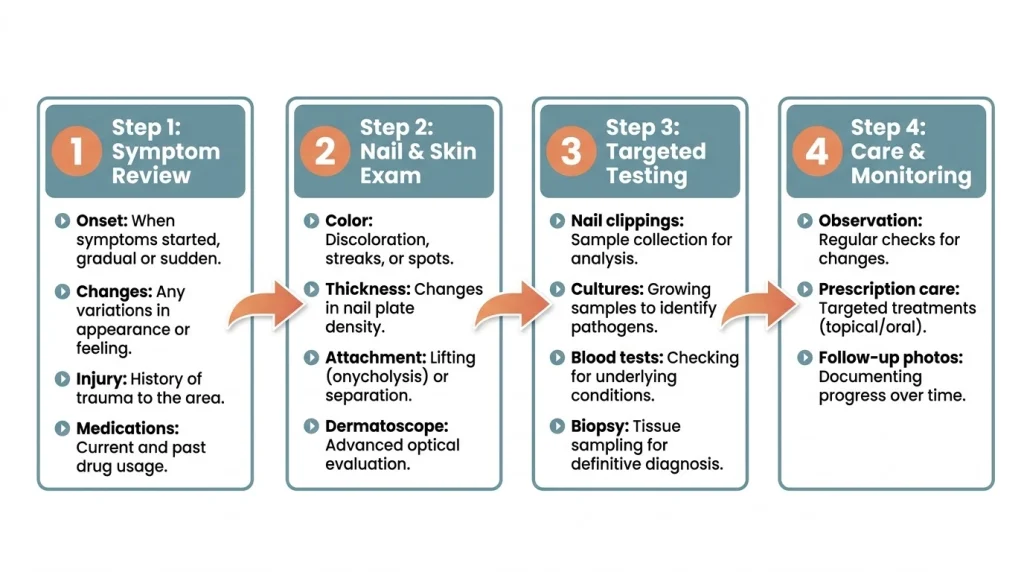
Knowing what to expect can make your appointment feel less intimidating.
Step 1: Your Clinician Reviews Your Symptoms
You’ll typically be asked when the discoloration began, whether it has changed, and if you experienced an injury.
Mention recent manicures, new medications, frequent water exposure, and any symptoms elsewhere on your body.
Step 2: Your Nails and Surrounding Skin Are Examined
The clinician may examine the color, pattern, thickness, shape, and attachment of your nails.
For pigmented changes, a dermatologist may use a dermatoscope, a specialized magnifying instrument that allows closer assessment.
Step 3: Testing May Be Recommended
Depending on the appearance of your nail, possible investigations include:
- Nail clippings or scrapings for fungal testing
- Microbiological testing when infection is suspected
- Blood tests when an underlying condition is a concern
- A nail-unit biopsy when a suspicious lesion requires tissue examination
Not everyone needs testing. The clinician selects investigations based on your individual findings.
Step 4: You Receive a Treatment or Monitoring Plan
Treatment depends on the diagnosis. Some nail changes need observation only, while others may require prescription medication, changes to nail-care practices, or a procedure.
A clinician might recommend follow-up photographs or an additional examination to track your progress.
How Can You Safely Care for Discolored Nails While Waiting for an Appointment?
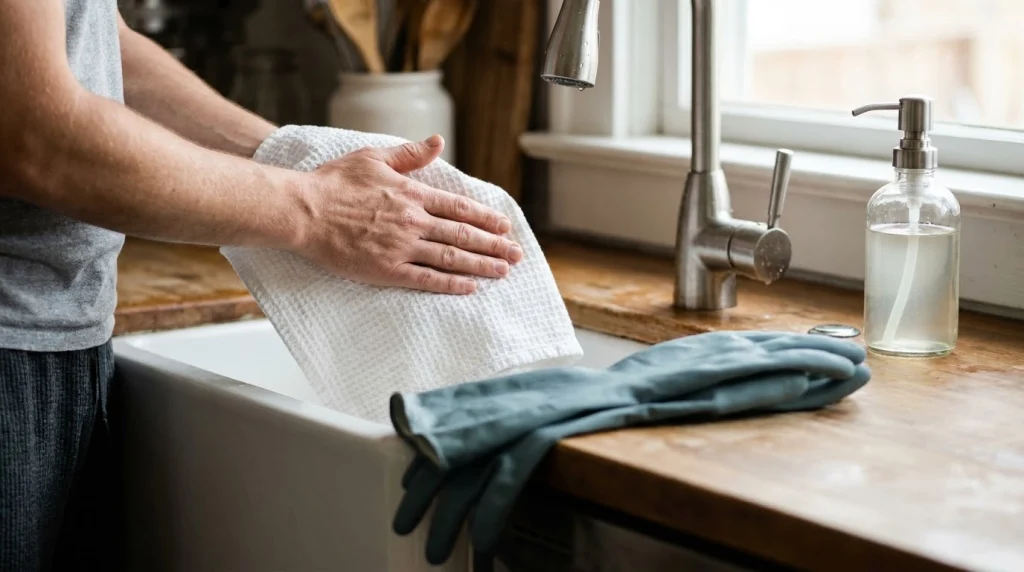
Until you know why the discoloration occurred, focus on gentle hygiene rather than aggressive cosmetic correction.
Do
- Keep your nails clean and dry.
- Use a gentle soap and dry carefully after washing.
- Wear protective gloves during wet household chores.
- Keep nails trimmed without cutting into attached tissue.
- Take clear photos to document changes.
- Seek evaluation for concerning symptoms.
Don’t
- Cover suspicious changes with gel or acrylic.
- Scrape beneath a lifted nail.
- Use household bleach to whiten nails.
- Pick, peel, or forcibly remove damaged nail material.
- Attempt to drain a painful nail bruise yourself.
- Delay care for new or changing dark streaks.
Which Nail Care Products Are Helpful?
Basic hygiene products can make everyday nail care easier, but they cannot diagnose or cure infections, melanoma, or systemic conditions.
Choose gentle products that support routine maintenance without irritating the nail folds.
Soft Nail Brush for Gentle Cleaning
A soft-bristled nail brush may help remove surface dirt during normal hygiene. Avoid vigorous scrubbing or brushing beneath detached nail areas.
Optional Nail Care Product
Soft-Bristled Nail Cleaning Brush
Useful for gentle cleaning of healthy, intact nails without relying on sharp instruments.
As an Amazon Associate, we earn from qualifying purchases.
Moisturizing Hand Cream for Dry Cuticles
Regular moisturizing can reduce dryness around the nail folds. Fragrance-free products are often a sensible option if your skin is sensitive.
However, moisturizers don’t treat fungal or bacterial nail infections. Apply them as part of ordinary skin care, not as a substitute for diagnosis.
For an everyday option, consider a fragrance-free moisturizing hand cream.
Protective Gloves for Repeated Wet Work
Repeated exposure to water and cleaning solutions can irritate the skin around your nails and contribute to nail problems.
Protective gloves can reduce contact with household chemicals. Make sure your hands are dry before wearing them for extended tasks, and change damp glove liners when needed.
You can browse reusable household cleaning gloves for everyday wet chores.
Remember: These products support general nail hygiene. They are not treatments for unexplained discoloration.
How Can You Prevent Common Nail Discoloration?
You cannot prevent every medical cause of nail discoloration. Still, a few practical habits can reduce cosmetic staining, irritation, and some infection risks.
Use Nail Polish Carefully
Apply an appropriate base coat before highly pigmented polish to help reduce direct pigment contact with the nail surface.
Remove old polish gently instead of peeling or scraping it away. Avoid repeated harsh buffing, which can thin the nail plate.
Keep Manicure Tools Clean
Use clean personal nail tools and choose salons that follow appropriate instrument cleaning and disinfection procedures.
Don’t share nail files, clippers, or other equipment that could transfer infectious organisms.
Avoid Excess Moisture Beneath Enhancements
Don’t ignore lifting gel or acrylic products. Water trapped beneath separated enhancements may encourage microbial growth.
Have damaged enhancements removed appropriately rather than applying new product over the gap.
Protect Nails From Repeated Trauma
Keep your nails at a manageable length and avoid using them as tools for opening packages or scraping surfaces.
Wear properly fitting shoes to reduce repeated pressure on toenails, especially during running or long walks.
Check Your Natural Nails Regularly
Look at your nails without polish when possible. Compare both hands and feet, paying attention to new stripes, changes in pigmentation, thickening, lifting, and unusual growth.
A photograph taken under consistent lighting can help you describe a change to your healthcare professional. Photography should never delay assessment of a suspicious lesion.
How Long Does Nail Discoloration Take to Go Away?
The time required depends on the cause and whether the affected part of the nail must grow out.
Temporary surface staining may gradually fade or disappear as the nail grows. Minor injury-related spots usually move toward the free edge with new nail growth.
Fingernails generally take about six months to replace completely, while toenails may take up to 18 months. Growth varies from person to person.
Fungal infections may need prolonged treatment, and even after successful treatment, healthy-looking nail growth takes time to replace damaged nail material.
Some discoloration does not disappear without treatment. A new dark streak, unexplained persistent color change, or expanding abnormality should not be left alone simply to see whether it eventually grows out.
Can You Hide Nail Discoloration With Nail Polish?
Although polish can conceal an uneven nail color, covering an unexplained change may make it harder to monitor progression.
If your nail is otherwise healthy and you’re dealing with a known cosmetic stain, regular polish may be reasonable after gentle nail care.
However, avoid applying polish or enhancements over nails with:
- New or changing dark streaks
- Green discoloration
- Suspected infection
- Active pain or swelling
- Significant lifting or splitting
Ask your healthcare professional when it is safe to resume manicures after treatment.
Frequently Asked Questions About Nail Discoloration
Q: When should I worry about nail discoloration?
A: Seek professional advice if a color change is unexplained, persistent, spreading, or accompanied by nail thickening, pain, swelling, or lifting. A new or changing dark band deserves prompt dermatologist evaluation.
Q: Can nail discoloration indicate cancer?
A: Occasionally. Nail melanoma can appear as a brown or black streak, sometimes with widening pigment or darkening of surrounding skin. Many dark streaks have noncancerous causes, but professional assessment is essential.
Q: Are yellow nails always caused by fungus?
A: No. Yellow nails can result from polish staining, nail thickening, fungal infection, and other conditions. Thickening, crumbling, and progressive changes make professional evaluation particularly useful.
Q: Should I remove gel polish if my nail turns green?
A: Avoid covering the green discoloration with additional product. Arrange assessment, and have the enhancement removed carefully if appropriate. A clinician can determine whether bacterial infection or another problem is present.
Q: Can nail discoloration disappear without treatment?
A: Some minor stains and injury-related marks grow out naturally. However, infections, persistent abnormalities, and suspicious dark pigmentation may require medical testing or treatment.
Final Thoughts: Know When Your Nails Need Professional Attention
Nail discoloration can be as simple as temporary polish staining or as important as an early warning sign of a medical condition. The safest approach is to pay attention to unexplained changes, worsening symptoms, and unusual dark pigmentation instead of trying to conceal them.
If you’re uncertain about a nail’s appearance, a healthcare professional can help identify the cause and recommend appropriate next steps.
Save this guide to your Pinterest nail care board so you can revisit these warning signs whenever you notice an unexpected change in your nails.
Medical References and Further Reading
The following resources provide additional evidence-based information about nail changes and medical warning signs:
- American Academy of Dermatology: 12 Nail Changes a Dermatologist Should Examine.
- American Academy of Dermatology: How to Check Your Nails for Melanoma.
- NHS: Nail Problems.
- NHS: Fungal Nail Infection.
- NHS: Blue or Grey Skin or Lips.
Medical Disclaimer: This article is intended for general educational purposes and does not replace professional diagnosis or treatment. Nail discoloration has many possible causes. Consult a qualified healthcare professional if you have concerns, and seek immediate medical assistance for emergency symptoms.

Hi, I’m Jessica, the creator behind Unique Lash & Nails Katy.
I created this website for anyone who loves beautiful nails as much as I do. Here, I share trendy nail designs, seasonal manicure ideas, easy nail care tips, honest product recommendations, and step-by-step guides to help you create salon-worthy nails at home. Whether you’re looking for everyday inspiration or your next favorite nail trend, I hope you’ll find something you love.