Why Are My Nails Discolored? Causes & Warning Signs
Quick Answer
Your nails may become discolored because of dark nail polish, minor injuries, fungal or bacterial infections, skin conditions, medications, or underlying health problems. Yellow staining after a manicure is often cosmetic, while thick, crumbling, green, or unexplained dark nails deserve closer attention. A new dark streak, persistent color change, or painful nail should be evaluated by a healthcare professional.
You remove your favorite manicure, glance at your fingertips, and notice something unexpected. Your nails look yellow, white, brown, or even slightly green. Naturally, you’re wondering whether it’s just a stubborn polish stain or something more serious.
Nail discoloration isn’t one single condition. Different colors, patterns, and accompanying symptoms can point toward very different explanations. Some changes grow out naturally, while others require treatment.
Here’s how to recognize common causes, understand what your nail color may indicate, and decide what to do next without damaging your nails.


What Does Nail Discoloration Actually Mean?
Nail discoloration means that part or all of your nail looks different from its usual color. It may affect the nail plate, the nail bed beneath it, or the surrounding skin.
Healthy fingernails typically have a translucent, slightly pink appearance, although natural nail-bed color varies with skin tone. The white free edge and pale crescent near the cuticle are normal anatomical features.
A color change may appear as:
- Uniform discoloration: An entire nail looks yellow, brown, white, or another unusual shade.
- Spots: Small white, dark, or yellow patches appear in the nail.
- Vertical streaks: Lines extend from the cuticle toward the tip.
- Horizontal bands: Color changes extend across the nail.
- Discoloration beneath the nail: The nail surface looks normal, but the underlying area changes color.
- Discoloration with texture changes: The nail becomes thicker, crumbly, pitted, brittle, or loose.
The most useful clues are the color, how quickly it appeared, whether one or several nails are affected, and whether you notice pain or changes in thickness.
For a broader comparison, explore these signs of unhealthy nails to understand which changes deserve attention.
Why Are My Nails Discolored? 9 Common Causes
Several everyday habits and medical conditions can change nail appearance. Understanding the cause matters because a cosmetic stain doesn’t need the same treatment as an infection.
1. Dark Nail Polish Stains
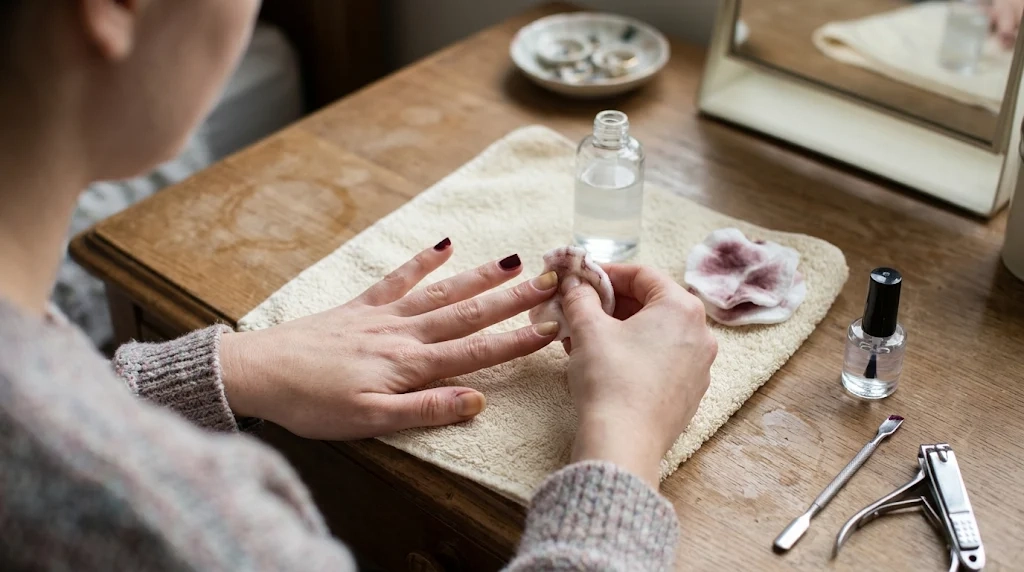
One of the simplest explanations is pigment left behind by nail polish. Deep reds, burgundy, black, navy, and other highly pigmented colors may stain the nail plate, particularly when you skip a protective base coat.
The nail can look yellowish or orange-brown after polish removal. Staining is more likely when the affected nails remain smooth, painless, and firmly attached.
What to do: Remove polish gently, avoid harsh scrubbing, and allow the stained section to grow out. A stain-resistant base coat can reduce the chance of future discoloration.
If yellow polish stains are a recurring problem, follow these tips to stop nails from yellowing before your next manicure.
2. Fungal Nail Infections
A fungal nail infection, called onychomycosis, can cause yellow, white, or brown discoloration. It’s particularly common in toenails, although fingernails can become infected too.
Unlike ordinary staining, a fungal infection may gradually change the nail’s structure.
Watch for these signs:
- Yellow or white discoloration spreading across the nail
- Thickened or distorted nail plates
- Crumbly or brittle nail edges
- Debris collecting beneath the nail
- The nail separating from its bed
Fungi can enter through small breaks in the nail or surrounding skin. Warm, damp environments, tight shoes, and certain nail injuries can increase the risk.
What to do: Ask a healthcare professional to confirm the diagnosis. Psoriasis, trauma, and other conditions can resemble fungal infections. Treatment may involve prescription topical or oral antifungal medication.
Learn more about why fungal nail infections develop and how to reduce your risk.
3. Injuries and Bruising Beneath the Nail
If you accidentally slam your finger in a drawer or drop something onto your toe, blood can collect beneath the nail plate. This is called a subungual hematoma.
The affected nail may appear red, purple, dark brown, or black. Depending on the injury, you might also experience pressure, tenderness, or throbbing pain.
As the nail grows, the damaged area often moves toward the tip. A significant injury can eventually cause the nail to loosen or fall off.
What to do: Protect the affected finger or toe and avoid additional pressure. Seek prompt medical attention for severe pain, substantial swelling, or a suspected fracture. Don’t attempt to puncture or drain the nail yourself.
4. Bacterial Infections
Green nail discoloration is often associated with bacteria called Pseudomonas. These organisms can grow in moist spaces, particularly when a natural or artificial nail has lifted away from its underlying surface.
The discoloration may appear green, blue-green, or greenish-black.
You’re more likely to encounter this problem when moisture remains trapped beneath a lifting nail enhancement or when your hands spend long periods in wet environments.
What to do: Avoid covering the affected nail with additional polish or glue. Keep the area clean and dry and arrange a professional evaluation. Treatment depends on the infection and its severity.
Warning
Never glue a lifting artificial nail back into place when green discoloration appears underneath. Trapped moisture and a concealed infection may worsen. Seek prompt care if the nail is painful, swollen, producing pus, or surrounded by spreading redness.
5. Repeated Gel, Acrylic, or Artificial Nail Damage
Gel and acrylic manicures don’t automatically cause unhealthy nails. However, aggressive filing, peeling enhancements, scraping off products, and repeated trauma can damage the nail plate.
You may notice cloudy white patches, rough surfaces, thinning, or areas that look unusually pale.
Nail lifting can also make the separated portion appear white because air replaces the normal contact between the plate and nail bed.
What to do: Stop peeling products, use appropriate removal methods, and give damaged nails time to grow. Have unexplained lifting or persistent discoloration examined rather than assuming it’s only manicure damage.
6. Nail Psoriasis and Other Skin Conditions
Psoriasis can affect your nails even when skin symptoms are limited or less noticeable. It may cause yellow-brown patches, small pits, thickening, crumbling, or separation from the nail bed.
A yellowish patch beneath the nail is sometimes described as an oil-drop or salmon patch.
Eczema and other inflammatory conditions can also affect nail texture and appearance, particularly when inflammation involves the nail-forming area.
What to do: Arrange a dermatology assessment if your nails develop persistent pitting, lifting, or unexplained yellow-brown patches. Treating the underlying inflammatory condition may improve nail growth.
7. Certain Medications
Some medicines can change nail color or create unusual bands and pigmentation. The pattern depends on the medication, duration of treatment, and your individual response.
Examples include certain antibiotics, antimalarial medications, and cancer treatments.
Medication-related changes can occasionally affect several nails at once, which may help distinguish them from a localized injury.
What to do: Review the timing of your nail changes with a pharmacist or prescribing clinician. Never stop a prescribed medication solely because your nails change color without discussing it with your healthcare provider.
8. Nutritional Deficiencies
Nutrition contributes to normal nail production and overall skin health. Deficiencies in certain nutrients, including iron, can affect nail appearance or strength.
Iron-deficiency anemia may be associated with pale nail beds, brittle nails, or spoon-shaped nails in some people.
However, a white spot or yellow nail doesn’t automatically mean you’re deficient in vitamins. These changes have many possible causes.
What to do: Eat a balanced diet containing adequate protein, iron, and other essential nutrients. If you also experience unusual fatigue, weakness, or other concerning symptoms, ask your clinician whether testing is appropriate.
Don’t begin high-dose supplements based on nail color alone. Excess supplementation can have risks, and the correct treatment depends on identifying a genuine deficiency.
9. Underlying Medical Conditions
Occasionally, nail discoloration is associated with a broader health condition rather than a problem limited to the nail itself.
Depending on the pattern and accompanying symptoms, clinicians may consider anemia, kidney or liver disease, thyroid disorders, circulation problems, or conditions affecting oxygen delivery.
Rare conditions such as yellow nail syndrome may cause thickened, slow-growing yellow nails together with other symptoms.
A nail color change by itself cannot diagnose any of these diseases. Your medical history, examination, and sometimes laboratory testing are necessary to determine the cause.
What to do: Book a medical appointment for persistent, unexplained changes, especially if multiple nails change or you notice other symptoms.
What Do Different Nail Discoloration Colors Mean?
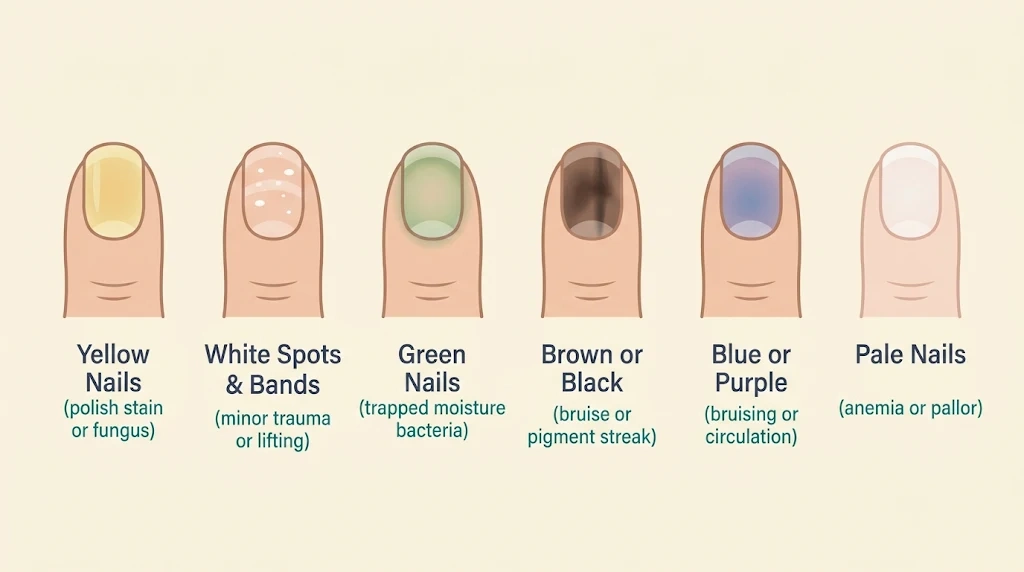
Color can provide a useful starting point, but it isn’t enough to identify the exact cause. Here’s what common shades may suggest.
Yellow Nails
Yellow discoloration may result from polish staining, fungal infection, psoriasis, or other conditions. The surrounding texture provides important clues.
Smooth nails that turn yellow after removing dark polish are more consistent with staining. Thick, crumbly, or lifting yellow nails raise greater concern for infection or another nail disorder.
White Nails or White Spots
Small white spots, called punctate leukonychia, commonly follow minor injury to the nail-forming area. You might notice them weeks after the original damage.
However, widespread whitening, unusual white bands, or white discoloration associated with nail lifting can have different explanations.
If most of your nail suddenly changes color or several nails develop an unfamiliar pattern, seek medical advice.
Green Nails
Green discoloration often raises suspicion for a bacterial infection, especially when moisture becomes trapped beneath a lifted nail.
This can happen with both natural and artificial nails. Avoid hiding the problem beneath a new manicure and seek an assessment.
Brown or Black Nails
Dark nails can develop because of bruising, external staining, increased pigment production, medications, or other conditions.
Some people naturally have stable pigmented streaks, particularly in darker skin tones. However, a new, widening, or changing brown or black streak in one nail needs dermatologic evaluation to rule out nail melanoma.
Pay special attention when pigment spreads onto the nearby cuticle or surrounding skin.
Blue or Purple Nails
A purple area beneath a single nail may be a bruise. Blue-looking nail beds across several fingers may occur with cold exposure but can also reflect a circulation or oxygenation problem.
Sudden blue discoloration accompanied by breathing difficulty, chest pain, confusion, or blue lips requires emergency medical attention.
Pale Nails
Nail beds that appear unusually pale may sometimes be associated with anemia or another medical issue. Lighting, skin tone, temperature, and individual variation can also change how pale your nails look.
Persistent pallor combined with fatigue, shortness of breath, or dizziness warrants medical evaluation.
For additional context, see our guide explaining what color healthy nails should be.
How Can You Tell Whether Nail Discoloration Is Harmless or Serious?
Before choosing a whitening product or trying an antifungal treatment, examine the pattern of your nail change.
Ask yourself these six questions:
- When did it appear? Did the discoloration start after removing polish, sustaining an injury, or beginning medication?
- How many nails are affected? A single changing nail may point toward a localized issue, while several affected nails can suggest broader causes.
- Has the texture changed? Thickening, crumbling, pitting, or lifting makes a simple surface stain less likely.
- Is there pain or swelling? Tenderness, redness, warmth, or drainage may indicate injury or infection.
- Is the color changing? A growing dark streak or an expanding patch should not be dismissed.
- Are there other symptoms? Fatigue, breathing problems, unusual swelling, or skin changes may help a clinician determine the cause.
Pro Tip
Take a clear photograph of the affected nail in natural light and note the date. Comparing images can help you describe changes accurately at a medical appointment. Don’t delay evaluation of a new dark streak simply to monitor photographs.
When Should You See a Doctor About Discolored Nails?
Although many nail color changes are harmless, certain patterns deserve professional assessment.
Contact a healthcare professional if:
- A new brown or black streak appears, particularly in one nail.
- An existing dark streak becomes wider, darker, or irregular.
- Dark pigment extends onto surrounding skin.
- Your nail becomes thick, distorted, crumbly, or detached.
- Green discoloration appears beneath a lifted nail.
- The surrounding skin becomes painful, swollen, warm, or starts draining fluid.
- Discoloration persists without a clear explanation.
- Multiple nails change along with other unexplained symptoms.
Seek Medical Attention
Get urgent medical advice for rapidly spreading redness, fever, severe nail pain, or significant swelling. Seek emergency care for sudden blue nails with blue lips, shortness of breath, chest pain, or confusion. New or changing dark nail streaks require a prompt dermatology assessment even when they are painless.
If you have diabetes, poor circulation, or a weakened immune system, seek care early when you suspect a nail infection.
What Can You Do About Discolored Nails?
The correct approach depends entirely on why your nails changed color. Trying to bleach every discolored nail can irritate the surrounding skin and delay appropriate treatment.
If Your Nails Are Stained by Polish
Gently remove any remaining polish using an appropriate remover. Wash your hands with mild soap, pat them dry, and apply moisturizer or cuticle oil.
Allow the stained nail to grow out naturally instead of repeatedly buffing away its surface. Heavy filing can thin the nail plate and cause additional damage.
You can also learn how to remove yellow nail stains safely without relying on abrasive whitening techniques.
If You Suspect Nail Fungus
Keep nails trimmed, clean, and dry. Avoid sharing nail tools and disinfect reusable equipment properly.
Arrange testing or evaluation when infection is suspected. Prescription antifungal treatments may be needed, and visible improvement is gradual because a healthy nail must grow forward.
Home remedies such as vinegar, lemon juice, or tea tree oil have not been shown to reliably cure established fungal nail infections.
If Your Nails Are Bruised
Protect the affected nail from additional trauma. Wear comfortable shoes if a toenail is involved, and avoid picking at any loosened area.
Minor bruising may gradually move toward the tip as the nail grows. Significant injuries or severe pain need medical assessment.
If You Have Green Discoloration
Stop applying enhancements over the affected area. Keep the nail clean and dry, and avoid digging beneath it with sharp tools.
A healthcare professional can determine whether bacterial treatment or other intervention is needed.
If the Cause Is Unclear
Leave the nail visible rather than covering it with opaque polish. Record any changes and book an appointment with a qualified healthcare professional.
Treating the actual cause is more effective than repeatedly trying to disguise the color.
How Long Does Nail Discoloration Take to Go Away?
The recovery period depends on whether the color comes from surface staining, damage, infection, or an underlying condition.
Nails grow relatively slowly. A fingernail typically takes around four to six months to grow out completely, while a toenail may take twelve to eighteen months.
That means even after the original problem is resolved, the discolored section may remain visible for months.
- Polish staining: Usually improves as the stained portion grows out.
- Minor injury: Discoloration often moves toward the nail tip during growth.
- Fungal infection: Clearing the infection and replacing the damaged nail can take months.
- Manicure-related damage: The affected nail plate generally needs time to grow out.
- Medical conditions: Improvement depends on identifying and managing the underlying cause.
Don’t assume every persistent color change is harmless just because nails grow slowly. Unexplained discoloration should be assessed instead of left untreated for months.
How Can You Prevent Nail Discoloration?

Not every cause is preventable, but a consistent nail care routine can reduce staining, avoidable trauma, and some infection risks.
Do
- Use a base coat beneath dark polish.
- Keep nails clean and dry.
- Moisturize nails and surrounding skin.
- Choose properly sanitized manicure tools.
- Wear gloves when handling cleaning products.
- Check your natural nails regularly.
Don’t
- Peel off gel or acrylic enhancements.
- Share unclean nail tools.
- Pick at damaged cuticles.
- Scrub nails with harsh chemicals.
- Glue down lifting, discolored nails.
- Hide suspicious changes with polish.
Protect Your Nails During Manicures
Ask your nail technician about tool sanitation and proper enhancement removal. Avoid aggressive drilling or filing of your natural nails.
Between manicures, examine your nail plate for unusual patches, separation, or persistent color changes.
Limit Moisture Exposure
Wear protective gloves during lengthy cleaning sessions and dry your hands thoroughly afterward.
For toenails, choose breathable footwear, change damp socks, and address athlete’s foot when present. Reducing prolonged moisture exposure can help lower the risk of some nail infections.
Maintain a Gentle Nail Care Routine
Trim nails regularly, file rough edges gently, and avoid cutting the protective cuticle.
Apply a fragrance-free hand moisturizer after washing and massage a small amount around your nail folds.
For more everyday maintenance advice, read these nail hygiene tips after a manicure.
Which Nail Care Products Are Worth Using?
A few basic products can support healthy nail care, particularly when your discoloration comes from cosmetic staining or dryness.
Remember that beauty products cannot diagnose or cure nail infections or medical conditions.
Stain-Resistant Base Coat
A clear base coat creates a protective layer between colored polish and your nail plate. It’s particularly useful when you regularly wear deep reds, dark blues, or highly pigmented colors.
Explore stain-resistant nail base coats on Amazon.
Gentle Nail Polish Remover
A suitable remover helps you take off polish without scraping your natural nail. Choose a formula compatible with your manicure and follow the product’s instructions.
Explore gentle nail polish removers on Amazon.
Cuticle Oil or Hand Moisturizer
Regular moisturizing supports the skin around your nails and may reduce dryness from frequent washing or polish removal. It won’t reverse infection-related discoloration, but it can make your overall nail care routine gentler.
Explore moisturizing cuticle oils on Amazon.
As an Amazon Associate, we earn from qualifying purchases.
Frequently Asked Questions About Nail Discoloration
Q: Why are my nails discolored even though I don’t wear nail polish?
A: Nail discoloration without polish may result from trauma, fungal or bacterial infections, inflammatory nail conditions, medications, or other health issues. If the change is unexplained or persistent, have it evaluated rather than assuming it’s cosmetic.
Q: Can vitamin deficiencies cause nail discoloration?
A: Certain deficiencies, particularly iron deficiency, may affect nail appearance. However, color changes alone cannot confirm a nutritional deficiency. A healthcare professional can determine whether testing is needed.
Q: Are yellow nails always a sign of fungal infection?
A: No. Yellow nails can result from polish staining, psoriasis, smoking, or other causes. A fungal infection becomes more suspicious when the nail also thickens, crumbles, changes shape, or separates from its bed.
Q: Can discolored nails return to their normal color?
A: Often, yes. Cosmetic staining and minor injury marks generally move out as healthy nails grow. Discoloration caused by infections or underlying conditions may improve with appropriate treatment, although the timeline varies.
Q: Should I cover discolored nails with nail polish?
A: If you’re confident the discoloration is a harmless polish stain, you may eventually return to gentle manicures. Avoid covering unexplained, painful, green, lifting, or dark-streaked nails until the cause has been assessed.
Final Thoughts: What Your Nail Color Is Telling You
Discolored nails can be caused by something as ordinary as dark nail polish or something that needs medical attention. The key is to look beyond the color and consider changes in texture, pain, growth, and your overall health.
Protect your nails with gentle care, avoid harsh whitening shortcuts, and seek professional advice for unusual or persistent changes. Save this guide to your Pinterest nail care board so you can revisit the warning signs whenever you need them.
Medical note: This article provides general educational information and is not a substitute for professional diagnosis or treatment.

Hi, I’m Jessica, the creator behind Unique Lash & Nails Katy.
I created this website for anyone who loves beautiful nails as much as I do. Here, I share trendy nail designs, seasonal manicure ideas, easy nail care tips, honest product recommendations, and step-by-step guides to help you create salon-worthy nails at home. Whether you’re looking for everyday inspiration or your next favorite nail trend, I hope you’ll find something you love.