How to File and Trim Brittle Nails Safely: Easy Tips
Quick Answer
To file and trim brittle nails safely, start with clean, dry nails and sharp, clean clippers. Remove length using several small cuts rather than one large cut. Then use a fine-grit glass nail file with light strokes from the outer edges toward the center. Choose a short, softly rounded shape, avoid aggressive buffing, and finish with moisturizer or cuticle oil. Never force a split or painful nail into shape.
When your nails are brittle, even a quick trim can feel risky. One wrong clip may turn a tiny split into a broken nail, while rough filing can leave the edges peeling and snagging on everything.
Fortunately, you don’t need professional manicure skills to maintain fragile nails. You just need the right tools, controlled movements, and a little patience.
This guide shows you how to file and trim brittle nails safely at home, which mistakes to avoid, and how to maintain smoother edges between manicures.
Time needed
10–15 minutes
Difficulty
Beginner
Items needed
4 basic tools
Result lasts
Until new growth or snags


Why Do Brittle Nails Need Extra Care When Filing?
Brittle nails tend to crack, peel, split, or break more easily than resilient nails. Their tips may develop rough layers that catch on clothing, making routine grooming uncomfortable or frustrating.
Your nail plate consists primarily of keratin. Repeated exposure to water, detergents, solvents, physical trauma, and aggressive manicure techniques can contribute to changes in its condition.
When you apply too much force while clipping, the pressure may extend an existing crack. Similarly, dragging an abrasive file across delicate nail edges can create additional roughness.
The goal isn’t to remove as much nail as possible. It’s to reduce length gradually while keeping the remaining edge smooth and comfortable.
If your nails regularly peel or split, explore these practical habits for preventing nail splitting alongside your trimming routine.
What Tools Should You Use for Brittle Nails?
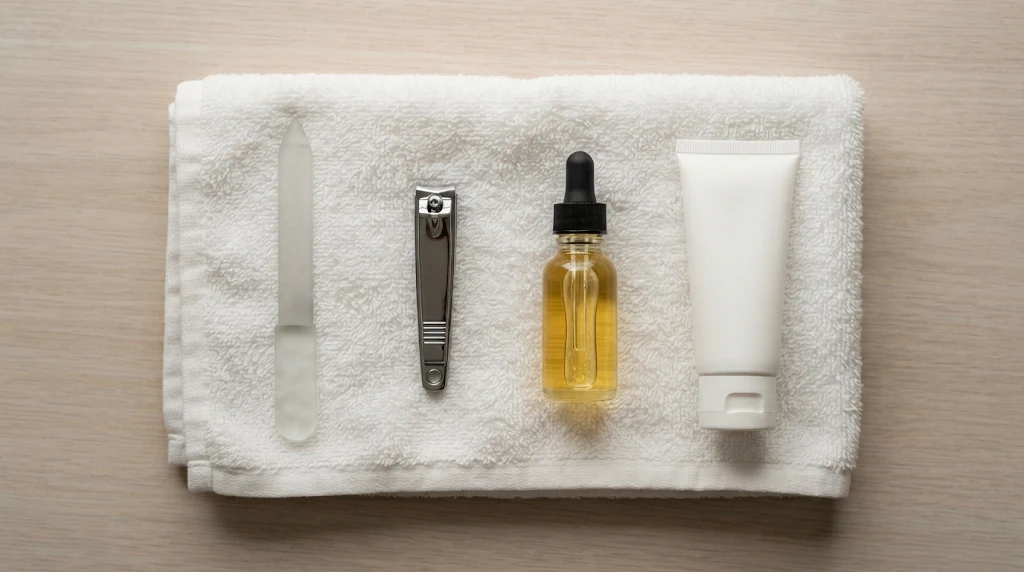
You don’t need an expensive electric manicure machine or a collection of salon accessories. A few gentle, well-maintained tools are usually enough.
- Fine-grit glass nail file: Helps smooth delicate edges with controlled strokes.
- Sharp nail clippers: Allow small, precise cuts without excessive squeezing.
- Soft, clean towel: Keeps your hands dry and your tools easy to handle.
- Fragrance-free hand cream or cuticle oil: Moisturizes nails and surrounding skin after grooming.
A fine-grit emery board can also work if you use light pressure. Replace disposable boards when their abrasive surfaces become worn or uneven.
Which Nail File Is Best for Brittle Nails?
A fine-grit glass nail file is a practical choice because it offers a consistent filing surface and can be washed between uses.
If you prefer an emery board, choose a fine abrasive instead of a coarse file intended for artificial nails. Coarse tools remove material quickly, which makes accidental over-filing easier.
Whatever material you choose, technique matters more than the product’s marketing claims. Gentle pressure and controlled strokes help you avoid removing unnecessary nail material.
Recommended Tool
Fine-Grit Glass Nail File
A washable glass file lets you smooth delicate nail tips gradually without relying on an overly coarse abrasive.
As an Amazon Associate, we earn from qualifying purchases.
When Should You Avoid Trimming a Brittle Nail?
Not every damaged nail is suitable for a regular at-home manicure. Before picking up your clippers, examine the nail for pain, deep cracks, lifting, or changes around the surrounding skin.
Warning
Do not clip through a painful crack extending into attached nail, cut skin beneath the nail, or pull away partially detached nail tissue. Seek professional medical advice for bleeding, significant lifting, increasing redness, swelling, pus, or unexplained discoloration. These problems need more than cosmetic filing.
For a minor snag limited to the white free edge, gentle smoothing is often reasonable. If the nail feels painful when touched or pressed, stop rather than trying to make the edges perfectly even.
How to File and Trim Brittle Nails Safely: Step-by-Step
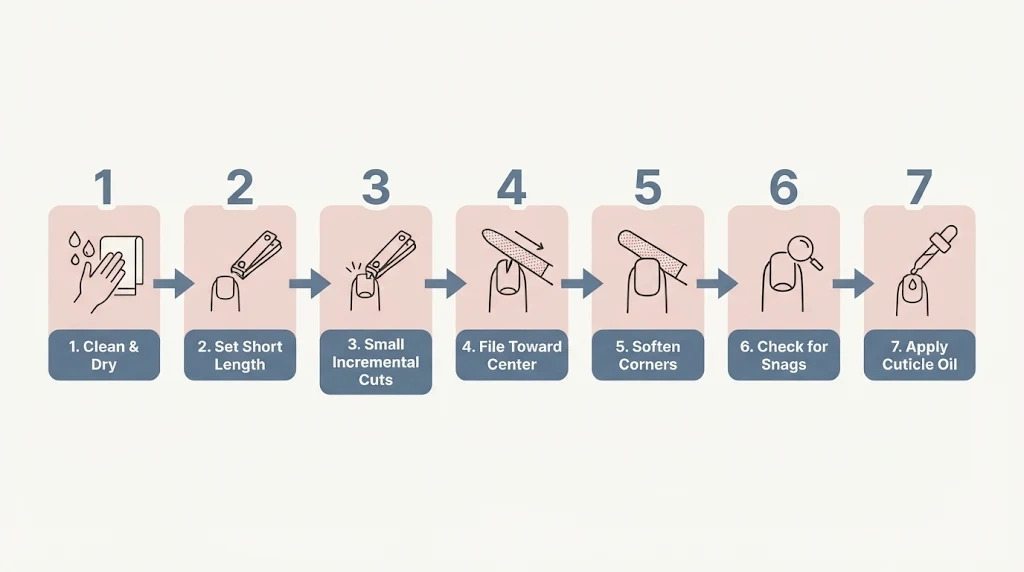
Follow these steps in order. Keep your movements light, and stop whenever you notice pain or an existing split becoming longer.
1 Clean and Dry Your Nails
Wash your hands with mild soap, rinse thoroughly, and dry your fingertips and nails. Check for peeling layers, cracks, or loose corners before beginning.
For routine shaping, work on comfortably dry nails rather than immediately after a prolonged bath, when the nail plate may be softer and more flexible.
Common mistake: Starting while nails are very soft from soaking can make delicate edges harder to control.
2 Choose a Short, Comfortable Length
Decide how much length you actually need to remove. For fragile nails, a short length with a small visible free edge is often easier to maintain than long tips.
Leave enough nail beyond the attached pink nail bed to avoid cutting sensitive skin underneath.
Common mistake: Cutting nails flush against the fingertip can leave the sensitive skin exposed and uncomfortable.
3 Trim With Several Small Cuts
Position clean, sharp clippers at the free edge and remove a small portion at a time. Work gradually across the nail instead of forcing the entire width into one cut.
If the nail is extremely thin or already peeling, you can skip clipping and shorten it gradually with a fine file.
Common mistake: Using dull clippers or taking one large cut can bend the nail and extend an existing split.
4 File Gently Toward the Center
Hold the file against the free edge with light pressure. Make a few controlled strokes from one outer corner toward the center, then repeat from the opposite corner.
Check the shape frequently. You only need to remove rough points and uneven areas, not repeatedly grind the entire tip.
Common mistake: Aggressive back-and-forth sawing with a coarse file can snag or fray fragile edges. Gentle controlled movements matter most.
5 Round the Corners Without Over-Filing
Create a soft round or squoval outline. Smooth sharp corners just enough that they won’t catch on clothing, hair, or towels.
Keep the sidewalls intact, because filing deeply into the sides removes supportive nail material and can make the nail more vulnerable to tearing.
Common mistake: Filing too far down the sides to achieve a narrow shape can weaken an already delicate nail.
6 Check for Snags and Stop Filing
Look carefully at each nail tip. If you notice a small rough edge, use one or two additional gentle strokes to smooth it.
Stop once the nail feels even and looks comfortable. Don’t keep filing simply to make every nail identical in length.
Common mistake: Continuing to file after the edges are smooth removes unnecessary length and can make the tip thinner.
7 Moisturize Your Nails and Cuticles
Massage fragrance-free hand cream or a small amount of cuticle oil into your nail folds, fingertips, and nail surfaces.
Moisturizing supports the surrounding skin and helps reduce dryness. Repeat after handwashing and before bed whenever your hands feel dry.
Common mistake: Treating moisturizer as an instant repair for split nail layers. It helps manage dryness but cannot permanently reconnect damaged nail material.
Should You File or Clip Brittle Nails First?
It depends on how much length you need to remove and how fragile your nails feel.
Choose clipping followed by filing when your nails are relatively stable but noticeably too long. Several small clips remove length efficiently, while a fine file smooths the remaining edge.
Choose filing only when you need to shorten a nail slightly or when clipping seems likely to bend an unusually thin or peeling tip.
Neither method should hurt. If a particular nail has a crack extending into attached tissue, don’t attempt to shorten the damaged area yourself.
Pro Tip
Keep a small glass nail file in your handbag or desk drawer. Smoothing a tiny snag early may prevent it from catching on fabric and turning into a larger tear.
What Nail Shape Is Safest for Brittle Nails?
For nails that frequently snag or break, shorter shapes with softened corners are usually practical choices.
Short Rounded Nails
A rounded shape follows the natural curve of your fingertip. It avoids sharp outer corners and works especially well when your nails are very short.
Short Squoval Nails
Squoval nails combine a relatively straight free edge with softly rounded corners. This shape gives a neat, polished appearance without requiring pointed tips.
Shapes to Approach Carefully
Long stilettos, narrow almonds, and sharply squared corners may be harder to maintain when your natural nails split easily. Their extended or projecting tips can catch on everyday objects.
You don’t need to abandon creative nail designs. Keeping the natural nail short and choosing a flattering color can still give your hands a stylish look.
What Should You Do and Avoid When Grooming Brittle Nails?
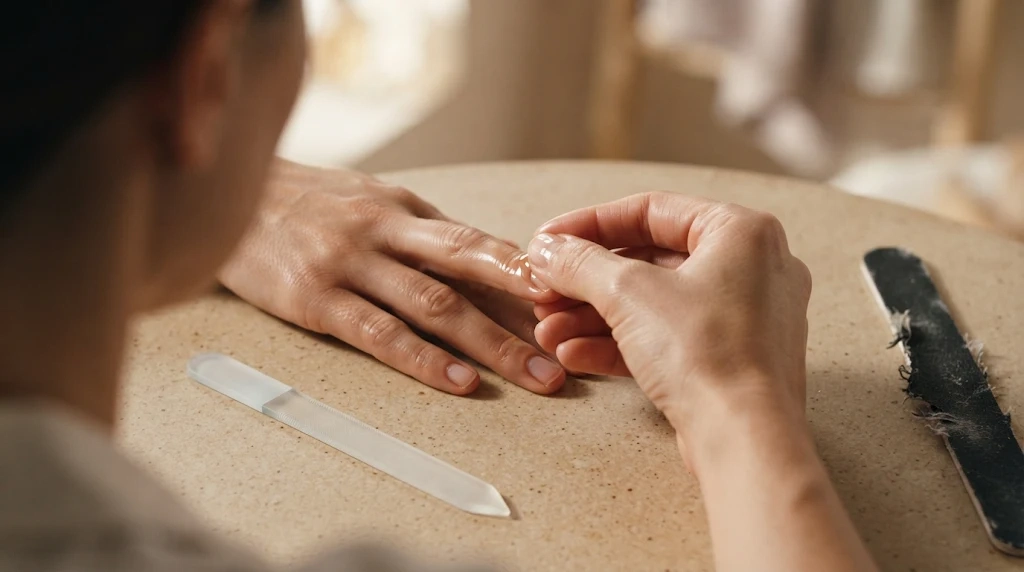
Do
- Use a fine-grit file with light pressure.
- Trim gradually using sharp, clean clippers.
- Keep fragile nails short with smooth corners.
- Apply moisturizer regularly.
Don’t
- Use coarse files meant for acrylic nails.
- Force clippers through a thick or cracked tip.
- Buff away peeling nail layers aggressively.
- Pick or pull at a split nail.
For more habits that may be causing unnecessary nail damage, see our guide to common nail health mistakes.
How Often Should You File and Trim Brittle Nails?
Most people don’t need to trim their fingernails every day. For many, checking their edges weekly and trimming approximately every one to two weeks is a reasonable starting point.
Your schedule depends on nail growth, your preferred length, and how easily the tips snag. Brittle nails may benefit from shorter, more frequent checks rather than repeated full manicures.
- Daily: Check for uncomfortable snags and moisturize your fingertips.
- Weekly: Inspect nail edges and gently smooth rough points as needed.
- Every 1–2 weeks: Trim excess length if your nails have grown beyond your comfortable shape.
- Whenever damage occurs: Assess the crack before attempting any grooming.
Don’t repeatedly file a perfectly smooth nail. Unnecessary filing removes material without providing additional protection.
How Can You Prevent Brittle Nails From Breaking After Filing?
A careful manicure helps create smooth edges, but what you do afterward matters just as much. Fragile nails may continue to split if they experience frequent moisture changes, strong chemicals, or repeated physical stress.
Moisturize After Washing
Keep fragrance-free hand cream near the sink and apply it after washing your hands. Pay attention to the skin around your nails rather than moisturizing only your palms.
Wear Gloves for Wet Chores
Use appropriately fitted protective gloves when washing dishes or handling household cleaning products. This reduces unnecessary exposure to water and irritants.
Avoid Using Nails as Tools
Open packages with scissors, use a proper tool to lift labels, and avoid scraping hard surfaces with your fingernails. These small changes reduce unnecessary leverage on the free edge.
Be Careful With Nail Enhancements
Gel, dip, and acrylic manicures can look beautiful, but forceful removal and excessive surface filing may leave natural nails damaged. Follow correct removal methods and avoid peeling enhancements away.
If your nails need a more comprehensive recovery routine, follow our four-week guide to strengthening weak, thin, and brittle nails.
What Products Can Help You Maintain Brittle Nails?
The most useful products are often simple grooming tools and moisturizers rather than expensive treatments promising instant nail repair.
Sharp, Comfortable Nail Clippers
Choose clippers that fit your fingernails and provide a clean cutting action. A comfortable grip makes it easier to control several small cuts.
Recommended Tool
Sharp Stainless Steel Fingernail Clippers
Well-maintained clippers help you remove small amounts of length without repeatedly squeezing a dull cutting edge.
As an Amazon Associate, we earn from qualifying purchases.
Cuticle Oil for Dry Fingertips
Jojoba-based cuticle oil is a convenient option if you enjoy a lightweight moisturizing product. Massage a small amount around the nail folds after grooming or before bed.
Remember that oil does not cure an underlying medical cause of brittle nails or permanently repair splits. Its main role is supporting a comfortable moisturizing routine.
Recommended Product
Jojoba Cuticle Oil
A small oil pen or bottle makes it convenient to moisturize dry nail folds and fingertips after your manicure.
As an Amazon Associate, we earn from qualifying purchases.
How Do You Fix Common Problems After Filing Brittle Nails?
Even when you work carefully, you may notice a small snag, rough edge, or peeling layer. The right response depends on where the damage is located.
Your nail edge still feels rough
Use a clean fine-grit file to smooth only the snagged area. Check the edge after a few strokes and stop when it feels even. Avoid repeating this over the entire nail.
A nail starts peeling at the tip
Don’t pull off the peeling layer. If the loose material is entirely within the free edge, gently shorten or smooth it. Keep the remaining nail protected and avoid aggressive surface buffing.
Your nails feel sore after trimming
Stop trimming and inspect for cuts, overly short edges, or deeper splits. Avoid additional filing on the sore area. Seek medical advice if pain persists or you notice swelling or signs of infection.
The corners keep catching on fabric
Try a shorter rounded or squoval shape. Smooth only the projecting corners while preserving the nail’s sidewalls. Check your edges before putting on knitted clothing or handling delicate fabrics.
Can Brittle Nails Become Stronger With Better Filing Habits?
Gentle filing helps prevent avoidable mechanical damage, but it doesn’t instantly change the structure of nail material that has already grown.
Improvement usually involves protecting existing nails while healthier new nail gradually grows outward. Fingernails typically require several months to replace their full length, so visible improvement can take time.
Your daily routine should prioritize moisture, manageable nail length, gentle manicure techniques, and protection from repeated trauma.
If brittleness begins suddenly, affects many nails, or continues despite sensible care, speak with a healthcare professional. Sometimes nail changes relate to skin conditions, thyroid disorders, nutritional problems, or other health factors that require evaluation.
For everyday maintenance, this simple daily nail care routine can help you build consistent habits between trimming sessions.
Frequently Asked Questions About Filing and Trimming Brittle Nails
Q: Is it better to cut or file brittle nails?
A: Both can be suitable when done gently. Use sharp clippers in small increments for significant length removal, then smooth the edges with a fine-grit file. For very thin or peeling tips, filing alone may give you better control.
Q: Should brittle nails be filed wet or dry?
A: Filing clean, comfortably dry nails is generally a practical choice because their edges are easier to inspect and shape. Avoid aggressive filing immediately after prolonged soaking, when your nails may be unusually soft.
Q: Can filing make brittle nails worse?
A: Yes, excessive filing, heavy pressure, coarse abrasives, and repeated surface buffing can remove nail material and increase damage. Use a fine file to smooth the free edge only as needed.
Q: How short should I keep brittle nails?
A: Keep your nails at a length that feels comfortable and doesn’t repeatedly catch on objects. A short free edge with rounded corners is often easier to manage, but avoid cutting into the attached nail or sensitive fingertip skin.
Q: How long does it take for brittle nails to improve?
A: You may notice smoother edges immediately after careful grooming, but damaged nail material must grow out. Visible improvements often take weeks, while full fingernail replacement generally takes several months. Persistent brittleness may need medical evaluation.
Final Thoughts: Keep Your Nail Routine Gentle
Learning how to file and trim brittle nails safely comes down to protecting the nail you already have. Use clean, sharp tools, take small cuts, shape with light pressure, and avoid removing unnecessary nail material.
Keep your nails at a manageable length, moisturize regularly, and address small snags before they turn into larger breaks. With patient, consistent care, your nails can look neat and feel more comfortable without an aggressive manicure.
Save this guide to your Pinterest nail care board so you can follow these gentle trimming and filing steps the next time your brittle nails need attention.

Hi, I’m Jessica, the creator behind Unique Lash & Nails Katy.
I created this website for anyone who loves beautiful nails as much as I do. Here, I share trendy nail designs, seasonal manicure ideas, easy nail care tips, honest product recommendations, and step-by-step guides to help you create salon-worthy nails at home. Whether you’re looking for everyday inspiration or your next favorite nail trend, I hope you’ll find something you love.