Nail Hygiene After a Manicure: Easy Care Tips
Quick Answer
Nail hygiene after a manicure starts with regular handwashing, gentle cleaning beneath your nails, and thorough drying. Moisturize the skin around your nails, avoid cutting your cuticles, and protect your manicure with gloves during wet chores. Never pick at lifting gel or acrylic, and watch for unusual redness, pain, swelling, or discoloration.
Freshly manicured nails feel amazing. Whether you’ve chosen glossy nude polish, delicate French tips, or colorful Pinterest-inspired nail art, you naturally want your manicure to look beautiful for as long as possible.
But keeping your nails pretty is only half the job. Good nail hygiene helps protect the skin around your nails, prevents debris from collecting underneath longer tips, and reduces unnecessary damage between appointments.
The good news? You don’t need an expensive collection of products or a complicated routine. A few practical habits can keep your nails clean, comfortable, and beautifully maintained.


Why Is Nail Hygiene Important After a Manicure?
Your fingernails can collect dirt, skin debris, and microorganisms during ordinary activities. Longer nails can trap more debris underneath their free edges, making careful cleaning especially important.
According to the Centers for Disease Control and Prevention, keeping fingernails clean and maintaining proper hand hygiene helps reduce the spread of germs and the risk of certain infections.
A manicure can also leave the surrounding skin temporarily sensitive, particularly if filing, buffing, or cuticle work was aggressive.
That’s why your aftercare routine should focus on four priorities:
- Cleanliness: Remove visible dirt and debris without damaging your nails.
- Moisture balance: Prevent excessive dryness while avoiding prolonged dampness.
- Physical protection: Reduce unnecessary pressure, scratching, and lifting.
- Early problem detection: Notice irritation or unusual nail changes before covering them with another manicure.
Clean nails aren’t necessarily bare nails. You can enjoy nail polish, gel manicures, and decorative designs while following an appropriate hygiene routine.
What Should You Do Immediately After a Manicure?
Your first few hours of aftercare depend partly on the manicure you’ve received.
Allow regular polish to dry properly
Traditional nail polish continues settling after application. Even when its surface feels dry, pressure can leave dents or smudges if the underlying layers haven’t hardened sufficiently.
Follow your polish manufacturer’s drying instructions and avoid activities that could press, bend, or scrape your nails until the finish has adequately set.
Check your cuticles and surrounding skin
Take a quick look around each nail. Mild temporary sensitivity can occur after extensive grooming, but significant pain, bleeding, or increasing redness isn’t something to ignore.
If the skin is irritated, avoid additional filing, cuticle trimming, exfoliating products, or harsh chemicals.
Keep your hands clean
You don’t need to avoid ordinary handwashing after a manicure. Wash your hands whenever hygiene requires it, using soap and clean running water.
With regular polish, be mindful of drying time. With fully cured gel polish, ordinary handwashing shouldn’t require a special waiting period, provided the manicure was properly applied and cured.
Don’t immediately start picking or adjusting your nails
If you notice an uneven edge, a bubble, or a decorative element that feels loose, contact your nail technician or choose an appropriate repair method.
Trying to pull the material away can damage your natural nail.
What Is the Best Daily Nail Hygiene Routine?
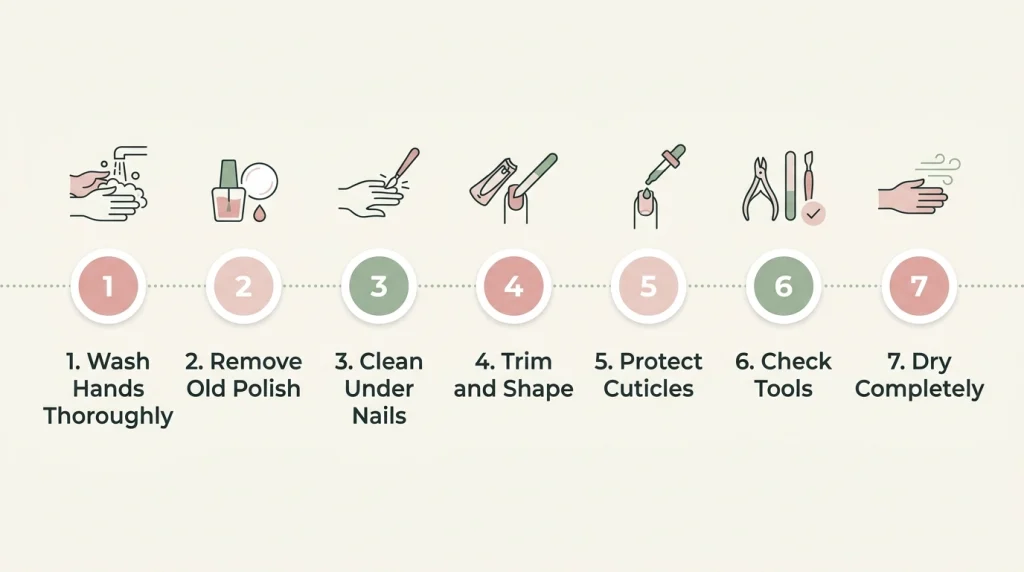
Your everyday routine should be simple enough to repeat consistently. Most of these habits fit naturally into activities you’re already doing.
1. Wash Your Hands Without Scrubbing Aggressively
Wash with soap and running water, paying attention to your fingertips and the areas around your nails.
Use normal handwashing technique, including cleaning beneath the free edges where practical. Avoid digging under the nails or using sharp objects to remove trapped debris.
Common mistake: Assuming polished nails don’t need cleaning. Germs and dirt can collect around or beneath a manicure even when the surface looks spotless.
2. Clean Gently Beneath Your Nails
If visible debris remains beneath your natural nails or extensions, use a clean, soft nail brush with soap and water.
Apply light pressure and avoid forcing the bristles underneath attached nail enhancements. Aggressive brushing can irritate the skin beneath your nails or disturb a lifting product.
Longer nails may need extra attention after cooking, gardening, applying makeup, or handling messy materials.
For a more detailed cleaning method, explore this guide to cleaning nails at home.
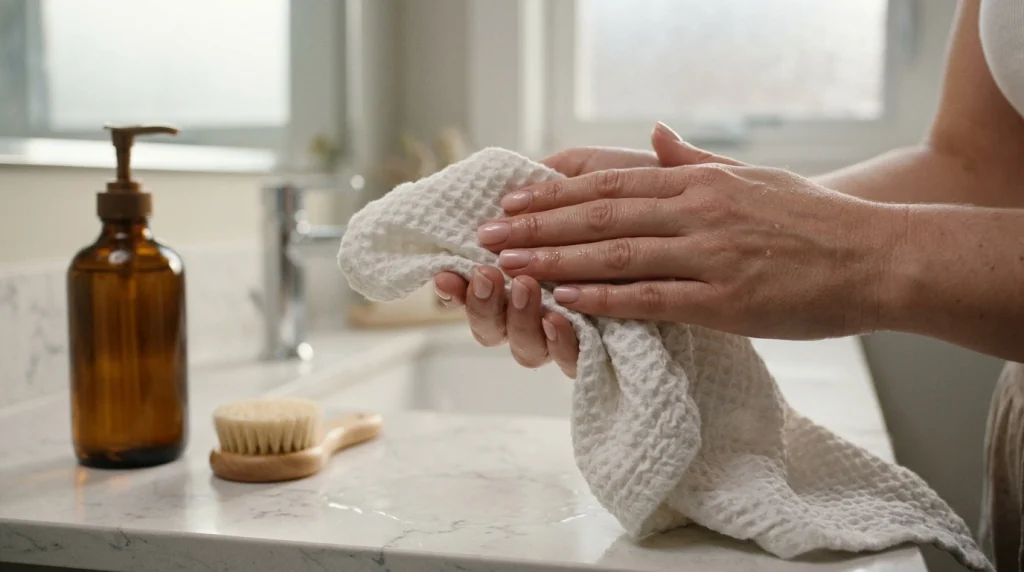
3. Dry Your Nails and Fingertips Thoroughly
After washing, use a clean towel to dry your hands, fingertips, and the spaces around your nails.
Water can collect in hard-to-reach areas around longer enhancements. Avoid leaving your hands unnecessarily damp, particularly if you already have lifting or damaged nail products.
Drying is important because persistently moist environments can encourage microbial growth.
Common mistake: Washing carefully but immediately putting damp hands into tight gloves for a prolonged period.
4. Moisturize the Skin Around Your Nails
Apply a fragrance-free hand cream after washing, especially when your skin feels tight or dry.
Massage a small amount around your fingertips, nail folds, and cuticle area. Cuticle oil can be an additional option when the surrounding skin is particularly dry.
Choose a product that feels comfortable and doesn’t irritate your skin. You don’t need to apply multiple oils and creams if one moisturizer is doing the job.
Common mistake: Using large amounts of oil while ignoring irritated or cracked skin that may need medical attention.
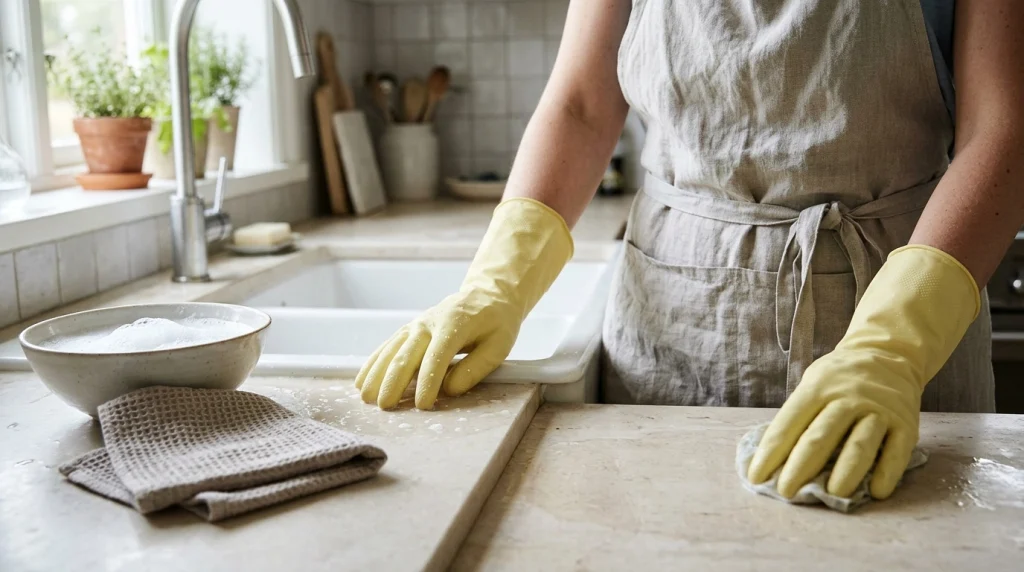
5. Wear Gloves During Wet Household Tasks
When washing dishes, scrubbing bathrooms, or using household cleaning products, choose suitable protective gloves.
This helps limit repeated contact with detergents and prolonged water exposure, both of which can contribute to dryness and nail fragility.
Remove your gloves after finishing, wash your hands as needed, dry thoroughly, and moisturize.
Don’t keep wearing damp gloves simply because you’re trying to protect your manicure.
6. Inspect Your Manicure Briefly Each Day
Check for chipped edges, lifting enhancements, unexpected discoloration, or irritated skin.
A quick visual check can help you spot developing problems rather than overlooking them until your next salon appointment.
For more ways to protect your natural nails, see these easy daily nail protection habits.
How Do You Clean Under Gel or Acrylic Nails Safely?
Long gel and acrylic nails can look gorgeous, but their length and shape may make the undersides harder to clean.
The safest approach is gentle cleaning without disturbing the bond between the natural nail and the enhancement.
Use soap, water, and a soft brush
Begin with normal handwashing. If you can see debris beneath the free edge, gently brush the accessible area with a clean, soft nail brush.
Don’t insert sharp manicure tools deep beneath the enhancement. The skin under your nail is sensitive, and aggressive cleaning can cause injury.
Pay attention to lifting
When an acrylic or gel enhancement separates from your natural nail, a gap can form where moisture and debris may collect.
Don’t attempt to seal that gap with household glue or repeatedly press the enhancement back into place.
Arrange for a qualified nail professional to assess the lifting. If you notice pain, greenish discoloration, unusual odor, swelling, or other concerning changes, seek medical advice rather than simply covering the area.
Avoid soaking your extensions unnecessarily
Ordinary handwashing is appropriate. However, keeping your nails immersed in water for extended periods isn’t necessary for hygiene and may be unhelpful when the surrounding skin is already irritated.
For additional protection advice, see how to protect your nails during gel manicures.
Should You Cut or Push Back Your Cuticles After a Manicure?
For routine aftercare, the safest approach is to leave your cuticles intact.
Your cuticles and surrounding nail folds help protect the area where new nail growth occurs. Cutting or aggressively pushing them back can create openings that make irritation and infection more likely.
The American Academy of Dermatology recommends avoiding cuticle cutting and forceful pushing.
If your cuticle area looks dry or uneven, try the following:
- Apply a small amount of fragrance-free moisturizer or cuticle oil.
- Massage the surrounding skin gently without pulling it.
- Leave attached cuticle tissue alone.
- Carefully clip only a loose hangnail with a clean, appropriate tool rather than tearing it.
Warning
If the skin around a nail becomes increasingly red, warm, swollen, or painful, don’t cut, squeeze, or attempt to drain it yourself. These changes may indicate an infection that needs medical evaluation.
How Often Should You Follow Your Nail Hygiene Routine?
Healthy nail maintenance doesn’t mean repeatedly cleaning or manipulating your nails throughout the day.
Instead, match your routine to normal hygiene needs and the condition of your manicure.
Every day
- Wash your hands when appropriate.
- Clean visible debris from beneath your nails gently.
- Dry your fingertips after washing.
- Moisturize when your skin feels dry.
- Check for pain, lifting, or visible nail changes.
Every week
- Inspect your nail length and shape.
- Smooth minor snags with a clean nail file when appropriate.
- Examine your manicure tools and clean them correctly.
- Check whether any enhancement needs professional attention.
Between manicures
- Remove products using the correct method for that nail system.
- Inspect your natural nail surface.
- Avoid immediately covering unexplained discoloration or damage.
- Replace worn disposable manicure accessories.
You can find a more detailed schedule in this guide to how often you should care for your nails.
What Nail Hygiene Mistakes Should You Avoid?
Some manicure habits seem harmless because they don’t immediately affect the appearance of your polish. Unfortunately, repeated mistakes can irritate your skin or damage the nails beneath.
Picking at gel or acrylic products
Removing attached material by force can peel away superficial layers of the natural nail.
Use the appropriate removal process instead. Some soak-off products require acetone, while hard gel or certain extensions need professional filing or removal.
Using dirty manicure tools
Nail clippers, reusable files, and other implements can accumulate debris during grooming.
Clean your personal tools according to their material and manufacturer’s instructions. Reusable salon instruments require appropriate professional cleaning and disinfection or sterilization procedures, as applicable.
Disposable items should not be reused when they aren’t designed for safe reprocessing.
Cleaning with sharp objects
Metal picks, pointed household objects, and excessive pressure beneath the nail can injure sensitive tissue.
Gentle cleaning is more important than trying to scrape every tiny mark from underneath your manicure.
Ignoring lifted enhancements
A loose enhancement is not simply a cosmetic inconvenience. Separation may allow debris and moisture to accumulate.
Get the area assessed rather than adding glue or polish to conceal it.
Using nails as tools
Opening cans, scraping labels, and prying objects apart can place substantial force on your manicure.
Use your fingertips or an appropriate tool instead. You’ll reduce the risk of painful breaks and accidental nail lifting.
What Are the Signs of Poor Nail Hygiene or Infection?
Not every unusual nail appearance indicates an infection. Polish staining, product damage, allergic reactions, and other nail conditions can also change how your nails look or feel.
However, certain symptoms deserve attention.
- Increasing redness or swelling: Particularly around the nail folds.
- Persistent or worsening pain: Especially when touching the fingertip.
- Pus or drainage: May indicate a bacterial infection.
- Green, yellow, or unusual discoloration: Can have different causes and should be assessed when unexplained.
- Nail lifting or separation: May follow trauma, product damage, or an underlying nail disorder.
- Itching, burning, or a rash: Could indicate irritation or an allergic reaction to nail products.
Contact a healthcare professional if you notice significant or worsening symptoms. Seek prompt care for rapidly spreading redness, severe pain, fever, or signs of a serious infection.
People with diabetes, reduced circulation, or weakened immune systems should be especially cautious about possible nail infections.
Don’t cover suspicious changes with fresh acrylic, gel, or opaque polish before the problem has been assessed.
What Are the Most Important Nail Hygiene Do’s and Don’ts?
Do
- Wash your hands regularly.
- Clean under nails gently.
- Dry your fingertips.
- Moisturize dry skin.
- Use clean grooming tools.
- Protect hands during wet chores.
- Monitor unusual nail changes.
Don’t
- Dig deeply beneath nails.
- Cut healthy cuticles.
- Reuse dirty salon tools.
- Peel off attached gel.
- Ignore lifting extensions.
- Use nails to pry objects.
- Cover possible infections.
Which Products Help Maintain Nail Hygiene After a Manicure?
You don’t need an elaborate manicure collection. A few practical products can make your daily routine easier.
Disclosure: As an Amazon Associate, we earn from qualifying purchases.
Recommended Product
Soft-Bristle Nail Cleaning Brush
A gentle nail brush is useful for removing accessible debris beneath longer nails without relying on sharp cleaning tools. Choose a brush that is easy to rinse and dry.
Recommended Product
Fragrance-Free Moisturizing Hand Cream
A simple hand cream supports the skin around your nails, especially after frequent handwashing or exposure to drying conditions.
Recommended Product
Reusable Household Cleaning Gloves
Suitable protective gloves reduce contact with dishwashing detergents, cleaning solutions, and prolonged water exposure. Select gloves appropriate for the products you’re using.
How Can You Keep Your Manicure Looking Fresh Without Sacrificing Hygiene?
Good hygiene and beautiful nail art can work together. The key is choosing maintenance habits that protect your finished manicure without skipping necessary cleaning.
Choose a manageable nail length
Extra-long nails aren’t automatically unhealthy, but they may require more attention when cleaning, dressing, typing, and performing everyday tasks.
If your extensions frequently catch on clothing or make fingertip cleaning difficult, consider a shorter length at your next appointment.
Protect the finish appropriately
If you wear traditional polish, use a compatible top coat according to the product’s instructions. It may help maintain shine and reduce superficial wear.
Don’t use a top coat to conceal lifting enhancements, painful nails, or signs of infection.
Keep a small nail-care kit
A compact kit containing a clean file, suitable moisturizer, and personal grooming tools can make minor maintenance easier.
Store implements in a clean, dry location rather than leaving them exposed on a damp bathroom counter.
Choose hygienic salons
At future appointments, look for clean workstations, appropriate hand hygiene, and proper tool processing between clients.
Ask how reusable implements are cleaned and disinfected or sterilized. Single-use items should be new for your appointment.
For additional everyday care ideas, explore these healthy nail habits everyone should follow.
Pro Tip
Keep your nail brush clean and allow it to dry fully between uses. A brush that’s constantly damp or visibly dirty isn’t a useful hygiene tool. Replace it if the bristles become damaged or difficult to clean.
Frequently Asked Questions About Nail Hygiene After a Manicure
Q: Can you wash your hands immediately after a manicure?
A: Yes, normal hand hygiene is important. With traditional nail polish, avoid unnecessary pressure or activity that could smudge the finish before it dries. Properly cured gel polish generally doesn’t require waiting before ordinary handwashing.
Q: How often should you clean under acrylic nails?
A: Clean the accessible underside during normal handwashing, particularly when debris is visible or after messy activities. Use soap, water, and gentle brushing when needed. Avoid sharp instruments and aggressive scrubbing.
Q: Does cuticle oil help keep nails hygienic?
A: Cuticle oil can help moisturize dry skin around your nails, but it doesn’t replace washing with soap and water. Think of it as a skin-conditioning product rather than a disinfectant.
Q: What should you do if your nail hurts after a manicure?
A: Avoid further filing, pressure, or cosmetic treatments. If pain persists, worsens, or occurs with redness, swelling, discharge, or discoloration, seek medical evaluation. Don’t assume persistent pain is a normal part of nail aftercare.
Q: Can poor hygiene cause problems beneath gel or acrylic nails?
A: Inadequate cleaning and moisture trapped around damaged or lifting enhancements may contribute to nail problems. Gentle hygiene, proper application and removal, and prompt attention to lifting or unusual symptoms are important.
Final Thoughts on Nail Hygiene After a Manicure
Beautiful nails deserve gentle, consistent care. The best nail hygiene after a manicure comes from regular handwashing, careful under-nail cleaning, thorough drying, and protecting your cuticles and natural nails.
Keep your routine simple, avoid picking at enhancements, and never ignore signs of infection or unusual irritation. Your manicure should be something you enjoy, not something that compromises your nail health.
Save this guide to your Pinterest nail-care board so you can revisit these easy hygiene habits before and after your next manicure.

Hi, I’m Jessica, the creator behind Unique Lash & Nails Katy.
I created this website for anyone who loves beautiful nails as much as I do. Here, I share trendy nail designs, seasonal manicure ideas, easy nail care tips, honest product recommendations, and step-by-step guides to help you create salon-worthy nails at home. Whether you’re looking for everyday inspiration or your next favorite nail trend, I hope you’ll find something you love.