How to Remove Yellow Nail Stains and Make Nails Look White Again
Quick Answer
To remove yellow nail stains, take off all polish, wash your nails, and gently buff only the surface. Soak them for five minutes in diluted 3% hydrogen peroxide, then rinse and moisturize. Stop if you feel burning or irritation. Thick, brittle, painful, or persistently yellow nails may need medical care rather than whitening.
Time needed
10–15 minutes
Difficulty
Beginner
Items needed
5 basic items
Result lasts
Until nails stain again
You remove your favorite dark manicure and discover that your natural nails look yellow. It can be alarming, but polish pigment is a common explanation—especially after wearing deep red, burgundy, navy, green, or black polish without a protective base coat.
The right whitening method depends on what caused the color. A light, even stain that appears after polish is usually cosmetic. Yellowing accompanied by thickening, crumbling, lifting, odor, pain, or swelling should not be scrubbed or bleached at home.


Is It a Surface Stain or Something More?
 Save
SaveBefore trying to turn your nails white again, remove every trace of polish and examine them in natural light. Cosmetic stains and nail conditions can look similar at first, but a few clues help you decide what to do next.
It is probably a polish stain when:
- The discoloration appeared immediately after removing dark or highly pigmented polish.
- The yellow color is light, even, and limited to the nail plate.
- Your nails remain smooth and attached to the nail bed.
- You have no pain, swelling, odor, itching, or redness.
- Several nails are stained in a pattern that matches your manicure.
It may need professional attention when:
- The nail is becoming thick, brittle, crumbly, distorted, or separated from the nail bed.
- The color continues to deepen even when you are not wearing polish.
- Only one nail changes without an obvious staining event or injury.
- The surrounding skin is painful, swollen, warm, itchy, or draining fluid.
- You notice a new dark brown or black streak that does not grow out normally.
- You have diabetes, poor circulation, or a weakened immune system.
Warning
Home whitening only changes superficial stains. It does not treat fungal infections, psoriasis, bacterial infections, injuries, or medical causes of nail discoloration. Arrange a medical evaluation if your nails are thick, painful, lifting, crumbling, or persistently yellow.
Why Do Natural Nails Turn Yellow?
Dark nail polish is the most familiar cause. Certain pigments can migrate into the porous layers of the nail plate. The risk increases when you skip base coat, keep the same manicure on for a long time, or repeatedly use strong colors without giving the stained section time to grow out.
Other cosmetic causes include self-tanner, hair dye, cleaning products, nicotine, and residue left after artificial nail removal. Frequent filing can also make a nail appear dull and uneven rather than truly yellow.
A fungal nail infection is another possibility, particularly on toenails. It often causes gradual discoloration along with thickening, brittleness, debris under the nail, or separation from the nail bed. A professional examination may be needed because trauma, psoriasis, and other nail disorders can resemble fungus.
Occasionally, a medicine or health condition can affect nail color. This is why you should avoid treating every yellow nail as a simple beauty problem.
What Do You Need to Whiten Polish-Stained Nails?
- Acetone-free nail polish remover
- A soft nail brush
- A very fine nail buffer
- Standard 3% hydrogen peroxide
- A small glass or ceramic bowl
- Warm water
- Cuticle oil or fragrance-free hand cream
You do not need household bleach. Chlorine bleach is far too aggressive for a cosmetic nail stain and can irritate your skin, dry the nail plate, and damage the surrounding cuticle.
Recommended Product
Gentle Acetone-Free Nail Polish Remover
★★★★☆ Popular nail-care option
An acetone-free remover helps clear leftover pigment without adding as much dryness before the whitening treatment.
As an Amazon Associate, we earn from qualifying purchases.
How Do You Remove Yellow Nail Stains Step by Step?
 Save
Save
1
Remove Every Trace of Polish
Saturate a lint-free pad with acetone-free remover. Hold it on each nail for several seconds before wiping toward the free edge. Repeat with a clean section of the pad until no color transfers.
Common mistake: Rubbing the same stained cotton pad over every nail can spread dissolved pigment across your fingers.
2
Wash and Inspect Your Nails
Wash your hands with mild soap and warm water, then dry them completely. Check for splitting, cuts, redness, lifting, or thickening before continuing. Skip whitening if the skin or nail is damaged.
Common mistake: Treating irritated skin with peroxide can cause stinging and additional dryness.
3
Buff the Surface Very Lightly
Use the finest side of a nail buffer and make two or three gentle passes over each stained nail. Your goal is to lift loose surface residue, not remove visible layers of the nail.
Common mistake: Buffing until the nail feels hot or looks thin weakens the plate and can make future peeling more likely.
4
Soak in Diluted Hydrogen Peroxide
Mix one part standard 3% hydrogen peroxide with three parts warm water. Soak only your fingertips for three to five minutes. Remove them immediately if you experience burning, strong stinging, or increasing redness.
Common mistake: Using stronger peroxide or extending the soaking time will not safely accelerate the result; it mainly increases dryness and irritation.
5
Rinse and Restore Moisture
Rinse thoroughly and pat your hands dry. Massage one drop of cuticle oil into each nail and the surrounding skin, then apply hand cream. Leave the nails bare for the rest of the day if possible.
Common mistake: Applying polish immediately can trap moisture and makes it harder to judge whether the staining has actually improved.
Pro Tip
Take a photo before treatment and another in the same lighting afterward. Indoor light can make nails appear warmer or yellower, so matching photos gives you a more honest comparison.
What Can You Use If You Do Not Have Hydrogen Peroxide?
Use a Baking Soda Paste for Mild Surface Stains
Mix one teaspoon of baking soda with enough water to form a loose paste. Massage it gently over each nail with your fingertips for about 30 seconds, then rinse. The mild abrasive action may lift superficial pigment, but aggressive scrubbing can roughen the nail.
This method suits faint staining better than deep pigment. Use it once, moisturize afterward, and wait several days before deciding whether another treatment is necessary.
Use Whitening Toothpaste Occasionally
A small amount of non-gel whitening toothpaste can help with very light stains because it usually contains gentle polishing ingredients. Brush it over the nail with a soft nail brush for 30 to 60 seconds, then rinse thoroughly.
Avoid highly abrasive charcoal toothpaste. Its dark particles can collect around dry cuticles and make the manicure area look dirtier rather than brighter.
Let Deep Stains Grow Out
Sometimes patience is the safest whitening method. Pigment that has penetrated the nail plate cannot always be removed without thinning the nail. Keep the nails short, moisturize them daily, and allow the discolored section to move toward the tip as the nail grows.
Fingernails commonly need several months to replace the full nail plate. Toenails grow more slowly and may take considerably longer. The exact time varies with the nail, your health, age, circulation, and previous damage.
Recommended Product
Ultra-Fine Natural Nail Buffer
★★★★☆ Useful for gentle surface care
A fine-grit buffer gives you more control than a coarse file when lifting a small amount of superficial polish residue.
As an Amazon Associate, we earn from qualifying purchases.
Which Popular Nail-Whitening Remedies Should You Avoid?
Lemon juice appears in many DIY nail-whitening recipes, but its acidity can sting broken cuticles and increase dryness. It may also irritate skin that is exposed to sunlight after contact with citrus. You have safer, more predictable options.
Denture tablets and concentrated whitening mixtures are also unnecessary. They were not designed for repeated contact with the skin surrounding your nails. Never combine hydrogen peroxide with vinegar, household bleach, ammonia, or another cleaner.
Scraping the yellow layer with a metal tool is especially damaging. A stained nail needs time and gentle treatment—not enough pressure to create a thin or painful spot.
How Quickly Will Yellow Nail Stains Disappear?
A faint surface stain may look lighter after one treatment. Moderate staining often improves gradually over one to three gentle sessions spaced several days apart. If the pigment has moved deeper into the nail plate, complete removal may require the stained portion to grow out.
Do not whiten your nails every day. Repeated soaking, scrubbing, and buffing can dehydrate the nail and create splitting. If one careful treatment makes no difference, wait and monitor the new growth rather than increasing the strength of your mixture.
How Can You Prevent Yellow Nail Stains?
Do
- +Apply a clear, stain-blocking base coat before dark polish.
- +Wear gloves when using hair dye, self-tanner, or colored cleaning products.
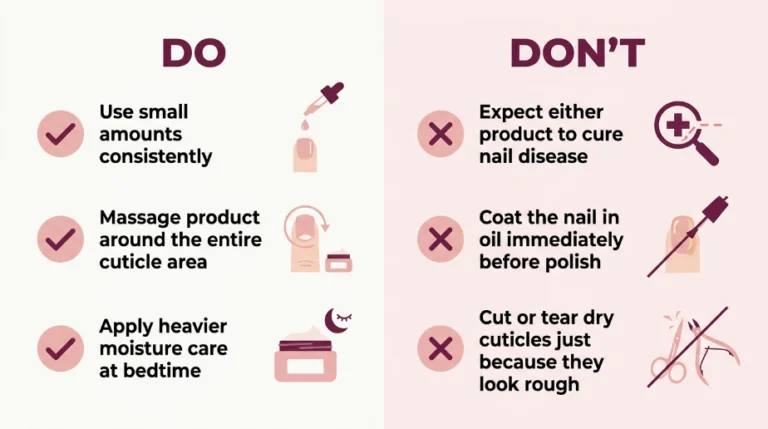
- +Use cuticle oil daily to reduce dryness and brittleness.
Don’t
- −Apply highly pigmented polish directly to bare nails.
- −Buff away visible layers to chase a perfectly white color.
- −Cover unexplained discoloration without checking it first.
Base coat creates a barrier between your nail plate and colored pigment. Apply one thin, even layer across the entire nail, including the side edges. Allow it to dry before adding color.
For highly staining shades, two thin base-coat layers may provide better separation than one thick layer. Thick coats dry slowly and can make the manicure peel sooner.
Recommended Product
Stain-Blocking Nail Base Coat
★★★★☆ Helpful under dark polish
A clear base coat reduces direct contact between strong polish pigments and your porous natural nail.
As an Amazon Associate, we earn from qualifying purchases.
What Should You Do If the Stains Will Not Come Off?
The yellow color looks exactly the same after treatment
Stop buffing and give the nail time to grow. Photograph the nails once a week. A cosmetic stain should gradually move toward the free edge as new nail appears.
Your nails feel dry after whitening
Pause all whitening treatments. Apply cuticle oil two or three times a day and use hand cream after washing. Wear gloves for wet cleaning to limit repeated swelling and drying.
The nail is thick or crumbly
Do not cover it with artificial nails or repeatedly whiten it. Keep it clean and dry, avoid sharing nail tools, and arrange an examination with a qualified healthcare professional.
Only one nail keeps changing color
Remove any polish and monitor it without attempting to hide the change. Unexplained discoloration in one nail deserves professional assessment, particularly if it spreads, darkens, hurts, or affects the surrounding skin.
Frequently Asked Questions About Yellow Nails
Q: Can yellow nails become white again?
A: Light surface stains can often be brightened, while deeper polish stains may need to grow out. Whitening will not correct discoloration caused by an infection or health condition.
Q: Does hydrogen peroxide remove yellow nail stains?
A: Diluted 3% hydrogen peroxide may lighten superficial polish stains. Use a short soak, rinse well, and stop if it irritates your skin. Never apply a stronger concentration.
Q: Does baking soda whiten fingernails?
A: A damp baking soda paste can help lift a faint surface stain because it is mildly abrasive. Rub gently and use it occasionally; frequent scrubbing may leave your nails thin and rough.
Q: How can you tell nail-polish staining from fungus?
A: Polish staining is usually flat and appears after removing color. Fungus may cause progressive yellowing, thickening, crumbling, debris, or lifting, but only a qualified professional can confirm the cause.
Q: Can you paint over yellow nails?
A: You can cover a confirmed cosmetic stain after the nail is clean and dry. Do not hide unexplained, painful, thick, or worsening discoloration because polish makes changes harder to monitor.
Give Your Nails a Gentle Reset
The safest way to remove yellow nail stains is to start gently: clean away polish, lightly buff surface residue, use a short diluted-peroxide soak, and restore moisture. If the color remains deep, let it grow out instead of thinning your natural nails.
Save this guide to your Pinterest nail-care board so you have the steps ready the next time a dark manicure leaves unwanted stains.

Hi, I’m Jessica, the creator behind Unique Lash & Nails Katy.
I created this website for anyone who loves beautiful nails as much as I do. Here, I share trendy nail designs, seasonal manicure ideas, easy nail care tips, honest product recommendations, and step-by-step guides to help you create salon-worthy nails at home. Whether you’re looking for everyday inspiration or your next favorite nail trend, I hope you’ll find something you love.