What Color Should Healthy Nails?
Quick Answer
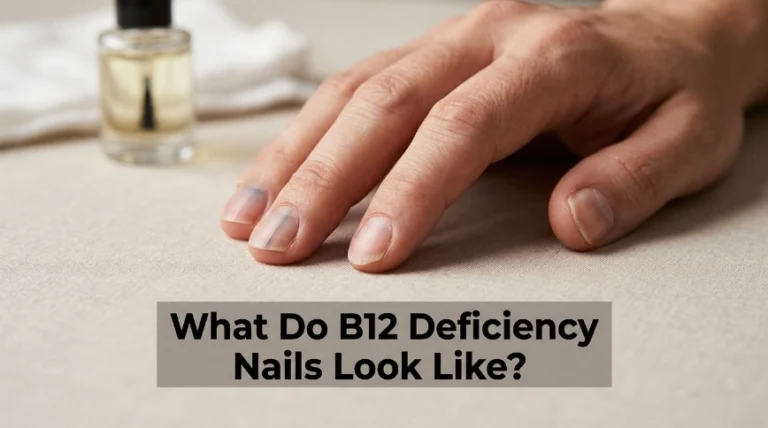
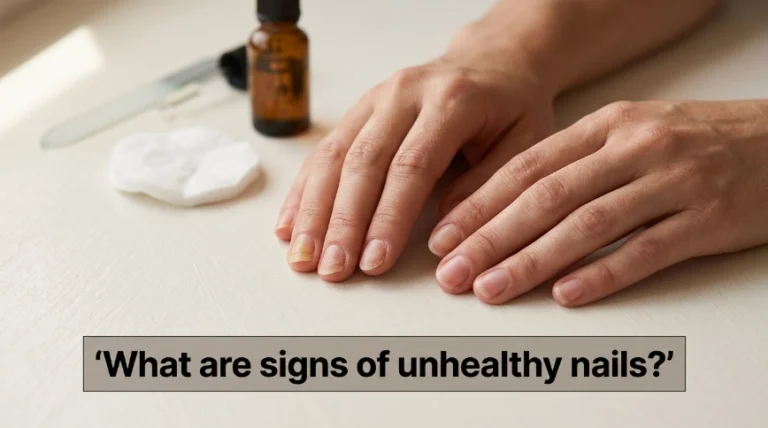
Healthy nails are a soft, even pink with a pale, slightly translucent tip — the pink comes from the blood vessels in your nail bed showing through the nail plate. Your nails should also be smooth, free of deep ridges, and free of dark spots or unusual discoloration. Small white flecks or thin vertical lines are normal; a nail that’s turning yellow, blue, or very pale is your body’s way of flagging something worth paying attention to.
Glance down at your nails right now. If you’re second-guessing the color you see, you’re not being paranoid — your nails really do change color for a reason, and that reason isn’t always polish or press-ons.
Here’s what you’ll actually get from this guide: a clear picture of what normal, healthy nail color looks like, a full breakdown of what different discolorations usually mean, and simple habits that keep your natural nail color looking its best. No guesswork, no scary rabbit holes — just the facts you came here for.


Why Nails Are Pink in the First Place
Your nail plate — the hard part you can see — is actually clear. It’s made of layers of keratin, the same protein that makes up your hair. What gives your nails their pink tint isn’t the nail itself; it’s the nail bed underneath, which is packed with tiny blood vessels. When light passes through the translucent nail plate, it picks up the color of the blood flowing beneath it, and that’s the pink you see.
This matters because it explains why nail color is such a useful signal. Blood carries oxygen, so anything that changes how much oxygen is reaching your fingertips — poor circulation, low iron, certain medications, or even just being cold — can shift the color of your nail bed. Your nails aren’t decorative in this sense; they’re a small, visible window into what’s happening under the surface.
You can also learn a lot by checking whether healthy nails should be hard or soft, since texture and color usually shift together when something’s off.
What Do Healthy Nails Actually Look Like?
Before you compare your nails to a worst-case scenario, it helps to know what “normal” covers, because normal has more range than most people think.
Pro Tip
Check your nail color in natural daylight, not under bathroom LED lighting. Warm indoor bulbs can make pale pink nails look yellow or orange, which sends a lot of people into an unnecessary panic.
Here’s what falls squarely within a healthy range:
- A consistent pink base tone across the whole nail bed, though the exact shade varies by skin tone
- A pale, slightly whiter free edge (the part that grows past your fingertip)
- A smooth surface without deep grooves, though a few fine vertical lines are common and increase naturally with age
- A firm but slightly flexible texture — not brittle, not soft enough to bend easily
- Occasional small white spots from minor bumps or knocks, which grow out on their own
If your nails check most of these boxes, you’re in good shape. Small variations from person to person are completely normal, since nail color is also influenced by skin tone, age, and how much blood flow you naturally have in your extremities.
What Different Nail Colors Actually Mean
 Save
SaveThis is the part most people are really searching for, so let’s go through it color by color. None of this replaces a doctor’s opinion, but it will tell you whether what you’re seeing is worth a second look.
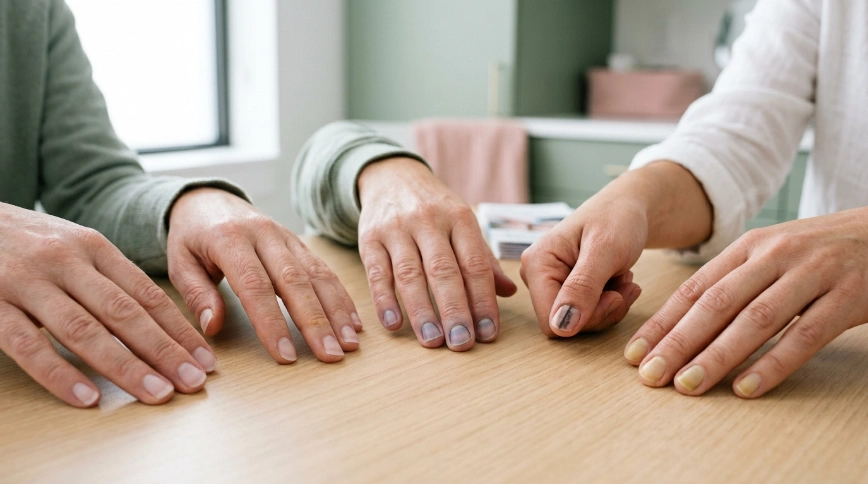
Pale or white nails
A washed-out, whitish nail bed can point to low iron levels, poor circulation, or general nutritional gaps. It’s one of the more common changes people notice, especially if it comes on gradually rather than overnight.
Yellow nails
Most of the time this is cosmetic — dark polish worn without a base coat stains the keratin directly. Persistent yellowing that isn’t tied to polish use can also come from a fungal infection, so if it doesn’t fade after a polish-free stretch, that’s worth noting.
Blue or purple-tinted nails
This usually signals that your fingertips aren’t getting enough oxygenated blood, often from cold exposure or tight rings and gloves cutting off circulation. It typically fades within minutes once you warm up.
Dark streaks or spots
A single dark line running vertically under the nail, or a spot that appears without an obvious bruise behind it, is one of the few nail changes doctors take seriously right away. It doesn’t always mean something dangerous, but it’s not something to wait out.
Greenish tint
A green cast, usually paired with a bad smell, points to a bacterial infection trapped between a lifted nail and the nail bed — common after gel or acrylic sets that pop loose without you noticing right away.
If any of this sounds familiar, it’s worth reading through the full list of signs of unhealthy nails, since color rarely changes on its own — texture and shape usually shift alongside it.
What’s Behind Most Color Changes
Nail discoloration falls into two broad buckets: things happening on top of the nail, and things happening underneath it. Surface staining from dark polish, tobacco, or harsh cleaning products sits in the first bucket, and it’s the easiest to fix — it grows out or lifts off with gentle buffing. Changes coming from underneath, like circulation issues or nutrient gaps, take longer to resolve because you’re waiting on new, healthy nail growth to replace the affected section.
This is also why what causes weak nails and what causes discolored nails overlap so often. Both usually trace back to the same root issues: dehydration, harsh chemical exposure, poor diet, or an underlying health condition that hasn’t been addressed yet.
Do’s and Don’ts for Keeping Your Natural Nail Color Healthy
 Save
SaveDo
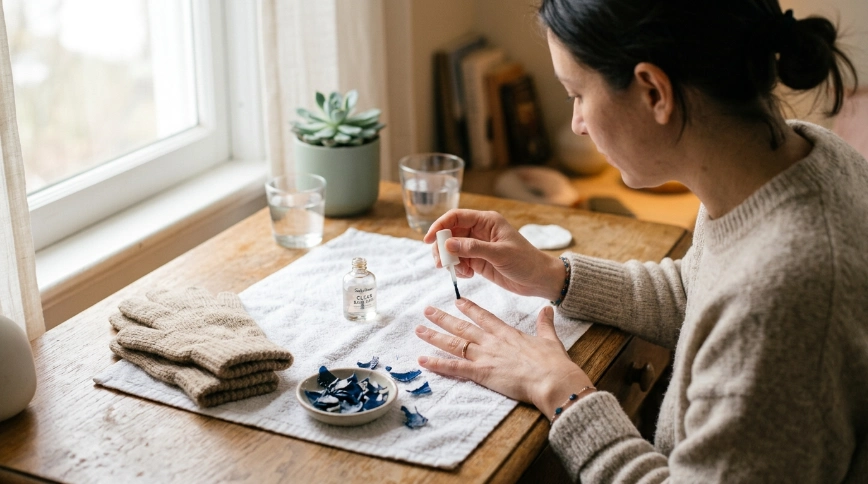
- +Apply a clear base coat before any colored polish, especially dark shades
- +Give your nails a polish-free week every month or two so you can actually see their natural color
- +Keep hands warm in cold weather to protect healthy circulation
Don’t
- −Peel off gel or acrylic sets — it strips the top layer of the nail plate and leaves it thin and discolored
- −Ignore a nail that stays lifted from the nail bed for more than a day or two
- −Assume every color change is cosmetic — persistent changes deserve a second look
Products That Support Your Natural Nail Color
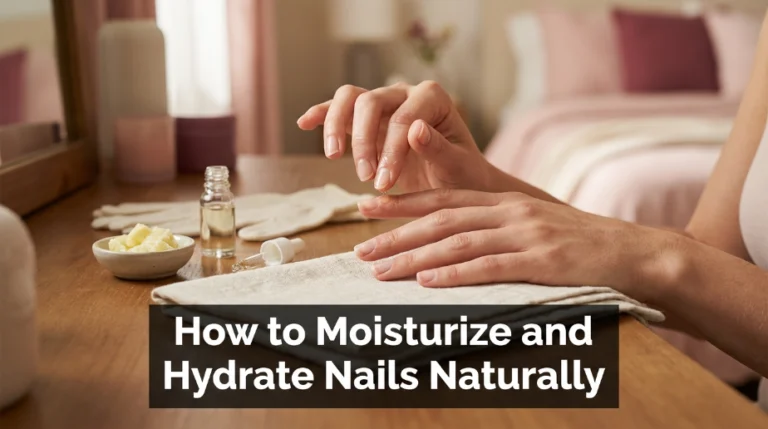
Nail color usually looks its best when the nail itself is well-hydrated and protected. A couple of products make a real difference here without any extra effort.
Recommended Product
Ridge-Filling Base Coat with Keratin
★★★★☆ Highly rated on Amazon
A good base coat creates a barrier between your nail and any pigment, which prevents the yellow staining that makes healthy nails look dull over time.
As an Amazon Associate, we earn from qualifying purchases.
Recommended Product
Vitamin E Cuticle Oil Pen
★★★★☆ Highly rated on Amazon
Keeping the nail bed and surrounding skin hydrated supports healthy circulation right where it matters most for nail color, and a pen format makes it easy to use daily.
As an Amazon Associate, we earn from qualifying purchases.
Pro Tips for Reading Your Nail Color Correctly
Pro Tip
Press gently on the center of your nail and release. Healthy nail beds turn white under pressure and snap back to pink within a second or two — a slow return can point to circulation issues worth mentioning to a doctor.
Pro Tip
Compare your fingernails to each other, not to someone else’s. Even side-by-side fingers on the same hand can differ slightly, and that’s normal — what matters more is a sudden change from your own baseline.
Pro Tip
If you’re trying to rule out a nutritional cause, give it a few weeks after adjusting your diet. Nails grow slowly, so you won’t see the improved color until new, healthier nail has grown out past the cuticle.
If your nails have already taken a hit from harsh treatments or over-filing, start with how to repair damaged nails alongside these color-focused habits — restoring strength and restoring color tend to happen together.
Frequently Asked Questions
Q: Is it normal for nail color to vary between fingers?
A: Yes, minor variation is normal, especially between your dominant and non-dominant hand. What matters more is whether one nail suddenly looks different from how it usually looks.
Q: Can dehydration change nail color?
A: It can make nails look duller and more brittle, though it’s less likely to cause a dramatic color shift on its own compared to circulation or nutrition issues.
Q: How long does it take for nail color to fully return to normal?
A: For surface staining, a few weeks of polish-free growth usually does it. For deeper causes tied to circulation or nutrition, it can take a full nail growth cycle of three to six months.
Q: Should I worry about a single white spot on one nail?
A: Almost never — this is usually from a minor bump to the nail bed weeks earlier and grows out on its own with no treatment needed.
Q: Does gel polish permanently change nail color?
A: Not permanently, but repeated use without breaks can leave nails temporarily yellow or thin. Growing it out and giving your nails rest periods restores the natural shade.
The Bottom Line
A soft, even pink with a pale tip is your baseline for healthy nail color — everything else is worth noticing but rarely worth panicking over. Pay attention to sudden changes rather than small day-to-day variations, keep your nails hydrated and protected, and give them a break from polish often enough to actually see what’s going on underneath. Save this guide so you’ve got it on hand the next time you catch yourself staring at your nails wondering if that color is normal.

Hi, I’m Jessica, the creator behind Unique Lash & Nails Katy.
I created this website for anyone who loves beautiful nails as much as I do. Here, I share trendy nail designs, seasonal manicure ideas, easy nail care tips, honest product recommendations, and step-by-step guides to help you create salon-worthy nails at home. Whether you’re looking for everyday inspiration or your next favorite nail trend, I hope you’ll find something you love.