How to Protect Nails in Winter
Quick Answer
To protect nails in winter, apply a rich hand cream after washing, massage cuticle oil around your nails daily, and wear gloves outdoors and for wet chores. Keep nails comfortably short, file snags gently, and avoid peeling off polish or enhancements. These small habits help reduce dry cuticles, splitting, and breakage throughout cold weather.
Winter can make your favorite manicure harder to maintain. Your fingertips feel tight, cuticles develop rough edges, and nails that looked fine last month suddenly catch on sweaters. The good news? You can protect your nails without giving up pretty polish or spending an hour on them every night. This guide shows you a practical winter routine, from your morning handwash to your bedtime cuticle care.
Time needed
5 minutes daily
Difficulty
Beginner
Items needed
5 essentials
Results last
With daily upkeep


Why Do Your Nails Break More Easily in Winter?
Cold outdoor air and heated indoor rooms often have low humidity. That dry environment can leave the skin around your nails tight, flaky, and more prone to painful hangnails. Your nail plate is different from living skin, but the surrounding skin and the way you handle your hands still affect how comfortable and resilient your nails feel.
Another problem is the cycle of wetting and drying. Every handwash, hot shower, and sink full of dishes exposes your nails to water. Repeated water exposure can contribute to peeling and splitting, especially when detergents and rough manicure removal are part of the mix. Winter makes those habits more noticeable because your hands are already dealing with dry air.
It helps to separate dry cuticles from damaged nail plates. Cream and oil can soften rough skin and reduce moisture loss, but they cannot permanently rebuild a nail layer that has already peeled away. That section must gradually grow out. For a more detailed moisturizing approach, see this guide to moisturizing and hydrating nails naturally.
What Do You Need for a Simple Winter Nail Care Routine?
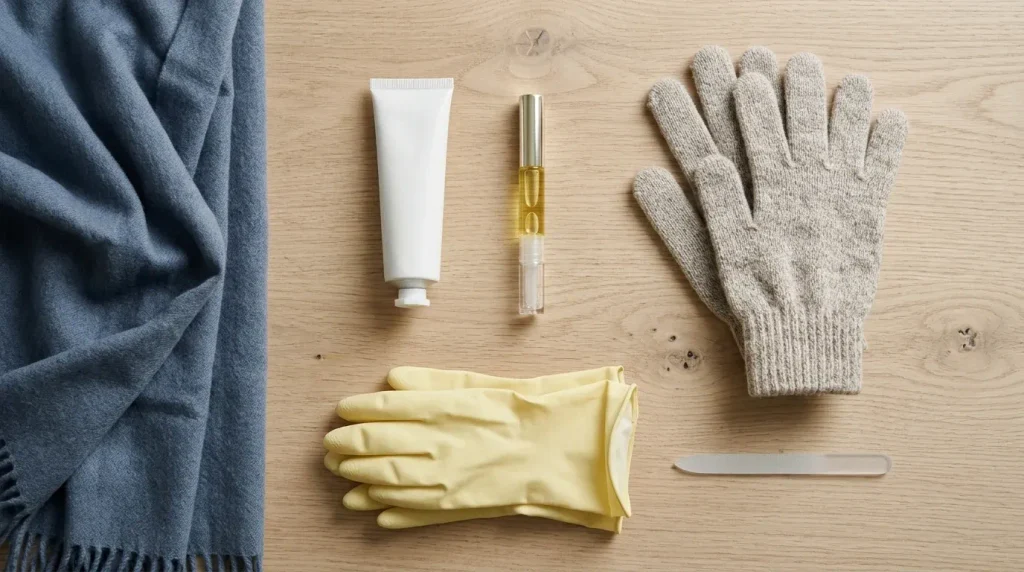
You don’t need a drawer full of serums. Start with five things you’ll actually use. The goal is to protect your nail edges, keep the surrounding skin comfortable, and make repeated handwashing less drying.
- Fragrance-free hand cream: Choose a thick formula with glycerin, ceramides, or petrolatum for hands that feel tight after washing.
- Cuticle oil: A small jojoba-based pen or bottle makes it easy to soften dry skin around the nail throughout your day.
- Warm outdoor gloves: A comfortable pair shields your fingertips from cold air and wind while you’re outside.
- Waterproof cleaning gloves: Reusable gloves keep dishwater and cleaning products off your nails during longer chores.
- Fine nail file: A glass or fine-grit file smooths tiny snags before they catch on knitwear and turn into splits.
Keep the hand cream near your sink, the cuticle oil in your bag, and your outdoor gloves next to your keys. That arrangement makes your routine much easier to follow than putting everything in a manicure kit you rarely open.
How Can You Protect Your Nails in Winter Step by Step?
1 Wash With Lukewarm Water
Choose lukewarm rather than very hot water, and wash with a gentle cleanser. Pat your hands dry, including the spaces around your nails. You still need proper hand hygiene; the trick is avoiding extra heat and harsh scrubbing that can leave skin feeling stripped.
Common mistake: Using steaming-hot water because it’s cold outside. Heat can worsen dryness without making ordinary handwashing more protective.
2 Apply Hand Cream After Every Wash
While your hands are still slightly damp, massage a pea-sized amount of rich cream across your fingers, nail folds, and fingertips. Reapply whenever your skin feels dry. Cream helps limit water loss, so this small step matters more than an occasional elaborate nail mask.
Common mistake: Stopping at the knuckles. Your cuticles and fingertips need attention too, especially when they’re exposed all day.
3 Massage Cuticle Oil Around Each Nail
Use one small drop for several nails, then rub it gently into the skin at the base and sides. Morning and bedtime are convenient starting points. Oil helps condition dry surrounding skin, but it isn’t a cure for nails already split or thinned by over-filing.
Common mistake: Cutting away all visible cuticle first. Healthy tissue around the nail base forms a protective barrier and shouldn’t be removed aggressively.
4 Seal Extra-Dry Cuticles Before Bed
If your cuticles are especially rough, apply cream first and dab a thin layer of plain petroleum jelly over the driest areas. You can wear clean cotton gloves overnight if they feel comfortable. This helps slow moisture loss while you sleep rather than trying to repair dryness with more trimming.
Common mistake: Picking off flaky skin at bedtime. Pulling a hangnail can create a painful opening and increase infection risk.
5 Wear Gloves Before Going Outdoors
Put on warm gloves before a windy walk, commute, or outdoor errand. Pick a soft lining that doesn’t irritate dry skin, and remove damp gloves once you’re indoors. Protecting the skin around your nails from cold, dry air makes your moisturizing routine more effective.
Common mistake: Wearing wet gloves for hours. Trapped moisture and friction can irritate your skin instead of protecting it.
6 Put on Waterproof Gloves for Chores
Wear reusable waterproof gloves when washing dishes, scrubbing bathrooms, or handling cleaning products. Add cotton liners for lengthy jobs if sweat makes your hands uncomfortable. Take the gloves off afterward, dry your hands, and moisturize again.
Common mistake: Assuming a few minutes of daily dishwashing don’t count. Repeated wetting, drying, and detergent contact can add up.
7 Shorten and Smooth Fragile Nail Edges
Keep your nails at a length that doesn’t snag easily, then smooth rough corners with light strokes from a fine file. A short oval or squoval shape can be practical when the tips are peeling. File the edge only; you don’t need to buff the surface thinner.
Common mistake: Pulling away a peeling layer. It can lift farther back than the snag and create a larger damaged area.
8 Keep Manicure Removal Gentle
Regular polish is fine if your nails tolerate it, but remove it without scraping or peeling. For gel, dip, or acrylic enhancements, follow the correct removal method or see a trained nail professional. If your nails feel unusually thin or sore, postpone another heavy set and focus on protection.
Common mistake: Picking off lifted gel because one corner catches on a sweater. The coating can take superficial nail layers with it.
For a year-round foundation, pair these winter habits with a healthy nail care routine that covers trimming, gentle prep, and safe polish removal.
Which Winter Habits Make Dry Nails Worse?
Sometimes your biggest improvement comes from removing one problem rather than adding another product. Long hot showers and overly hot handwashing can strip moisture from the surrounding skin. Frequent sanitizer use may also feel drying, although it’s still important to clean your hands when needed. Follow necessary hygiene with moisturizer rather than skipping hand hygiene.
Picking at hangnails is another common winter habit. When the skin next to your nail catches on a sweater, clip only the clearly detached piece with clean manicure scissors. Don’t pull it toward the nail base. If the area is cracked or tender, keep it clean and protect it from more friction.
Watch how often you change your manicure, too. Repeated acetone exposure, rough buffing, and aggressive removal can compound existing brittleness. Rather than switching polish every couple of days, keep a manicure you like for an appropriate period and remove it carefully when it’s ready.
Warning
Don’t glue, buff over, or cover a nail that is bleeding, very painful, swollen, draining pus, or lifting significantly from the nail bed. These changes may need medical assessment rather than another cosmetic product. Unexplained dark streaks or persistent color changes also deserve a professional check.
Can You Still Wear Gel Polish, Acrylics, or Nail Art in Winter?
Yes, if your nails and the surrounding skin are healthy and you can remove the manicure safely. Winter doesn’t automatically mean you must give up glossy red nails, chrome finishes, or delicate snowflake designs. Your priority is avoiding added trauma when the nails already seem fragile.
Ask your nail technician to keep filing gentle and avoid cutting living cuticle tissue. If you wear gel, don’t peel off chips; follow the product’s removal directions. A regular manicure can be a lower-maintenance option when you want color without repeated enhancement removal.
Consider a short, rounded shape for busy weeks when you’re pulling on gloves and handling thick clothing. A base coat can help reduce staining from dark polish, but it isn’t a treatment for a damaged nail. If you already have extensive peeling or soreness, learn how to support nail recovery before scheduling another set.
What Should You Do and Avoid for Winter Nail Protection?
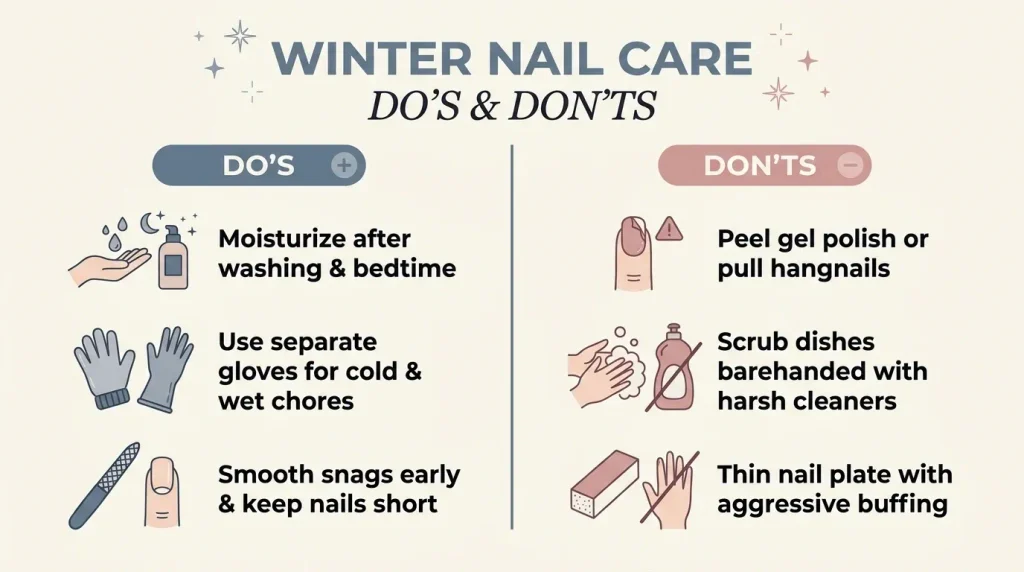
Do
- +Moisturize after handwashing and at bedtime.
- +Use separate gloves for winter weather and wet chores.
- +Smooth snags early and keep fragile nails short.
Don’t
- −Peel gel polish or pull off hangnails.
- −Scrub dishes barehanded with harsh cleaners.
- −Thin your nail plate with aggressive buffing.
How Often Should You Follow Your Winter Nail Care Routine?
A little maintenance repeated consistently is more useful than one intensive treatment. You can organize your nail protection around everyday activities rather than setting aside a long weekly session.
- Every morning: Apply hand cream, check for rough edges, and take warm gloves if you’ll be outside.
- After handwashing: Pat dry and apply a small amount of cream, especially around your nails.
- Before wet chores: Put on waterproof gloves, then dry and moisturize afterward.
- Every evening: Massage cuticle oil around the nail folds and add petroleum jelly if your skin feels very dry.
- Once a week: Inspect the tips for snags, adjust the length if needed, and check whether your manicure is lifting.
You may feel relief from tight, dry cuticles after a few days of regular moisturizing. Visible peeling in the nail plate can take much longer because the affected section needs to grow out. Don’t judge the routine by whether an old split disappears overnight; notice whether you’re getting fewer new snags over time.
Pro Tip
Store a travel-size hand cream next to your winter gloves, not just beside the sink. You’ll remember to reapply after a cold commute or outdoor walk, which is often when your fingertips feel most uncomfortable.
Which Products Are Actually Worth Buying for Winter Nails?
Choose products that solve the specific problem you have: rough skin, inconvenient moisturizing, or water exposure. There’s no need to buy a harsh nail hardener or a pile of supplements when your main issue is dry fingertips and repeated wet work.
Recommended Product
Fragrance-Free Hand Cream With Glycerin or Ceramides
A thicker cream is useful when winter handwashing leaves your skin and cuticles feeling tight.
As an Amazon Associate, we earn from qualifying purchases.
Recommended Product
Jojoba-Based Cuticle Oil Pen
A brush or pen format is easy to carry, so you’re more likely to use it consistently around dry nail folds.
As an Amazon Associate, we earn from qualifying purchases.
Recommended Product
Reusable Waterproof Cleaning Gloves
These protect fragile nails from dishwater and cleaning detergents more reliably than applying another layer of polish.
As an Amazon Associate, we earn from qualifying purchases.
What If Your Nails Are Already Peeling or Splitting?
Winter care can prevent additional irritation, but the right next step depends on what you’re seeing. Use these small fixes for mild, painless cosmetic problems, and stop if the nail or surrounding skin becomes painful.
Your nail tips keep peeling
Shorten the nail and smooth only the snagged edge. Protect it from prolonged water exposure and avoid peeling loose layers; prevention matters because existing damage must grow out.
Your cuticles crack beside the nail
Use fragrance-free cream frequently and protect the dry area with a thin layer of petroleum jelly. Skip picking and harsh cuticle trimming; seek care if redness, pain, swelling, or drainage develops.
Your nails feel thin after gel removal
Avoid more scraping and heavy buffing. Keep the tips short and let the damaged area grow forward. For more specific steps, see how to care for a damaged nail at home.
If your nails change color unexpectedly, become thick or crumbly, separate from the nail bed, or stay painful despite gentle care, speak with a dermatologist. Those changes can have causes other than winter dryness, and covering them with polish can delay a useful diagnosis.
Frequently Asked Questions About Winter Nail Care
Q: Does cold weather make nails brittle?
A: Cold weather often comes with dry air, indoor heating, and frequent handwashing, which can aggravate dry cuticles and make existing brittle-nail problems more noticeable. Water exposure and manicure damage also matter.
Q: Should you use cuticle oil every day in winter?
A: Daily use is reasonable if your skin tolerates it. Massage a small amount around the nail folds once or twice a day, and use hand cream after washing. Stop any product that causes irritation.
Q: Is Vaseline good for nails in winter?
A: Plain petroleum jelly can help seal moisture into dry skin around your nails, especially overnight. It won’t repair a split nail plate, but it may make rough cuticles feel more comfortable.
Q: Do nails need a break from polish during winter?
A: Not automatically. If your nails are healthy, gentle polish use is fine. If they’re thin, sore, or peeling after repeated gel or acrylic removal, reducing manicure trauma while new nail grows can help.
Q: How long will it take for winter-damaged nails to improve?
A: Dry skin may feel better within days of regular moisturizing, but a visibly damaged nail plate needs time to grow out. Fingernail replacement commonly takes several months, depending on where the damage starts.
How Will You Keep Your Nails Healthy All Winter?
The easiest winter nail plan is also the most repeatable: cream after washing, oil around dry cuticles, gloves for cold and wet chores, and gentler manicures. Protect what’s growing instead of trying to force damaged layers to look perfect overnight. Save this guide on Pinterest so your winter nail care checklist is ready whenever temperatures drop.

Hi, I’m Jessica, the creator behind Unique Lash & Nails Katy.
I created this website for anyone who loves beautiful nails as much as I do. Here, I share trendy nail designs, seasonal manicure ideas, easy nail care tips, honest product recommendations, and step-by-step guides to help you create salon-worthy nails at home. Whether you’re looking for everyday inspiration or your next favorite nail trend, I hope you’ll find something you love.