Healthy Nail Habits Everyone Should Follow: 12 Easy Tips
Quick Answer
The most important healthy nail habits everyone should follow are moisturizing nails and cuticles daily, keeping nails clean and dry, trimming and filing gently, wearing gloves during household chores, and avoiding aggressive manicure removal. Protect your cuticles, stop using nails as tools, and maintain a simple weekly routine. Small, consistent habits help reduce splitting, peeling, and unnecessary breakage.
Beautiful nails aren’t just about finding the perfect polish color or mastering your latest Pinterest manicure inspiration. The everyday things you do with your hands have a major influence on how your natural nails look and feel.
If your nails constantly peel, snag, or break before reaching your favorite length, your routine might need a few small changes. You don’t need expensive salon appointments or dozens of products to improve it.
These 12 healthy nail habits everyone should follow will help you protect your natural nails, maintain smoother cuticles, and enjoy your favorite manicures with less unnecessary damage.


Why Do Your Everyday Nail Habits Matter?
Your nails are made primarily of keratin, a tough protein that forms the visible nail plate. New nail grows from the nail matrix beneath the skin near the base of each nail.
Although your nails may look solid, their layered structure can become damaged by repeated exposure to water, harsh chemicals, aggressive filing, and physical pressure.
When your nails repeatedly become wet and dry, they can become more vulnerable to splitting. Removing gel polish incorrectly can strip superficial nail layers, while cutting your cuticles can damage the protective barrier around the nail.
That’s why healthy nail care is about preventing damage before it happens, rather than searching for a miracle treatment after your nails become brittle.
For a more complete foundation, explore this simple nail care routine for healthy nails and see how daily care and regular maintenance work together.
What Are the 12 Healthy Nail Habits Everyone Should Follow?
1. Moisturize Your Nails and Cuticles Every Day
If you adopt only one new nail care habit this week, make it daily moisturizing.
Frequent handwashing, cold weather, household cleaners, and nail polish removers can leave your nails and surrounding skin feeling dry. Dry nails are often more vulnerable to peeling and splitting.
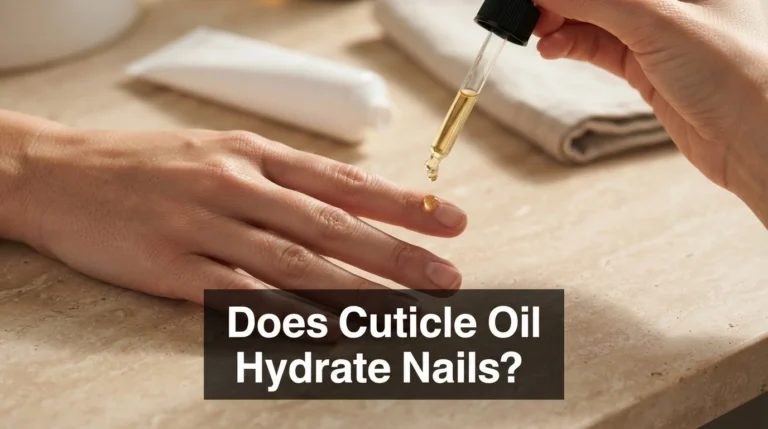
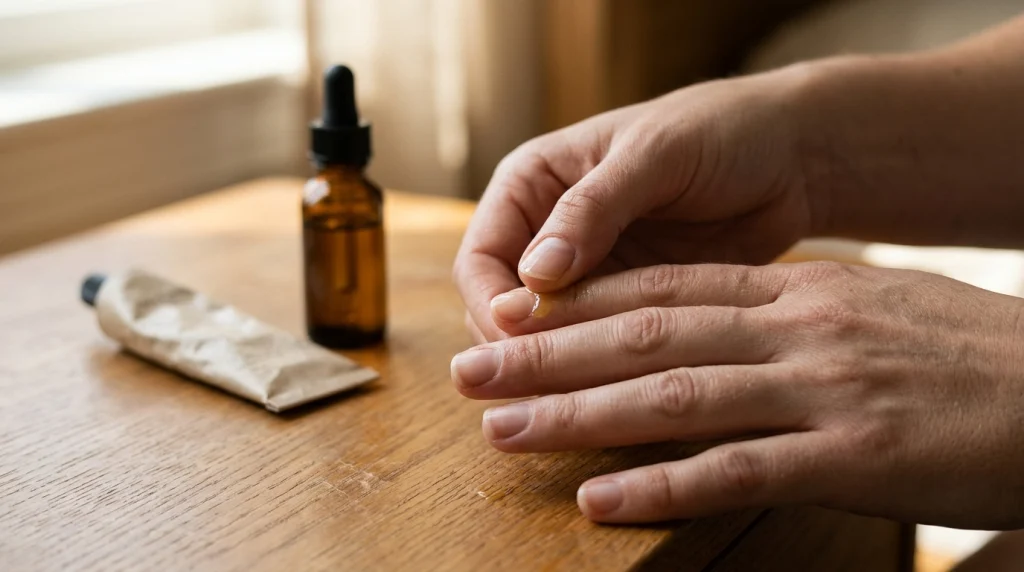
A moisturizing hand cream helps maintain the skin barrier, while cuticle oil can soften the skin surrounding your nails and make dry areas feel more comfortable.
How to build the habit:
- Apply hand cream after washing your hands whenever practical.
- Massage a small amount of cuticle oil around each nail once or twice daily if needed.
- Use a thicker, fragrance-free moisturizer before bed when your hands feel particularly dry.
- Rub moisturizer over the nail plates instead of applying it only to your palms.
Jojoba-based cuticle oils are a convenient option because they spread easily and generally feel lightweight. However, a basic moisturizing cream or petroleum jelly can also be useful.
Remember: Moisturizing helps protect existing nails from dryness, but it cannot permanently rebuild a nail plate that has already been severely damaged.
Pro Tip
Keep a small cuticle oil pen beside your bedside table and apply it immediately before sleeping. Linking nail care to an existing bedtime habit makes it easier to stay consistent.
2. Keep Your Nails Clean and Dry
Clean nails are an important part of good personal hygiene, but cleaning them aggressively can create problems of its own.
Bacteria and fungi can thrive in moist environments. Keeping your hands and nails clean, then drying them properly, helps reduce conditions that encourage unwanted microbial growth.
Use mild soap and lukewarm water to wash your hands. If dirt collects beneath your nails, gently loosen it with a clean, soft nail brush.
Avoid digging beneath your nails with sharp metal tools. Doing so can injure the skin underneath or contribute to separation between the nail plate and nail bed.
After washing, dry between your fingers and around your nails with a clean towel.
If you regularly struggle with dirt under longer nails, follow this guide to cleaning nails at home for a gentle approach that doesn’t require harsh scraping.
3. Trim Your Nails Before They Become Too Long
Long nails can look gorgeous, especially with almond, oval, or French-tip designs. However, extra length creates more opportunities for the nail tip to catch on clothing, drawers, and everyday objects.
If your natural nails are already thin or prone to splitting, maintaining a shorter length can reduce mechanical stress.
Use clean, sharp nail clippers and trim your fingernails approximately straight across. Then soften the corners slightly with a nail file.
You don’t need to trim your nails every few days. Check their length weekly and shorten them whenever they begin interfering with comfortable daily activities.
Best practice: If your nails frequently crack near the sides, try a short oval or softly rounded shape instead of maintaining sharp corners.
4. File Gently Instead of Aggressively
Filing might seem harmless, but excessive pressure and repeated rough movements can contribute to damaged nail edges.
Choose a fine-grit file suitable for natural nails and use controlled strokes to smooth rough areas. Filing in one direction is a gentle method, particularly when your nails are brittle.
Don’t force the file against the sidewalls of your nails or repeatedly saw across a small crack.
Whenever possible, file dry nails rather than very soft, waterlogged ones.
For routine grooming, focus on removing snags and maintaining your shape instead of dramatically reshaping your nails several times a week.
Why it matters: A smooth free edge is less likely to catch on hair, fabric, or other surfaces and develop a larger tear.
5. Stop Using Your Nails as Tools
One of the most overlooked healthy nail habits is surprisingly simple: stop asking your nails to do jobs they weren’t designed to do.
Your nails help protect your fingertips and support fine hand movements. They aren’t built to function as screwdrivers, bottle openers, or scraping tools.
Common habits that can damage your nails include:
- Using your nail tips to open soda cans.
- Peeling stubborn labels from containers.
- Scraping dried residue from countertops.
- Prying open packaging with long nails.
- Picking at stickers or hardened materials.
Instead, use the appropriate household tool or the pads of your fingers when possible.
This change is particularly important if you love longer natural nails, since more length can increase leverage when pressure is applied to the tip.
6. Wear Protective Gloves During Household Chores
Washing dishes, cleaning bathrooms, and scrubbing surfaces might be part of your everyday schedule, but repeated exposure to water and detergents can be rough on your nails.
Prolonged wetting and drying may contribute to brittle, splitting nails. Strong cleaning products can also irritate the skin surrounding them.
Wear properly fitted household gloves when washing dishes or working with cleaning solutions.
If your hands become sweaty inside gloves, try cotton-lined protective gloves or appropriate cotton liners to improve comfort during longer tasks.
Remove your gloves afterward, dry your hands thoroughly, and apply moisturizer.
Pro Tip
Keep a dedicated pair of dishwashing gloves near your kitchen sink. You’ll be more likely to use them consistently when you don’t have to search for them every time you clean.
7. Leave Your Cuticles Intact
Neat cuticles can make a manicure look polished, but cutting them isn’t necessary for healthy-looking nails.
The cuticle helps seal the area between the nail plate and surrounding skin, limiting the entry of germs.
When you cut or forcefully push back this tissue, you may create small openings that increase the risk of irritation or infection.
Instead of aggressively trimming the cuticle area, moisturize it daily and leave attached, healthy tissue alone.
If you develop a hangnail, wash your hands and carefully trim only the loose, protruding skin with clean manicure scissors. Never pull it away with your fingers or teeth.
A healthy cuticle routine should feel comfortable. Redness, bleeding, and soreness are signs that your grooming has become too aggressive.
8. Remove Nail Polish Without Peeling or Scraping
Peeling off gel polish can feel satisfying, especially when the edges begin lifting. Unfortunately, it can also pull away superficial layers of your natural nail plate.
This may leave your nails feeling thin, rough, or more prone to breakage.
Use a removal method appropriate for your specific manicure product. Regular polish can be dissolved with a suitable polish remover, while some soak-off gels require carefully controlled acetone removal.
Hard gels, certain builder products, and other artificial enhancements may require professional filing or specialized removal rather than simple soaking.
Never forcefully scrape away stubborn product or pry enhancements off your natural nails.
If you’re unsure whether a product can be safely removed at home, consult a qualified nail technician.
Warning
Never pull off a lifting artificial nail when it remains attached to your natural nail. Forceful removal can damage the nail plate and surrounding tissue. If the nail is painful, bleeding, or separating from the nail bed, seek appropriate professional care.
9. Give Damaged Nails Time to Recover
Your nails don’t need to breathe in the way living skin does. However, taking a break from gel, acrylic, or other enhancements can be useful when your nails show signs of damage.
If your nails become unusually thin, sore, peeling, or brittle after repeated manicures, covering them immediately with another enhancement may hide the problem without solving it.
Consider keeping them short, moisturizing regularly, and avoiding unnecessary nail treatments while the damaged portion grows out.
For a practical recovery approach, see how to make your nails healthy again.
Remember that nail plate damage doesn’t heal like a skin wound. The affected section usually needs to grow forward and be trimmed away as new nail replaces it.
There’s no universal number of polish-free days that guarantees recovery. The time needed depends on the damage and the growth of your nails.
10. Eat a Balanced Diet to Support Normal Nail Growth
Your nails grow from living tissue that depends on adequate nutrition, so eating balanced meals matters more than chasing unproven nail-growth shortcuts.
Protein provides the building blocks your body uses to create keratin. Other nutrients, including iron and zinc, also contribute to normal bodily functions involved in maintaining healthy tissues.
Build meals around varied sources of protein, vegetables, fruits, whole grains, and other nutrient-rich foods.
Good everyday options include:
- Eggs, beans, fish, tofu, or lean meat for protein.
- Leafy vegetables and legumes as sources of several essential nutrients.
- Nuts and seeds for a range of minerals and healthy fats.
- Fruit and vegetables for vitamin C and other nutrients.
- Whole grains as part of a varied, balanced diet.
Don’t assume that brittle nails automatically mean you have a vitamin deficiency. Repeated water exposure and cosmetic damage are common contributors to nail fragility.
Biotin supplements are often marketed for nail strength, but evidence of meaningful benefits for people without a deficiency is limited. High-dose biotin can also interfere with certain medical laboratory tests.
If your nails change unexpectedly or you suspect a nutritional deficiency, ask a healthcare professional about appropriate evaluation before taking supplements.
11. Keep Your Manicure Tools Clean
Your manicure tools touch nails and nearby skin repeatedly, so keeping them clean is an important hygiene habit.
Remove visible debris from clippers, files, and other reusable tools after use. Clean and disinfect reusable metal implements according to their manufacturer’s instructions, then dry and store them properly.
Replace disposable files and buffers when they become worn or difficult to clean.
Avoid sharing personal manicure tools, particularly when someone has a suspected nail or skin infection.
At a nail salon, pay attention to workstation cleanliness and ask how reusable equipment is disinfected.
Single-use items shouldn’t be reused between clients unless they are specifically designed to be safely reprocessed.
Smart habit: Keep your own small manicure kit in a clean case so your favorite tools are organized and ready whenever you need them.
12. Follow a Consistent Nail Care Routine
The most effective nail habits aren’t necessarily the most elaborate ones. They’re the habits you can comfortably repeat.
You don’t need a fresh manicure every week or an expensive product collection. A few minutes of consistent care can help you maintain smoother nail edges, softer surrounding skin, and fewer avoidable breaks.
Focus on three priorities: moisture, protection, and gentle maintenance.
For a routine you can easily fit into a busy schedule, explore how to take care of nails daily.
What Should Your Daily and Weekly Nail Care Routine Look Like?
Creating a repeatable schedule makes healthy nail habits feel effortless rather than overwhelming.
Your Daily Nail Care Checklist
- Morning: Wash and dry your hands gently, then apply hand cream.
- Throughout the day: Moisturize after frequent washing and protect your hands during wet chores.
- When needed: Smooth a small nail snag before it develops into a larger crack.
- Evening: Apply a small amount of cuticle oil or moisturizer around your nails.
- Before bed: Use a thicker cream if your skin and nails feel especially dry.
Your Weekly Nail Care Checklist
- Inspect your nails for splitting, lifting, or unusual changes.
- Trim your nails if their length has become uncomfortable.
- File rough edges with gentle, controlled strokes.
- Clean and organize your reusable manicure tools.
- Check whether your current manicure needs safe removal or maintenance.
This routine doesn’t require precise timing. Adjust it to your nail length, lifestyle, and manicure preferences.
What Should You Do and Avoid for Healthy Nails?
Do
- Moisturize nails and cuticles daily.
- Wear gloves during wet chores.
- Keep nail edges smooth.
- Use clean manicure tools.
- Remove polish gently.
- Maintain a manageable nail length.
Don’t
- Bite or pick at your nails.
- Cut healthy cuticles.
- Use nails to pry objects open.
- Peel off gel enhancements.
- Over-buff thin nail plates.
- Ignore painful nail changes.
How Long Does It Take to Notice Healthier Nails?
The timeline depends on whether you’re dealing with simple dryness or significant nail plate damage.
Dry surrounding skin can feel softer soon after moisturizing. Preventing new snags and reducing water exposure may help limit additional breakage over the following weeks.
However, visibly damaged nail plate must gradually grow out before it can be completely replaced.
Fingernails generally grow around 3 millimeters per month, although the rate varies from person to person. A fingernail may take approximately four to six months to replace itself fully.
That means the benefits of better nail habits often develop gradually. Consistency is more useful than repeatedly changing products because you haven’t noticed dramatic improvement after a few days.
What to expect:
- First few days: Dry skin and cuticles may feel more comfortable with regular moisturizing.
- After several weeks: Better protection may reduce repeated snags and preventable breakage.
- Over several months: New nail growth gradually replaces previously damaged areas.
These are general expectations, not guaranteed results. Persistent nail fragility may require evaluation for underlying causes.
Which Nail Care Products Are Actually Worth Buying?
You don’t need an overflowing drawer of nail products to maintain healthy nails. A few simple essentials are more useful than buying every trendy nail treatment you see online.
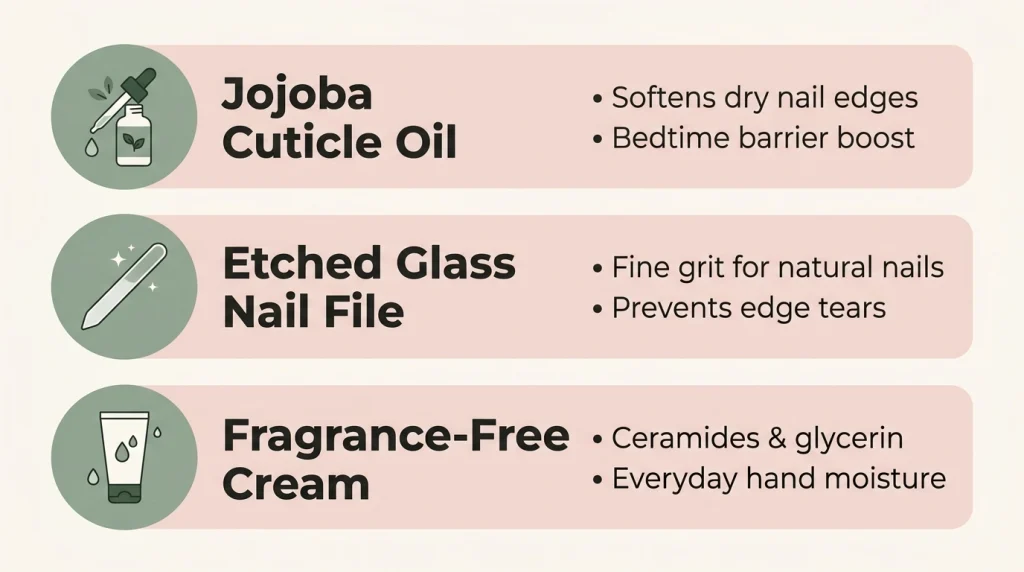
1. Jojoba Cuticle Oil for Dry Nail Edges
A lightweight cuticle oil is convenient for softening dry skin around your nails, especially if you wash your hands frequently.
Look for a simple formula that feels comfortable on your skin. If you’re sensitive to fragrances, choose a fragrance-free option.
Recommended Product
Jojoba Cuticle Oil
A practical everyday moisturizer for dry cuticles that fits easily into your bedtime nail care routine.
As an Amazon Associate, we earn from qualifying purchases.
2. Fine-Grit Nail File for Gentle Shaping
A fine-grit nail file helps you maintain smooth edges without needing aggressive clipping or rough shaping.
Choose a file intended for natural nails and replace it when the surface becomes worn or damaged.
If you prefer a reusable option, consider a quality glass nail file with a protective storage case.
Recommended Product
Glass Nail File for Natural Nails
A reusable shaping tool that helps smooth small snags and maintain a neat natural nail shape.
As an Amazon Associate, we earn from qualifying purchases.
3. Fragrance-Free Hand Cream for Everyday Moisture
A good hand cream should be comfortable enough that you actually use it regularly.
Look for moisturizing ingredients such as glycerin, petrolatum, or ceramides. These can support the skin’s moisture barrier and help reduce dryness around the nails.
Apply cream over your fingertips, nail plates, and surrounding skin after washing.
Recommended Product
Fragrance-Free Moisturizing Hand Cream
A simple moisturizing cream supports comfortable skin and cuticles without requiring a specialized nail treatment.
As an Amazon Associate, we earn from qualifying purchases.
What Extra Habits Can Help Protect Your Natural Nails?
Once you’ve mastered the basics, a few small adjustments can make your routine even more effective.
Match Your Nail Length to Your Lifestyle
If you type frequently, work with your hands, or regularly catch your nails on objects, a shorter shape may be easier to maintain.
Choose a length that suits your daily activities instead of forcing your nails to maintain a style that constantly causes breakage.
Avoid Excessive Surface Buffing
Repeatedly buffing the entire nail plate to create shine can gradually thin the surface.
Use minimal pressure and avoid frequent buffing, particularly if your nails are already flexible, peeling, or damaged.
Protect Your Nails Between Manicures
Check your bare nails after removing polish and before applying another enhancement. This gives you an opportunity to spot irritation, lifting, or unexpected discoloration.
You can keep your nails beautiful with regular polish or a simple natural finish while avoiding unnecessary aggressive treatments.
Pay Attention to Product Reactions
Burning, itching, swelling, or a rash after nail products may indicate irritation or an allergic reaction.
Stop using the suspected product and seek medical advice when symptoms are significant, persistent, or worsening.
When Should You Be Concerned About Your Nail Health?
Occasional peeling or a broken nail is common, but not every nail problem is cosmetic.
Some changes can reflect infections, inflammatory skin conditions, injuries, or other medical issues.
Warning Signs
Contact a healthcare professional if you notice persistent nail pain, swelling, bleeding, nail separation, unusual thickening, significant changes in color or shape, or a new unexplained dark streak. Seek prompt care for signs of infection or rapidly changing symptoms. Don’t hide concerning nail changes beneath artificial enhancements.
If your nails remain fragile despite reducing obvious sources of damage, a dermatologist can help identify possible underlying causes.
Frequently Asked Questions About Healthy Nail Habits
Q: What is the most important habit for healthy nails?
A: Regular moisturizing and protection from unnecessary damage are two of the most helpful habits. Keep nails clean, limit prolonged water exposure, and avoid aggressive cutting, filing, or manicure removal.
Q: Should you apply cuticle oil every day?
A: You can apply cuticle oil daily if your nail area feels dry. A small amount is usually enough, and a fragrance-free hand cream or petroleum jelly can also help maintain moisture.
Q: Is it healthier to keep your nails short or long?
A: Either length can be maintained with proper care, but shorter nails are generally less likely to catch on objects. If your nails frequently split or break, reducing their length may help.
Q: Can damaged nails become healthy again?
A: New, healthier nail can gradually replace damaged nail plate as it grows. Keeping nails moisturized, avoiding further trauma, and allowing time for growth are important. Significant damage may require several months to grow out.
Q: Can you wear nail polish and still have healthy nails?
A: Yes. Many people can wear regular polish while maintaining healthy nails. The key is gentle application and removal, avoiding repeated trauma, and paying attention to irritation or changes in your natural nails.
Start Building Healthier Nail Habits Today
Healthy, beautiful nails don’t require an elaborate routine. Moisturize regularly, protect your hands during chores, groom gently, and give damaged nails time to grow out. These small habits can help you maintain stronger-looking natural nails while still enjoying the manicures you love.
Save this guide to your Pinterest nail care board so you can revisit these 12 healthy nail habits whenever your routine needs a refresh.

Hi, I’m Jessica, the creator behind Unique Lash & Nails Katy.
I created this website for anyone who loves beautiful nails as much as I do. Here, I share trendy nail designs, seasonal manicure ideas, easy nail care tips, honest product recommendations, and step-by-step guides to help you create salon-worthy nails at home. Whether you’re looking for everyday inspiration or your next favorite nail trend, I hope you’ll find something you love.