How to Protect Nails During Travel
Quick Answer
To protect nails during travel, shorten and smooth your nails before leaving, let your manicure dry or cure completely, and pack a fine nail file, cuticle oil, and hand cream. Moisturize after handwashing, dry nails after swimming, and use tools instead of your nails to handle luggage or packaging. Fix small snags immediately rather than picking at them.
Time needed
15–25 minutes before departure
Difficulty
Beginner
Items needed
5 travel-friendly basics
Result lasts
Throughout your trip with upkeep
You shouldn’t have to choose between a fun vacation and a manicure that survives the journey. Suitcase zippers, frequent handwashing, long sightseeing days, and hotel pools can all challenge your nails in different ways. A little preparation helps you avoid the chipped polish and broken corners that are so annoying when you’re away from home.
This guide shows you what to do before departure, what to pack, and how to protect both natural nails and manicures once the trip begins. The goal isn’t a complicated beauty routine. It’s a few small habits you can actually keep while traveling.


Why Are Your Nails More Vulnerable When You Travel?
Travel changes what your hands do all day. You drag luggage, unzip tight bags, open snack wrappers, and touch unfamiliar handles. Long or sharply pointed nails catch more easily during those tasks. Repeated wetting and drying can also make nails more prone to peeling, while frequent washing and sanitizer use may leave the surrounding skin dry.
Meanwhile, swimming, cleaning products, and poorly fitting walking shoes can affect fingernails and toenails. Nail polish is another consideration: a rushed manicure may smudge before you reach the airport, and a lifted gel edge can catch on everything. The good news is that most of these risks are manageable without skipping your favorite nail color.
Warning
Don’t cover a painful, swollen, greenish, bleeding, or lifting nail with new gel, acrylic, or press-ons just to make it vacation-ready. These changes may need professional assessment. A manicure can hide worsening damage and delay appropriate care.
What Should You Pack in a Travel Nail Care Kit?
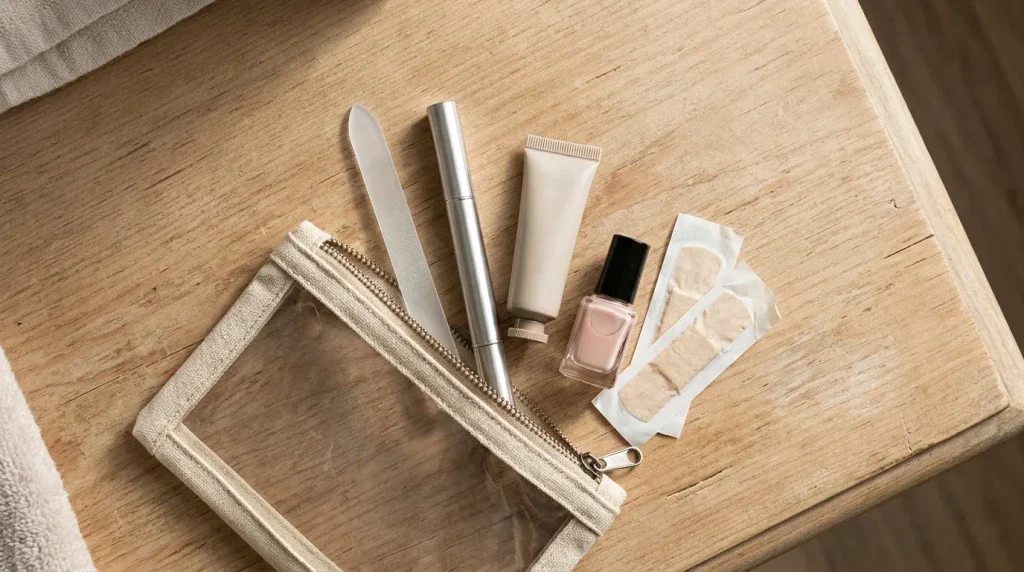
Your kit should fit in a small zip pouch so it’s easy to find in your hotel room. You don’t need a portable salon. These five basics cover the problems you’re most likely to encounter:
- Fine nail file: A glass nail file or gentle emery board smooths snags before they turn into breaks.
- Cuticle oil: A jojoba cuticle oil pen is less messy than a dropper bottle and easy to use before bed.
- Hand cream: A small tube of fragrance-free hand cream helps reduce dryness after cleansing.
- Manicure touch-up: If you wear regular polish, pack a tightly closed bottle of your shade or a small clear top coat for minor edge wear.
- Small adhesive bandages: Keep a couple for protecting a tender fingertip or a minor snag until you can care for it properly.
Put liquids inside a leak-resistant pouch and check your airline and departure airport’s current carry-on rules. Don’t bring sharp salon tools or flammable products without checking the applicable restrictions. If you can’t travel with a product, buy it after arrival rather than risking confiscation.
How Do You Protect Nails During Travel Step by Step?
Start a day or two before your trip. That gives you time to prepare without rushing through a fresh manicure while your ride is already outside.
1Trim and Smooth Your Nail Edges
Check for small splits, peeling corners, or edges that catch on fabric. Trim any extra length that makes ordinary tasks awkward, then file into a softly rounded or squoval shape. A smooth free edge is less likely to snag on packing cubes, towels, and seat belts.
Keep the length you enjoy if it’s practical; protection doesn’t require cutting every nail short. For a reliable pre-trip routine, use this simple nail care routine as your preparation checklist.
Common mistake: Filing away the side corners too aggressively creates a narrow tip that catches and breaks more easily.
2Choose a Practical Manicure
For active trips, consider regular polish on short nails or an uncomplicated salon manicure that you know wears comfortably. Sheer pink, nude, or a subtle shimmer makes small edge chips less noticeable than a high-contrast dark shade. If you already wear gel or acrylic, check that nothing is lifting before leaving.
Don’t schedule an unfamiliar enhancement service just before a long trip if your skin is sensitive to nail products. A familiar routine is easier to maintain when your usual technician isn’t nearby.
Common mistake: Choosing extra-long extensions for a luggage-heavy adventure increases the chance of a painful catch or lever-like pull.
3Finish Your Polish Before Departure Day
Apply a suitable base coat, thin layers of color, and a compatible top coat according to each product’s directions. Run the brush lightly across the free edge when the formula allows it. Give regular polish adequate drying time before packing, and have gel professionally or correctly cured using the intended system.
If you favor dark shades, a base coat also helps limit pigment staining. See these tips for preventing nail yellowing before choosing a bold holiday color.
Common mistake: Painting thick coats right before handling bags leaves the surface vulnerable to dents and smears.
4Pack Your Repair Kit Where You Can Reach It
Put your file, cream, oil, and any allowed touch-up products in one pouch rather than loose in your suitcase. Add a small tissue or cloth to wipe off excess cream before touching your phone. If your airline restricts a particular item, keep the permitted essentials and leave the rest at home.
A file is especially valuable because smoothing a tiny snag takes seconds. Waiting until the nail catches on a sweater can turn a simple rough edge into a deeper split.
Common mistake: Packing every nail product you own makes the one useful tool impossible to find when you need it.
5Moisturize After Washing and Sanitizing
Clean your hands whenever hygiene requires it; protecting a manicure never comes before proper handwashing. Once your hands are clean and dry, massage a little cream over the backs of your hands, fingertips, and nail folds. Use cuticle oil when convenient, particularly before bed.
Repeated cleansing can leave the skin around your nails tight and flaky. If you want a simple ingredient-based routine, this guide explains how to moisturize and hydrate nails naturally without unnecessary treatments.
Common mistake: Applying a heavy layer of slippery oil immediately before carrying luggage makes your grip less secure.
6Handle Luggage Without Using Your Nails
Use the pads of your fingers to pull zippers and lift suitcase handles. Reach for scissors or a package opener when a seal is stubborn, and use a key or suitable tool instead of your nail to pry a tab. Ask for help with a jammed lock rather than forcing it open.
These tiny adjustments matter most when you’re distracted or rushing. An elegant long manicure is still wearable on vacation, but it needs more awareness around metal edges, luggage straps, and stiff plastic packaging.
Common mistake: Using a nail tip to open a soda can can bend or split it even when the polish itself looks intact.
7Rinse and Dry After Water Activities
After swimming in a pool or the sea, rinse with fresh water when available and pat your hands dry, including around and beneath the free edges. Apply hand cream later when your skin is clean and dry. Avoid leaving damp gloves or wet socks on for hours.
You don’t have to skip the ocean or the hotel pool. Just reduce unnecessary prolonged wet exposure, and wear shower sandals in communal pool areas or changing rooms to help protect your feet.
Common mistake: Scraping sand from underneath nails with a sharp object can irritate or separate the nail from its bed.
8Protect Toenails on Walking Days
Trim toenails straight across before a walking-heavy trip and gently smooth sharp corners. Choose footwear with enough room for your toes, especially if your feet swell during long travel days. Change damp socks and let shoes dry between uses when possible.
Pressure from tight shoes can make toenails sore or bruised, so prioritize comfort over a narrow silhouette. If a nail becomes very painful or visibly lifts, reduce pressure and seek appropriate medical advice rather than covering it with polish.
Common mistake: Cutting deeply down the sides of a toenail can contribute to painful ingrown edges.
9Check Your Nails Each Evening
Spend one minute checking for a rough edge, new chip, loose enhancement, or irritated cuticle. Smooth only minor snags and apply a small amount of moisturizer. If you have regular polish, a thin top-coat touch-up may improve the appearance of light wear when the manufacturer allows it.
Keep your routine realistic: clean, dry, inspect, moisturize. If you want to continue the habit once you’re home, follow these daily nail care habits between trips.
Common mistake: Picking at a lifted gel corner removes protective layers of the natural nail and can worsen separation.
How Should You Adjust Nail Care for Different Trips?
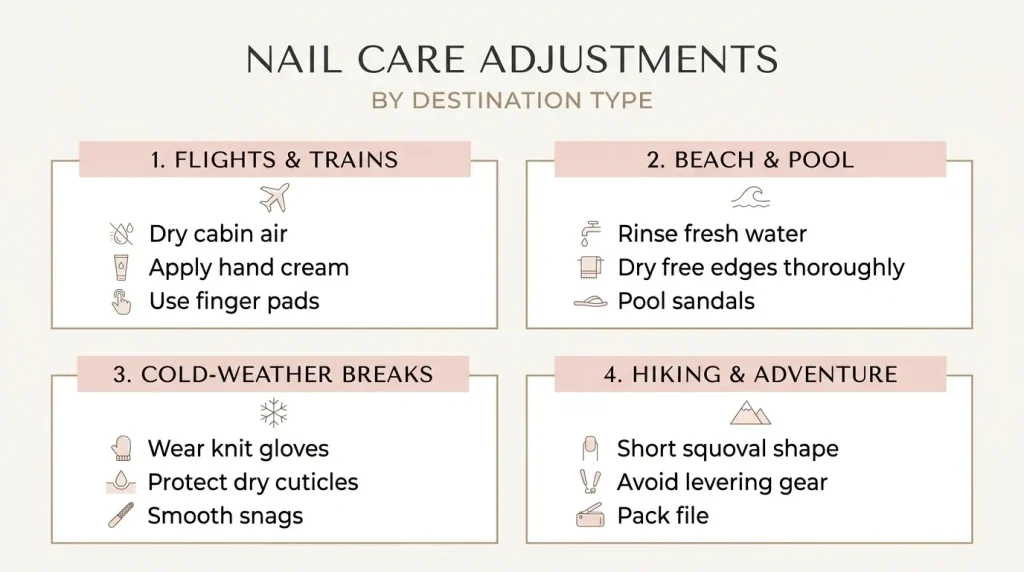
Long flights and train journeys
Keep a small tube of cream accessible, use hand hygiene as needed, and avoid opening stiff packaging with your nails. You may notice tighter-feeling skin after frequent washing or time in dry environments. Apply moisturizer when convenient rather than repeatedly coating your hands with oil during luggage handling.
Beach holidays and pool vacations
Choose a manageable nail length, rinse after swimming, and dry the nails and toes thoroughly. Use footwear in communal wet areas. A clear top coat can help maintain the appearance of regular polish, but no coating guarantees protection against every chip or impact.
Cold-weather city breaks
Cold air and repeated indoor heating can make the skin around nails feel rough. Carry hand cream and wear comfortable gloves outdoors. Avoid tugging tightly knitted gloves over sharp nail tips; smooth snags before they hook into the fabric.
Hiking, camping, and adventure trips
Short, smooth nails are usually easier to manage when you’re tying gear, handling rope, or setting up equipment. Carry a clean file and avoid aggressive scraping when dirt collects. Wash with appropriate soap and water when possible, then dry well. If you use protective work gloves, choose a comfortable fit.
Pro Tip
Make a tiny bedside nail station on your first evening: put your cuticle oil, cream, and file together next to your charger. You’ll see them when you’re already winding down, which makes a 60-second nail check much easier to remember.
What Should You Do and Avoid to Keep Nails Safe?
Do
- File snags as soon as you notice them.
- Moisturize clean hands and nail folds.
- Dry nails and feet after swimming.
- Use practical footwear and protective gloves.
Don’t
- Use nails to pry open luggage or cans.
- Peel off gel, acrylic, or regular polish.
- Cut healthy cuticles or dig under nails.
- Ignore pain, swelling, or a lifting nail.
What If Your Nail Chips or Breaks While You’re Away?
A small chip appears in regular polish
If the nail itself is intact, clean and dry the surface, dab on a little matching polish if available, and add compatible top coat after it dries. Next time, use thinner coats and protect the tips from rough handling.
The free edge catches or splits slightly
Gently file a minor rough edge only if the split is away from the attached pink portion of the nail. Stop if it hurts or bleeds. Protect the finger from further knocks; seek medical care for deeper tears, significant pain, or signs of infection.
Gel or acrylic begins lifting
Don’t tear, glue, or force the enhancement back into place. Avoid snagging it and arrange professional removal or repair when practical. If your natural nail is damaged, this nail recovery guide can help you plan gentler care afterward.
Frequently Asked Questions About Travel Nail Care
Q: Is gel polish better than regular polish for a vacation?
A: Gel can be convenient because it doesn’t need the same air-drying time as regular polish, but it still can chip or lift. Choose the system that suits your nails and avoid picking during removal.
Q: Can swimming ruin your manicure?
A: Swimming doesn’t automatically ruin polish. Repeated water exposure and rough handling may contribute to wear, so rinse, dry, and avoid picking at any loose edges afterward.
Q: How often should you apply cuticle oil when traveling?
A: Once daily is an easy starting point, especially before bed. Add hand cream after washing whenever your skin feels dry. Neither product needs to be applied constantly to be useful.
Q: Can you carry nail polish or cuticle oil on a plane?
A: Rules depend on the airport, airline, country, packaging, and product type. Check current carry-on liquid and hazardous-item restrictions before packing polish, remover, or oil.
Q: What nail shape is easiest to maintain while traveling?
A: A short round or squoval shape is a practical choice because the edges are less likely to catch on clothes or bags. Keep any shape you like if it’s smooth and comfortable for your activities.
Keep Your Nails Vacation-Ready Without Overthinking It
The best way to protect nails during travel is to prepare smooth, manageable edges, bring a tiny care kit, and treat your nails gently during everyday activities. One minute of moisturizing and checking for snags each evening can save you from an unnecessary manicure emergency.
Save this travel nail care checklist on Pinterest before your next getaway so it’s ready when you start packing.

Hi, I’m Jessica, the creator behind Unique Lash & Nails Katy.
I created this website for anyone who loves beautiful nails as much as I do. Here, I share trendy nail designs, seasonal manicure ideas, easy nail care tips, honest product recommendations, and step-by-step guides to help you create salon-worthy nails at home. Whether you’re looking for everyday inspiration or your next favorite nail trend, I hope you’ll find something you love.