Should You Wear Gloves for Household Cleaning? Nail Tips
Quick Answer
Yes, you should wear gloves for household cleaning when you wash dishes, scrub with detergents, or handle cleaning chemicals. Waterproof gloves limit prolonged water exposure that can contribute to peeling nails and protect your skin from irritating products. Choose gloves compatible with your cleaner, keep their insides dry, and wash and moisturize your hands after removal. A quick dusting session may not require them, but long, wet chores usually do.
Should You Wear Gloves for Household Cleaning?
Your favorite manicure shouldn’t have to compete with a sink full of dishes. Cleaning gloves can make a real difference to dry cuticles, peeling nail tips, and hands that feel tight after scrubbing. Here’s when to wear them, which material to choose, and how to avoid the sweaty-glove problem that makes so many people give up.


When Should You Actually Wear Gloves While Cleaning?
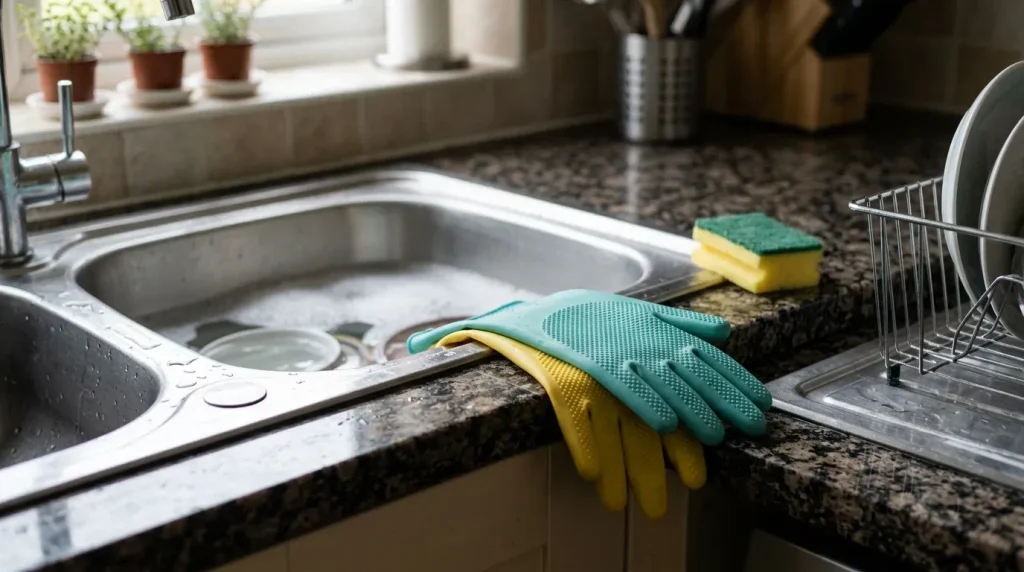
Wear them for wet work and products that could irritate your skin. You don’t need gloves for every household movement, but you should put them on before a chore becomes a long soak or requires a chemical product whose label recommends hand protection.
- Washing dishes by hand: Yes. Warm water, dish detergent, and repeated immersion make this a high-value time to protect your nails.
- Scrubbing bathrooms: Yes. Wear gloves suitable for the toilet, tile, or limescale cleaner you’re using, and add eye protection if the label calls for it.
- Hand-washing laundry: Yes. Detergent and extended soaking can irritate skin and leave nails temporarily soft.
- Wiping kitchen counters: It depends. A short wipe with plain water may be fine without gloves; a disinfectant or degreaser calls for following the product label.
- Dry dusting or tidying: Usually optional. Gloves may still help if dust irritates your skin or rough surfaces catch your nails.
- Handling bleach or strong cleaners: Follow the label’s protective-equipment instructions every time. Choose chemical-compatible gloves rather than assuming any waterproof pair will work.
If you prefer one simple rule, keep dedicated dishwashing gloves by your sink and a separate, appropriately rated pair with your bathroom supplies. That small separation also helps you avoid transferring bathroom residue onto dishes or food-preparation areas.
How Does Cleaning Without Gloves Affect Your Nails?
Your nail plate is made of layers of keratin, and it can absorb water. During a lengthy dishwashing session, those layers take up moisture; as your nails dry, they release it. Frequent wet-and-dry cycles can contribute to splitting and peeling, particularly if your nails are already fragile.
Soap and detergents add another problem: they remove oils from the skin around your nails. You might notice tight fingertips, little hangnails, or rough cuticles before you see any obvious nail damage. Very hot water can make that dry feeling worse, which is why your shower and sink habits matter together. Our guide to how hot water affects nails explains that pattern in more detail.
Cleaning chemicals can also irritate exposed skin, especially when you have small cracks around your nail folds. Gloves provide a barrier, but they aren’t magical armor. The wrong material, a puncture, or liquid trapped inside can leave your hands exposed anyway.
It’s also important not to blame cleaning for every nail change. Repeated gel removal, nail biting, aggressive filing, and some health conditions can cause similar-looking weakness. If your tips keep splitting after you’ve changed your cleaning habits, compare other common causes of weak nails rather than buying endless strengthening products.
Which Cleaning Gloves Are Best for Your Hands and Nails?
The best pair depends on what you’re cleaning, how long your hands will be wet, and whether your skin gets irritated easily. No glove material protects against every chemical, so check the cleaner label and any glove compatibility guidance first.
1. Reusable waterproof gloves for dishes and everyday wet chores
These are the easiest choice for sinks, ordinary dish soap, and routine wet household tasks. Look for a flexible pair with textured palms, a comfortable cuff, and a size that lets you grip a slippery glass without squeezing your fingertips. A cotton lining can feel better during longer chores if it stays dry.
Pros: Reusable, easy to rinse, and more comfortable than thin disposable gloves for repeated dishwashing. Cons: They take time to dry and can develop leaks or unpleasant odors if you store them damp. Don’t assume that an ordinary dishwashing glove is safe for every concentrated chemical.
Browse reusable waterproof dishwashing gloves if your hands are regularly in the sink. Prioritize fit and material information over a cute color.
2. Nitrile gloves for tasks requiring suitable chemical resistance
Nitrile is a useful latex-free option for some cleaning products, especially when you need finger dexterity for detailed work. Some people prefer it for wiping small surfaces or handling messy items, but thickness and manufacturer specifications matter. A very thin disposable nitrile glove is not automatically suitable for prolonged contact with a strong cleaner.
Pros: Good fingertip control, no natural-rubber latex, and options with specified chemical resistance. Cons: Disposable pairs create waste, can trap sweat, and may tear during rough scrubbing. Follow the label and glove manufacturer’s compatibility information before using them with chemicals.
3. Cotton-lined gloves for hands that sweat or feel itchy
Soft lining can reduce friction and make a longer dishwashing session more pleasant. If you already own unlined waterproof gloves, separate thin cotton glove liners can be an option, provided the outer gloves still fit properly and the liners remain dry.
Pros: Less direct rubbing on sensitive skin and easier moisture management when you change wet liners. Cons: Extra fabric can make snug gloves uncomfortable, and damp cotton held against your skin can make irritation worse. Remove the gloves when you start feeling clammy.
4. Latex gloves only if they suit you and the cleaning product
Natural-rubber latex can be flexible and grippy, but it isn’t the best choice if you have a latex allergy or suspect one. It also isn’t universally resistant to household chemicals. If you develop itching, hives, or repeated redness with latex, stop using it and choose a suitable non-latex alternative; seek medical advice for persistent or severe reactions.
Pros: Flexible fit for people who tolerate it. Cons: Allergy potential and chemical-resistance limitations. Your cleaner’s label and the glove manufacturer’s guidance matter more than the material name alone.
How Do You Wear Cleaning Gloves Without Trapping Moisture?
A protective glove only helps when your skin isn’t sitting in water inside it. Use this five-part routine to keep your nail folds comfortable while you work.
1 Check the cleaner and the gloves
Read the cleaning product’s label before starting. Inspect both gloves for holes, damaged cuffs, and signs of wear; choose a material the product instructions consider appropriate.
Common mistake: Using the same thin glove for dish soap and a strong bathroom chemical without checking whether it provides adequate protection.
2 Start with clean, dry hands
Wash and thoroughly dry your hands before putting gloves on. Dry around each nail fold and between your fingers; a small amount of fragrance-free cream can be used earlier if it has absorbed and doesn’t interfere with the glove or task.
Common mistake: Pulling gloves over damp hands, then mistaking the uncomfortable, soggy feeling for an allergy.
3 Fit the cuff and fingertips comfortably
Choose enough finger room to grip tools without stretching the glove over your nails. Keep the cuff positioned to reduce water entry, but don’t let it cut into your wrist or interfere with safe movement.
Common mistake: Buying gloves one size too small; extra pressure at the tips makes gripping awkward and can encourage tears.
4 Take breaks if your hands get sweaty
During long chores, stop in a safe place and remove your gloves when your hands become damp. Dry your skin, change wet cotton liners, and resume with clean, dry gloves rather than pushing through itching or prickling.
Common mistake: Wearing sweaty gloves continuously because keeping water outside seems more important than keeping moisture off your skin inside.
5 Remove, wash, moisturize, and dry the gloves
Peel gloves off without touching contaminated outer surfaces against your bare skin. Wash your hands with soap and water afterward, dry thoroughly, and apply moisturizer to nails and cuticles. Rinse reusable gloves as directed, then let both surfaces dry before storage.
Common mistake: Tossing wet gloves into a closed cabinet, where the lining stays damp and unpleasant.
Will Gloves Protect Gel, Acrylic, and Press-On Nails?
Yes, gloves can reduce exposure to water and detergents that affect your natural nail and the area around a manicure. They won’t stop an enhancement from lifting if its bond is already damaged, and they won’t turn an unsafe cleaning product into a safe one.
Gel manicures
Fully cured gel tolerates routine washing, but repeated wet work can aggravate edges that are already lifting. Wear gloves for long dishwashing sessions, and don’t pick at a lifted corner. If your gel starts separating, get it properly assessed and removed rather than trapping water underneath.
Acrylic extensions
Long extensions can puncture a tight glove or reduce your grip on slippery objects. Pick a roomier fingertip and avoid using your acrylics as scrapers. If an acrylic has lifted, covering it with a glove doesn’t repair the gap; arrange a safe repair or removal.
Press-on nails
Adhesive tabs and certain nail glues can loosen with repeated soaking. A waterproof barrier helps reduce water exposure while you clean, especially soon after application. Still, check that your press-ons are secure before putting pressure on them inside gloves.
Between manicures, it’s useful to inspect your natural nails rather than covering every flaw with another coat. If yours are currently peeling or feel unusually flexible, follow a gentle routine for damaged, weak nails while the affected nail grows out.
What Safety Mistakes Should You Avoid With Cleaning Gloves?
Warning
Gloves do not replace ventilation, eye protection, or product-label instructions. Never mix bleach with ammonia, vinegar, acids, or other cleaners; dangerous gases can form. If a cleaner gets inside your glove, remove it promptly and follow the product’s first-aid directions. Seek urgent medical or poison-center advice for significant chemical exposure.
Another common mistake is wearing one glove for everything. That bathroom-cleaning pair can carry residue onto a food-contact surface, even when the outside looks clean. Separate pairs by task, rinse and dry reusable gloves correctly, and replace them whenever the material cracks or leaks.
Don’t use gloves to hide a skin problem, either. Persistent itching, a rash, burning, or cracks around your fingertips could be irritant contact dermatitis or an allergy to a glove component. Try a suitable alternative material and ask a healthcare professional about persistent symptoms. Sudden breathing difficulty or widespread swelling after glove exposure needs urgent care.
What Should You Do Before and After Cleaning to Keep Nails Healthy?
Gloves are the first barrier, not the whole nail-care routine. Keep your nails short enough that they don’t scrape inside the fingertips, and use a fine file to smooth snags before they catch. Avoid cutting or aggressively pushing back the cuticle, since the surrounding skin helps protect the nail root.
After cleaning, pat your hands dry and rub a fragrance-free cream over your fingers, nail folds, and nails. Ingredients such as glycerin, petrolatum, or ceramides can help reduce the tight, dry feeling from frequent washing. A small amount of cuticle oil can make rough skin around your nails feel more comfortable; it won’t glue a split nail back together.
For especially dry fingertips, apply cream again before bed. Keep a travel-size tube near your kitchen sink so moisturizing becomes the natural last step of a chore. Our simple nail-care routine shows how to combine that habit with trimming, shaping, and gentle manicure maintenance.
Pro Tip
Keep your everyday dishwashing gloves hanging open where air can reach them, and put a small hand-cream tube beside that spot. You’ll be reminded to dry the gloves and moisturize in the same moment, instead of remembering only after your cuticles feel rough.
What Are the Biggest Do’s and Don’ts for Glove-Wearing?
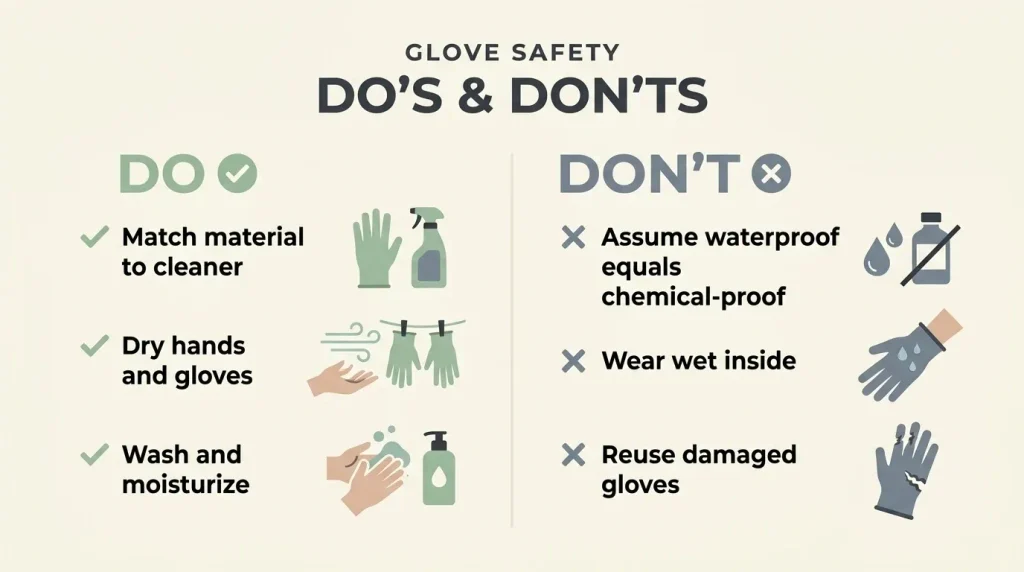
Do
- +Match glove material to the cleaner’s instructions
- +Dry your hands and gloves between sessions
- +Wash and moisturize after taking gloves off
Don’t
- −Assume every waterproof glove resists chemicals
- −Keep wearing gloves after the inside gets wet
- −Reuse damaged gloves or mix cleaning products
Which Simple Products Make This Routine Easier?
You don’t need a full nail-treatment collection. Start with well-fitting gloves and a moisturizer you actually enjoy using. Add a liner or oil only if it solves a specific problem for you.
Recommended Product
Fragrance-Free Ceramide Hand Cream
A cream with ceramides or glycerin helps support dry skin around your nails after handwashing and cleaning, without relying on heavily scented formulas.
As an Amazon Associate, we earn from qualifying purchases.
If your cuticles look flaky even with cream, try a small jojoba cuticle oil pen after drying your hands. A pen is convenient by the sink and lets you apply a tiny amount without flooding the nail folds. Use it as a comfort step, not as a cure for nail disease or a replacement for gloves.
Frequently Asked Questions About Cleaning Gloves
Q: Should you wear gloves when washing dishes every day?
A: Yes, if you hand-wash dishes regularly, waterproof gloves can reduce repeated soaking and detergent contact. Make sure they fit, keep the inside dry, and moisturize after you’re finished.
Q: Are rubber or nitrile gloves better for house cleaning?
A: Reusable waterproof gloves often suit ordinary dishes and wet chores, while appropriately rated nitrile gloves work for some detailed tasks. Neither material is automatically safe for every chemical; follow the product label and glove compatibility guidance.
Q: Can wearing cleaning gloves cause dry or itchy hands?
A: Yes. Sweat trapped inside, friction, glove ingredients, or a latex allergy can cause irritation. Change wet gloves promptly, dry your hands, and seek medical advice for a persistent rash.
Q: Do cleaning gloves stop nail polish from chipping?
A: They can reduce water, detergent, and abrasion exposure during chores, which may help your manicure last. They can’t prevent every chip, especially if your polish is already peeling or your nails are being used as tools.
Q: Do you need gloves for natural or homemade cleaners?
A: Sometimes. Natural doesn’t always mean non-irritating: acids, concentrated ingredients, and frequent wetting can still affect your skin. Assess the actual ingredients and exposure, and never mix homemade products with bleach.
So, Should Gloves Be Part of Your Cleaning Routine?
Yes—especially when your chores involve long water exposure, detergents, or products that call for hand protection. Choose compatible, comfortable gloves, remove them when damp, and finish by washing, drying, and moisturizing your hands. Save this guide to your Pinterest nail-care board so your next cleaning day is easier on your nails.

Hi, I’m Jessica, the creator behind Unique Lash & Nails Katy.
I created this website for anyone who loves beautiful nails as much as I do. Here, I share trendy nail designs, seasonal manicure ideas, easy nail care tips, honest product recommendations, and step-by-step guides to help you create salon-worthy nails at home. Whether you’re looking for everyday inspiration or your next favorite nail trend, I hope you’ll find something you love.