Nail Oil vs Cuticle Oil: Which One Do You Need?
Quick Answer
Nail oil and cuticle oil usually do the same job: condition your nail plate and the skin around it. The difference is often the product’s emphasis, not a strict formula rule. Choose a lightweight oil you enjoy using daily for brittle nails, and a richer formula or balm for very dry cuticles. You rarely need two separate bottles.
Standing in the nail-care aisle comparing bottles labeled “nail oil,” “cuticle oil,” and “nail and cuticle oil”? Here’s the surprise: those names often describe overlapping products. What matters more is the formula, how your fingertips feel after using it, and whether you’ll actually apply it regularly. This nail oil vs cuticle oil guide makes the choice simple.


Is Nail Oil the Same as Cuticle Oil?
Usually, yes. Both are leave-on conditioning products designed to soften the nail area and reduce the dry, tight feeling that often follows handwashing, polish remover, or cold weather. Many formulas are explicitly sold as “nail and cuticle oil” because the same few drops can be massaged over your visible nail and the surrounding skin.
There is no universal ingredient standard that makes every bottle marked “nail oil” fundamentally different from one marked “cuticle oil.” A brand might use “nail oil” to highlight conditioning the hard nail plate, while “cuticle oil” highlights softening the skin at the nail base. Another brand may use either name for essentially the same blend.
Check the ingredients, texture, and applicator rather than assuming one label is stronger.
What Is the Real Difference Between Nail Oil and Cuticle Oil?
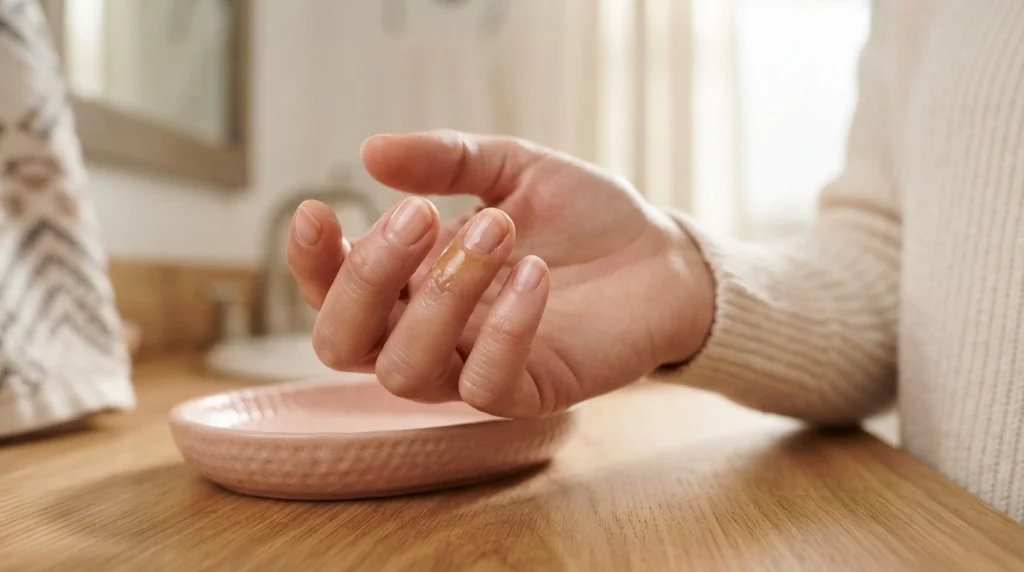
Nail Oil
Typical focus: Conditioning the nail plate and helping dry nails feel more flexible.
Best for: Rough-looking, brittle, peeling-prone nails.
Texture: Often lightweight, though formulas vary.
Cuticle Oil
Typical focus: Softening the cuticle area and neighboring skin.
Best for: Flaky nail folds, rough skin, and hangnail-prone fingertips.
Texture: Light oil or richer blend, depending on the brand.
The overlap is the important part: a jojoba-based cuticle oil can also condition the exposed nail, and a nail oil can soften dry skin. You don’t need to buy both because your nails are brittle and your cuticles are dry. Start with one multipurpose product and see how your hands respond.
How Do Oils Actually Help Your Nails and Cuticles?
Your visible nails are made of layers of hardened keratin, while the skin around them has its own protective barrier. Repeated soaking, soaps, sanitizer, cleaning products, and polish removal can leave both areas feeling dry. Oils act as emollients: they make surfaces feel smoother and help slow moisture loss. Some ingredients may also condition parts of the nail plate.
That matters because a very dry nail can feel less flexible and may be easier to snag or split during normal activities. Oil doesn’t glue together a torn nail or permanently reverse thinning from aggressive filing. Instead, it supports comfortable day-to-day care while you protect the nail that’s already there.
The cuticle itself is a thin layer of tissue at the nail base, and the surrounding nail fold helps protect the growing nail. Keeping that area comfortable is useful; cutting away protective tissue is not. If your cuticles look uneven, moisturizing is a safer starting point than trimming them aggressively.
For a broader routine focused on weak tips, see the guide to the best oils for weak, damaged, or brittle nails. It explains why reducing breakage is different from making nails grow faster.
Which Should You Choose for Your Nail Concern?
1. If Your Nails Peel, Bend, or Break Easily
Choose a light, easy-to-spread nail-and-cuticle oil, ideally one with jojoba among its main conditioning ingredients. Massage a tiny amount over bare nails, around the edges, and underneath the free edge when accessible. The goal is steady conditioning and less roughness, not instant hardening.
Pros: One product covers the nail plate and surrounding skin; light textures fit into daily life. Cons: Oil cannot rebuild a split or replace nail material lost to filing. Keep damaged nails short enough to avoid catching, and file away snags gently.
2. If Your Cuticles Are Flaky, Tight, or Rough
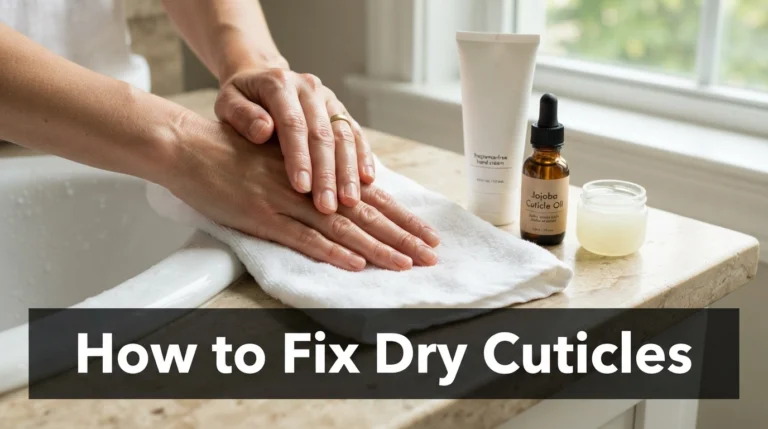
Choose a cuticle oil that feels comfortable on your skin. A simple jojoba blend may be enough for everyday dryness. If the skin is very rough, follow the oil with a fragrance-free hand cream or a thin layer of petroleum jelly at bedtime to help reduce moisture loss.
Pros: Easy to target the nail folds, especially with a brush pen. Cons: A thin oil alone might not feel protective enough in extremely dry weather. If your skin stings with fragranced products, try a plain, fragrance-free option instead.
3. If You Wear Gel Polish, Acrylics, or Press-Ons
Choose whichever oil you will use around the nail folds without picking at your enhancement. A brush pen is handy because it delivers a controlled amount along the sides and base without coating your whole hand. You can use a little oil on surrounding skin even when most of your nail plate is covered.
Pros: Helps maintain a comfortable-looking cuticle area between appointments. Cons: It won’t fix lifting, sensitivity, or damage from improper removal. Follow your nail technician’s aftercare instructions, and never use oil as a reason to ignore a painful or lifting enhancement.
4. If You Want One Simple Everyday Product
A basic, unscented jojoba oil or nail-and-cuticle blend is the easiest starting point. You can apply it after your evening handwash and add another application whenever your fingertips feel dry. If you already own a cuticle oil that you like, finish that bottle before buying anything else.
For an easy routine around this habit, follow these daily nail care steps. You don’t need to turn moisturizing into a complicated treatment schedule.
Which Ingredients Should You Look for on the Label?
Jojoba Oil: A Versatile Everyday Choice
Jojoba is popular because it spreads easily and usually feels less heavy than thicker oils. It is technically a liquid wax, but it’s commonly called an oil. Nail-care professionals often use it in formulas intended for both the nail plate and the skin. It is a practical first choice if you dislike greasy fingertips.
Sweet Almond, Sunflower, and Other Plant Oils: Softening Blends
Sweet almond and sunflower oils can make a formula feel smooth and comfortable, particularly around dry nail folds. They aren’t mandatory ingredients, and more different oils do not automatically mean better results. If you have a known nut allergy, check product labels carefully and choose an alternative that you know is safe for you.
Vitamin E: A Supporting Ingredient, Not a Growth Miracle
Vitamin E appears in many nail-care blends and can help support the stability of some oil formulas. Seeing it on the label doesn’t prove the product will repair a damaged nail or speed growth. Think of it as one possible supporting ingredient rather than the reason to choose an expensive bottle.
Fragrance and Essential Oils: Optional, Not Necessary
A lovely scent can make your routine feel luxurious, but perfume and essential oils can irritate sensitive skin. If your nail folds become itchy, red, or uncomfortable after using an oil, stop applying it. A short ingredient list and fragrance-free formula are often easier choices when your skin reacts readily.
Pro Tip
Read the first few ingredients before choosing by scent or packaging. If your goal is daily conditioning, a simple formula with a dispenser you enjoy using beats an elaborate blend you only reach for once a month.
How Should You Apply Nail Oil or Cuticle Oil?
Use the same basic method for either product. Start with clean hands, then dry them gently. Place a tiny drop at the base of each nail, or use a brush pen to paint a narrow line around the nail fold. Massage along both sides and across the exposed nail plate for several seconds. A little goes a long way.
On bare nails, spread oil over the tips too. With polish or gel, focus on surrounding skin. Excess oil is messy, not more effective.
Timing matters for manicures: if you’re about to apply regular polish, prepare a clean, dry, oil-free nail plate so the base coat adheres properly. Save your final oil application for after the manicure has dried according to product directions. Oil used during ordinary daily care is different from oil left on the plate immediately before painting.
Try this schedule: use oil once every evening for a week, then add a morning application if your hands frequently feel tight or dry. Reapply after lots of handwashing when practical, and use hand cream after washing too. This approach is simple enough to maintain during work, school, or a busy day.
How Long Does It Take to Notice a Difference?
Your cuticle area may look smoother shortly after application because the oil softens dry surface skin. If dryness is the main problem, consistent use over the next several days or weeks may make your fingertips feel more comfortable. Results vary with your skin, handwashing habits, and how dry the environment is.
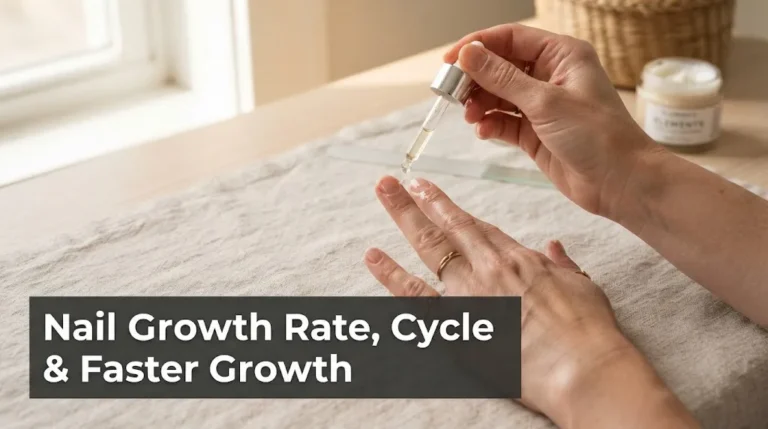
Nail splitting is slower to improve. An already torn edge has to be trimmed or grow out; oil doesn’t fuse it back together. Fingernails generally grow only a few millimeters per month, so noticeable changes in newly grown nail can take months. Be wary of products promising dramatic growth in a few days.
If length is your goal, combine conditioning with protecting the tips from repeated trauma. The article on habits that help you retain nail length explains why preventing breaks is often more useful than searching for a miracle growth oil.
Which Nail and Cuticle Oil Products Are Worth Considering?
You don’t need five bottles. These are three practical shopping options based on texture, applicator, and everyday use. Prices and formulas can change, so check the current label and ingredient list before buying.
Recommended Product Type
Pure Jojoba Oil for Bare Nails and Sensitive Routines
A single-ingredient, fragrance-free jojoba oil is a straightforward pick when you want to condition nails and skin without paying for extra scent or decorative packaging.
As an Amazon Associate, we earn from qualifying purchases.
Recommended Product
CND SolarOil Nail and Cuticle Care
This familiar nail-and-cuticle product illustrates why you often don’t need to choose between the two labels; it is designed as a combined conditioning oil.
As an Amazon Associate, we earn from qualifying purchases.
Recommended Product Type
Cuticle Oil Brush Pen for Your Bag or Desk
A brush-tip pen makes it easier to apply a controlled amount around each nail when you’re away from home and don’t want an oily dropper bottle in your bag.
As an Amazon Associate, we earn from qualifying purchases.
What Mistakes Make Nail Oils Less Useful?
Applying Oil Only When Your Cuticles Look Terrible
A once-a-month rescue treatment can’t replace basic everyday maintenance. Put the bottle beside your hand cream or nightstand so applying it becomes an automatic thirty-second habit. There’s no need to keep a rigid schedule, but regular use is more realistic than occasional heavy applications.
Buying an Oil That Irritates Your Skin
Strongly scented blends may feel fancy, yet irritation defeats the point of moisturizing. If you notice itching, stinging, rash, or persistent redness, stop using the product. Don’t keep applying it in the hope that the irritation will somehow turn into healthier cuticles.
Cutting Your Cuticles After Softening Them
Oil helps rough skin feel more pliable; it doesn’t mean the cuticle should be cut away. The protective tissue around the nail is a barrier against germs. Leave it intact, and avoid forceful pushing or trimming even when your fingertips look neatly softened.
Expecting Oil to Replace Gloves and Gentle Nail Care
Moisturizing helps, but constant wet work and harsh cleaning products can still leave nails vulnerable. Wear protective gloves for dishes and cleaning, smooth sharp snags promptly, and avoid using nails to pry open containers. For more ideas, see the best way to moisturize your nails.
Warning
Oil is cosmetic care, not treatment for an infection or nail disease. If the skin around a nail becomes increasingly swollen, hot, painful, or produces pus—or a nail develops unexplained discoloration, lifting, or persistent changes—seek medical advice rather than covering the problem with oil or polish.
Should You Use Cuticle Oil With Hand Cream or Vaseline?
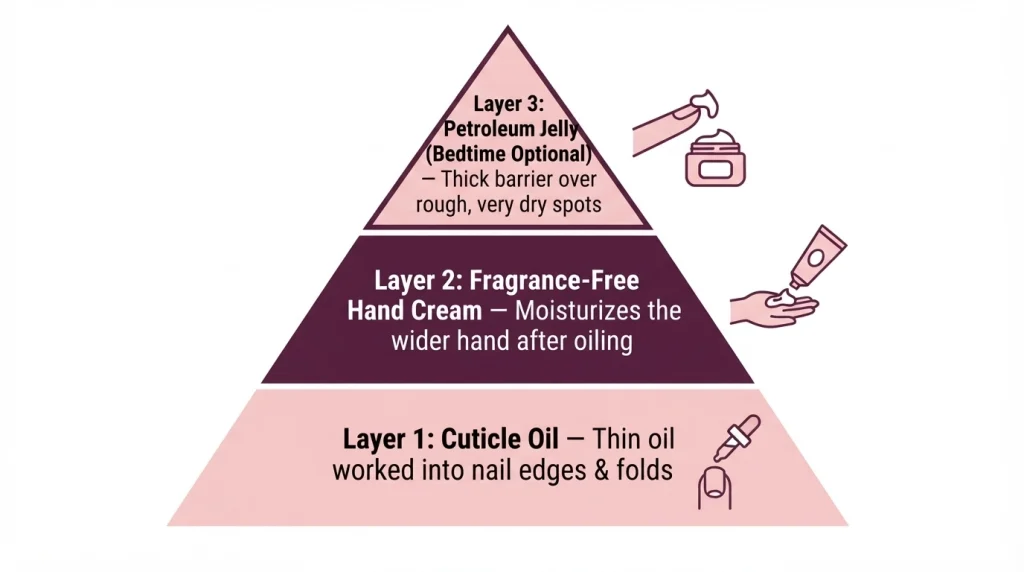
Yes, if your fingertips need extra comfort. They are complementary products, not competitors. A thin oil is easy to work around the nail edges, while cream moisturizes the wider hand. Petroleum jelly forms a thicker barrier that can be especially useful over very dry areas at bedtime.
For a simple evening routine, wash your hands, pat them dry, massage a little oil around your nails, and follow with fragrance-free hand cream. Add a small dab of petroleum jelly over rough spots if needed. There’s no rule that all three are necessary every night.
If you’re deciding between an oil and an ointment, the site’s Vaseline vs cuticle oil comparison explains when each texture makes the most sense.
Frequently Asked Questions About Nail Oil vs Cuticle Oil
Q: Can you use cuticle oil on the whole nail?
A: Yes. Most cuticle oils can be spread over the exposed nail plate as well as the surrounding skin. Check your product’s directions, and avoid leaving oil on the nail immediately before applying regular polish.
Q: Do nail oil and cuticle oil make nails grow faster?
A: Neither has been shown to dramatically speed normal nail growth. Regular conditioning may reduce dryness-related splitting, which can help you hold on to the length your nails naturally grow.
Q: How often should you apply nail or cuticle oil?
A: Once daily is a practical place to start. Use it more often if frequent handwashing or dry weather leaves your fingertips uncomfortable, provided the formula doesn’t irritate your skin.
Q: Is cuticle remover the same as cuticle oil?
A: No. Cuticle oil is a leave-on conditioner. Cuticle remover is a separate product intended to loosen dead cuticle material and must be used according to its directions. Never treat remover as an overnight moisturizing oil.
Q: Is plain jojoba oil better than a branded cuticle oil?
A: Not automatically. Plain jojoba is a sensible low-fuss option, while a blended product may offer a texture or applicator you prefer. Choose a formula your skin tolerates and that you’ll use regularly.
So, Which Oil Should You Buy?
For most people, nail oil vs cuticle oil isn’t a choice between two essential treatments. One simple oil can care for both the nail plate and the skin around it. Choose a comfortable texture, use a small amount consistently, and protect your nails from avoidable damage. Save this guide to your Pinterest nail-care board for the next time you’re comparing bottles.

Hi, I’m Jessica, the creator behind Unique Lash & Nails Katy.
I created this website for anyone who loves beautiful nails as much as I do. Here, I share trendy nail designs, seasonal manicure ideas, easy nail care tips, honest product recommendations, and step-by-step guides to help you create salon-worthy nails at home. Whether you’re looking for everyday inspiration or your next favorite nail trend, I hope you’ll find something you love.