Protect Dry Nails During Cleaning: 9 Easy Tips
Quick Answer
To protect dry nails during cleaning, wear waterproof household gloves with a comfortable lining, avoid direct contact with harsh cleaning chemicals, and limit prolonged exposure to water. Dry your hands thoroughly after chores, then apply fragrance-free hand cream and cuticle oil. Keep nails short and smooth to reduce snagging, peeling, and breakage.
If your nails feel rough, brittle, or painfully dry after washing dishes or cleaning the bathroom, your everyday chores may be contributing to the problem.
Repeated exposure to water, detergent, and cleaning chemicals can leave your nails more vulnerable to peeling and splitting. Fortunately, you don’t have to stop cleaning or spend a fortune on nail treatments.
With the right protective gloves, gentle habits, and a simple moisturizing routine, you can keep your hands clean without putting unnecessary stress on your nails.
Here’s exactly how to protect your dry nails during cleaning and help them stay comfortable, smooth, and healthy-looking.
Preparation Time
2–5 minutes
Difficulty
Beginner
Essential Items
Gloves, cream, oil
Protection
Repeat every cleaning session


Why Does Cleaning Make Your Nails Dry and Brittle?
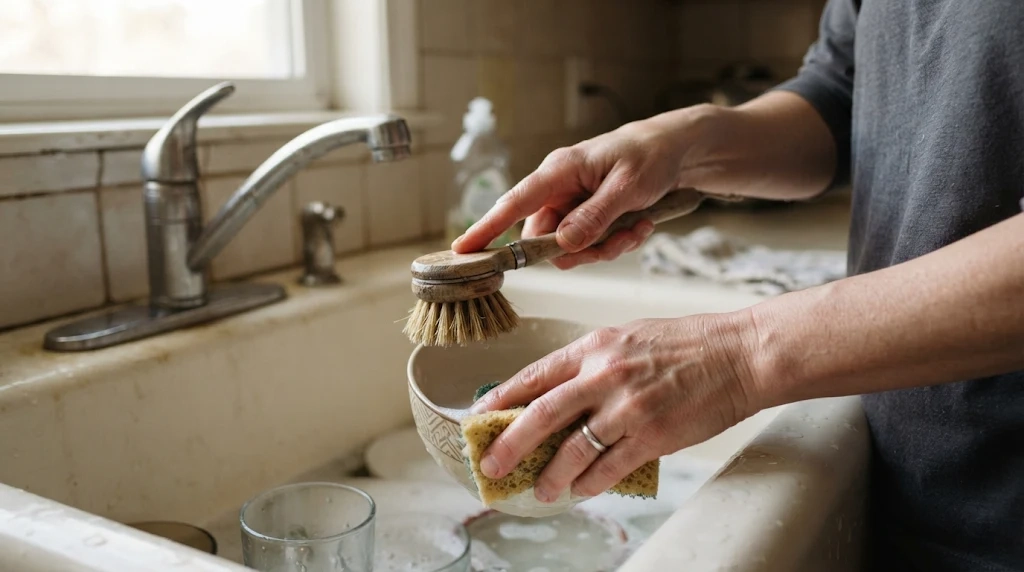
Your nails contain layers of keratin, a tough structural protein. Although nails look solid, the nail plate can absorb water and change slightly as it becomes wet and dries again.
When you’re repeatedly washing dishes, scrubbing surfaces, and rinsing your hands, these wet-to-dry cycles can contribute to peeling and splitting, especially if your nails are already fragile.
Cleaning products may also remove oils from the skin surrounding your nails, leaving your cuticles rough and uncomfortable.
Frequent Water Exposure
Long periods of water contact can temporarily soften your nails. Repeated soaking and drying may increase their tendency to split into layers.
Washing a few dishes isn’t automatically harmful. The bigger concern is repeated or prolonged exposure without appropriate protection.
Harsh Detergents and Cleaning Chemicals
Dishwashing detergents, degreasers, and some household cleaners can irritate your skin and contribute to dryness around your fingernails.
Strong chemicals, including certain disinfectants and bleach-based products, require extra care. Always follow the manufacturer’s handling and glove recommendations.
Friction and Repeated Scrubbing
Scrubbing brushes, rough sponges, and hard surfaces can catch your nail tips or place pressure on their edges.
If your nails already peel, this repeated contact may make existing splits worse.
For more information about the causes of nail dryness, see our guide on why your nails become dry and brittle.
What Do You Need to Protect Dry Nails While Cleaning?
You only need a few practical products to create a protective nail-care routine.
- Chemical-compatible household gloves: Help prevent direct exposure to water, detergents, and cleaning solutions.
- Cotton glove liners: May improve comfort and absorb moisture inside protective gloves.
- Fragrance-free hand cream: Helps replenish moisture in dry skin after washing.
- Cuticle oil: Helps condition the skin around your nails.
- Petroleum jelly: Provides an additional moisturizing barrier for very dry surrounding skin.
- Fine-grit nail file: Smooths rough nail edges before they catch and split.
Choose items you’ll actually use consistently. A comfortable pair of protective gloves and a dependable moisturizer are more useful than an elaborate routine you rarely follow.
How Can You Protect Dry Nails During Cleaning? 9 Easy Steps
Follow these practical steps before, during, and after household chores. Each one reduces a different source of unnecessary nail stress.
Step 1: Choose the Right Protective Gloves
Start with gloves designed for the cleaning task you’re performing. They should fit comfortably without pulling tightly across your fingertips.
For ordinary dishwashing, waterproof household gloves help reduce repeated water exposure. For stronger chemicals, choose gloves specifically recommended on the cleaning product’s label or safety information.
Replace gloves when they develop holes, tears, or significant wear.
Common mistake: Assuming every rubber or disposable glove protects against every cleaner. Chemical resistance depends on glove material and the substance being handled.
Step 2: Keep the Inside of Your Gloves Dry
Moisture trapped inside gloves can leave your hands damp and uncomfortable.
Before putting them on, make sure your hands are dry. If you frequently sweat inside your gloves, consider clean cotton liners that fit comfortably beneath them.
Take breaks during extended cleaning sessions when practical, and dry reusable gloves according to their care instructions.
Common mistake: Reusing gloves that remain wet inside. Persistent dampness can irritate the skin around already-sensitive nails.
Step 3: Protect Your Nails Before Starting Chores
If your hands feel dry, apply a light layer of fragrance-free moisturizer before cleaning and allow it to absorb.
Pay attention to the skin beside your nails and around your cuticles. Avoid leaving a thick, slippery coating that makes gloves difficult to put on or affects your grip.
Keep broken or irritated skin away from chemicals and follow any protective measures specified on product labels.
Common mistake: Using moisturizer as a substitute for protective gloves. Cream can help with dryness, but it doesn’t provide reliable chemical protection.
Step 4: Limit Direct Contact With Cleaning Solutions
Use cleaning tools that keep your fingers away from the cleaning solution, such as long-handled brushes, microfiber cloths, and appropriately designed sponges.
Follow the recommended product dilution and contact time. More cleaner doesn’t necessarily mean better results.
Choose less irritating cleaning products when suitable for the surface and cleaning job.
Common mistake: Mixing household cleaners to make them stronger. Certain combinations, including bleach with acids or ammonia, can release dangerous gases.
Step 5: Avoid Unnecessarily Long Water Exposure
When possible, organize your cleaning tasks so you don’t repeatedly immerse your hands in water.
For example, gather dishes before washing, use suitable tools to remove stubborn food, and avoid leaving your hands soaking in the sink.
Wear appropriate gloves throughout wet cleaning tasks rather than putting them on only after your hands become uncomfortable.
Common mistake: Removing gloves for a quick task and continuing to handle detergent or wet surfaces with bare hands.
Step 6: Keep Your Nail Tips Short and Smooth
Shorter nails are less likely to catch on cleaning cloths, gloves, or hard surfaces.
Use a clean, fine-grit nail file to smooth sharp corners and rough edges. A rounded or softly squared shape often works well for everyday chores.
If your nails are already splitting, avoid aggressively buffing their surfaces. Focus on the free edges rather than thinning the nail plate.
Common mistake: Pulling off peeling nail layers or filing deeply into the sides, which can worsen existing damage.
Step 7: Wash and Dry Your Hands After Cleaning
Remove your cleaning gloves carefully to avoid transferring residue onto your skin.
If your hands may have contacted cleaning chemicals, follow the product’s first-aid directions. Otherwise, wash as needed with mild soap and running water.
Pat your hands dry with a clean towel, paying attention to your fingertips and the spaces around your nails.
Common mistake: Leaving your hands damp after removing gloves, particularly when your skin is already irritated.
Step 8: Apply Hand Cream and Cuticle Oil
After drying your hands, massage a moisturizing hand cream into your skin, fingertips, and the areas around your nails.
Look for ingredients such as glycerin, petrolatum, ceramides, or dimethicone. These can help reduce moisture loss from dry skin.
Apply a small amount of cuticle oil around each nail if you enjoy using it. You don’t need to flood your nails with oil for it to be useful.
Common mistake: Moisturizing only at bedtime while repeatedly washing your hands throughout the day.
Step 9: Finish With Overnight Nail Care
Before bed, apply a richer hand cream to clean, dry hands. If the skin around your nails remains especially dry, add a thin layer of petroleum jelly.
Massage gently rather than scraping away rough cuticles. Leave healthy cuticle tissue intact because it helps protect the area where the nail grows.
Consistent overnight moisturizing helps dry skin feel more comfortable, although damaged nail layers still need time to grow out.
Common mistake: Expecting a single overnight treatment to permanently repair splitting nail plates.
Which Cleaning Products Should You Be Careful With?
Some cleaning products require more precautions than others. Always read the label instead of relying on whether a product smells strong or mild.
Warning
Never mix bleach with ammonia, vinegar, acidic toilet cleaners, or other household chemicals. Dangerous gases can form. If a cleaning product causes burning, significant irritation, or breathing symptoms, stop exposure and follow appropriate first-aid guidance immediately.
- Dishwashing detergents: Repeated contact may contribute to dry or irritated skin.
- Degreasers: Some formulas can be particularly irritating; use the prescribed protection.
- Bleach-based cleaners: Follow dilution, ventilation, and glove instructions carefully.
- Bathroom and toilet cleaners: Acidic or alkaline formulas may require chemical-resistant gloves and eye protection.
- Disinfectants: Respect their labeled handling precautions and required surface contact times.
If your skin is cracked, painful, or actively irritated, avoid direct exposure and consider having someone else perform chemical-intensive cleaning until the skin recovers.
What Are the Best Gloves for Dry, Brittle Nails?
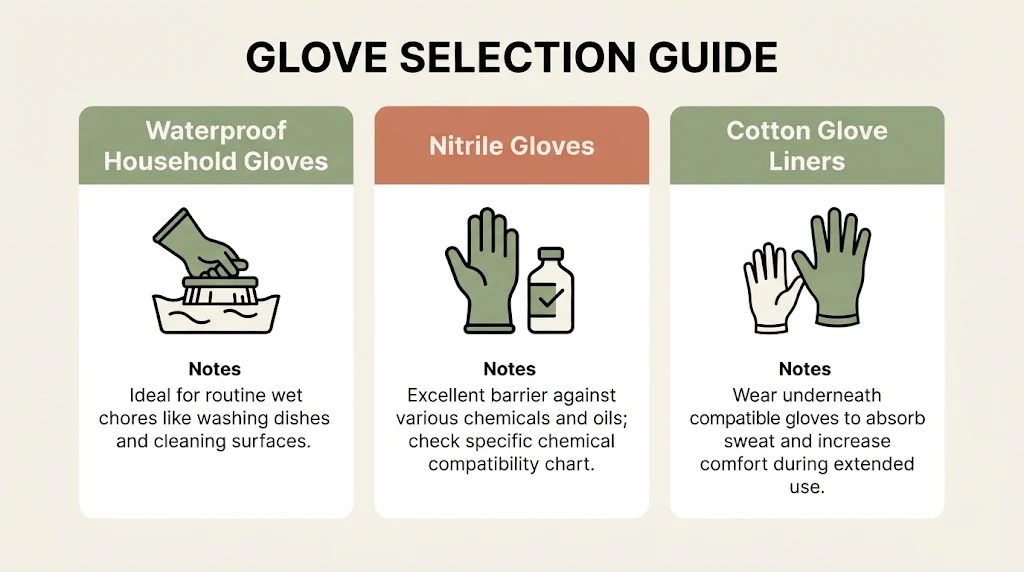
The best gloves depend on your cleaning task, the substances involved, and how comfortable they feel during use.
Waterproof Household Gloves
These are practical for routine dishwashing and wet household chores. Choose a size that allows normal finger movement without excess rubbing around the fingertips.
Longer cuffs can help prevent splashes from entering the gloves.
Nitrile Gloves
Nitrile gloves are available in disposable and reusable designs. Some offer useful protection against particular household chemicals, but their suitability depends on thickness, formulation, and exposure conditions.
Check the glove manufacturer’s chemical compatibility information before using them with stronger cleaners.
Cotton Glove Liners
Soft cotton liners may help with sweat and friction when worn beneath compatible protective gloves.
Change them when damp. Cotton alone isn’t waterproof or a substitute for chemical-resistant protection.
Pro Tip
Keep a designated pair of gloves near the kitchen sink and another pair with your bathroom supplies. Having the appropriate protection within reach makes it easier to wear gloves consistently.
Which Nail-Care Products Are Worth Keeping at Home?
You don’t need expensive nail treatments to start protecting your hands. These three product categories fit naturally into a practical cleaning-day routine.
Affiliate disclosure: As an Amazon Associate, we earn from qualifying purchases.
Recommended Product
Reusable Household Cleaning Gloves
Choose comfortable, waterproof gloves suitable for your specific cleaning products and tasks.
Recommended Product
Fragrance-Free Moisturizing Hand Cream
A rich moisturizer containing glycerin, ceramides, or petrolatum can help soften dry skin after chores.
Recommended Product
Cuticle Oil Pen
A portable cuticle oil pen makes it convenient to condition the skin around your nails after handwashing.
What Should You Do and Avoid When Cleaning With Dry Nails?
DO
- Wear suitable protective gloves.
- Keep gloves clean and dry inside.
- Moisturize after washing.
- Keep nail edges smooth.
- Follow cleaner label instructions.
DON’T
- Clean with bare hands unnecessarily.
- Mix household chemicals.
- Leave wet gloves on for hours.
- Pick peeling nail layers.
- Use nails as scraping tools.
How Often Should You Moisturize Dry Nails?
Moisturize your hands after washing and whenever the surrounding skin feels dry. For many people, this means applying hand cream several times daily.
You can use cuticle oil once or twice a day if it helps you maintain a consistent routine. At bedtime, a thicker cream or petroleum jelly can be helpful for especially dry skin.
For a broader approach to healthy nail habits, explore our complete daily nail care routine.
Can You Wear Nail Polish While Doing Household Cleaning?
Yes. Wearing regular nail polish doesn’t automatically mean you must avoid household chores.
A well-applied base coat and top coat may help protect the appearance of your manicure, but polish isn’t a reliable barrier against cleaning chemicals.
Wear appropriate gloves even when your nails are painted. Avoid using your nail tips to scrape off stubborn dirt because this can chip polish and stress the nail underneath.
If you’re wearing gel or acrylic nails, take care around any areas that are lifting or damaged. Don’t pull off loose enhancements, and seek professional removal when necessary.
How Can You Fix Nail Problems Caused by Cleaning?
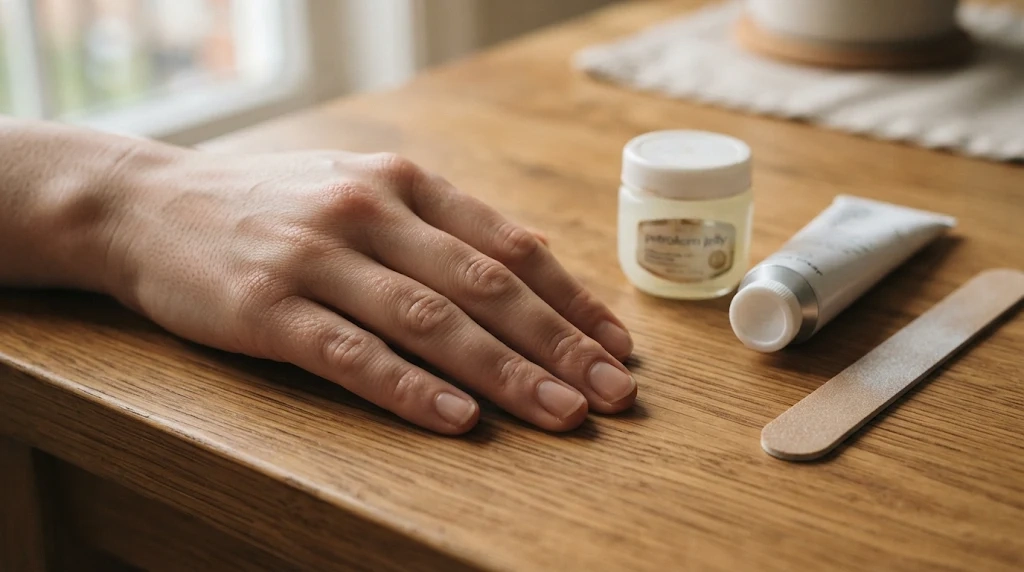
Problem: Your nail tips keep peeling
Gently smooth loose rough edges without pulling away layers. Keep your nails shorter and reduce repeated water exposure with appropriate gloves. The damaged section needs time to grow out.
Problem: Your cuticles are cracked and uncomfortable
Apply fragrance-free moisturizer regularly, followed by a small amount of petroleum jelly when needed. Avoid trimming healthy cuticle tissue. Seek medical advice if you notice spreading redness, swelling, pus, or increasing pain.
Problem: Your nails break during scrubbing
Shorten and smooth vulnerable edges, then switch to cleaning tools that don’t require pressure from your fingertips. Use comfortable gloves that don’t pull on your nail tips.
Problem: Your hands become red or itchy after cleaning
Stop contact with the suspected irritant, follow the product’s first-aid instructions, and review your glove material and cleaning products. Persistent or recurring symptoms may indicate irritant or allergic contact dermatitis and deserve medical assessment.
If you already have substantial nail damage, our guide on helping damaged nails become healthy again offers a longer-term care approach.
How Long Does It Take for Dry Nails to Improve?
Dry skin around your nails may feel softer after several days of consistent moisturizing, although the response varies.
Existing splits and peeling areas in the nail plate don’t simply heal back together. As your nails grow, the damaged portions gradually move toward the tips and can be trimmed away.
A complete fingernail can take roughly four to six months to grow out, sometimes longer. If your nails are severely damaged or aren’t improving despite gentle care, consult a dermatologist.
When Should You Seek Professional Advice?
Household cleaning isn’t the only possible cause of brittle or abnormal nails. Skin conditions, infections, repeated manicure trauma, and some health conditions can affect nail appearance.
Seek professional advice if you notice:
- Persistent pain, swelling, or redness around a nail.
- Pus or signs of infection.
- Nails lifting significantly from the nail bed.
- Unexplained nail discoloration or major shape changes.
- Severe cracking that doesn’t improve with protection.
- Recurring hand rashes after using gloves or cleaning products.
A dermatologist can help distinguish ordinary dryness from conditions that need specific treatment.
Frequently Asked Questions
Q: Can washing dishes every day damage your nails?
A: Frequent, prolonged exposure to water and detergent can contribute to brittle or peeling nails. Wearing waterproof gloves and moisturizing afterward helps reduce unnecessary exposure.
Q: Should you apply cuticle oil before or after cleaning?
A: Applying cuticle oil after cleaning, once your hands are clean and dry, is convenient and helps condition surrounding skin. You can also use it at other times during the day.
Q: Are cotton gloves enough for washing dishes?
A: No. Cotton gloves absorb water and don’t provide waterproof protection. They may be useful as liners beneath compatible household cleaning gloves, but they aren’t a substitute for them.
Q: Does nail polish protect nails from cleaning chemicals?
A: Regular nail polish may help maintain the appearance of your manicure, but it doesn’t replace chemical-resistant gloves. Always use the protection recommended for the cleaning product.
Q: What is the easiest way to stop nails from splitting during chores?
A: Keep nails short with smooth edges, wear suitable protective gloves, and moisturize consistently. If splitting continues or becomes painful, seek advice from a dermatologist.
Keep Your Nails Protected Every Cleaning Day
Protecting dry nails during cleaning comes down to a few repeatable habits: wear suitable gloves, minimize unnecessary water and chemical exposure, dry your hands thoroughly, and moisturize afterward.
You don’t need a complicated manicure routine. Small, consistent changes can make your cleaning days easier on your nails while helping healthy new growth stay protected.
Save this guide to Pinterest so you can quickly revisit these simple nail-protection tips before your next cleaning session.

Hi, I’m Jessica, the creator behind Unique Lash & Nails Katy.
I created this website for anyone who loves beautiful nails as much as I do. Here, I share trendy nail designs, seasonal manicure ideas, easy nail care tips, honest product recommendations, and step-by-step guides to help you create salon-worthy nails at home. Whether you’re looking for everyday inspiration or your next favorite nail trend, I hope you’ll find something you love.