How to Prevent Nail Damage From Over-Manicuring
Quick Answer
To prevent nail damage from over-manicuring, limit aggressive filing and buffing, never cut your cuticles, and remove gel or acrylic products using the correct method instead of peeling them off. Keep your nails short when fragile, moisturize daily, and protect your hands from water and cleaning chemicals. Take a break from enhancements whenever your nails become thin, tender, or brittle.
Beautiful manicures shouldn’t leave your natural nails weak, peeling, or painful. Yet repeated polishing, harsh removal, and excessive nail preparation can gradually wear down the protective nail plate.
The good news? You don’t have to give up nail art to protect your nails. Small changes to your manicure routine can reduce unnecessary damage and help you maintain healthier natural nails.
Here’s how to recognize over-manicuring, make your appointments gentler, and give your nails the protection they need between treatments.


How Much Time Does Nail Damage Prevention Take?
Daily Care
3–5 minutes
Difficulty
Beginner
Essentials
File, moisturizer, gloves
Maintenance
Every day
Why Can Too Many Manicures Damage Your Nails?
Your fingernails are made primarily of keratin, arranged into layers that form a protective nail plate. Unlike living skin, damaged sections of the visible nail plate cannot regenerate themselves. They must gradually grow forward and be trimmed away.
Frequent manicures become a problem when repeated treatments remove nail material, irritate surrounding skin, or place additional stress on already fragile nails.
The most common causes include:
- Excessive buffing: Repeated abrasion removes layers from the natural nail plate, making it thinner.
- Aggressive electric filing: High-pressure or poorly controlled filing can create grooves, tenderness, and surface damage.
- Peeling off gel polish: Pulling attached product away can remove superficial layers of your natural nail.
- Frequent acetone exposure: Repeated or prolonged contact can temporarily dry nails and surrounding skin.
- Cuticle cutting: Removing protective living tissue can increase the risk of inflammation and infection.
- Repeated enhancements: Constant application and removal can expose fragile nails to more mechanical stress.
It’s not simply how often you get a manicure that matters. The application technique, products, removal method, and condition of your nails all affect your risk.
For a closer look at these causes, explore our guide to how frequent manicures can damage natural nails.
What Are the Warning Signs of Over-Manicuring?
Check your nails after removing polish or enhancements. You may notice early signs of damage before a major crack or split develops.
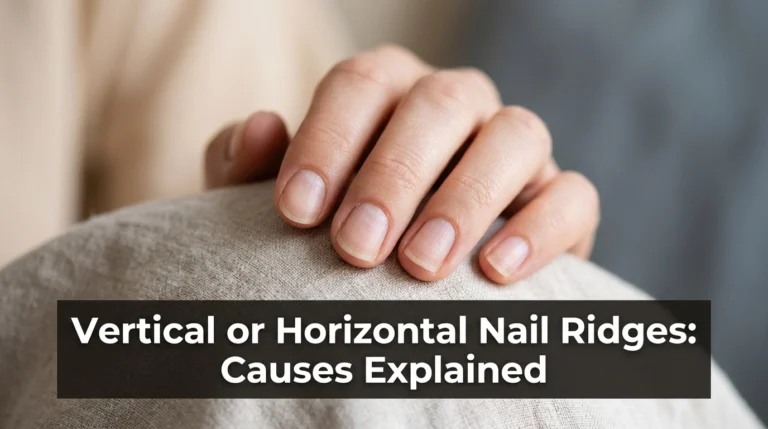
- Thin, flexible nails: Your nails bend more easily than usual or feel uncomfortable when pressed.
- Peeling layers: The tips separate into thin sheets instead of staying smooth.
- Rough white patches: The surface looks uneven or chalky after product removal.
- Frequent splitting: Small cracks develop during normal activities.
- Dry, irritated nail folds: The skin around your nails becomes flaky or uncomfortable.
- Persistent tenderness: Your nails hurt during washing, typing, or gentle pressure.
These changes can have several causes, and they’re not proof that manicures are responsible. However, if they appear after repeated treatments, reducing cosmetic stress is a sensible first step.
Important Warning
Stop cosmetic nail treatments and seek medical evaluation if you experience significant pain, swelling, spreading redness, drainage, green discoloration, a new or changing dark streak, or nail separation. These changes may require professional assessment rather than another manicure.
What Do You Need for a Nail-Friendly Manicure Routine?
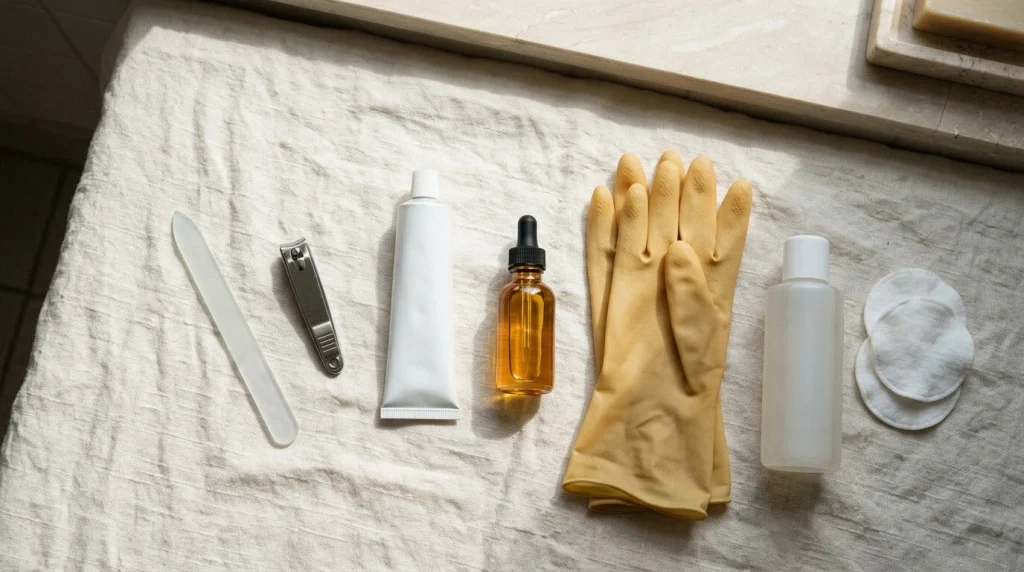
You don’t need an expensive collection of treatments to protect your nails. Start with a few practical essentials that reduce friction, dryness, and accidental breakage.
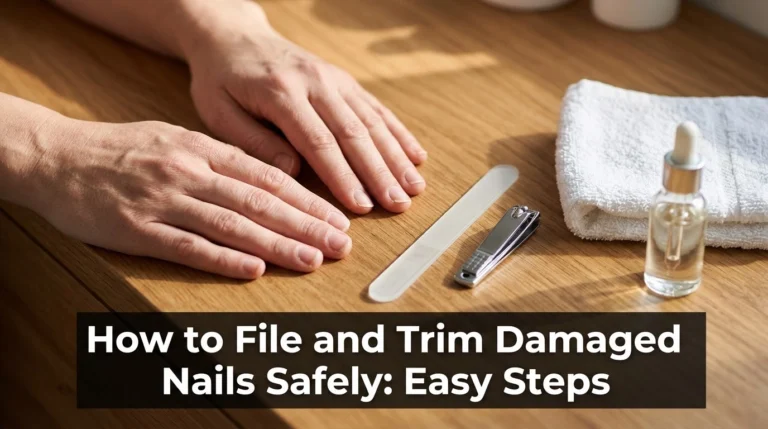
- Fine-grit or glass nail file: For gently smoothing rough tips without aggressive filing.
- Clean nail clippers: For shortening nails before they become difficult to manage.
- Fragrance-free hand cream: Look for moisturizing ingredients such as glycerin or petrolatum.
- Cuticle oil: A jojoba-based formula can help condition dry skin around your nails.
- Protective cleaning gloves: To reduce exposure to dish soap, detergents, and prolonged wet work.
- Appropriate polish remover: Choose a removal method compatible with the exact product you’re wearing.
A fine-grit glass nail file can be useful if you frequently develop small snags between manicures.
How to Prevent Nail Damage From Over-Manicuring: 8 Essential Steps
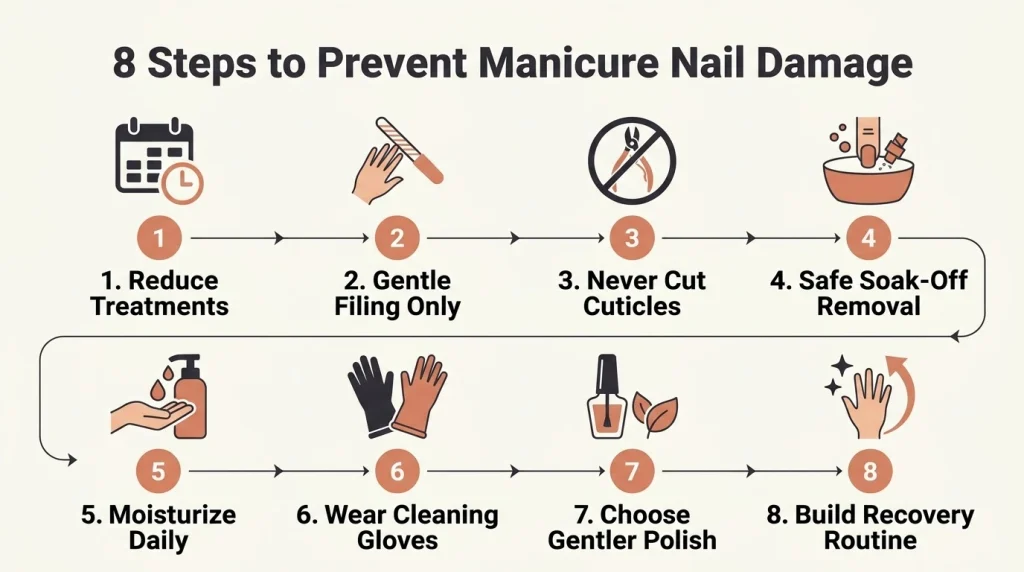
The best prevention routine focuses on reducing repeated trauma, not applying stronger cosmetic products over vulnerable nails.
Step 1: Reduce Unnecessary Manicure Treatments
You don’t need to change your manicure every time you notice a tiny chip. Frequent removal and reapplication can expose your nails to unnecessary filing, solvents, and friction.
If your nails are already peeling or thin, temporarily stop gel, acrylic, and dip treatments. A break of one to two weeks may be a useful starting point for assessing nail condition, but visibly damaged nails can require much longer protection.
When your nails are healthy, choose manicure timing based on how the coating wears and how your nails respond, rather than following a rigid schedule.
Common mistake: Immediately covering visibly weak nails with another enhancement because they look uneven.
Step 2: Avoid Aggressive Filing and Buffing
Trim excess length with clean clippers, then smooth the free edge using a fine-grit file and light pressure. A short oval or softly rounded shape can reduce snagging when nails are fragile.
Avoid trying to erase every ridge or surface imperfection with a buffing block. Each abrasive pass can remove more material from the nail plate.
If a salon technician uses an electric file, ask them to avoid unnecessary filing on your natural nail. Filing should never cause burning, pain, or visible thinning.
Common mistake: Buffing repeatedly until the nail looks perfectly shiny, even when it’s already thin.
Step 3: Protect Your Cuticles Instead of Cutting Them
The cuticle forms part of the protective seal between your nail plate and surrounding skin. Cutting or forcefully pushing it back can disrupt this barrier.
Ask your nail technician to leave the cuticles intact. If the surrounding skin feels dry, apply hand cream or a small amount of cuticle oil rather than trying to trim it away.
If you have a hangnail, carefully clip only the loose, dead piece with clean tools. Never pull it toward the base of your nail.
Common mistake: Cutting healthy cuticle tissue for a cleaner-looking polish line.
Step 4: Remove Gel, Dip, and Acrylic Products Safely
Improper removal is one of the biggest avoidable causes of manicure-related damage. Never peel, pry, or scrape off product that’s firmly attached to your nail.
For soak-off gel, follow the manufacturer’s recommended acetone-removal method. Protect surrounding skin where appropriate and avoid excessive soaking or scraping.
Not every product dissolves in acetone. Hard gel and certain enhancements require different removal techniques, so professional assistance is often safer than experimenting at home.
If the product doesn’t release easily, stop rather than forcing it. Remaining adhesion means you risk removing natural nail layers along with the coating.
Common mistake: Lifting a loose corner and peeling away the entire gel manicure.
Step 5: Moisturize Your Nails and Surrounding Skin Daily
Repeated handwashing, solvents, and cleaning products can dry your nails and the surrounding skin. A consistent moisturizing routine helps reduce dryness and keeps the nail folds more comfortable.
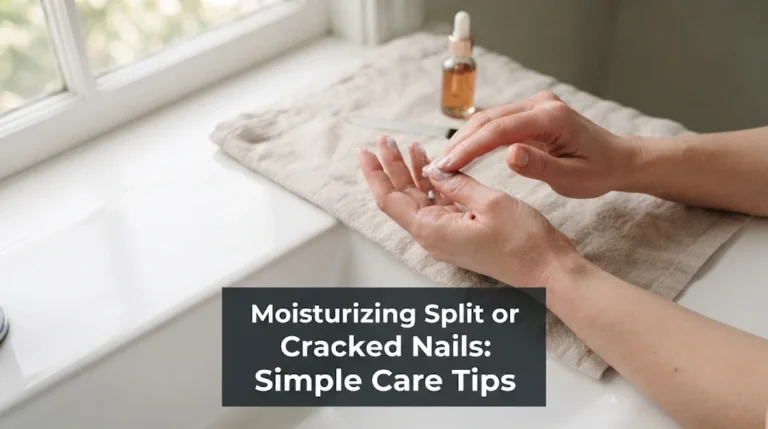
After washing your hands, apply fragrance-free hand cream across your fingers, nails, and cuticle area. At bedtime, add a small amount of petroleum jelly or nail oil if your skin feels particularly dry.
Choose a lightweight product if you’re more likely to use it regularly. Cuticle oil can improve conditioning, but it cannot rebuild nail layers that have already been removed.
Common mistake: Expecting a strengthening oil to restore damaged nail thickness overnight.
Step 6: Protect Your Hands From Water and Chemicals
Repeated wetting and drying can contribute to brittle nails. Cleaning chemicals and detergents may also irritate the skin around your fingertips.
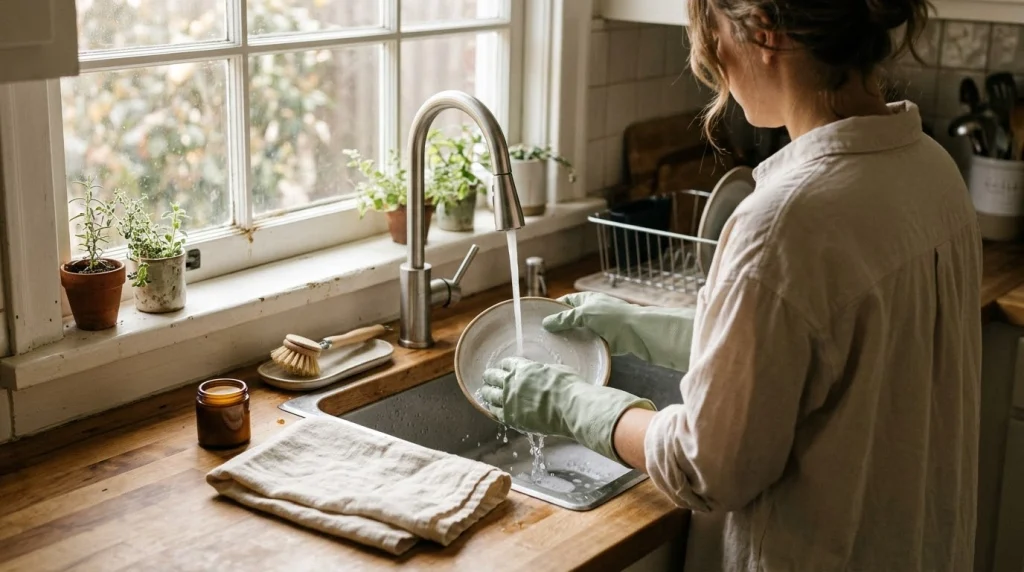
Wear suitable household gloves when washing dishes, cleaning bathrooms, or handling strong detergents. Make sure the gloves fit comfortably and dry them between uses.
After finishing chores, dry your hands thoroughly and apply moisturizer. If your hands sweat heavily inside gloves, take breaks and consider a comfortable cotton lining.
Common mistake: Wearing damp gloves for long periods, which can leave your skin irritated.
Step 7: Choose Gentler Manicure Products
If your nails are healthy and you enjoy changing colors frequently, traditional air-dry polish may be easier to remove gently than long-wear enhancements.
Apply a thin base coat to help reduce color staining, followed by thin layers of polish. When it’s time for a new color, remove the old coating instead of peeling or scraping it away.
Be cautious with products marketed as extremely hard nail treatments. Some formulas can increase stiffness without restoring natural flexibility. Stop using any product that causes irritation or discomfort.
If you choose gel cured under a nail lamp, protect the skin on your hands with broad-spectrum, water-resistant SPF 30+ sunscreen or suitable UV-protective fingerless gloves.
Common mistake: Assuming products labeled “natural” or “gentle” are automatically safe for every sensitive nail or skin type.
Step 8: Build a Simple Nail Recovery Routine
If your nails feel weak after repeated manicures, focus on protecting new growth rather than making the damaged area look perfect.
Keep your nails comfortably short, smooth any snags gently, and avoid additional enhancements while they’re fragile. Apply moisturizer regularly and wear gloves for wet chores.
Check your nails once a week for peeling, cracks, or changes in color. As healthier nail grows from the base, you can gradually trim away the damaged sections.
For more everyday care habits, explore our guide on how to strengthen nails safely.
Common mistake: Applying new acrylics over thin nails to hide the damage before they have recovered.
What Should You Ask Your Nail Technician to Do Differently?
A beautiful salon manicure should never require you to tolerate unnecessary pain or aggressive treatment of your natural nails.
Before your next appointment, explain that you want to minimize nail plate thinning and protect your cuticles. A responsible technician should be able to discuss their preparation and removal methods.
- Ask for minimal filing: Request that unnecessary abrasion on the natural nail be avoided.
- Skip cuticle cutting: Keep protective living tissue intact.
- Check tool hygiene: Make sure reusable instruments are properly cleaned and disinfected between clients.
- Discuss removal before application: Ask whether the product is soak-off or requires another technique.
- Speak up about discomfort: Burning, tenderness, or pain during preparation is a reason to stop and reassess.
- Avoid covering suspicious changes: Nails with unexplained discoloration, separation, or inflammation should be examined before cosmetic treatment.
If you regularly get enhancements, consider asking whether a simpler manicure could achieve your preferred appearance with less preparation.
Pro Tip
Before your appointment, take a clear photo of your bare nails. Comparing photos over several months may help you notice thinning, recurring breaks, or changes that are easy to miss under polish.
Which Nail Care Habits Should You Keep or Avoid?
Do
- Moisturize your nails daily.
- Keep fragile nails short.
- Use gentle filing techniques.
- Wear gloves during cleaning.
- Remove polish properly.
- Inspect your natural nails.
Don’t
- Peel off gel or acrylics.
- Over-buff the nail surface.
- Cut healthy cuticle tissue.
- Ignore pain or irritation.
- Use nails to pry objects open.
- Cover unexplained nail changes.
How Often Should You Get a Manicure Without Damaging Your Nails?
There isn’t one medically established manicure interval that guarantees healthy nails. Your ideal schedule depends on your nail condition, the type of product used, and how gently each application and removal is performed.
For traditional polish, you can refresh the color when necessary as long as removal and preparation remain gentle. Avoid unnecessarily stripping or buffing your natural nail during every color change.
Gel and acrylic enhancements deserve additional caution because preparation and removal can involve more mechanical stress. If you notice increasing brittleness, thinning, or discomfort, reduce the frequency and consider a break.
Dermatologists recommend a one- to two-week polish holiday between gel manicures to assess and care for your nails. This is a general recommendation, not a guarantee that existing damage will heal in that time.
For a manageable at-home schedule, see our step-by-step nail care routine.
How Long Does It Take for Over-Manicured Nails to Recover?
Recovery depends on whether you’re dealing with temporary dryness, surface peeling, or more substantial damage to the nail plate.
- First several days: Dry skin around your nails may feel more comfortable with regular moisturizing and reduced irritant exposure.
- After 1–2 weeks: Gentle protection may reduce new snags and breakage, but existing thin sections remain.
- After several months: Healthier nail growth gradually replaces the older damaged section.
- About 4–6 months or longer: Many fingernails can substantially grow out their visible plate, although individual growth rates and damage severity vary.
Fingernails typically grow around 3 millimeters per month. That means no cream, oil, or clear coating can instantly restore nail material that’s already been filed away.
You’ll often get better results by protecting the nail as it grows instead of repeatedly testing whether it has become stronger.
For a more detailed explanation, see how long nail damage takes to grow out.
Which Products Can Help Prevent Manicure-Related Nail Damage?
Good nail care products support gentle maintenance. They don’t replace safe salon techniques, and they aren’t cures for significant nail injury.
Disclosure: As an Amazon Associate, we earn from qualifying purchases. Product links below lead to Amazon search results so you can compare current options.
Recommended Tool
Fine-Grit Glass Nail File
A quality glass nail file is useful for smoothing small snags without unnecessarily buffing the nail surface. Use gentle pressure and stop as soon as the edge feels smooth.
Best for: Maintaining short natural nails and preventing rough tips from catching.
Recommended Care Product
Jojoba-Based Cuticle Oil Pen
A portable oil pen makes moisturizing the skin around your nails convenient after handwashing or before bed. Choose a fragrance-free option if you’re sensitive to scented products.
Best for: Dry cuticles and daily nail-fold conditioning.
Recommended Protection
Reusable Household Gloves With Cotton Lining
Protective gloves help limit repeated water and detergent exposure during household chores. A soft lining can improve comfort when you’re wearing them for longer tasks.
Best for: Dishwashing, cleaning, and protecting fragile nails from irritants.
What If Your Nails Are Already Damaged From Too Many Manicures?
If your natural nails are visibly weak, the priority is to prevent further damage while they grow.
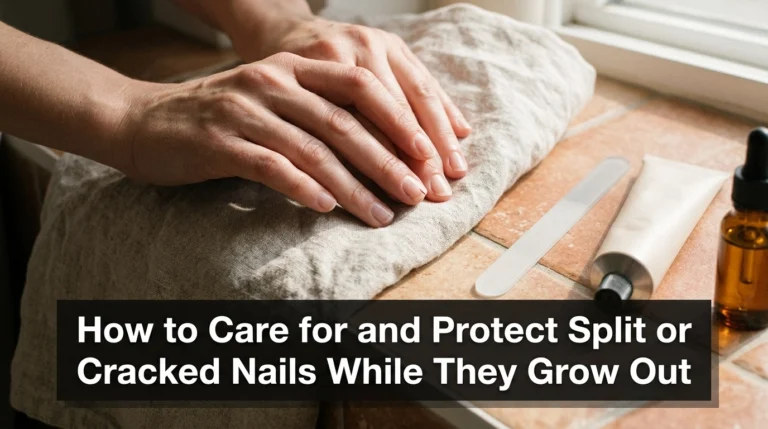
Start by removing existing enhancements safely, preferably with professional assistance if you’re unsure of the product or removal technique. Keep your nails short and avoid additional buffing.
Use moisturizer regularly, protect your fingers from wet work, and temporarily skip anything that causes discomfort. Don’t try to conceal painful or inflamed nails under another artificial coating.
Some nail changes have medical causes unrelated to manicures. If damage persists, worsens, or appears without a clear explanation, a dermatologist can help determine the cause.
For practical recovery steps, see how to care for weak nails after gel or acrylic removal.
Frequently Asked Questions
Q: Can getting manicures too often permanently damage your nails?
A: Frequent manicures can cause thinning, peeling, or brittleness when they involve repeated trauma. Most superficial nail-plate damage gradually grows out, but serious injury to the nail matrix can sometimes cause lasting changes.
Q: Is regular nail polish safer than gel or acrylic nails?
A: Traditional polish generally requires less intensive preparation and is easier to remove than many long-wear enhancements. However, aggressive filing, picking, and frequent solvent exposure can still cause problems.
Q: Should you let your nails breathe between manicures?
A: Nails don’t need to breathe because the visible nail plate consists of nonliving keratin. However, leaving nails free of enhancements temporarily can reduce repeated cosmetic stress and make it easier to inspect and moisturize them.
Q: Can cuticle oil reverse nail damage?
A: Cuticle oil can help condition dry nails and surrounding skin, but it cannot replace damaged nail layers. Existing structural damage must grow out while you protect the nail from additional injury.
Q: How do you know when your nails are ready for another manicure?
A: Consider another gentle manicure only when your nails are comfortable, the surrounding skin is healthy, and you can avoid further damage. If your nails remain painfully thin, cracked, or separated from the nail bed, postpone enhancements and seek professional advice.
Keep Your Manicures Beautiful Without Sacrificing Nail Health
Learning how to prevent nail damage from over-manicuring comes down to one important principle: protect your natural nails before, during, and after every treatment.
Choose gentle filing, safe removal, consistent moisturizing, and a manicure schedule that respects your nails’ condition. These habits can help reduce preventable damage while allowing you to enjoy the nail styles you love.
Save this guide on Pinterest so you can revisit these nail-friendly habits before your next manicure appointment.
Health note: This guide provides general nail-care information and isn’t a substitute for medical evaluation of painful, infected, or persistently abnormal nails.

Hi, I’m Jessica, the creator behind Unique Lash & Nails Katy.
I created this website for anyone who loves beautiful nails as much as I do. Here, I share trendy nail designs, seasonal manicure ideas, easy nail care tips, honest product recommendations, and step-by-step guides to help you create salon-worthy nails at home. Whether you’re looking for everyday inspiration or your next favorite nail trend, I hope you’ll find something you love.