Why Do Nails Split Vertically or Horizontally? Causes
Quick Answer
Nails often split vertically because of age-related ridges, repeated injury, or brittle nail plates. Horizontal splitting usually describes layers peeling apart at the tip, often after frequent wetting, drying, or harsh manicures. A deep groove crossing the entire nail is different: it can signal a temporary interruption in nail growth. Protect your nails, avoid pulling apart splits, and get unexplained, painful, or changing nails evaluated.
You glance down at your manicure and notice a tiny crack. Then another nail starts peeling at the tip. Why does one split from top to bottom while another separates in layers?
The direction matters, but it doesn’t tell the whole story. Here’s how to recognize the type of splitting you have, understand the likely causes, and choose nail-care habits that actually protect new growth.


What’s the Difference Between Vertical and Horizontal Nail Splitting?

Your nail plate is made mainly of compacted keratin cells. Although it feels solid, repeated bending, soaking, and scraping can weaken its structure. A split can form in different directions depending on the damage and the nail’s condition.
Vertical nail splitting: cracks that follow the nail’s length
A vertical split runs from the free edge toward the cuticle, following the direction your nail grows. You may see a thin ridge, a narrow groove, or a crack that catches on your hair. The term onychorrhexis describes longitudinal ridging and splitting in brittle nails.
Fine lengthwise ridges become more noticeable with age and are often harmless. A true recurring split in one nail, especially if it begins near the base, deserves more attention than an ordinary shallow ridge.
Horizontal nail splitting: layers that separate at the tip
Horizontal splitting commonly means the free edge peels into thin sheets, almost like layers of paper. This pattern is called onychoschizia. Repeated contact with water, detergent, polish remover, or rough filing can contribute to it.
However, a horizontal groove across the width of the nail isn’t the same thing as peeling. Deep transverse grooves, called Beau’s lines, can appear when nail growth slows temporarily after illness, injury, or another significant stress. You should not assume every horizontal line is a split.
Why Do Your Nails Split Vertically?
1. Natural Aging and Prominent Nail Ridges
As you get older, longitudinal ridges may become more visible. Some nails also become more fragile, so a raised ridge may turn into a snag or crack after repeated stress. An isolated fine ridge without pain or discoloration is usually less concerning than a new, deep fissure.
2. Repeated Pressure on the Same Nail
Using a thumbnail to lift stickers, open cans, or scrape labels puts pressure on the same small area over and over. A crack may repeatedly reopen at that weak point. Even habitual picking at a cuticle or pushing it back aggressively can affect how a nail grows.
3. Damage From Manicures and Enhancements
Over-filing, aggressive buffing, peeling off gel polish, and forcing off acrylic enhancements can thin or injure the nail. A damaged plate bends less predictably and may develop lengthwise cracks.
If you’ve recently removed a manicure, compare the affected nail with your other nails before blaming a deficiency.
4. A Local Nail Condition or Injury Near the Growth Area
When the nail matrix, the tissue responsible for forming the nail, is repeatedly injured, a groove or split may keep returning in the same place.
A persistent single-nail split can also have other local causes that require examination. Covering it with artificial nails won’t explain the cause.
Why Do Nails Split Horizontally or Peel Into Layers?
Repeated Wetting and Drying
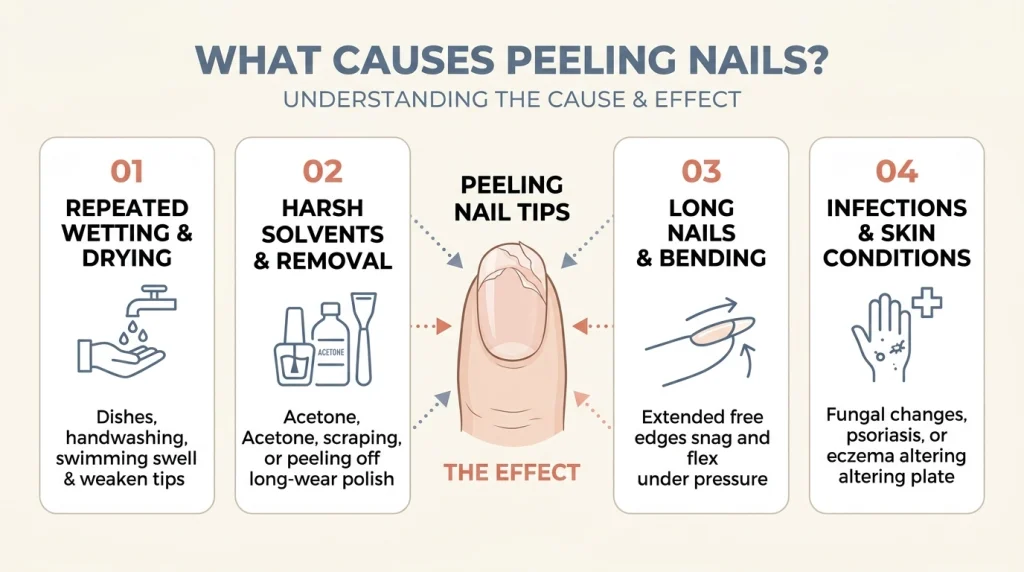
Water exposure is one of the most practical causes to investigate. Washing dishes, frequent handwashing, swimming, and cleaning repeatedly expose the nail to moisture and drying. Over time, the cycles can make vulnerable tips more likely to peel.
If several fingernails start separating after a period of extra housework or salon services, that pattern makes everyday exposure worth reviewing first.
Harsh Products and Rough Polish Removal
Frequent solvent use, scraping stubborn polish, or pulling off long-wear coatings can damage surface layers.
A peeling tip is especially tempting to pick, but removing the top layer can uncover a larger weak area underneath.
Long Nails and Repeated Bending
A long free edge catches more easily on keyboards, fabric, and household objects. When it bends under pressure, weak layers at the tip can pull apart.
Keeping nails shorter for a few weeks often makes daily snagging easier to manage.
Infections and Other Nail Disorders
A thickened, yellowish, crumbly, or lifting nail may have an infection or another nail condition rather than simple cosmetic damage.
Psoriasis and eczema can also affect nail appearance. Appearance alone isn’t enough to identify a fungal infection, so avoid repeatedly applying treatments without a diagnosis.
Could a Health Condition or Nutrient Deficiency Be Causing Your Splitting Nails?
Sometimes, yes—but most peeling nails aren’t proof of a vitamin shortage. Iron deficiency, thyroid disorders, certain skin diseases, and medication effects may contribute to nail changes.
Your overall symptoms and medical history matter more than the direction of a crack alone.
If your nail changes appear suddenly across several fingers, or you also have unusual fatigue, hair changes, or other symptoms, ask a clinician whether an examination or testing makes sense.
Don’t start high-dose iron or biotin just because your nails split. Iron can be harmful when unnecessary, and biotin can interfere with important laboratory tests.
For a wider look at fragility and its possible causes, see what causes brittle nails.
How Can You Tell What Kind of Nail Damage You Have?
- Thin layers peeling from several tips: Think about water exposure, repeated solvents, and manicure removal.
- A lengthwise ridge with no pain: This may be a common surface change, especially with age.
- The same single nail splitting repeatedly: Consider repeated trauma, but arrange an assessment if it persists.
- A deep groove stretching across the nail: This may reflect a past interruption in growth rather than ordinary peeling.
- A thick, discolored, crumbly nail: An infection or another nail disorder needs consideration.
- A crack extending into tender attached tissue: Protect the area and seek care, particularly if bleeding or inflammation develops.
Warning
A new dark stripe, pigment spreading onto surrounding skin, significant pain, swelling, pus, or a nail lifting away from its bed deserves medical evaluation. Don’t hide an unexplained change under opaque polish or enhancements.
What Can You Do Right Now to Protect a Split Nail?

You cannot permanently fuse a damaged nail plate back into healthy nail tissue. You can, however, keep a small split from catching and give new growth a better chance.
Keep the Free Edge Short and Smooth
If the split is confined to the unattached tip, carefully trim only loose, snagging material. Use a fine file to soften rough edges without sawing aggressively.
Never cut deeply into attached nail or pull a split toward the cuticle.
Moisturize the Nail and Surrounding Skin
After washing and drying your hands, rub a fragrance-free cream into your fingertips, nails, and surrounding skin.
A little petroleum jelly around the cuticle at bedtime can help reduce dryness. Moisturizer conditions the area; it does not glue a structural split together.
Protect Hands During Wet Chores
Wear well-fitting protective gloves when washing dishes or handling cleaning agents. Dry your hands thoroughly afterward and change damp gloves rather than leaving your fingers in a sweaty environment.
Give Damaged Nails a Break From Aggressive Services
If your nails are peeling or tender after gel or acrylic removal, avoid additional heavy buffing, scraping, or forced removal.
A gentle bare-nail period may make it easier to notice whether fresh damage is occurring.
For more everyday adjustments, explore these habits to stop nails from breaking.
Which Daily Habits Help Prevent More Splitting?
Do
- File snags before they spread.
- Keep nails at a manageable length.
- Moisturize after washing.
- Wear gloves for wet cleaning.
- Remove enhancements gently.
Don’t
- Pick at peeling layers.
- Use nails to pry objects open.
- Buff away deep ridges.
- Rip off gel polish.
- Ignore painful or changing nails.
Build these habits into your usual schedule rather than purchasing an elaborate treatment system.
The guide to a simple nail-care routine explains how daily care and occasional maintenance can work together.
Pro Tip
Take a clear picture of your bare nails once every four weeks, using similar lighting. Comparing the new nail growing from the cuticle is more informative than repeatedly examining an old damaged tip.
How Long Does a Split Nail Take to Grow Out?
Relief from snags can be immediate once you trim and smooth a loose tip. But the split itself doesn’t disappear overnight. Healthy new nail must grow forward while the damaged section gradually reaches the free edge.
A full fingernail commonly takes around four to six months to replace, while toenails grow much more slowly and can take roughly 12 to 18 months.
Timing varies with age, health, and which nail is affected. If a nail’s growth area is injured, the new nail may still show an abnormal groove or split.
Don’t judge your progress after only a few days. Look for fewer new splits and smoother emerging growth over several weeks.
You can also compare dry nails versus brittle nails to understand why improving surface dryness isn’t always the same as preventing breakage.
When Should You See a Dermatologist About Splitting Nails?
Routine mild peeling is often manageable with gentler care. A medical opinion becomes more important when the pattern is new, persistent, or accompanied by other changes.
- A deep split keeps returning in the same nail, especially close to the cuticle.
- The nail becomes painful, bleeds, lifts, or develops surrounding redness or swelling.
- You notice a new or changing dark streak or discoloration.
- Several nails suddenly develop pronounced grooves or become unusually fragile.
- A nail looks thick, yellow, crumbly, or distorted.
- Splitting continues despite consistent protective care or occurs alongside other health symptoms.
A dermatologist can examine the nail and decide whether infection testing, a review of manicure exposure, or other medical evaluation is useful.
For other visible warning signs, review signs of unhealthy nails.
Which Simple Products Can Help You Protect Splitting Nails?
You don’t need a miracle serum. The most helpful purchases are basic tools that support protective habits. These products are optional, not treatments for a nail disease.
Recommended Product
Fine Glass Nail File
A fine file helps you smooth loose edges before they snag on clothing and turn into bigger tears. File gently rather than grinding down the plate.
Browse Glass Nail Files on Amazon
As an Amazon Associate, we earn from qualifying purchases.
Recommended Product
Fragrance-Free Hand Cream
Keeping your nails and surrounding skin conditioned makes a moisturizing routine easier, especially after frequent handwashing.
As an Amazon Associate, we earn from qualifying purchases.
Recommended Product
Reusable Household Cleaning Gloves
Well-fitting gloves reduce direct exposure to dishwater and cleaning solutions. Remove them if moisture accumulates inside.
Browse Cleaning Gloves on Amazon
As an Amazon Associate, we earn from qualifying purchases.
Frequently Asked Questions About Nails Splitting Vertically or Horizontally
Q: Is vertical nail splitting a sign of vitamin deficiency?
A: Not necessarily. Aging, repeated trauma, and nail fragility are common explanations. Deficiencies and medical conditions can contribute in some cases, but the appearance of a split alone can’t confirm them.
Q: Why do my nails split into layers at the tips?
A: Layered peeling often follows repeated wetting and drying, harsh polish removal, or physical wear. Keep tips short, avoid picking off layers, and protect your hands during wet chores.
Q: Can a split nail repair itself?
A: The damaged nail plate doesn’t heal like skin. You can prevent snagging and additional injury while new nail grows and the split gradually moves toward the tip.
Q: Are horizontal nail ridges the same as horizontal splits?
A: No. Peeling layers at the tip are a type of splitting. Deep grooves running across the nail can be Beau’s lines, which indicate that growth slowed temporarily and may warrant evaluation.
Q: Should I cover a split nail with gel or acrylic?
A: Avoid covering a painful, lifting, or unexplained split. Application and removal can add stress to an already damaged nail. If you’re unsure why one nail keeps splitting, get it checked first.
What’s the Most Important Thing to Remember?
Vertical cracks and horizontal peeling can share everyday causes, but a persistent single-nail split or a deep crosswise groove deserves closer attention. Protect the nail you have, let damaged material grow out, and don’t guess at a medical cause from appearance alone.
Save this guide to your Pinterest nail-care board so you can revisit the warning signs and protective habits whenever your

Hi, I’m Jessica, the creator behind Unique Lash & Nails Katy.
I created this website for anyone who loves beautiful nails as much as I do. Here, I share trendy nail designs, seasonal manicure ideas, easy nail care tips, honest product recommendations, and step-by-step guides to help you create salon-worthy nails at home. Whether you’re looking for everyday inspiration or your next favorite nail trend, I hope you’ll find something you love.