Why Do My Nails Get So Dirty All the Time? Causes + Easy Fixes
Quick Answer
Your nails usually get dirty quickly because the free edge creates a small space where soil, makeup, food particles, fibers, dead skin, and everyday debris can collect. Longer nails, gardening, cleaning, oily products, and frequent hands-on activities can make buildup more noticeable. Gentle washing and brushing are usually enough, but discoloration that won’t wash away may not actually be dirt.
Here’s the part that surprises many people: what looks like dirt underneath your nails isn’t always ordinary dirt.
Your fingertips touch dozens of surfaces throughout the day, while the underside of each nail creates a protected little pocket where debris can stay even after a quick hand wash. Longer nails make that space larger, which is why you may feel like your nails look dirty again almost immediately.
The good news is that constantly seeing a little debris under otherwise normal nails usually doesn’t mean you’re doing anything wrong. Once you know what’s collecting there and why, keeping your nails looking cleaner becomes much easier.


Why do your nails get dirty so quickly?
The most common reason is simple: your nail tips naturally trap whatever your fingertips come into contact with.
When your nail extends beyond your fingertip, there’s a narrow underside that isn’t cleaned as directly as the palms of your hands. Small particles can get pushed beneath that free edge while you type, cook, apply makeup, garden, clean, handle fabrics, scratch your skin, or open packages.
Several everyday factors can make the problem more noticeable.
Your nails are longer
Long nails create more surface area underneath the free edge. That gives lint, soil, skin cells, cosmetics, and other particles more room to collect.
This doesn’t mean you have to give up long nails. It simply means they usually require more intentional cleaning than very short nails.
If you’re trying to maintain length without making your routine difficult, learning how to keep natural nails long and strong can help you balance appearance with easier everyday maintenance.
You work with your hands frequently
Gardening, cooking, crafting, cleaning, painting, working with machinery, handling cardboard, and even applying certain cosmetics can leave tiny particles around your fingertips.
You may not notice anything on your palms because handwashing removes it quickly. Material pushed beneath the nail edge is more sheltered, so it tends to stay visible longer.
You wear hand cream or oily products
Moisturizer and cuticle oil are useful parts of nail care, but a heavy layer can make dust or fibers stick more easily until the product absorbs.
That doesn’t mean you should stop moisturizing. Instead, use a small amount, massage it in well, and give rich products a few minutes to absorb before doing dusty or messy work.
You scratch your skin or scalp
If you frequently scratch dry skin or your scalp, material from the skin surface can become trapped underneath longer nails.
This is one reason the buildup may look pale, gray, or slightly oily instead of like obvious brown soil.
Your nail shape makes debris more visible
Some nail shapes expose more of the underside than others. Long square, coffin, and almond nails can all create noticeable free edges where material is easy to see.
Shorter rounded or squoval nails generally leave less room for buildup simply because there’s less nail extending past your fingertip.
Is the dark material under your nails actually dirt?
Sometimes yes. Sometimes no.
Ordinary dirt usually loosens after washing with soap, running water, and gentle brushing. If the mark remains in exactly the same place after careful cleaning, take a closer look before scrubbing harder.
What appears to be dirt can sometimes be:
- Dead skin and keratin debris collecting beneath the free edge.
- Makeup or hair-product residue transferred while applying or styling products.
- Polish staining visible through the nail plate rather than material sitting underneath it.
- Fibers or lint from dark clothing, towels, bedding, or upholstery.
- Material trapped beneath a slightly lifted nail, which can be harder to remove with ordinary washing.
Warning
Don’t keep scraping a dark or discolored area just because it looks dirty. If gentle washing doesn’t change it, aggressive digging can irritate the skin underneath your nail without solving the actual problem.
How can you keep dirt from collecting under your nails?
 Save
SaveYou don’t need to scrub your nails constantly. A few small habits make a much bigger difference.
Wash around your fingertips, not just your palms
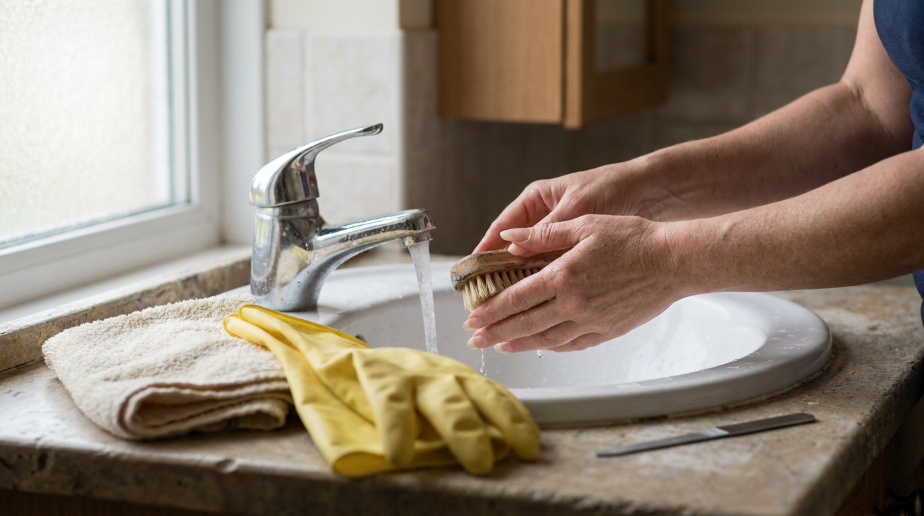
When washing your hands, work the soap around the fingertips and visible nail edges instead of concentrating only on your palms.
If you can still see debris afterward, use a clean soft-bristle brush with light pressure. You can follow this complete guide on how to clean nails at home when your nails need more than ordinary handwashing.
Pro Tip
Keep a dedicated nail brush beside the sink you use after gardening, cooking, crafts, or other messy activities. You’re much more likely to remove fresh debris before it becomes packed underneath longer nails.
Wear gloves for messy jobs
Prevention is easier than repeatedly digging soil, paint, food residue, or cleaning grime from beneath your nails.
Wear appropriate protective gloves for gardening, dishwashing, household cleaning, painting, and other activities that repeatedly expose your fingertips to debris or chemicals.
Keep the underside dry
After handwashing, dry around and underneath longer free edges instead of leaving moisture trapped there.
A clean towel usually does the job. You don’t need to insert sharp objects underneath the nail to dry it.
Shorten nails slightly if cleaning becomes difficult
You don’t have to cut long nails completely short. Removing a few millimeters can make a surprisingly large difference when debris constantly gets trapped underneath them.
Use a fine nail file to keep the free edge smooth. Rough or chipped edges can catch fibers and make nails look untidy even when they’re technically clean.
Use the right cleaner for the job
Daily dirt generally doesn’t require acetone, bleach, peroxide, or complicated homemade mixtures. Soap, water, and gentle brushing are the starting point.
Cleaning your nails before polish is a different situation because you’re often trying to remove surface oils and product residue rather than visible dirt. This guide to the best liquid to clean nails explains which type of cleaner fits different nail-care jobs.
What should you do—and avoid—if your nails always look dirty?
Do
- +Wash around your fingertips carefully.
- +Use a clean, soft nail brush when debris remains.
- +Wear gloves before messy chores.
Don’t
- −Dig underneath nails with pins or sharp tools.
- −Scrub harder just to make the underside look white.
- −Assume every dark mark is removable dirt.
For a more consistent approach, a simple nail care routine can help you combine cleaning, filing, moisturizing, and protection without overdoing any one step.
Which products make dirty nails easier to manage?
You only need a few basic items. Products should make gentle cleaning easier rather than encourage aggressive scrubbing.
Recommended Product
Soft-Bristle Nail Cleaning Brush
★★★★☆ Useful everyday nail-care tool
A soft brush helps loosen visible debris beneath the free edge without relying on sharp scraping tools.
As an Amazon Associate, we earn from qualifying purchases.
Recommended Product
Reusable Household Cleaning Gloves
★★★★☆ Practical prevention option
Gloves help stop grime and cleaning residue from reaching underneath your nails in the first place.
As an Amazon Associate, we earn from qualifying purchases.
Recommended Product
Fine-Grit Glass Nail File
★★★★☆ Useful for smooth nail edges
Keeping rough free edges smooth reduces snagging and makes longer nails easier to keep neat.
As an Amazon Associate, we earn from qualifying purchases.
Recommended Product
Jojoba Cuticle Oil
★★★★☆ Easy daily nail-care addition
A small amount after cleaning helps moisturize dry skin around your nails so you don’t have to choose between clean-looking nails and comfortable cuticles.
As an Amazon Associate, we earn from qualifying purchases.
Why do your nails still look dirty after you wash them?
Debris comes back within a few hours
Immediate fix: Gently brush beneath the visible free edge when you wash your hands. Prevention: Notice which activity happens before the buildup appears. Gardening, makeup, cooking, scratching, and dark fabrics are common culprits.
The underside always looks gray
Immediate fix: Wash gently and stop if additional brushing doesn’t change the color. Prevention: Avoid trying to achieve an unnaturally bright-white underside through repeated scraping or bleaching.
Long nails trap everything
Immediate fix: Soften stubborn debris with warm soapy water and clean gently. Prevention: Keep a nail brush near your sink, wear gloves for messy jobs, and consider shortening the free edge slightly if daily maintenance becomes frustrating.
The nail itself looks yellow or brown
Immediate fix: Check whether you’re looking at removable material or color within the nail itself. Prevention: Use a base coat beneath strongly pigmented polish and avoid repeatedly scrubbing discoloration that isn’t sitting on the surface.
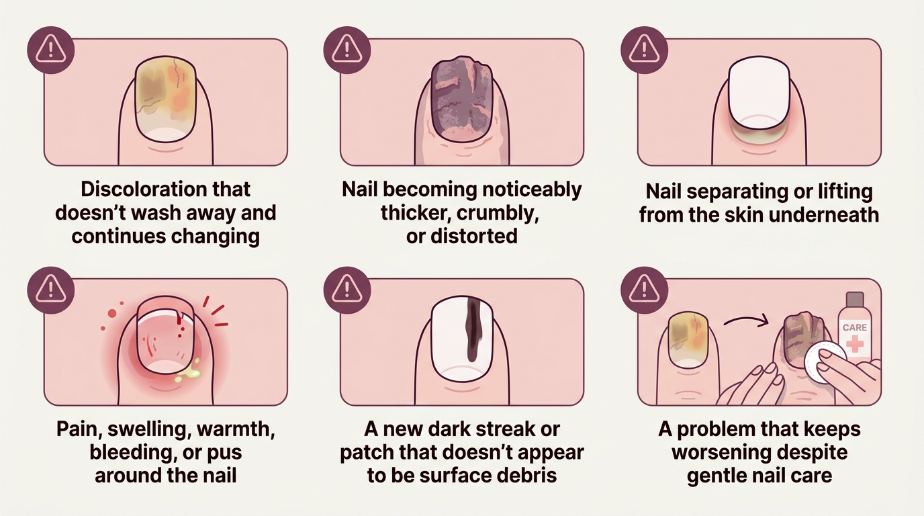
When should dirty-looking nails get more attention?
 Save
SaveA little removable debris under an otherwise comfortable, normal-looking nail is very different from a persistent change in the nail itself.
Consider getting professional medical advice if you notice changes such as:
- Discoloration that doesn’t wash away and continues changing.
- A nail becoming noticeably thicker, crumbly, or distorted.
- The nail separating or lifting from the skin underneath.
- Pain, swelling, warmth, bleeding, or pus around the nail.
- A new dark streak or patch that doesn’t appear to be surface debris.
- A problem that keeps worsening despite gentle nail care.
Those signs don’t automatically tell you what the cause is. They simply mean that more scrubbing isn’t the right next step, because a healthcare professional can evaluate whether you’re dealing with a nail condition rather than ordinary dirt.
Pro Tip
If you’re unsure whether a mark is dirt, take a clear photo before cleaning. If the same discoloration stays in exactly the same place afterward, you’ll know that repeatedly scrubbing the area probably isn’t helping.
Frequently asked questions about nails getting dirty
Q: Why do my nails get dirty even when I wash my hands?
A: Normal handwashing may clean your palms without removing every particle beneath a longer free edge. Work soap around your fingertips and use a soft nail brush when visible debris remains.
Q: Why is there black stuff under my nails?
A: Dark debris can come from soil, fibers, makeup, crafts, or everyday surfaces. If a dark area doesn’t move or wash away with gentle cleaning, don’t assume it’s dirt or dig at it aggressively.
Q: Do long nails naturally get dirtier?
A: Longer nails give debris more space to collect beneath the free edge, so buildup can be more noticeable. You can still wear long nails; they simply need more attention during handwashing and messy activities.
Q: Should I use something sharp to clean under my nails?
A: No. A sharp tool can irritate or injure the delicate area beneath the nail. Soften stubborn debris with warm soapy water and use a clean soft-bristle nail brush instead.
Q: How often should I clean underneath my nails?
A: Give the nail edges attention during normal handwashing and clean visible debris when needed. You don’t need to aggressively brush underneath your nails several times a day when they already look clean.
Keeping your nails clean doesn’t require constant scrubbing
If your nails seem to get dirty all the time, the most likely explanation is everyday debris collecting beneath the free edge—especially when your nails are long or your hands stay busy. Gentle washing, a soft nail brush, gloves for messy jobs, and a manageable nail length can solve most routine buildup.
The important part is knowing when to stop cleaning. If a mark won’t wash away or your nail changes in color, thickness, shape, comfort, or attachment, treat it as a nail change rather than stubborn dirt. Save this guide on Pinterest so you have the gentle cleaning routine handy the next time your nails start looking less than fresh.

Hi, I’m Jessica, the creator behind Unique Lash & Nails Katy.
I created this website for anyone who loves beautiful nails as much as I do. Here, I share trendy nail designs, seasonal manicure ideas, easy nail care tips, honest product recommendations, and step-by-step guides to help you create salon-worthy nails at home. Whether you’re looking for everyday inspiration or your next favorite nail trend, I hope you’ll find something you love.