Best Liquid to Clean Nails — What Actually Works
Quick Answer
The best liquid to clean nails before a manicure is 91% isopropyl alcohol — it removes oil, residue, and bacteria without stripping moisture the way acetone does. For removing old polish, pure acetone works fastest. For daily cleaning under nails, warm soapy water with a nail brush is all you need. The liquid you choose should match the job you’re doing.
Most people assume any liquid that smells like a salon must be the right one to use on their nails. That’s not quite true. The wrong liquid at the wrong stage — say, acetone before painting instead of alcohol — can leave an invisible residue that makes polish lift within days. This guide breaks down every liquid worth knowing about, tells you exactly when to use each one, and saves your manicure from an avoidable mistake.


Why the Right Liquid Changes Everything for Your Nails
Your nail plate is covered in a thin layer of natural oil — this is what gives healthy nails their subtle shine. That oil is your nail’s protection, but it’s also the enemy of polish adhesion. When you apply polish over an oily surface, the bond between your nail and the base coat is weak, and you’ll start seeing chips or lifting within 48 hours.
Different liquids remove different things. Soap and water tackles surface dirt. Alcohol dissolves oil. Acetone dissolves polish, gel, and acrylic. Each has a role — using the wrong one for the wrong job either damages your nails, wastes your time, or both. For a full picture of what strong, healthy nails actually need day to day, check out what a proper nail care routine looks like.
The Best Liquids to Clean Nails — Each One Ranked by Job
 Save
Save1. Isopropyl Alcohol (91% or Higher) — Best for Pre-Manicure Prep
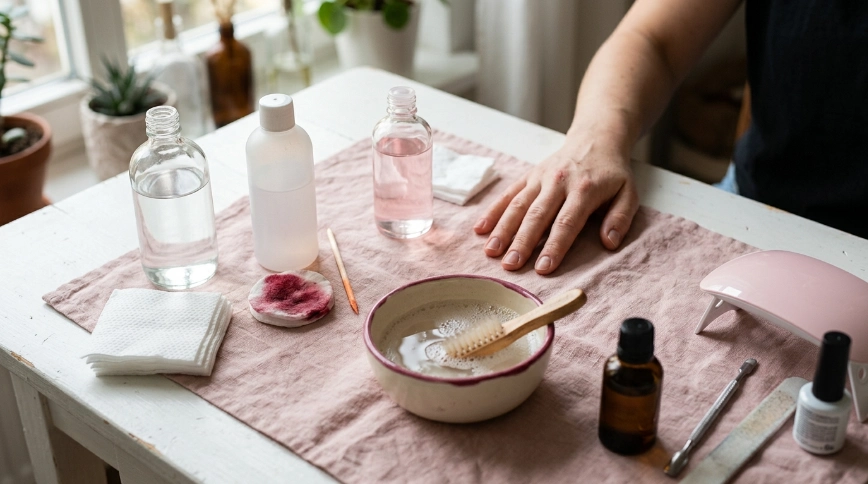
This is the gold standard for cleaning nail plates before applying any polish, gel, or nail art. At 91% concentration, it evaporates almost instantly, leaving zero residue behind. It removes the natural oil from your nail surface — which sounds bad, but it’s exactly what you want before painting, because oil is the number-one cause of early chipping.
Swipe a lint-free pad soaked in 91% isopropyl alcohol across each nail and let it air dry for 10 seconds. Don’t blow on it — the moisture from your breath reintroduces oils. Your polish will last noticeably longer after this single step.
Warning
Don’t use 70% rubbing alcohol as a substitute for 91% — the 30% water content means it doesn’t evaporate cleanly and can leave moisture trapped under your polish, causing lifting and bubbling in the first 24 hours.
Recommended Product
91% Isopropyl Alcohol for Nail Prep
★★★★★ Highly rated on Amazon
At 91% concentration, this evaporates fully and leaves your nail plate completely oil-free — which is the one thing your base coat needs to grip and hold for a week or longer.
As an Amazon Associate, we earn from qualifying purchases.
2. Pure Acetone — Best for Removing Polish, Gel, and Acrylic
Acetone is not a cleaning liquid — it’s a removal liquid. The distinction matters. It dissolves nail polish in seconds, cuts through gel coats with soaking, and breaks down acrylic product efficiently. Nothing beats it for speed and effectiveness when you’re taking off an old manicure.
Pure acetone (100%) works faster than acetone-based removers diluted with conditioners. Those “moisturizing” removers are kinder on your skin but leave behind a film that interferes with new polish adhesion if you don’t follow up with alcohol. Use pure acetone to remove, then immediately follow with 91% isopropyl alcohol to prep the nail for its next application.
One important note: acetone is too aggressive for daily use on bare nails. It pulls moisture out of the nail plate and surrounding cuticle, which over time causes brittleness and peeling. If you’re wondering why your nails keep breaking, the answer might be in how often you’re removing polish with acetone without rehydrating afterwards.
3. Non-Acetone Remover — Best for Sensitive or Dry Nails
Non-acetone removers use ethyl acetate or butyl acetate as the active ingredient instead of acetone. They’re gentler on the skin and nails but significantly slower — you’ll need more product and more time to remove the same amount of polish. They’re also not strong enough to remove gel or acrylic, so don’t bother trying.
If your nails are already brittle, thin, or prone to peeling, non-acetone removers reduce the stripping effect that makes damage worse. The trade-off is patience: expect the process to take two to three times longer than pure acetone.
4. Warm Soapy Water — Best for Daily Cleaning Under Nails
For everyday hygiene — removing dirt, cleaning under the free edge, washing away bacteria — warm water and a gentle hand soap with a nail brush is all you need. A soft nail brush gets into the groove under the nail tip without tearing at the skin or scratching the polish surface.
This isn’t glamorous, but it’s the most nail-safe cleaning method for routine maintenance. It won’t strip polish, won’t dehydrate the nail plate, and takes less than a minute. After washing, always apply cuticle oil or a hand cream to lock moisture back in — water alone, especially hot water, pulls oils out of your cuticles over time.
Recommended Product
Nail Cleaning Brush with Soft Bristles
★★★★☆ Highly rated on Amazon
Soft bristles reach under the free edge and clean along the sidewalls without disturbing polish or pressing into the cuticle — the kind of gentle daily tool your nails actually need.
As an Amazon Associate, we earn from qualifying purchases.
5. Nail Dehydrator — Best Before Gel or Acrylic Application
A nail dehydrator isn’t a cleaner in the traditional sense — it’s a specialized liquid used by nail techs before applying gel polish or acrylic. It removes both surface moisture and oil at the same time, going deeper than alcohol alone. If you do gel manis at home and you’re dealing with lifting around the edges, a dehydrator is often the missing step.
Apply it after your alcohol wipe-down, let it dry for 15 seconds, and then apply your primer or base coat. Most at-home gel kits skip this step entirely, which is exactly why salon manis tend to last longer than DIY ones.
Recommended Product
Nail Dehydrator for Gel and Acrylic Prep
★★★★★ Highly rated on Amazon
This removes oil and moisture simultaneously at a deeper level than alcohol — the reason gel and acrylic applied over it bonds tighter and lifts later than when skipped.
As an Amazon Associate, we earn from qualifying purchases.
Do’s and Don’ts When Cleaning Your Nails
Do
- +Use 91% isopropyl alcohol on a lint-free pad as the final step before any polish application
- +Follow acetone removal with cuticle oil within 5 minutes to restore moisture to the nail plate
- +Use a nail brush with warm soapy water daily to keep the area under your free edge clean and bacteria-free
Don’t
- −Use 70% rubbing alcohol before painting — the water content leaves invisible residue that causes lifting
- −Use acetone as an everyday cleaner — it’s a removal tool, not a maintenance product, and repeated use without hydration causes brittleness
- −Blow on your nails to dry them after alcohol — your breath carries moisture and oils that immediately undo the prep work
Pro Tips for Getting the Most Out of Nail-Cleaning Liquids
Pro Tip
Always use lint-free nail wipes instead of cotton balls with alcohol or acetone. Regular cotton leaves behind tiny fibers on the nail surface that get sealed under your base coat and create a bumpy texture. Lint-free wipes are cheap and the difference in finish quality is immediately visible.
Pro Tip
Wipe your nails with alcohol in one direction — not back and forth. Wiping back and forth can redistribute the same oils across the nail instead of lifting them off, which defeats the whole purpose of the step.
Pro Tip
If you have naturally oily nails (your polish always lifts at the tips within two days), use both a nail dehydrator and alcohol in sequence before your base coat — dehydrator first, then alcohol, then immediately apply your base coat with no delay. This two-step prep is what nail techs do on clients with stubborn lifting.
Keeping your nail plate and cuticles in their best condition between manicures makes a real difference in how well any liquid performs. You can read more about how to care for your nails every day at home to build habits that protect your polish longer.
What Happens If You Skip Cleaning Your Nails Properly?
 Save
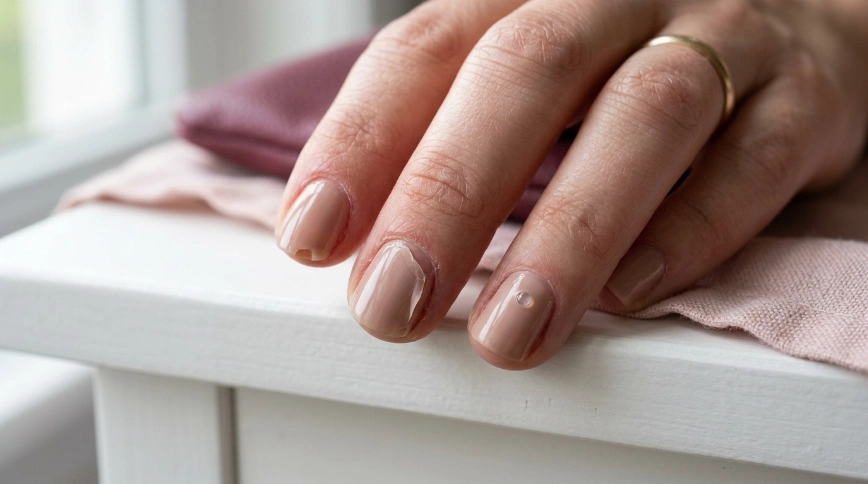
SaveSkipping the cleaning step — or using the wrong liquid — doesn’t show up immediately. Your polish looks fine when you first apply it. The problems appear 24 to 72 hours later: a chip at the tip, lifting at the sidewall, or a bubble forming in the middle of the nail. All of those are signs of poor adhesion, and poor adhesion almost always comes back to surface prep.
Oil is invisible on the nail plate but it acts like a barrier between your polish and the keratin surface. No matter how many coats you apply, they’re all sitting on top of a layer of oil, not bonded to the nail itself. One wipe with 91% alcohol takes five seconds and eliminates this entirely.
If your nails are currently showing damage from over-use of acetone or harsh liquids, the guide on repairing damaged and weak nails covers exactly how to rebuild nail strength before your next manicure.
Frequently Asked Questions
Q: Can I use hand sanitizer to clean my nails before painting?
A: Most hand sanitizers are only 60–70% alcohol, and they contain glycerin and other moisturizing additives that leave a film behind. That film sits on your nail plate and acts just like oil — preventing polish adhesion. Stick with 91% isopropyl alcohol on a lint-free pad for nail prep, and save the hand sanitizer for your hands only.
Q: Is acetone or non-acetone remover better for your nails?
A: Pure acetone is more effective but more drying. Non-acetone remover is gentler but slower and can’t remove gel or acrylic at all. For healthy nails with occasional manicures, pure acetone followed immediately by cuticle oil is the most practical choice. For brittle or damaged nails, switch to non-acetone remover temporarily while you let your nails recover.
Q: Can I clean my nails with hydrogen peroxide?
A: Hydrogen peroxide can be used to whiten stained nails — soaking for a few minutes in a diluted solution works for surface staining from dark polish. It’s not a substitute for alcohol as a pre-manicure prep, though, because it doesn’t remove oil from the nail plate effectively. Use it only as an occasional whitening treatment on bare nails, not as a regular cleaner.
Q: How often should I clean under my nails?
A: Daily, with warm soapy water and a nail brush — especially if you wear extensions or longer natural nails, where debris collects more easily. Bacteria thrive in the warm, enclosed space between the nail plate and the fingertip, so consistent hygiene under the free edge protects both your nail health and the longevity of your polish.
Q: What liquid do nail salons use to clean nails?
A: Most nail techs use either 91–99% isopropyl alcohol or a dedicated nail prep cleanser (which is usually alcohol-based with added antibacterial agents) after filing and before any polish. For gel and acrylic, they add a nail dehydrator and an acid-free primer to maximize bonding. This exact combination is what makes salon manicures last longer than home ones in most cases.
The Bottom Line on Nail-Cleaning Liquids
Match your liquid to your task: 91% isopropyl alcohol before any polish, pure acetone to remove it, warm soapy water for daily hygiene, and a nail dehydrator if you’re working with gel or acrylic at home. Each one has a specific role, and swapping them around is exactly how you get chips, lifting, and brittle nails that seem to appear out of nowhere.
Save this to your Pinterest nail board so you always have it ready before your next manicure — your polish longevity will thank you.

Hi, I’m Jessica, the creator behind Unique Lash & Nails Katy.
I created this website for anyone who loves beautiful nails as much as I do. Here, I share trendy nail designs, seasonal manicure ideas, easy nail care tips, honest product recommendations, and step-by-step guides to help you create salon-worthy nails at home. Whether you’re looking for everyday inspiration or your next favorite nail trend, I hope you’ll find something you love.