How to Keep Natural Nails Long and Strong
Quick Answer
To keep your natural nails long and strong, focus on three things every day: keep them moisturized with cuticle oil, file them gently into a shape that won’t snag, and protect them from water and harsh cleaning products. Add a strengthening base coat if your nails peel easily, avoid using your nails as tools, and stay consistent for at least 6 to 8 weeks. Healthy nails usually grow best when they stay flexible, protected, and well cared for rather than dry, over-buffed, or overloaded with damage.
If your natural nails always seem to break right when they start looking good, you’re not alone. Most long-nail problems come down to daily habits, not bad luck.
The good news is that you don’t need a complicated 15-step routine. You need a few smart habits that protect your nails while they grow, plus the right products in the right order.
Here’s the routine that actually helps you keep your natural nails long and strong without making them feel high-maintenance.


What actually helps natural nails grow long and stay strong?
 Save
SaveYour nails need moisture, protection, and low-friction care. That’s the real foundation. Nails are made of layers of keratin, and those layers split apart when they get too dry, stay soaked too often, or take repeated physical stress.
That’s why some people say their nails “grow but never stay long.” The problem usually isn’t growth. It’s retention. Your nails may already be growing at a normal rate, but they break, peel, or bend before you get to enjoy the length.
If you want better retention, these are the habits that matter most:
- Oil your cuticles and nail plate regularly so the nail stays flexible instead of brittle.
- File instead of clip when possible to reduce tiny stress cracks at the free edge.
- Wear gloves for cleaning and dishes because long water exposure makes nails swell and weaken.
- Keep a little polish or base coat on to create a light barrier against daily wear.
- Use your fingers differently so your nails aren’t doing the job of tools.
Once you understand that, everything gets easier. You’re not trying to “force” nail growth. You’re trying to stop preventable breakage.
What daily routine should you follow for long, strong natural nails?
You don’t need to do everything at once. Think of your routine in layers: daily care, weekly maintenance, and damage prevention.
Method 1: Keep your nails flexible with oil
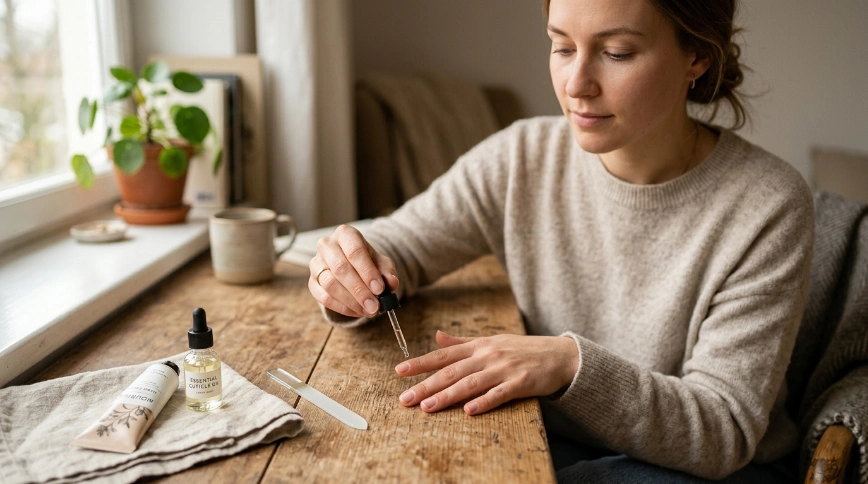
If you only change one habit, make it this one. Cuticle oil helps reduce dryness, and a well-oiled nail plate tends to bend a little instead of snapping fast. That flexibility matters when you’re trying to grow length.
Look for a lightweight oil that absorbs well. Jojoba cuticle oil is a solid option because it’s lightweight, easy to use, and works well for daily nail care.
Apply oil at least twice a day, especially after washing your hands and before bed. Massage it into the cuticle area and across the nail plate for 20 to 30 seconds.
Pro Tip
Keep cuticle oil next to your hand soap, desk, or nightstand. Your routine gets easier when the product is always where you already spend time.
Method 2: Choose a nail shape that resists breakage
Long square corners catch on fabric, hair, and pockets more easily than softly rounded shapes. If your nails keep snapping at the sides, your shape may be working against you.
For most people, squoval or soft oval is the easiest shape to maintain. These shapes spread pressure more evenly and reduce snag points.
Use a fine-grit file, not a rough emery board that shreds the edge. A glass nail file is a great pick because it smooths the edge cleanly and helps reduce peeling at the tip.
File in short, controlled motions. Modern fine-grit files are gentle enough that a light see-saw motion is usually fine, but the goal is still the same: smooth the edge without overworking it.
Method 3: Keep a protective layer on your nails
Even if you don’t love colored polish, your nails often do better with at least a thin base coat. That light coating helps reduce surface wear and gives the nail a little extra support during everyday use.
If your nails peel, use a strengthening or ridge-filling base coat once or twice a week. Just don’t confuse “strength” with “hard as possible.” Extremely hard nails can become brittle if they lose flexibility. You want support, not stiffness that leads to snapping.
A nail strengthening base coat can help if your nails feel thin after repeated polish removal or light damage.
Method 4: Reduce water damage and chemical stress
This surprises a lot of people, but nails and water aren’t best friends. Nails absorb water, swell, and then contract as they dry. Repeating that cycle over and over can make the layers separate more easily.
That doesn’t mean you should avoid washing your hands. It means you should limit long soaking and protect your nails during chores. Wear gloves for dishwashing, bathroom cleaning, and deep housework. A pair of cleaning gloves for dishes is one of the simplest ways to cut down on breakage.
Try not to soak your nails in bowls of water before manicures. If you need to soften cuticles, use cuticle remover instead. That does the job faster and causes less swelling.
Method 5: Change how you use your hands
One of the fastest ways to keep natural nails longer is to stop making them do heavy work. Use your knuckles to press buttons, the side of your finger to open tabs, and an actual tool to scrape labels or lift can tops.
This sounds small, but it adds up. Many broken nails happen during normal life, not during a manicure.
Once you start moving more intentionally, you’ll notice fewer random cracks and much better length retention.
Which products actually help natural nails the most?
You don’t need a drawer full of products. A few basics do most of the work.
Recommended Product
Jojoba-Based Cuticle Oil
★★★★☆ Highly rated on Amazon
This is the most useful everyday product for long natural nails because it helps keep the nail plate and cuticle area from getting dry and brittle.
As an Amazon Associate, we earn from qualifying purchases.
Recommended Product
Fine-Grit Glass Nail File
★★★★☆ Highly rated on Amazon
A glass file creates a smoother edge than coarse files, which helps reduce splitting and snagging at the tips.
As an Amazon Associate, we earn from qualifying purchases.
Recommended Product
Nail Strengthening Base Coat
★★★★☆ Highly rated on Amazon
This can help support weak or peeling nails, especially if you want to keep a clear, natural-looking manicure while you grow them out.
As an Amazon Associate, we earn from qualifying purchases.
How long does it take to keep your natural nails long and strong?
You’ll usually notice less dryness and snagging within 1 to 2 weeks if you start oiling regularly and filing gently. Visible improvement in breakage often shows up after 3 to 4 weeks.
For real length retention, give your routine at least 6 to 8 weeks. Fingernails grow slowly, and damaged nails need time to move forward as new, healthier growth comes in from the base.
If your nails are very thin from over-buffing, harsh removal, or repeated trauma, it may take closer to 3 months to see a full difference. That’s normal. The important thing is consistency, not perfection.
What should you do — and what should you stop doing?
Do
- +Apply cuticle oil daily, especially after hand washing and before bed.
- +Keep your nails filed smooth in a soft oval or squoval shape to reduce snagging.
- +Wear gloves for dishes and cleaning so your nails aren’t soaking in water and chemicals.
Don’t
- −Don’t peel off polish or scrape off gel, because that lifts layers from the nail plate.
- −Don’t use your nails to open cans, scratch labels, or pry things apart.
- −Don’t over-buff the surface, because thinner nails may feel smooth at first but often get weaker later.
What expert habits make the biggest difference?
Pro Tip
Oil the underside of the free edge too. That’s where dryness and peeling often start once your nails begin getting longer.
Pro Tip
Reapply top coat every 2 to 3 days if you wear polish. That small refresh helps seal the manicure and reduces edge wear that can lead to breaks.
Pro Tip
Keep one nail slightly shorter than the others if a specific finger always breaks first. Matching your hand use can give you much better overall retention.
Pro Tip
If your nails keep splitting in the same spot, lightly shorten them and reshape the area instead of trying to “save” the crack. Tiny weak points usually travel upward if you leave them alone.
Why do natural nails still break even when you’re trying?
 Save
SaveSometimes you’re doing a lot right, but one repeated habit keeps undoing the progress. These are the most common setbacks I see.
Your nails peel at the tips
Immediate fix: lightly file off the rough edge and start using cuticle oil twice daily. Then add a strengthening base coat for support. Prevention: avoid soaking, switch to a glass file, and stop picking at tiny lifted layers.
Your nails bend and tear easily
Immediate fix: keep them a bit shorter while you rebuild strength and use a protective base coat. Prevention: reduce water exposure, keep polish or clear coat on, and moisturize consistently so the nail doesn’t stay weak and unprotected.
One nail always breaks before the others
Immediate fix: shorten and reshape that nail so it isn’t carrying extra stress. Prevention: notice how you use that finger during texting, cleaning, or opening things. Repeated pressure on the same nail is often the real cause.
Your nails seem weak no matter what you do
Immediate fix: strip your routine back to basics — oil, gentle filing, clear coat, and protection. Prevention: if you also notice pain, color change, ridges that suddenly appear, or ongoing splitting, check with a dermatologist or healthcare professional because nail weakness can sometimes reflect an underlying issue.
When should you be careful with “nail strength” products?
Warning
Don’t overuse very strong hardeners if your nails already feel dry or brittle. Some formulas can make nails feel tough at first but less flexible over time, which may increase snapping. If that happens, switch to a more balanced strengthening base coat and focus more on oiling.
You should also be cautious with aggressive buffing, frequent acetone exposure without rehydrating afterward, and peeling off any nail enhancement. Those habits remove layers and make it much harder to grow natural length.
FAQ
Q: How often should you oil your nails?
A: Twice a day is a great starting point. If your nails are very dry or you wash your hands often, applying cuticle oil 3 to 4 times a day can help even more.
Q: Is it better to keep polish on natural nails?
A: For many people, yes. A base coat or simple manicure can add a little protection and reduce surface wear. Just remove polish gently and avoid picking or peeling it off.
Q: Should you cut or file natural nails?
A: Filing is often gentler for maintenance because it smooths the edge as you shape it. If you need to remove a lot of length, clip first and then file to refine the shape.
Q: Do biotin supplements help natural nails?
A: Some people notice improvement, but supplements aren’t a quick fix and they don’t replace good nail care. If you’re considering supplements, it’s smart to check with your healthcare provider first.
Q: Why are your nails still short if they’re growing?
A: Growth and retention aren’t the same thing. Your nails may be growing normally, but if they keep peeling, bending, or snapping, you’ll never see the length. That’s why protection matters so much.
The bottom line on keeping natural nails long and strong
If you want long, strong natural nails, the winning routine is simple: oil them often, file them gently, protect them from water and rough use, and stay consistent long enough to see new growth come through stronger.
You don’t need perfect nails overnight. You need repeatable habits that help your nails survive everyday life. Save this guide to Pinterest so you can come back to the routine whenever your nails need a reset.

Hi, I’m Jessica, the creator behind Unique Lash & Nails Katy.
I created this website for anyone who loves beautiful nails as much as I do. Here, I share trendy nail designs, seasonal manicure ideas, easy nail care tips, honest product recommendations, and step-by-step guides to help you create salon-worthy nails at home. Whether you’re looking for everyday inspiration or your next favorite nail trend, I hope you’ll find something you love.