What Kills Fungus Under Fingernails? Treatments That Actually Work
Quick Answer
Prescription antifungal medicine is what reliably kills fungus growing in or beneath a fingernail. Oral terbinafine is commonly used because it reaches the nail through your bloodstream, while nail-specific solutions such as ciclopirox may suit milder infections. Ordinary athlete’s-foot cream, vinegar, bleach, and peroxide don’t reliably cure fungus inside a nail. Get the diagnosis confirmed before treatment because injury, psoriasis, and other nail conditions can look similar.
When a fingernail turns yellow, becomes crumbly, or starts lifting, it’s natural to want something that kills the problem immediately. The difficult part is location: nail fungus, medically called onychomycosis, can live inside the hard nail plate and in the skin beneath it. A treatment must reach that protected area in a useful concentration.
That’s why a cream that clears a fungal rash on your hand may do very little for an infected nail. This guide explains which treatments can reach the fungus, how a clinician chooses between them, and how you can support healing without damaging your nail.
Medical note
This article provides general education, not a diagnosis. See a dermatologist or primary-care clinician before taking an oral antifungal. Seek prompt care if the finger is painful, hot, swollen, draining pus, or developing a spreading red streak.


Why Is Fungus Under a Fingernail So Hard to Kill?
Your nail is made of tightly packed keratin. That hard barrier protects the fingertip, but it also blocks many liquids and creams. Once fungi settle beneath the nail or within its layers, a surface treatment must penetrate the plate to reach them.
Moisture and repeated minor damage can make infection easier. Frequent wet work, artificial nails, shared manicure tools, nail biting, and an untreated fungal rash on the hand or foot can create an opening. The infection may begin at an edge and slowly move inward.
Clearing the organism is only half the process. The damaged portion doesn’t turn normal again overnight; it has to grow out and be trimmed away. Fingernails grow faster than toenails, but visible recovery still takes months.
How Can You Tell Whether It Is Really Nail Fungus?
Fungus may cause several changes, but appearance alone can’t confirm it. A dermatologist can examine the nail and may clip or scrape a small sample for microscopy, culture, or another laboratory test. Testing matters because antifungal tablets won’t improve a nail damaged by trauma or psoriasis.
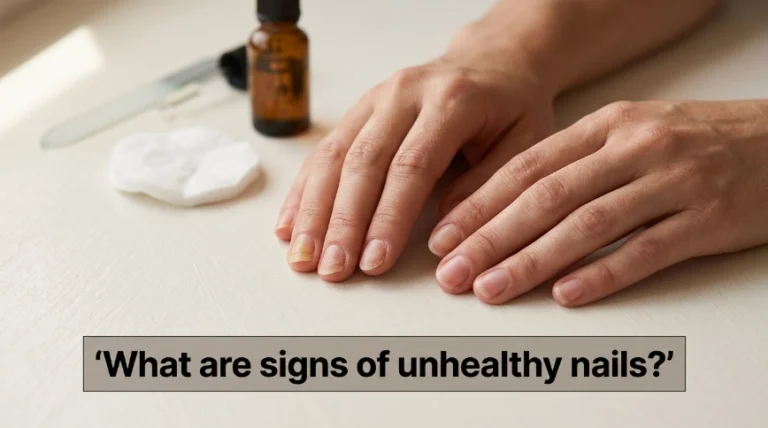
- Color change: The nail may develop white, yellow, tan, or brown areas.
- Debris beneath the nail: A chalky or crumbly buildup can collect under a free edge.
- Thickening or distortion: The plate may become rough, ridged, or difficult to trim.
- Lifting: Part of the nail can separate from the nail bed.
- Slow spread: The change often expands over weeks or months instead of appearing after one injury.
A dark nail is not automatically fungal. A bruise, pigment from polish, medication, bacterial growth, and—in uncommon cases—a melanoma beneath the nail can change its color. Use this guide to compare a black nail versus a fungal nail, but ask a clinician to assess a new dark stripe, pigment spreading onto the surrounding skin, or a mark that doesn’t move outward as the nail grows.
Which Medicines Actually Kill Fungus Under Fingernails?
 Save
SaveOral terbinafine reaches the nail from the inside
Prescription oral terbinafine is a common first-choice treatment for dermatophyte nail infections. After you swallow it, the medicine enters growing nail tissue through your bloodstream. That route lets it reach fungus that a general skin cream cannot.
A typical course for a confirmed fingernail infection is shorter than a toenail course; the American Academy of Dermatology describes six weeks for fingernails. Your own dose and duration may differ, so follow the prescriber rather than an online schedule.
Terbinafine isn’t right for everyone. Your clinician will review liver disease, pregnancy or breastfeeding, allergies, and possible drug interactions. Blood testing may be needed before or during treatment. Contact the prescriber promptly if you develop yellow skin or eyes, dark urine, unusually pale stool, persistent nausea, loss of appetite, or severe fatigue.
Oral itraconazole is an alternative for some infections
Itraconazole also travels through the body to the nail. A clinician may choose it based on the organism, your medical history, or whether terbinafine is suitable. It has important drug interactions and may be unsafe for people with certain heart or liver problems. Pregnancy is another major consideration.
Neither oral medicine should be borrowed, purchased informally, or started simply because a nail looks yellow. Confirming the infection helps you avoid unnecessary risk and gives the clinician a better chance of choosing a medicine that matches the cause.
Nail-specific topical prescriptions can treat milder disease
Prescription ciclopirox lacquer can treat certain fungal infections of fingernails and toenails. It’s painted on the nail on a schedule and used consistently for many months. Regular removal of loose material or professional trimming may help it reach the affected area.
Other prescription nail solutions include efinaconazole and tavaborole, although their approvals, availability, cost, and exact indications vary by country and may focus on toenails. A dermatologist can tell you whether one is appropriate for a fingernail. Topical treatment tends to make the most sense when a limited area is affected and the infection hasn’t reached the nail’s growth center.
Pro Tip
Take one clear photo in the same lighting every four weeks. Look for a narrow band of smooth, normally colored nail growing from the cuticle. The old damaged tip can remain ugly even when treatment is working.
Why Doesn’t Regular Antifungal Cream Cure the Nail?
Nonprescription terbinafine, clotrimazole, and similar creams can work well on fungal skin infections. They usually cannot pass through an intact nail plate in enough quantity to cure fungus living inside it. If you also have an itchy, scaly rash around the fingers, a clinician or pharmacist may recommend a skin antifungal for that separate area—but treating the skin doesn’t replace nail treatment.
Likewise, cleaning under the free edge removes dirt and loose debris but doesn’t sterilize the nail bed. Gentle hygiene is helpful; aggressive scraping creates tiny injuries that make the nail easier to infect. If buildup is your main concern, follow a safe nail-cleaning routine instead of digging underneath the plate.
Do Vinegar, Peroxide, Tea Tree Oil, or Bleach Kill Nail Fungus?
Laboratory activity against fungi doesn’t automatically mean a substance cures an infection beneath a human nail. Vinegar, tea tree oil, and mentholated ointment have limited or low-quality evidence, and they aren’t dependable substitutes for a proven antifungal. Hydrogen peroxide can irritate tissue without reaching every fungal cell.
Never apply household bleach beneath or around your nail. It can cause a chemical burn, worsen lifting, and damage the surrounding skin. Don’t mix cleaning chemicals, and don’t inject or force any liquid under the nail.
Oil can reduce dryness around the cuticle, but it doesn’t reliably kill an established nail infection. If you’re considering it for comfort, learn what coconut oil can and cannot do for nails and keep it separate from your prescribed treatment plan.
What Is the Safest Action Plan for a Suspected Infection?
- Remove polish and artificial enhancements. Your clinician needs a clear view of the plate and surrounding skin. Don’t pry off gel, acrylic, or press-on nails; soak or remove them correctly to avoid more damage.
- Photograph the nail. Record its appearance before treatment so you can judge new growth rather than relying on memory.
- Book an examination. Ask whether a nail clipping or scraping is appropriate, especially before oral medicine.
- Use the chosen treatment exactly as directed. Topical nail medicine commonly requires daily application and months of consistency. Skipped doses give the fungus more opportunity to persist.
- Trim only what is loose. Keep the edge short and smooth, but don’t cut into attached nail or scrape beneath the plate.
- Control moisture and reinfection. Dry your hands carefully, wear gloves for prolonged wet work, and disinfect or replace contaminated manicure tools.
Helpful Nail-Care Supply
Disposable Nail Files
Single-use files help you smooth a rough infected edge without returning a contaminated file to your manicure kit; they support hygiene but do not cure fungus.
As an Amazon Associate, we earn from qualifying purchases.
How Long Does Fingernail Fungus Take to Clear?
Medication can stop or kill susceptible fungi before the nail looks normal. A healthy fingernail generally needs about four to six months to replace itself, and severely damaged nails may take longer. The first encouraging sign is usually clear new growth at the base—not an instant change at the stained tip.
A clinician may reassess you if there’s no healthy growth after a reasonable interval, the change is spreading, or laboratory testing identifies a less common organism. Don’t stop a prescribed topical early just because the nail looks better. Conversely, don’t extend tablets on your own because discoloration remains.
What Should You Do—and Avoid—While the Nail Grows Out?
Do
- +Wash gently and dry around every nail.
- +Wear gloves with a cotton lining for wet chores.
- +Keep a separate clipper for the affected nail.
Don’t
- −Share files, clippers, towels, or artificial nails.
- −Cover an active infection with acrylic or gel.
- −Cut the cuticle or dig under lifted nail.
If the nail collects soil, ink, or product residue during work, avoid sharp tools. The advice on keeping fingernails clean without over-scrubbing can help you protect the seal between nail and skin.
Helpful Wet-Work Supply
Cotton-Lined Household Gloves
These reduce long water and detergent exposure while keeping sweaty skin away from a rubber surface; remove them if the lining becomes damp.
As an Amazon Associate, we earn from qualifying purchases.
Why Is Your Nail Not Improving?
The same damaged area is still visible
Check the base for clear new growth. Old damage must move toward the tip before you can trim it away. Photograph monthly and continue the prescribed course.
A skin cream is being used on the nail
Ask whether you need a nail-specific prescription. Standard athlete’s-foot cream doesn’t penetrate an intact plate well enough to treat infection inside it.
The diagnosis may be different
Request testing or reassessment. Trauma, eczema, psoriasis, bacterial colonization, and tumors can mimic fungal changes and require different care.
The infection keeps returning
Treat any confirmed fungal rash, stop sharing tools, keep hands dry, and clean reusable instruments according to their manufacturer’s instructions. Ask whether maintenance treatment is appropriate.
Helpful Hygiene Supply
Personal Stainless-Steel Nail Clipper
Keeping one washable clipper for your own affected nail reduces cross-contamination; clean it after use and never share it.
As an Amazon Associate, we earn from qualifying purchases.
When Should You See a Dermatologist Quickly?
 Save
SaveArrange an appointment if the nail change is new and unexplained, involves several nails, causes pain, or continues to spread. Don’t delay if you have diabetes, poor circulation, reduced immunity, or a history of serious skin infections. These conditions can raise the stakes of even a small break in the skin.
Get prompt medical attention for warmth, swelling, pus, severe tenderness, fever, or redness moving up the finger. Those signs may indicate a bacterial infection rather than uncomplicated nail fungus. A new brown or black streak—especially one that widens or colors the adjacent skin—also needs professional assessment.
Frequently Asked Questions About Fungus Under Fingernails
Q: What kills fingernail fungus the fastest?
A: For a confirmed dermatophyte infection, a prescription oral antifungal such as terbinafine often clears the organism faster than topical treatment. It still takes months for a healthy-looking nail to grow out, and only a clinician can decide whether the medicine is safe for you.
Q: Can you put antifungal cream under a lifted nail?
A: Don’t force cream beneath a nail. Standard skin antifungals aren’t formulated to cure infection inside the nail plate, and probing the gap can injure the nail bed. Ask about a nail-specific treatment.
Q: Will the infected fingernail fall off?
A: A badly damaged nail can loosen or partly detach, but many fungal nails remain in place. Don’t pull it off. Keep it protected and let a clinician trim or remove diseased nail safely if needed.
Q: Is fingernail fungus contagious?
A: Yes, fungi can spread through direct contact or shared clippers, files, towels, and manicure equipment. Avoid sharing tools, clean reusable items, and wash your hands after touching the affected nail.
Q: Can you wear nail polish while treating fungus?
A: Ask the prescriber. Cosmetic polish or artificial nails may hide progress, trap moisture, or interfere with a medicated lacquer’s schedule. Leave the nail bare for examinations and testing.
The Bottom Line
What kills fungus under fingernails is an antifungal treatment that can actually reach the infection—often prescription tablets or a nail-specific topical chosen after diagnosis. Skip bleach and aggressive scraping, protect the nail from moisture and reinfection, and judge progress by healthy growth at the base. Save this guide on Pinterest so you can check each step while your nail grows out.

Hi, I’m Jessica, the creator behind Unique Lash & Nails Katy.
I created this website for anyone who loves beautiful nails as much as I do. Here, I share trendy nail designs, seasonal manicure ideas, easy nail care tips, honest product recommendations, and step-by-step guides to help you create salon-worthy nails at home. Whether you’re looking for everyday inspiration or your next favorite nail trend, I hope you’ll find something you love.