How to Protect Nails During Exercise
Quick Answer
To protect nails during exercise, keep them short enough that they don’t strike equipment first, smooth snagging edges, and use your finger pads and palms instead of nail tips. Choose well-fitting shoes and optional grip protection, keep hands and feet dry, and moisturize after washing up. Avoid strenuous gripping with long extensions or any nail that’s already loose or painful.
Time needed
5 minutes before; 3 after
Difficulty
Beginner
Items needed
File, towel, moisturizer
Result lasts
Repeat every workout
You shouldn’t have to choose between your favorite manicure and your fitness routine. Yet one awkward dumbbell pickup, tight running shoe, or snagged yoga mat can turn a good workout into a broken-nail emergency.
The solution isn’t covering every nail with another hard layer. It’s reducing the pressure, friction, and catches that cause damage in the first place. Here’s a workout-friendly routine that works whether you wear natural nails, regular polish, gel, or extensions.


What should you have ready before your workout?
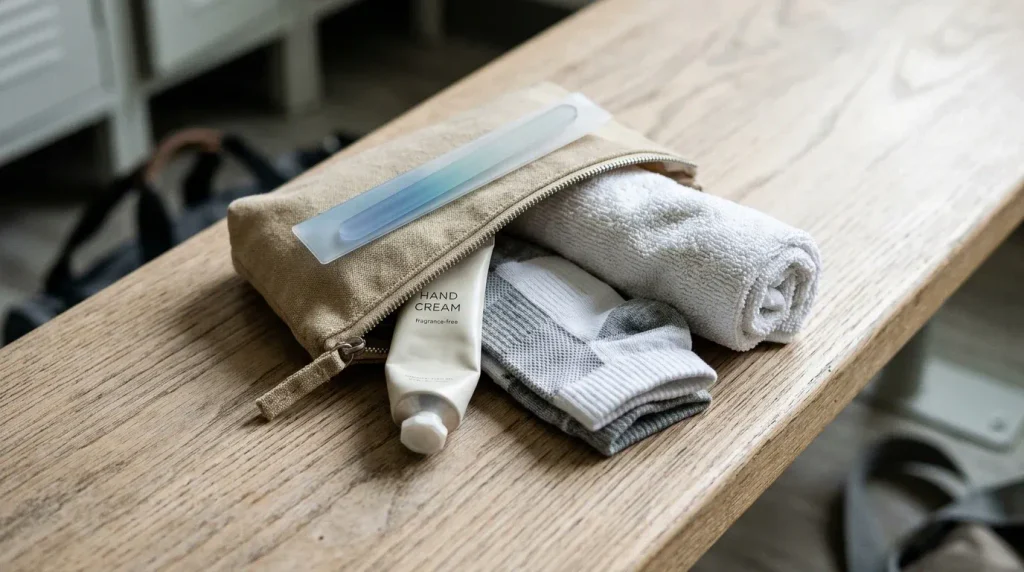
You need only a few basics. Keep a small nail-care pouch in your gym bag so a rough edge doesn’t become a full break halfway through class.
- Fine glass nail file: Smooth tiny snags without aggressively sawing at the tip. A glass nail file for natural nails is a compact option.
- Clean microfiber towel: Dry sweat from hands before handling weights or equipment.
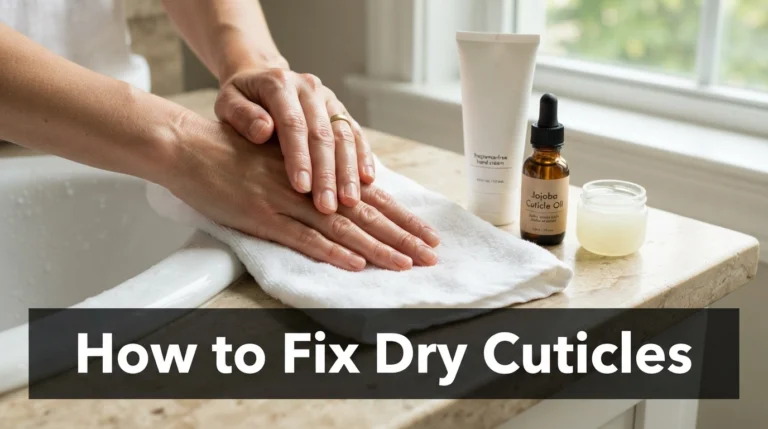
- Fragrance-free hand cream: Reapply after your post-workout handwash, not immediately before gripping equipment.
- Optional gym grip pads or properly fitted gloves: Useful if handles repeatedly rub your fingers or catch an extension.
- Fresh, moisture-wicking socks: Help manage damp feet during cardio sessions.
Don’t pack glue, sharp cuticle tools, or a bulky manicure kit as your first line of defense. Simple grooming and a safer grip are more useful than trying to repair nail damage between sets.
Can exercise actually damage your nails?
Yes. Most workout-related nail damage comes from mechanical stress: catching a nail on a handle, pressing an extended tip against a hard surface, or repeatedly banging toenails inside shoes. Long extensions create extra leverage when they hit something, while already-brittle nails can split under smaller forces.
Sweat itself doesn’t instantly ruin a gel manicure. The bigger concerns are slippery grips, damp gloves or socks left on for too long, and friction against the nail or surrounding skin. If your nails routinely peel before you reach the gym, explore common causes of weak nails so you can address the underlying problem too.
Warning
Don’t train through a nail that’s partly detached, bleeding, intensely painful, swollen, or showing pus. Avoid gluing an extension over an injured nail or taping directly across an open wound. Stop the activity, protect the area, and seek medical advice for significant injury or signs of infection.
How do you protect nails during exercise step by step?
1 Trim and smooth your nail edges
Check your nails the evening before a demanding workout. Aim for short, softly rounded or squoval tips that won’t touch the bar or floor before your finger pads do. File any sharp corner lightly in one direction, then run a fingertip over the edge to check for catches.
You don’t need to cut your nails to the quick. The goal is comfortable length with no exposed hook that could catch a towel, resistance band, or glove seam.
Common mistake: Filing deeply into the sidewalls to create a dramatic shape. That removes support exactly where lifting and gripping apply pressure.
2 Inspect polish, gel, and extensions
Look for lifted gel corners, cracked acrylics, and press-ons that shift when touched. A loose edge can catch more easily as you grip, so skip a high-friction activity until the nail can be removed or repaired safely. Never peel a lifted product off the natural nail.
If you train frequently, consider a shorter enhancement and a less pointed shape. Regular polish may chip, but a chipped color layer isn’t automatically an injury to the nail below.
Common mistake: Painting over a lifting extension to make it look secure. Cosmetic coverage doesn’t restore its attachment and can hide trouble underneath.
3 Choose grip protection only when helpful
For repeated dumbbell, kettlebell, or machine work, well-fitted gloves or grip pads may reduce rubbing and prevent fabric or handles from catching longer tips. Test them with a light load first to be sure you can maintain full control without slipping.
If bare hands give you a safer, more predictable grip, don’t add accessories just for your manicure. Chalk and lifting straps are training tools, not nail shields; use them only when appropriate for your exercise and skill level.
Common mistake: Wearing oversized gloves with bunching fingertips. Extra fabric can snag nails and make gripping less secure.
4 Grip equipment with your palms and finger pads
When picking up weights, position the handle securely in your palm and wrap your fingers around it rather than pinching with the tips of your nails. Set equipment down carefully instead of letting a bar roll across the ends of your fingers.
During floor moves, spread your fingers comfortably and place weight through the hand as your instructor recommends. If a pose forces an extension directly into the mat, modify the hand position or choose an appropriate alternative instead of tolerating pain.
Common mistake: Changing your lifting grip so much that the weight becomes unstable. Equipment control and joint safety always come before saving a manicure.
5 Give your toenails room inside your shoes
Trim toenails straight across, leaving them comfortable rather than cutting into the corners. Check that your running or training shoes have enough toe space and that your feet don’t slide forward into the front on downhill runs or jumps.
Lace your shoes securely and replace socks that stay damp. Repeated toe impact can cause bruising or a darkened nail, especially during long runs, so don’t dismiss recurring pressure as normal.
Common mistake: Buying shoes solely by length while ignoring toe-box shape. A narrow front can squeeze toenails even when the overall size seems correct.
6 Control moisture without over-drying
Wipe sweaty hands before handling smooth equipment, and change soaked gloves or socks promptly. After training, wash your hands, dry around the nails, and avoid scraping underneath the free edge with sharp objects.
Don’t put oil or heavy cream on your palms right before lifting; a slippery grip is a bigger risk than dry cuticles for that hour. Save moisturizing for after you’ve finished and cleaned up.
Common mistake: Staying in damp gloves or sweaty socks after class. Prolonged moisture can irritate skin and create conditions that favor fungal problems.
7 Moisturize and check nails after cooling down
Once your hands are clean and completely dry, massage hand cream over your nails and the skin around them. Add a drop of cuticle oil if they feel rough. Consistent moisture helps limit dryness-related peeling, even though oil can’t glue a cracked nail back together.
Inspect each edge while you’re doing this. If you find a tiny snag on the free edge, smooth it gently before it catches on clothing later. A simple daily nail-care routine makes this part automatic.
Common mistake: Tugging at a peeling corner after exercise. Pulling often removes more nail than simply shortening and smoothing the loose edge.
Which workouts are hardest on nails?
Weightlifting and strength machines
Bars, dumbbells, and metal handles can catch long corners, especially when you rack weights quickly. Shorter nails, a secure palm-based grip, and careful equipment handling offer the most practical protection. Gloves are optional, not a substitute for good technique.
Yoga, Pilates, and bodyweight workouts
Downward dog, planks, and push-ups put your hands near the floor or mat. Keep fingertips relaxed rather than digging nail tips downward. If wrist comfort or nail length prevents safe positioning, ask for a modification such as an appropriate prop or alternative pose.
Running, walking, and HIIT
Your toenails deserve as much attention as your manicure. Forward sliding inside shoes, repeated impact, and tight toe boxes can cause tenderness or discoloration. The right fit, straight-across toenail trimming, and fresh socks usually matter more than pedicure products.
Climbing, boxing, and contact sports
These activities can expose nails to powerful catches or direct impact. Keep them very short and follow your gym’s hygiene and equipment rules. For climbing holds, boxing gloves, or partner drills, long acrylics and raised decorations may be impractical or unsafe; consider removing them safely before participating.
What should you do and avoid at the gym?
Do
- File sharp tips before training.
- Keep equipment grips secure and dry.
- Choose roomy, supportive trainers.
- Moisturize after handwashing.
Don’t
- Use nails to pry equipment clips.
- Lift with an unstable or slippery grip.
- Peel off loosened gel or acrylic.
- Ignore pain beneath a toenail.
How can you keep a manicure gym-friendly long-term?
Pro Tip
Book nail appointments after your hardest lifting or climbing day, not right before it. That way you can choose a practical length and spot any lifting before your next high-friction session.
Choose shape before color. Rounded and squoval tips have fewer projecting corners than dramatic coffin or stiletto extensions. That doesn’t make them breakproof, but it reduces easy snag points.
Match length to your training week. If you’re increasing lifting volume or trying indoor climbing, scale your nail length down first. A manicure that works for a desk day may not work for hanging from a bar.
Skip unnecessary hardening layers. A very rigid nail coating isn’t a guarantee against breakage, and aggressive removal can damage the natural plate. If nails already feel thin, follow a gentle nail recovery routine instead of stacking more products on top.
Keep a quick post-gym habit. Dry, inspect, moisturize: those three actions take only a few minutes and help you notice small problems before your next session.
What if a nail chips, splits, or hurts mid-workout?
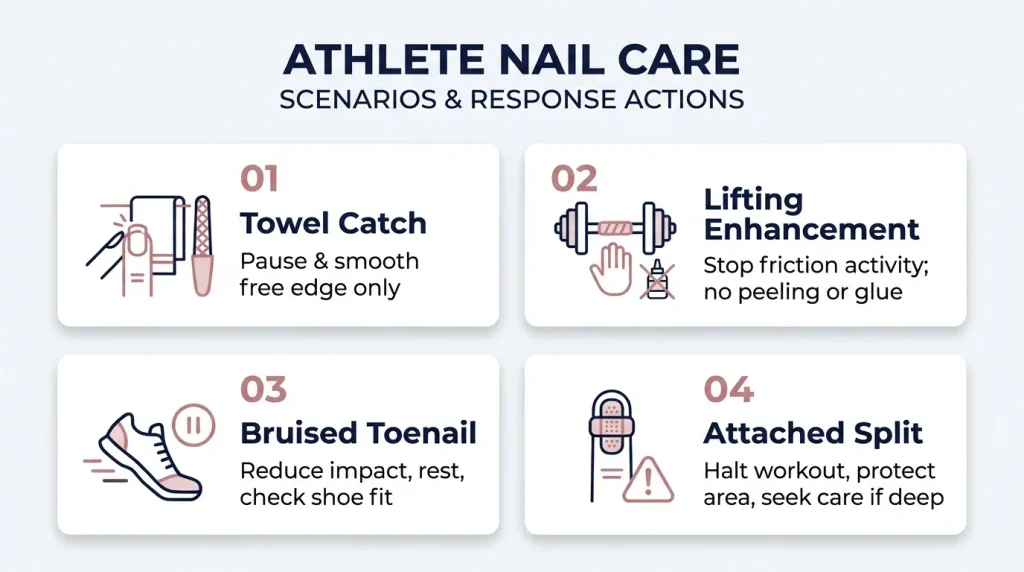
A small tip catches on your gym towel
Pause and file only the loose free edge, if it isn’t painful or attached to living tissue. Before your next workout, shorten the nail slightly and check every corner.
Your gel or acrylic starts lifting
Stop activities likely to catch it. Don’t force, peel, or glue the lifted section down; arrange safe professional removal or repair. Choose shorter extensions for future sessions.
A toenail feels bruised after running
Reduce impact, check shoe fit, and rest the toe. Seek medical care for severe throbbing pain, major dark discoloration after an injury, or a nail that’s separating; don’t try to drill or puncture it yourself.
Your natural nail splits into the attached portion
Stop the workout and avoid pulling the split. Cover and protect the area as appropriate, and seek medical advice if the crack is deep, painful, or bleeding. For superficial damage only, see this guide to repairing a damaged nail safely.
Which nail-care products are actually useful for workouts?
You don’t need a gym-specific nail serum. Start with inexpensive products that solve real problems: a fine file for snags, grip accessories if you need them, and moisturizer for dry nails after cleaning up.
Recommended Product
Lightweight Weightlifting Grip Pads
A slim pad may reduce handle friction without extra glove fabric around your nail tips. Choose a non-slip fit and test it with light weights.
As an Amazon Associate, we earn from qualifying purchases.
Recommended Product
Jojoba-Based Cuticle Oil
A small bottle makes it convenient to moisturize dry cuticle skin after showering, without coating your hands before lifting.
As an Amazon Associate, we earn from qualifying purchases.
If your feet get very sweaty, consider moisture-wicking running socks too. They won’t compensate for shoes that squeeze your toes, but they can help keep the skin around your nails drier.
Frequently asked questions about protecting nails during exercise
Q: Can you lift weights with acrylic nails?
A: Sometimes, but long acrylics can catch or lever against equipment. Keep them short, avoid lifting with the tips, and choose a secure grip. If a nail is lifting or painful, don’t train through it.
Q: Do workout gloves stop nails from breaking?
A: They may help reduce friction or catching, but only when they fit well and don’t compromise your grip. Shorter nails and careful equipment handling remain the most reliable prevention habits.
Q: Does sweat ruin gel nail polish?
A: Ordinary workout sweat isn’t expected to dissolve properly cured gel. More important risks are snagging a lifted edge, repeated friction, and leaving damp gloves on for long periods.
Q: What’s the best nail shape for the gym?
A: Short round or squoval nails are practical choices because they have fewer sharp corners to catch. The safest length is one that lets you grip and use equipment without pressing on the nail tips.
Q: How do runners prevent black toenails?
A: Keep toenails trimmed straight across, wear shoes with enough toe room, and secure your laces to limit forward sliding. A dark nail after impact can indicate bleeding beneath it; seek care if pain is severe or the change is unexplained.
Keep your nails strong without skipping your workouts
Protecting nails during exercise is mainly about thoughtful length, safe grips, comfortable shoes, and a simple clean-and-moisturize routine. You can still enjoy cute nails while you move; just let your training needs decide how long or elaborate your manicure should be.
Save this guide to your Pinterest nail-care board before your next gym day, and share it with a friend who’s tired of breaking a nail between sets.

Hi, I’m Jessica, the creator behind Unique Lash & Nails Katy.
I created this website for anyone who loves beautiful nails as much as I do. Here, I share trendy nail designs, seasonal manicure ideas, easy nail care tips, honest product recommendations, and step-by-step guides to help you create salon-worthy nails at home. Whether you’re looking for everyday inspiration or your next favorite nail trend, I hope you’ll find something you love.