How to Maintain Healthy Nails: 12 Easy Care Tips
Quick Answer
To maintain healthy nails, keep them clean and dry, moisturize your cuticles daily, trim and file gently, and protect your hands from harsh chemicals and prolonged water exposure. Avoid picking off gel polish, biting your nails, or cutting healthy cuticles. A consistent routine with hand cream, gentle grooming, and careful manicure removal helps reduce peeling, splitting, and breakage as new nails grow.
Beautiful nails don’t have to mean expensive salon appointments or a shelf full of strengthening treatments. Your everyday habits often matter much more than your manicure products.
Whether you love colorful nail art, elegant French tips, or completely natural nails, learning how to maintain healthy nails helps you build a stronger foundation for every look.
This guide covers 12 practical habits, a realistic daily routine, product essentials, and the mistakes that can quietly damage your nails.


What Do Healthy Nails Actually Look Like?
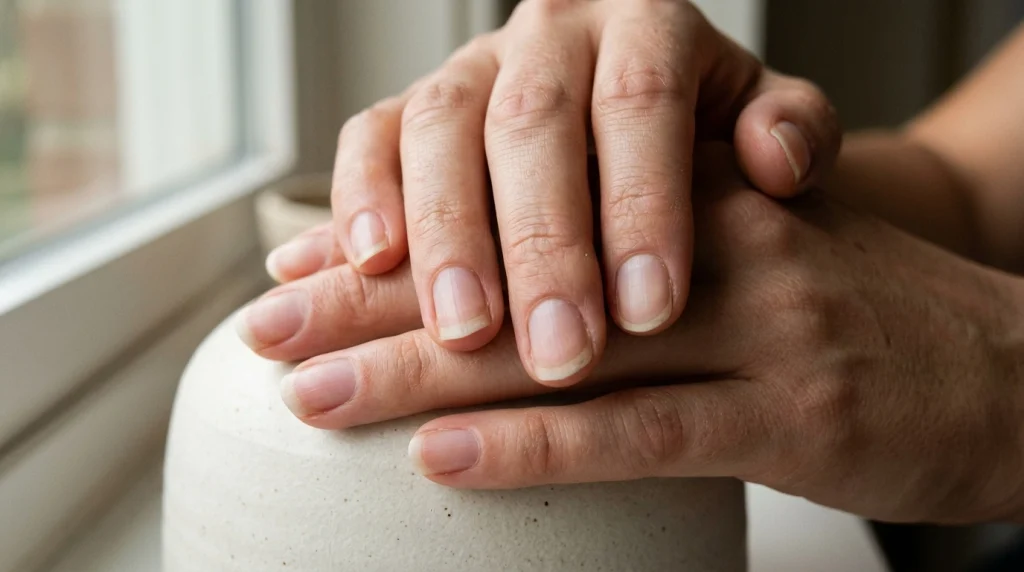
Before changing your routine, it’s helpful to understand what you’re trying to maintain. Healthy fingernails are generally smooth, firmly attached to the nail bed, and free from persistent pain or inflammation.
Normal nails may have subtle lengthwise ridges, slight variations in color, or naturally different shapes. You don’t need perfectly glossy, identical nails to have healthy hands.
Some reassuring signs include:
- Consistent growth: Your nails gradually grow without frequent unexplained changes.
- Comfortable cuticles: The surrounding skin isn’t swollen, tender, or repeatedly cracking.
- Minimal splitting: Your free edges generally remain intact during everyday activities.
- A firmly attached nail plate: Your nails aren’t unexpectedly separating from the skin underneath.
- A relatively even surface: Your nails don’t develop sudden deep grooves, unusual thickening, or major texture changes.
If your nails have recently become fragile, you might benefit from this guide on how to make your nails healthy again.
How Can You Maintain Healthy Nails Every Day?
The best nail routine is the one you can actually follow. These 12 habits address common causes of dryness, peeling, and preventable nail damage without making your beauty routine unnecessarily complicated.
1. Keep Your Nails Clean Without Over-Scrubbing
Wash your hands regularly with mild soap and water. When dirt collects beneath your nails, clean the area gently rather than scraping underneath with a sharp tool.
A soft nail brush can help remove visible debris. Use light pressure, especially if your skin is sensitive.
After washing, dry your hands thoroughly, including around your fingertips. Frequent prolonged moisture exposure can contribute to irritation and leave fragile nails more vulnerable to splitting.
Try this: Keep your nails at a manageable length if you frequently work with your hands. Shorter free edges usually collect less debris and are less likely to catch on objects.
2. Apply Cuticle Oil Consistently
Cuticle oil is one of the simplest additions to a healthy nail routine. It helps soften the skin around your nails and reduces the dry, rough appearance that makes manicures look untidy.
Jojoba-based cuticle oil is a convenient option because it spreads easily and feels lightweight.
Massage a small drop around each nail once or twice a day, or whenever the area feels dry. Pay attention to the sides of your nails and the skin near the base.
You don’t need to soak your fingertips in oil. A thin application followed by gentle massage is enough for routine moisturizing.
Pro Tip
Keep a small cuticle oil pen beside your bed or at your desk. Connecting nail care to a habit you already have makes daily moisturizing much easier to remember.
3. Moisturize Your Hands After Washing
Hand cream doesn’t just benefit your palms and knuckles. Your fingernails and surrounding skin are exposed to the same soaps, weather changes, and frequent washing.
Choose a fragrance-free moisturizer containing ingredients such as glycerin, petrolatum, or ceramides. These ingredients help the skin retain moisture and support its protective barrier.
Apply cream after washing your hands, then massage the remaining product over your fingertips.
If your cuticles are extremely dry, apply a thin layer of plain petroleum jelly before bedtime to help seal in moisture.
4. Trim Your Nails Before They Start Snagging
Long nails aren’t automatically unhealthy, but extra length creates more leverage when a nail catches on fabric, hair, or a hard surface.
Check your nails every week and trim as needed. For many people, a trim every one to two weeks is a reasonable starting point.
Use clean, sharp nail clippers. Avoid cutting so deeply that you expose tender skin underneath.
If you’re growing your nails longer, maintain a smooth free edge rather than refusing to shorten a damaged tip. Removing a small snag early can prevent a more painful break later.
5. File Your Nails Gently
A fine-grit nail file or glass nail file helps smooth rough edges without requiring aggressive pressure.
File with light, controlled strokes. You can work from the outer edge toward the center, avoiding forceful sawing that bends a thin nail back and forth.
A rounded or squoval shape is often practical for nails that repeatedly catch at the corners.
Avoid excessive buffing of the nail surface. Buffing removes material from the nail plate, so repeated sessions can make already-thin nails more fragile.
6. Protect Your Nails While Cleaning
Frequent dishwashing, household cleaning, and long periods of wet work can be hard on your nails.
The nail plate absorbs water and changes as it becomes wet and dries. Repeated cycles can contribute to splitting in nails that are already brittle.
Wear protective gloves when washing dishes, cleaning bathrooms, or handling irritating household products.
If you wear gloves for extended periods, consider a breathable cotton liner and change gloves when the inside becomes damp.
Remember: Gloves work best when your hands are dry before putting them on. Trapping moisture against the skin for long periods can create additional irritation.
7. Stop Using Your Nails as Tools
Your fingernails may feel strong, but they’re not designed to open soda cans, scrape stickers, pry lids, or separate tightly attached objects.
These activities put pressure on the free edge and can create tiny cracks that eventually become larger splits.
Reach for a proper tool instead. Use a key or another suitable object to lift a can tab, and use a scraper rather than your thumbnail to remove a stubborn label.
It’s a small adjustment, but it can make a noticeable difference if your nails constantly break at the corners.
8. Leave Your Cuticles Intact
Your cuticles help protect the area where new nails grow. Cutting or aggressively pushing them back can irritate the skin and increase the risk of infection.
For a neat manicure, focus on moisturizing rather than removing healthy tissue.
If you have a hangnail, soften the surrounding skin and carefully clip only the loose piece using clean, sharp nippers. Don’t pull it away with your fingers or teeth.
Warning
Don’t cut deeply into the skin around your nail to achieve a perfectly clean cuticle line. Small wounds can become irritated or infected. If the area becomes increasingly red, swollen, painful, or develops pus, seek medical advice.
9. Remove Nail Polish Without Peeling It Off
One of the biggest manicure-related mistakes is peeling off gel polish, dip powder, or another firmly attached coating.
When you pull the product away, superficial layers of your natural nail may come off with it. That can leave the nail surface thin, rough, and more likely to split.
For traditional polish, use an appropriate remover and avoid excessive rubbing. Acetone works efficiently but can temporarily dry the nail and nearby skin, so moisturize afterward.
For gel or artificial enhancements, follow the manufacturer’s recommended removal method or ask a trained nail professional for help.
Never pry off a product that is still strongly attached.
10. Choose Nail Products Based on Your Nail Condition
Not every nail needs a strengthener. If your nails are naturally flexible and rarely break, basic moisturizing and protective grooming may be enough.
For nails that peel or split, a suitable protective coating may reduce everyday mechanical damage. However, coatings can’t permanently restore layers that have already been removed.
A base coat can also help reduce staining from strongly pigmented traditional nail polish.
Be cautious with aggressive nail hardeners, especially products containing formaldehyde. Some can cause irritation or make nails overly rigid when used incorrectly.
Think of strengthening products as optional tools rather than replacements for healthy daily habits.
11. Support Your Nails With Balanced Nutrition
Your nails are made primarily from keratin, a protein produced by specialized cells in the nail matrix.
A balanced diet provides the nutrients needed for normal nail growth. Include protein sources such as eggs, fish, beans, tofu, or lean meat, along with vegetables, fruits, whole grains, and other nutrient-rich foods.
Iron, zinc, and other nutrients contribute to normal body functions, including nail formation. Nutritional deficiencies can sometimes affect nail appearance, but brittle nails don’t automatically mean you’re deficient.
Don’t start high-dose supplements solely because you want longer nails. Biotin, for example, has limited evidence for routine use in otherwise healthy people and can interfere with certain laboratory tests.
If your nails change suddenly or you suspect a deficiency, ask a healthcare professional whether testing is appropriate.
12. Give Damaged Nails Time to Grow Out
Damaged nails need patience. Unlike living skin, the visible nail plate cannot repair itself by replacing lost cells.
Instead, new nail grows from the matrix near the base and gradually pushes the damaged portion outward.
Keep severely weakened nails shorter, moisturize regularly, and reduce activities that cause additional trauma.
If your nails are recovering from repeated enhancements, follow a gentler routine until the damaged section has grown out.
For more everyday maintenance ideas, explore this simple guide to the best nail care routine.
What Is the Best Daily and Weekly Nail Care Routine?
You don’t need to spend half an hour on your nails every morning. A practical routine separates essential daily care from occasional maintenance.
Your Daily Nail Care Routine
- Morning: Wash and dry your hands, then apply moisturizing hand cream.
- During the day: Reapply moisturizer after frequent handwashing and wear gloves for wet cleaning tasks.
- Evening: Check for snags, gently smooth rough tips if needed, and massage cuticle oil around each nail.
- Before bed: Add a richer cream or a small amount of petroleum jelly if your surrounding skin feels particularly dry.
Most days, this takes just a few minutes. The goal isn’t to constantly work on your nails; it’s to protect them between manicures.
Your Weekly Nail Care Routine
- Inspect your nails for peeling, splitting, lifting, or unusual changes.
- Trim nails that have become inconveniently long.
- Smooth uneven edges with a clean, fine-grit file.
- Remove chipped traditional polish gently if you’re ready for a fresh manicure.
- Clean reusable nail tools and allow them to dry completely.
- Check your cuticles for dryness or hangnails without aggressively removing healthy skin.
What Are the Biggest Mistakes That Damage Healthy Nails?
Sometimes maintaining healthy nails is less about adding new products and more about removing habits that repeatedly weaken them.
Over-Buffing the Nail Surface
Buffing may create a temporary smooth finish, but removing surface layers too frequently can leave your nails thinner. Limit unnecessary buffing, especially before repeated gel applications.
Changing Manicures Too Aggressively
Frequent product changes aren’t automatically harmful. The problem is repeated scraping, forceful removal, and excessive filing during preparation.
Choose gentle application and removal techniques, even if that means spending more time on the process.
Ignoring Persistent Dryness
Dry cuticles may begin as a cosmetic issue, but cracking surrounding skin can become uncomfortable. Applying moisturizer consistently is easier than repeatedly dealing with painful hangnails.
Covering Nail Changes Without Checking Them
If your nail suddenly becomes discolored, painful, thickened, or detached, covering it with another manicure may hide a problem that deserves attention.
Unexplained dark streaks, persistent inflammation, or significant nail lifting should be assessed by a healthcare professional.
How Long Does It Take to Improve Nail Health?
Moisturizer can make dry skin feel softer quickly, but visible changes in the nail plate take longer.
Fingernails typically grow approximately 3 millimeters per month, although growth varies with age, health, and individual factors.
- Within days: Regular moisturizing may improve how dry cuticles feel and look.
- After 2–4 weeks: You may notice fewer new snags if you’ve protected your nails consistently.
- After 6–8 weeks: A larger area of new nail may become visible near the base, although results depend on your starting condition.
- After 4–6 months: A fingernail may have largely or completely replaced its previous length.
These are general expectations, not guaranteed treatment results. Deep damage, underlying medical conditions, or ongoing trauma may change the timeline.
Helpful tracking idea: Take a photo of your bare nails once a month in similar lighting. Compare the growth near your cuticles rather than judging only the older, damaged tips.
What Should You Do and Avoid for Stronger Nails?
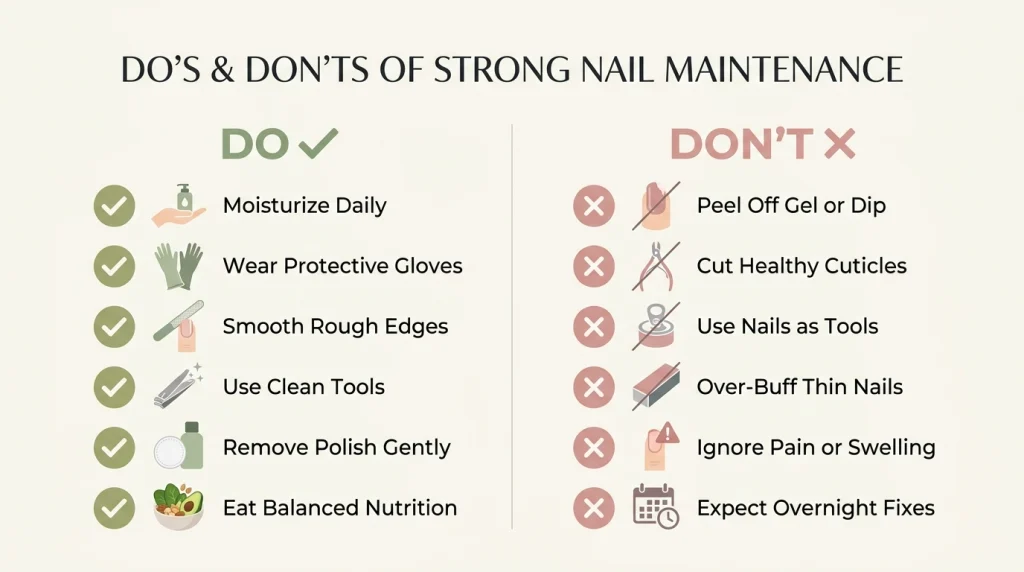
Do
- Moisturize nails and surrounding skin daily.
- Wear gloves for wet household chores.
- Keep rough edges smooth.
- Use clean manicure tools.
- Remove polish gently.
- Eat a balanced, varied diet.
Don’t
- Peel off gel or dip products.
- Cut healthy cuticles deeply.
- Use nails to pry open objects.
- Buff already-thin nails repeatedly.
- Ignore persistent pain or swelling.
- Expect overnight nail repair.
Which Nail Care Products Are Actually Worth Buying?
You don’t need a large collection of treatments to maintain healthy nails. A few inexpensive essentials can support the habits that matter most.
The following product categories are practical starting points, particularly if your nails feel dry or catch easily.
Recommended Product
Jojoba-Based Cuticle Oil
A convenient everyday moisturizer for dry cuticles and the skin around your nails. Choose a simple formula if you’re sensitive to fragrances.
As an Amazon Associate, we earn from qualifying purchases.
Recommended Product
Fine-Grain Glass Nail File
A reusable glass nail file helps smooth small snags with controlled pressure, making it useful for maintaining natural nails between manicures.
As an Amazon Associate, we earn from qualifying purchases.
Recommended Product
Fragrance-Free Moisturizing Hand Cream
A glycerin- or ceramide-containing hand cream helps support your skin barrier after frequent washing and keeps the area surrounding your nails comfortable.
As an Amazon Associate, we earn from qualifying purchases.
You can also explore the healthiest things to put on your nails if you’re deciding between moisturizing oils, protective coatings, and other nail treatments.
What Extra Nail Care Tips Make the Biggest Difference?
Moisturize Before Your Nails Feel Dry
Don’t wait until your cuticles start cracking. Applying a small amount of moisturizer consistently is easier than trying to correct severe dryness all at once.
Keep Your Nail Length Realistic
If you type constantly, lift weights, garden, or work with your hands, very long nails may experience more accidental impacts. Choose a length that fits your lifestyle rather than forcing a shape that repeatedly breaks.
Watch the New Growth Near Your Cuticles
The oldest nail is closest to the free edge. When you’re recovering from damage, a smoother section emerging near the base can be a more useful sign of progress than the condition of the tips.
Pro Tip
When visiting a nail salon, tell your technician if your nails have recently peeled or become sensitive. Ask for minimal natural-nail filing and gentle product removal. A manicure should never require you to tolerate significant pain.
Frequently Asked Questions About Maintaining Healthy Nails
Q: How do I maintain healthy nails naturally?
A: Keep your nails clean and dry, moisturize your cuticles, use a gentle nail file, and wear gloves during wet chores. Balanced nutrition and avoiding repeated nail trauma also support normal growth.
Q: Should I apply cuticle oil every day?
A: Daily cuticle oil can help maintain comfortable, moisturized skin around your nails. Apply a small amount once or twice daily, especially when your cuticles become dry from frequent washing.
Q: Can I wear nail polish and still have healthy nails?
A: Yes. Regular nail polish doesn’t automatically damage healthy nails. Gentle preparation, appropriate removal, and avoiding excessive filing are important. Take a break from enhancements if your nails become sore or noticeably thin.
Q: Why do my nails keep breaking even when I moisturize?
A: Frequent water exposure, repeated manicures, excessive filing, and everyday impacts can contribute to breakage. Some medical conditions may also affect nails. Seek medical advice if the problem persists or appears suddenly.
Q: How long does it take to grow healthier nails?
A: Fingernails typically grow about 3 millimeters per month. Dry cuticles may improve much sooner with moisturizing, but replacing a significantly damaged fingernail can take approximately four to six months.
Final Thoughts: Healthy Nails Start With Simple Habits
Learning how to maintain healthy nails doesn’t require complicated treatments. Consistent moisturizing, gentle grooming, protective gloves, and careful manicure removal help your natural nails stay in better condition as they grow.
Start with a few habits you can repeat every day, and give your nails time to respond. Save this guide to your Pinterest nail care board so you can return to your healthy nail routine whenever you need a reminder.

Hi, I’m Jessica, the creator behind Unique Lash & Nails Katy.
I created this website for anyone who loves beautiful nails as much as I do. Here, I share trendy nail designs, seasonal manicure ideas, easy nail care tips, honest product recommendations, and step-by-step guides to help you create salon-worthy nails at home. Whether you’re looking for everyday inspiration or your next favorite nail trend, I hope you’ll find something you love.